Arrival at Events in Hof by Train, Bus & Car
Arrival at the Biggest Events in Hof: Train, Bus & Car (Planning for Upcoming Events)
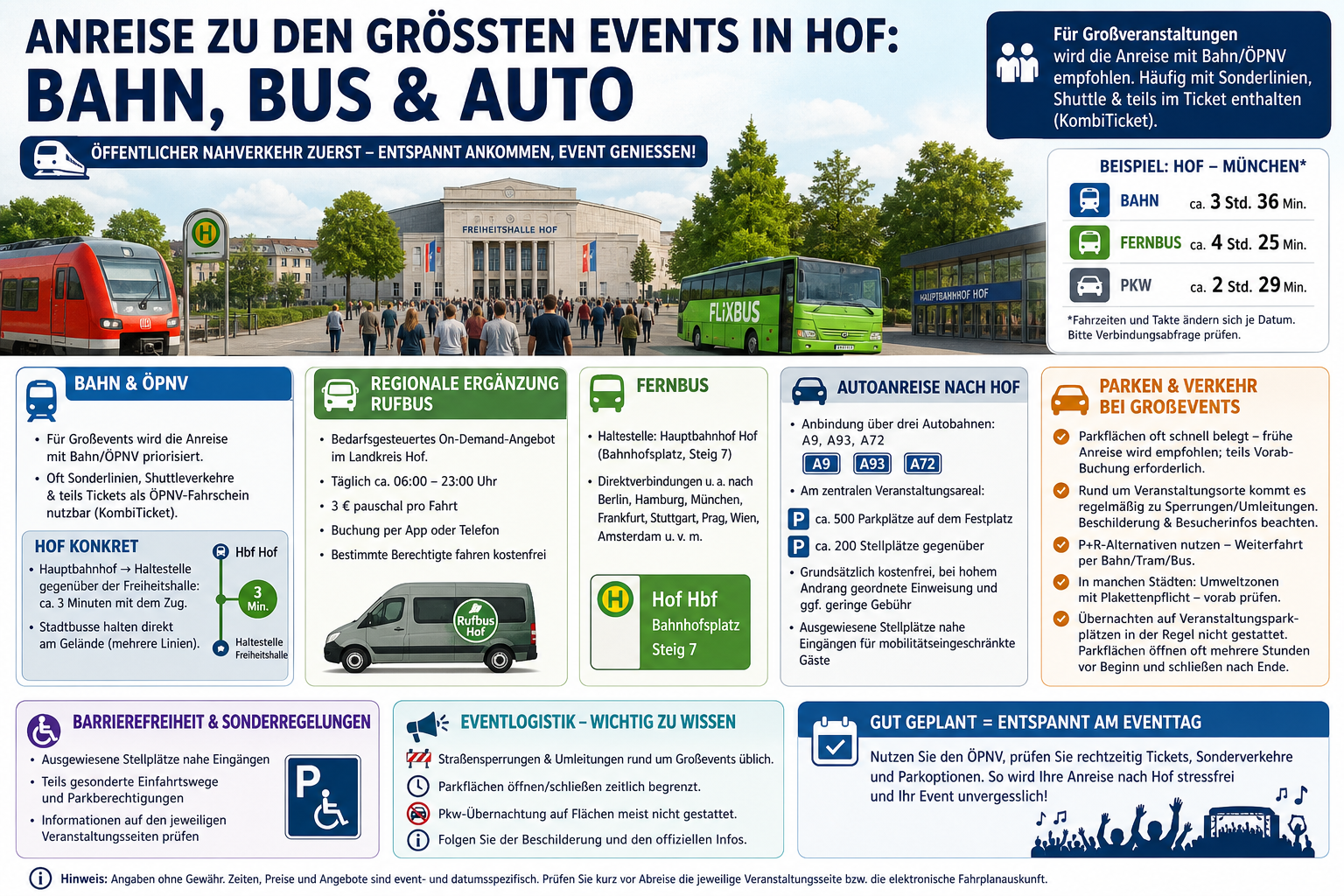
How to get to future major events in Hof with less stress: arrival by train, city bus, on-demand/call bus, long-distance bus, and car – including tips on closures, parking, accessibility, and a safe journey home.
The Basic Principle: How to Start Relaxed
For upcoming major events, your journey often determines whether your evening starts calmly or with stress. In Hof, the distances between the train station, city center, and many event areas are often short – at the same time, access roads, entrances, and bus stop routes can change at short notice around events.
The best strategy is therefore a combination of checking current connections (the day before and on the day of the event), a clear Plan A (e.g., train/bus), and a Plan B (e.g., park & ride or alternative stop). This way, you stay flexible, even if there is heavy demand or temporary closures.
Train & Public Transport: Often the Fastest Solution During High Demand
For future top events, traveling by train and city bus is the most reliable option in many cities: less time searching for parking, less risk of traffic jams, and after the event you are immediately mobile without your own vehicle. In Hof, the main train station is also a central transfer point, from which you can continue by city bus or on foot.
How to Plan Your Connection Properly
- Check DB connection: For train journeys, use the current travel information shortly before departure (including construction work, delays, and platform changes).
- Check city bus/network: Check the timetables and notices of the local transport service, especially for evening events (frequency, last trip, detours).
- Include additional services: During high demand, additional trips or changed routes may be set up. The official information from the organizers and the current details in the timetable information are decisive.
ComboTicket / Public Transport Included: Be Sure to Check in Advance
Some event or concert tickets include local transport authorization for the event day (often with time limits or certain zones). Whether this applies to your upcoming event in Hof can be seen on the ticket print or in the organizer's information. Check this before you leave – it can save time and money.
Closures, Detours & Event Logistics: So You Don’t Take a Wrong Turn
At future major events, temporary closures and changed access routes are a realistic scenario – especially immediately before admission and after the event ends. Reasons include visitor flows, emergency routes, and safe departure. This can mean that usual routes in navigation systems are not optimal.
How to React Properly
- Follow event signage and instructions from stewards/police – they are tailored to the situation on site.
- Plan buffer time for the last 1–2 kilometers (traffic jams, walking, checks).
- Remember your way home already upon arrival: Where is the stop? Where is the car parked? Which exit will you use?
If the organizer publishes travel information (e.g., recommended access routes, shuttle stops, changed entrances), this information is usually more reliable than standard routes.
Car & Parking: Plan Realistically, Know Alternatives
For upcoming events, the car can be a convenient option – especially for groups or if you are staying outside the city. At the same time, parking during high demand is the most common stress factor: occupancy, temporary entry rules, changed parking areas, or fees can vary depending on the event.
Parking Strategy for Major Events
- Arrive early: You have the best chance of a nearby parking space well before admission.
- Use official parking information: If parking areas, access routes, or parking fees are communicated, these apply specifically to the event.
- Set a Plan B: Define a second parking option or a park & ride approach in advance (park further away, take the last stretch by bus/train).
- Prioritize a safe journey home: If you are driving back late, check for rest opportunities in advance and avoid time pressure.
Environmental Zone / Emissions Sticker: Check in Advance
In Germany, environmental zones and access rules may apply depending on the city. Whether this affects your route or parts of your journey is best clarified in advance using official information (e.g., Federal Environment Agency) and current route planning.
Long-Distance Bus, On-Demand/Call Bus & Regional Connections
For upcoming events in Hof, the long-distance bus can be a practical alternative, especially if you want to travel from larger cities without transfers. Long-distance bus arrivals and departures are usually oriented towards train stations or central stops – making the switch to city bus or walking usually uncomplicated.
On-Demand/Call Bus: Flexible for Surrounding Areas and Late Returns
In the Hof area, demand-oriented services (on-demand or call bus) can be a useful addition – especially if regular lines run less frequently after the event. The booking method, operating times, and fare are crucial here, and these vary depending on the operator and service. Check these points in advance on the official website of the local transport service to ensure a reliable journey home.
Practical Tip: Plan Your Departure First, Then Your Arrival
At major events, departure is often the bigger hurdle (crowds, schedules, full vehicles). If you have your return trip firmly in mind (last connection, meeting point, pick-up zone), the entire planning process becomes more relaxed.
Accessibility & Mobility for All
If you want to travel barrier-free to upcoming events (e.g., wheelchair, walker, stroller, limited mobility), a quick check in advance is worthwhile: barrier-free routes, suitable entrances, and the actual accessibility of stops can vary depending on the event setup.
What You Should Check in Advance
- Barrier-free use of public transport: Find out whether the lines and stops you use are accessible (e.g., low-floor vehicles, ramps, announcements).
- Special parking or access regulations: Some events regulate access and parking spaces with authorization. The details are in the visitor information or from the organizer.
- Plan a buffer: Extra minutes help you use elevators, ramps, or quieter entrances without stress.
Checklist for Event Day (Arrival & Return)
- Check your ticket: Does it include public transport/ComboTicket? Are there time windows or zones?
- Check current connections: Check DB/public transport/long-distance bus again shortly before departure (disruptions, platforms, detours).
- Plan a buffer: Expect crowds at entrances, stops, and parking access.
- Read event information: Recommended routes, closures, shuttle stops, changed entrances.
- Set a Plan B: Alternative stop or parking option if the first choice is full.
- Fix your way home in advance: Last connection, meeting point, pick-up zone, walking distance, and waiting time.