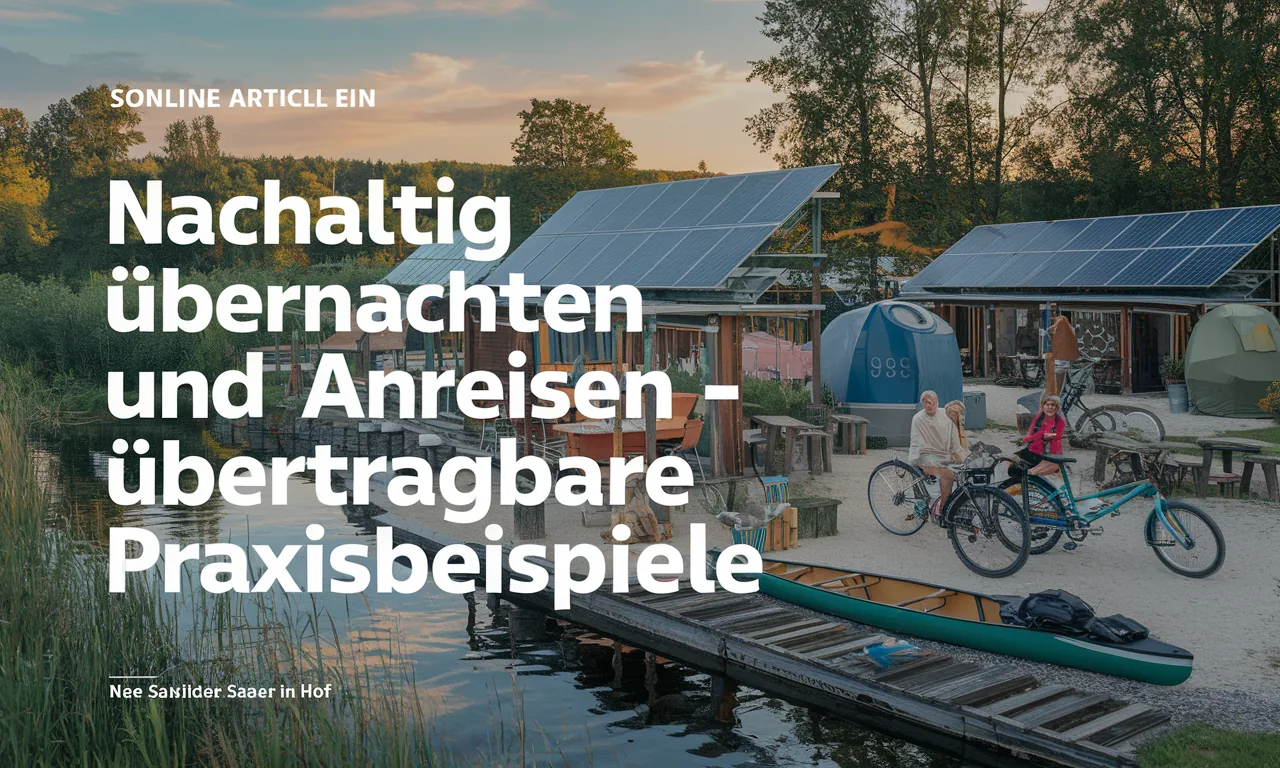
Sustainable Leisure Ideas in Hof: Experience Nature
Sustainable Leisure Ideas in Hof (Bavaria): Future Excursions that Combine Nature Experiences and Climate Protection
Are you planning your next day off in Hof and want to organize it so that travel, activities, and outdoor behavior remain as resource-efficient as possible? In and around Hof, you can combine many experiences in the coming weeks and months so that you travel without a car, respect natural areas, and at the same time collect real "aha" moments: on the water, in the forest, during environmental education—or in an exhibition that makes the circular economy visible.
Outdoors in and around Hof: On Foot, by Bike, by Paddle
For your upcoming weekends, you can make nature experiences in the region particularly low-emission by choosing activities that work with muscle power and rely on existing infrastructure: paths, entry points, marked routes.
Hiking & Quiet Tours: Nature-Friendly Travel
Plan your next hike so that it protects sensitive habitats. Good basic rules are: stay on paths, do not startle animals, reduce noise, leave no litter, and do not remove plants. These principles match the recommendations of conservation and outdoor organizations and are easy to implement.
Paddling Without a Motor: Quiet Movement on the Water
If you are planning a river tour in the coming months, canoeing is one of the most energy-efficient ways to travel: no motor, low noise, high chances for nature observation. It is important to act in accordance with nature conservation: enter and exit only at suitable places, do not step on bank vegetation, keep distance from breeding and resting areas, and respect local navigation rules.
Clubs & Guided Offers as a Safe Introduction
For your next steps (e.g., first paddle tour, first longer hike), organized groups are a practical option: you benefit from experience, safety routines, and local knowledge—and at the same time learn how to plan tours so that nature and recreation go hand in hand.
Participate & Learn: Organic Farms and Educational Offers
If you want to not only "consume" in the future, but really understand how nutrition, soil, water, and climate are connected, leisure time with learning and participation is worthwhile. Especially organic farms and educational sites make cycles tangible.
Volunteer Assignments (Work & Learn) as Planned Time-Outs
For the next holidays or extended weekends, you can plan assignments on organically managed farms, which are arranged through established networks. Typically, there is a clear framework: limited time period, practical help, joint learning, and insight into real processes (e.g., vegetable cultivation, maintenance work, harvesting). This is especially meaningful if you are interested in regional supply, soil health, and seasonal work.
School and Learning Farm Offers for Families and Groups
If you are planning an excursion as a family, school class, or group in the coming months, learning programs around animal husbandry, arable farming, and processing (e.g., from grain to bread) are a good alternative to purely consumption-oriented offers. The added value: children and young people experience cause and effect directly and develop a realistic picture of effort, resources, and responsibility.
Understanding Cycles: Aquaponics as a Future Topic to See
For your next city or family outing, you can specifically include places where sustainability is not just claimed but explained. Aquaponics is a vivid future topic for this: fish farming and plant cultivation are coupled in a cycle so that nutrients from one process are used in the other.
What You Can Learn During the Visit
- Cycle Principle: Plants absorb nutrients from the water cycle; thus, water is used in the system instead of being constantly replaced.
- Resource Efficiency as a Guiding Idea: The goal is to reduce water and fertilizer use and to manage material flows sensibly.
- Practical View of Technology & Responsibility: Aquaponics shows that "sustainable" almost always means planning, monitoring, and care—not magic.
If you plan such a program point for the next few weeks, make sure that explanatory offers (e.g., guided tours, info boards, digital learning stations) are available. This way, a short visit becomes a real learning moment that will stick with children in the long term.
Unwind: Forest Health & Starry Skies as Planned Time-Outs
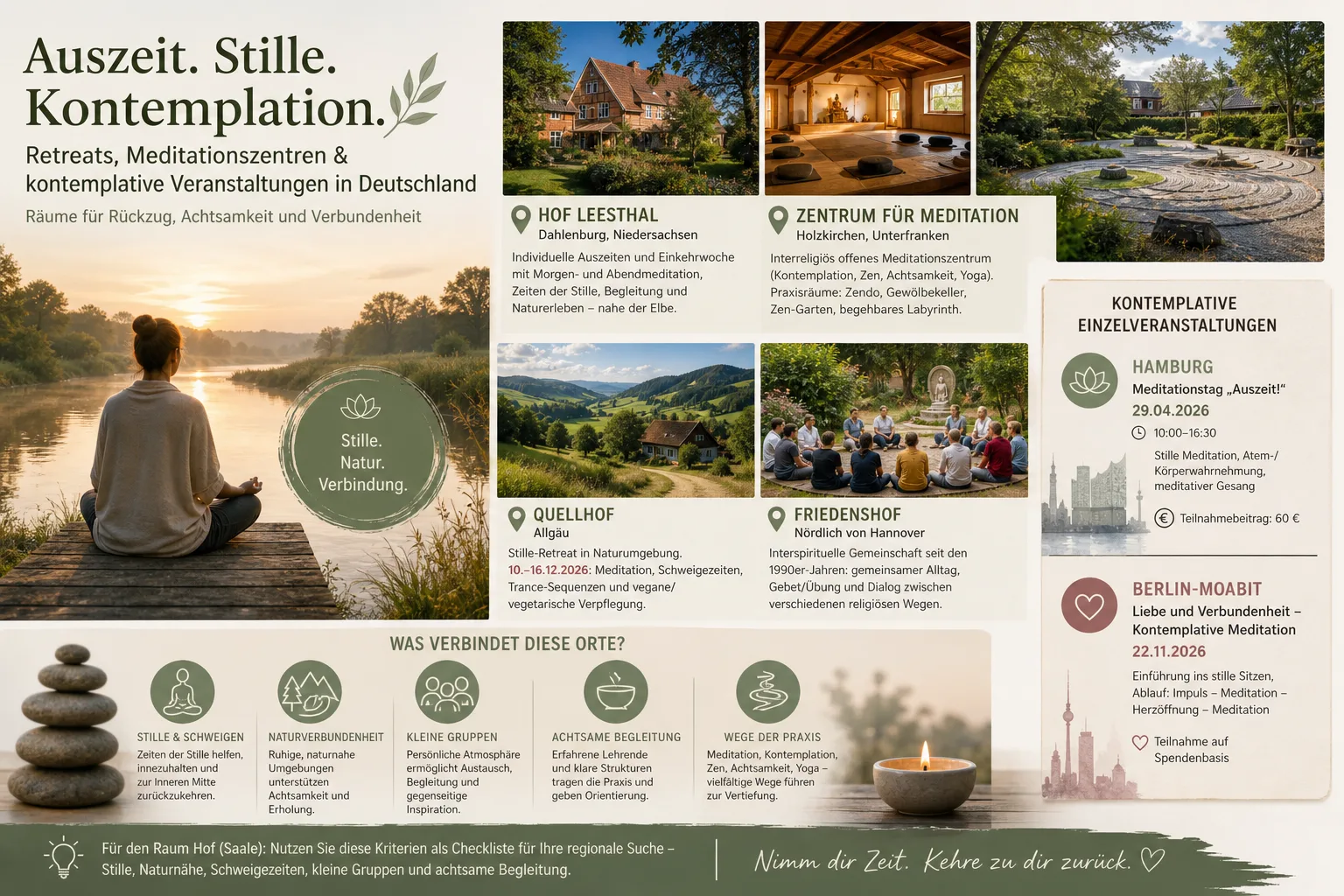
Sustainable leisure is not just "less CO₂," but often also "more regeneration." For the coming months, you can plan time-outs in the wider region that require very little infrastructure: forest, peace, darkness.
Forest Health: Conscious Outdoor Time Instead of Constant Noise
If you want to reduce stress in the future, you can organize excursions so that the forest is not just a backdrop, but the actual "program point": slow walking, breathing exercises, mindfulness, short stops instead of chasing kilometers. Research on nature contact and recreation is widely discussed in the literature; for your planning, this mainly means: less speed, more quality, clear breaks.
Starry Skies: Darkness as a Nature Experience
For a special evening in the next weeks or months, you can plan a trip to a region with as little light pollution as possible. In Dark-Sky regions, darkness is actively protected—this helps nocturnal animals and makes stargazing impressive again. This is practical even without special equipment: warm clothing, a seat pad, possibly binoculars; plus a weather and cloud check on the same day.
Planning Aid: How Your Excursion Becomes Truly Sustainable
You can use this checklist directly for your next Hof excursions:
- Plan Arrival First: Set train/bus connections, then choose route and starting point.
- One Destination, Multiple Experiences: Combine, for example, a walk + learning site + regional meal, instead of several widely separated stops.
- Act Nature-Friendly: Stay on paths, keep distance from animals, do not remove anything, take everything back with you.
- Smart Catering: Refillable bottle, lunch box, buy regional/seasonal—reduces single-use and transport.
- Weather and Safety Check: Clothing, water, emergency contact, realistic times. Sustainability only works if the excursion remains safe.
- Less, but Better: Consciously plan buffer times. Haste usually leads to unnecessary routes, purchases, and "quick fixes."
This way, Hof becomes a "leisure laboratory" for you in the future: you try out what is viable in everyday life and take the best routines home with you.