
Angela Hewitt
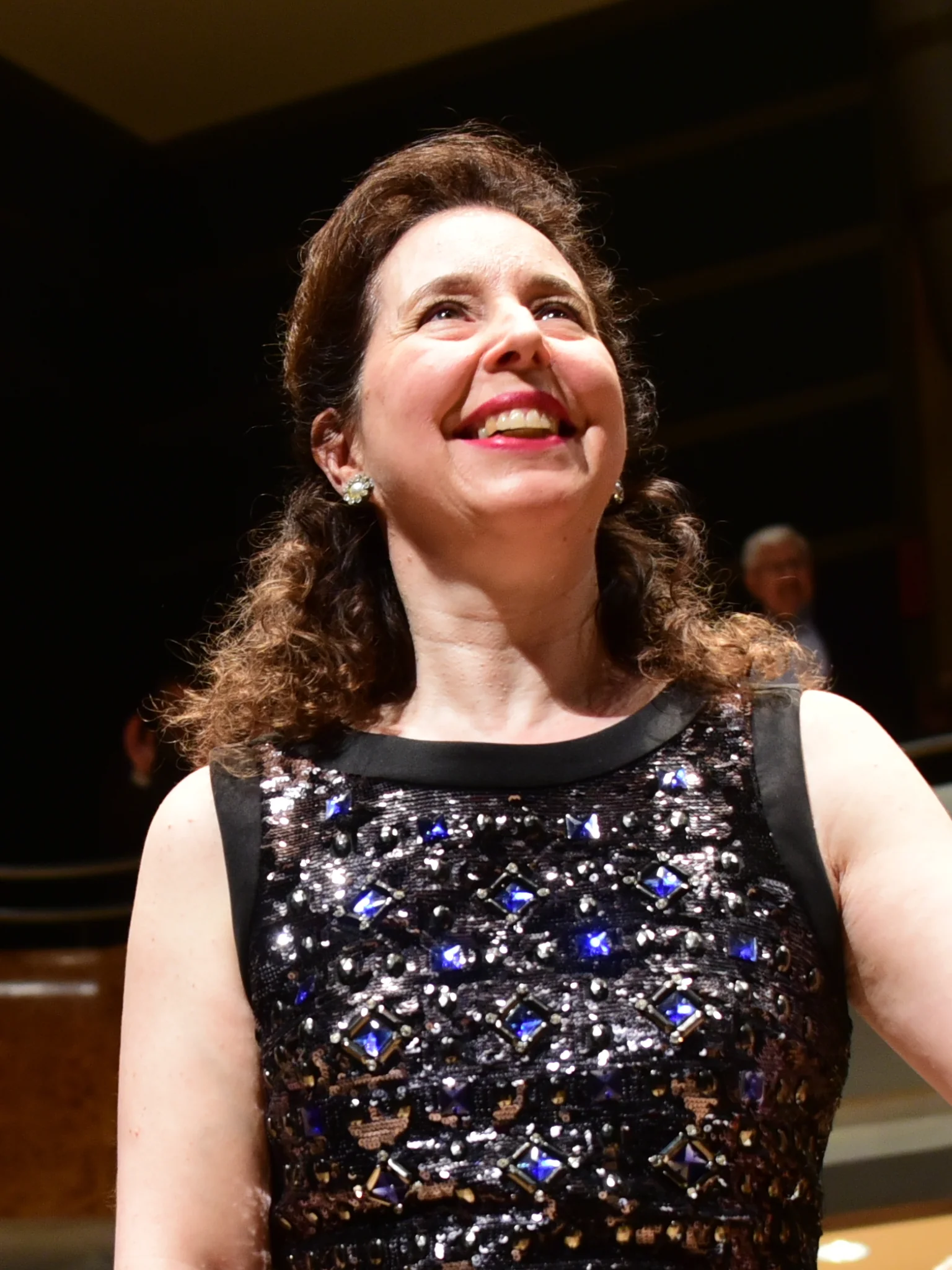
Image from Wikipedia
Image from Wikipedia
Angela Hewitt: The Great Bach Architect of the Piano
A pianist who has created a distinctive art form through clarity, virtuosity, and character
Angela Hewitt is one of the defining personalities in the international piano scene. The Canadian pianist, born in Ottawa in 1958, has carved out a solid place in music history with an exceptionally focused musical career and a rare blend of intellectual transparency, technical sovereignty, and poetic control. Her interpretations of Bach are particularly regarded as a reference worldwide, earning her not only artistic renown but also a loyal, cross-generational audience. ([angelahewitt.com](https://angelahewitt.com/bio/))
Early Shaping: Music as a Way of Life
Hewitt's artistic development began in a musical environment in Ottawa. Her father was an organist and choral director at Christ Church Cathedral, and she started piano lessons at the age of three; by four, she was performing publicly, and at five, she won her first scholarship. Her education also included classical ballet, violin, and recorder, which were formative experiences. This early versatility still explains the elegance of her phrasing and the extraordinary physicality of her playing. ([angelahewitt.com](https://angelahewitt.com/bio/))
After studying at the Royal Conservatory of Music in Toronto and at the University of Ottawa with Jean-Paul Sévilla, she quickly developed into a musician with international aspirations. Even as a teenager, she combined methodical discipline with a finely tuned sense of timbre, articulation, and form. The foundation of her later global career was therefore rooted not only in talent but also in an education that closely linked technique, stylistic awareness, and stylistic versatility. ([angelahewitt.com](https://angelahewitt.com/bio/))
The Breakthrough: Bach as the Key to a Global Career
The international breakthrough came in 1985 with her victory at the Toronto International Bach Piano Competition, held in memory of Glenn Gould. This success marked more than just a competition win: it positioned Angela Hewitt as a specialist in Bach of exceptional rank at the forefront of the concert world. From that point on, her musical career was no longer confined to regional or national successes but gained worldwide prominence. ([angelahewitt.com](https://angelahewitt.com/bio/))
Since then, Hewitt has regularly performed as a soloist in Europe, North and South America, Australia, and Asia. Her stage presence thrives on precision without coldness, on analytical clarity without academic distance. In the repertoire of Johann Sebastian Bach, she achieves a balance that many listeners experience as a rare synthesis of intellect, warmth, and rhythmic elasticity. Therefore, the name Angela Hewitt signifies not only pianistic brilliance but also an independent musical stance. ([angelahewitt.com](https://angelahewitt.com/bio/))
The Bach Discography: A Lifetime Achievement with Reference Status
At the center of Hewitt's discography is her Bach cycle released by Hyperion, which began in 1994 and concluded in 2014 with the recording of The Art of Fugue. The official biography describes this cycle as one of the great recording successes of our time; the accompanying texts on her website also emphasize that her Goldberg Variations and other Bach recordings are among the works she consistently performs in concert worldwide. This consistency makes her interpretation of Bach an ongoing artistic project rather than merely a repertoire focus. ([angelahewitt.com](https://angelahewitt.com/bio/))
Especially the Goldberg Variations showcase how deeply Hewitt intertwines musical structure, dance character, and polyphonic logic. Her recording is described on her website as almost "live"; it also features outstanding reviews from The Guardian and Gramophone that elevate the recording to the status of a reference work. Moreover, her art of slow, controlled unfolding never serves as an end in itself but always supports the inner architecture of the piece. ([angelahewitt.com](https://angelahewitt.com/discography/bach-the-goldberg-variations/))
Other cornerstones of her discography include works by Beethoven, Scarlatti, Couperin, Rameau, Chopin, Schumann, Liszt, Fauré, Debussy, Chabrier, Ravel, Granados, and Messiaen. The official biography explicitly mentions complete Beethoven sonatas as well as concert recordings featuring Bach, Schumann, and Messiaen. This breadth showcases Hewitt as an artist who has never perceived her expertise in Bach as a limitation but as a foundation for a wide-ranging, stylistically reflective pianism. ([angelahewitt.com](https://angelahewitt.com/bio/))
Style and Ideal Sound: Transparency, Dance, and Inner Tension
Angela Hewitt's style is characterized by clarity, controlled articulation, and an extraordinarily nuanced dynamic range. Her interpretations reveal voices from one another without destroying the overarching tension; therein lies her authority as a performer of Bach. Reviews on her official website repeatedly highlight her clarity, her nuances, and her pronounced sense of structure, while BBC Music Magazine praised her Fauré recording for its purity and transparency. ([angelahewitt.com](https://angelahewitt.com/discography/faure-piano-music/))
This aesthetic is also evident beyond the Baroque. In Fauré, Debussy, or Ravel, Hewitt combines richness of color with controlled line; in Beethoven, with structural tension; in Scarlatti, with rhythm and lightness. Her piano playing follows not a superficial mindset but a stylistic ideal that places the composition itself at the forefront. Thus, she belongs to the pianists whose artistic development is measured less by fashionable interpretative trends than by a consistent musical ethos. ([angelahewitt.com](https://angelahewitt.com/discography/faure-piano-music/))
Awards, Authority, and International Recognition
Hewitt's career is closely linked to awards and institutional recognition. According to her official biography, she has won four Juno Awards, was inducted into the Gramophone Hall of Fame in 2015, and received the Bach Medal from the City of Leipzig in 2020 as the first woman in the history of this award. Additional honors include the Wigmore Hall Gold Medal, an OBE, and her appointment as a Companion of the Order of Canada, the highest Canadian distinction. ([angelahewitt.com](https://angelahewitt.com/bio/))
These honors reflect not only popularity but also authority. Hewitt is perceived by orchestras, festivals, and specialized media as a musician of reliable excellence. That she also acts as a jury chairperson, festival director, and lecturer further enhances her status as a shaping figure in the classical music scene. Her expertise thereby extends far beyond the concert format, encompassing mediation, repertoire care, and cultural responsibility. ([angelahewitt.com](https://angelahewitt.com/bio/))
Current Projects: Festival, Tours, and New Repertoire
In recent years, Angela Hewitt remains artistically active at a high level. Her website announces the 21st Trasimeno Music Festival for 2026, which she has directed artistically since 2005. Additionally, the tour calendar lists numerous recitals in Europe and North America, including performances in Heidelberg, Ravenna, Weimar, Stade, and Bonn. This confirms that Hewitt is not operating in the shadow of her past but is actively present in today’s concert scene. ([angelahewitt.com](https://angelahewitt.com/))
Moreover, her ongoing interest in repertoire care and audience engagement is highlighted on her website with her recordings available on Apple Music, Spotify, and Amazon Music, as well as her offering of masterclasses and educational formats. This combination of live concert, recording culture, and pedagogical work grants her musical career a rare breadth and makes her interesting to both listeners and young pianists alike. ([angelahewitt.com](https://angelahewitt.com/))
Cultural Influence: A Pianist Between Tradition and Modernity
Angela Hewitt has significantly shaped the reception of Bach on the modern concert grand. Her recordings are not understood as nostalgic approaches to historical practice but as vibrant, highly musical reinterpretations with a clear focus on textual fidelity, structure, and tonal differentiation. That she also treats works from Mozart to Messiaen and Fauré with the same attention demonstrates her role as a bridge builder between epochs and styles. ([angelahewitt.com](https://angelahewitt.com/bio/))
Her influence also extends into musical education. Through festivals, masterclasses, booklet and CD notes, and her work as a mentor and juror, she imparts a comprehensive understanding of interpretation as both a mental and craft discipline. It is precisely this connection of experience, expertise, and artistic integrity that makes Hewitt an authority whose impact extends far beyond individual recordings. ([angelahewitt.com](https://angelahewitt.com/bio/))
Conclusion: A Pianist of Extraordinary Depth and Charisma
Angela Hewitt fascinates because she never uses virtuosity for its own sake. Her career combines masterful technique, historical sensitivity, stylistic intelligence, and a stage presence that draws strength from calm. Those who listen to her interpretations encounter a musician who takes every detail seriously while never losing sight of the larger context. ([angelahewitt.com](https://angelahewitt.com/bio/))
For this reason, Angela Hewitt remains an artist who should be experienced live. In concert, the unique tension of her musical career unfolds most impressively: in the direct dialogue between work, space, and audience. Those who love piano playing as the art of thinking, feeling, and shaping will find in Angela Hewitt one of the most compelling voices of our time. ([angelahewitt.com](https://angelahewitt.com/))
Official Channels of Angela Hewitt:
- Instagram: No official profile found
- Facebook: https://www.facebook.com/pages/Angela-Hewitt/201013549988366
- YouTube: https://www.youtube.com/watch?list=PLpiMiYZXBVkALXos1Gm8Fc3hE-9MKEd8G&v=6w6VuAnnDdc
- Spotify: No official profile found
- TikTok: No official profile found
Sources:
Upcoming Events
Piano Recital with Angela Hewitt
Experience Angela Hewitt in Bonn. An evening with Mozart, Beethoven, Haydn, Schubert, and Bach awaits you.
Angela Hewitt, Piano
Experience Angela Hewitt, one of the best Bach interpreters, live at the Beethoven House Bonn. An evening with the great masters of classical music.
Angela Hewitt live in Bonn - Beethoven-Haus Bonn/Kammermusiksaal Konzert 2026
Angela Hewitt live at the Beethoven-Haus Bonn: an evening full of clarity, sound depth, and classical elegance. May 7, 2026, tickets from 40 Euros. #Bonn #Classical