
Anne Gastinel
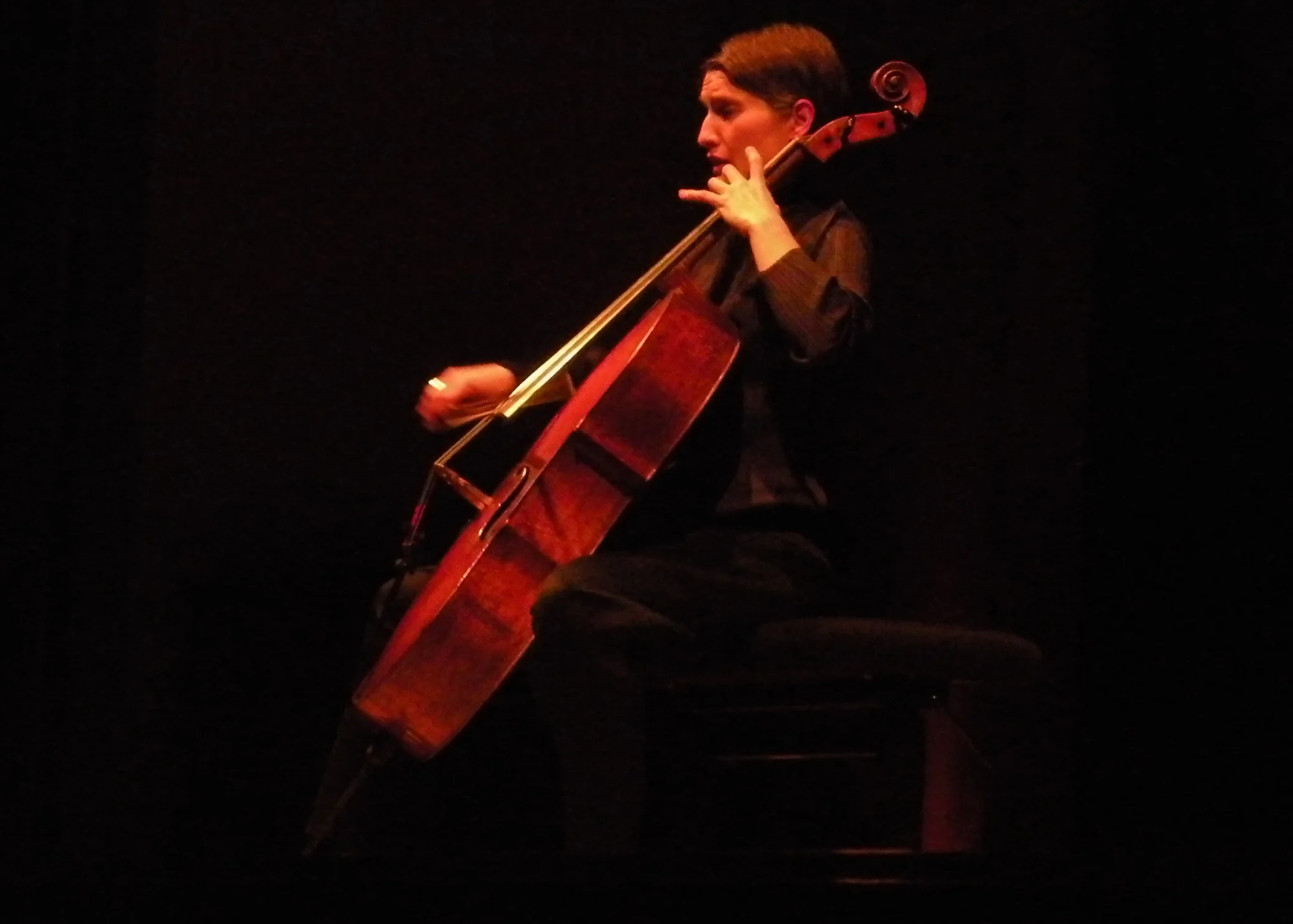
Image from Wikipedia
Image from Wikipedia
Anne Gastinel – The Lyrical Authority of the French Cello
An exceptional cellist between virtuosity, depth, and French sound culture
Anne Gastinel is one of the defining French cellists of her generation. Born on October 14, 1971, in Tassin-la-Demi-Lune near Lyon, she began playing the cello at the age of four and early on displayed the rare combination of technical security, musical maturity, and natural stage presence that characterizes her music career to this day. Her education took her to the prestigious French conservatories; at the same time, she developed artistically in a way that drew international attention early on. (orchestrenationaldebretagne.bzh)
Early Years: A Talent that Quickly Developed from Prodigy to Mature Performer
Anne Gastinel's career did not begin with a slow approach to the spotlight, but rather with remarkable precocity. At just ten years old, she made her television debut in France as a soloist; a year later, she was accepted into the Conservatoire de Lyon, where she won first prize in cello in 1986. Her subsequent studies at the Conservatoire de Paris, along with collaborations with greats such as Yo-Yo Ma, Paul Tortelier, and János Starker, mark a unique biographical path that profoundly shaped her expertise in the classical repertoire. (allmusic.com)
These early successes are not only indicative of an advantageous start but also lay the foundation for an extraordinarily disciplined music career. Winning international competitions, including those in Scheveningen, Prague, and Rostropovich, quickly anchored her name in European concert life. Furthermore, her early visibility on television and competition stages made it clear that Gastinel was not merely seen as a young talent but as an artist with her own profile, sound concept, and a pronounced sensitivity to musical form. (orchestrenationaldebretagne.bzh)
The Breakthrough: International Recognition and the Step into Major Concert Life
By the late 1980s and early 1990s, Anne Gastinel had established herself as a highly sought-after international soloist. She performed across Europe, reached a wider audience in 1990 through the Eurovision competition, and distinguished herself in the following years with a concert presence that extended far beyond the French market. The biography on the pages of La Dolce Volta and the Orchestre national de Bretagne describes her as a musician who quickly became an ambassador for the cello, performing in the most significant halls and festivals around the world. (ladolcevolta.com)
Among her early accolades are the Victoire de la Musique as "Nouveau talent" in 1994, the award for best recording in 2005, and the title of Soloist of the Year in 2006. These awards not only mark stages of a successful career but also attest to the constant quality of her interpretations and discography. Concurrently, she was honored with the rank of Chevalier de l’Ordre national du Mérite, underscoring her significance beyond the immediate concert scene. (orchestrenationaldebretagne.bzh)
Discography: From French Elegance to Beethoven, Bach, and Schubert
Anne Gastinel's discography showcases a remarkable stylistic range. Early on, she released recordings with the Orchestre National de Lyon, including works by Saint-Saëns, Lalo, and Fauré; later, she recorded Brahms, Beethoven, and Schubert, along with Bach, Dvořák, Bloch, Offenbach, and Chopin. This selection highlights her ability to navigate between the great romantic repertoire, French sound language, and the demands of baroque and classical formats with ease. (allmusic.com)
Significant are her chamber music projects with François-Frédéric Guy, Claire Désert, David Grimal, Philippe Cassard, Xavier Phillips, and the Quatuor Hermès. The repertoire includes the Beethoven sonatas and trios, works by Schubert and Schumann, as well as Offenbach's double cello pieces and Chopin arrangements. Critics regularly commend these recordings for their clarity of articulation, the balance between technical prowess and lyrical line, and the convincing inner architecture of her playing. (orchestrenationaldebretagne.bzh)
Style and Sound Aesthetics: Warmth, Precision, and Interpretive Authority
Anne Gastinel's style is repeatedly described in the music press as sonically controlled, technically brilliant, and deeply expressive. AllMusic praises her recordings as powerful, clear, and musically satisfying; ResMusica highlights her "sobere et racé" approach, meaning a controlled, elegant, yet distinctive tone production. This is precisely where the uniqueness of her interpretive art lies: She combines French nobility with analytical sharpness, never losing sight of the formal connection, even in virtuosic passages. (allmusic.com)
Her preferred timbre is not oriented towards effects but aims for controlled projection that keeps the musical phrase transparent. AllMusic characterizes her Bach recording as marked by great tempos, clean technique, and finely modeled intonation; at the same time, her work on tone is acknowledged as nuanced and variable. The fact that she plays on a Testore cello from 1690 fits this profile: a historical instrument, warm core, robust sound, ideal for a repertoire oscillating between intimacy and orchestral brilliance. (allmusic.com)
Current Projects and Artistic Presence until 2025
Even in recent concert seasons, Anne Gastinel remains present and in demand. The Orchestre national de Bretagne points to her role as a professor at CNSMD Lyon since 2003 and at the Jaroussky Academy, where she has taught since 2022. Radio Classique reported her inclusion in the teaching team of the Académie Philippe Jaroussky, highlighting her role as a formative educator for the next generation of cellists. Meanwhile, current concert announcements show that she continues to perform in central chamber music projects. (orchestrenationaldebretagne.bzh)
Projects for 2024 and 2025 primarily focus on trio and chamber music formats, including collaborations with David Grimal and Philippe Cassard, as well as a large-scale cello project as part of Palazzetto Bru Zane and the Philharmonie de Paris. These activities demonstrate an artist whose repertoire strategy emphasizes exchange, repertoire preservation, and collaborative precision. Thus, Gastinel remains not only a soloist but a musician who understands chamber music constellations as an artistic laboratory. (scenenationale-orleans.fr)
Cultural Influence: French School, International Resonance
Anne Gastinel exemplifies the modern French cello school: stylistically aware, sound-cultured, and open to a broad repertoire. Her career connects institutional excellence with international presence, and her recordings have made the romantic and classical core repertoire accessible to a new generation of listeners. The combination of concert activity, teaching, and discographic continuity elevates her to an authority that extends far beyond the status of a soloist within the French classical scene. (ladolcevolta.com)
Additionally, the cultural impact of her collaborations with pianists, violinists, and ensembles is notable. Particularly in chamber music, her playing reveals a special communicative quality: attentive, breathing, and structurally aware. Reviews and concert reports frequently emphasize that she never merely "accompanies" but instead opens musical spaces where form, color, and expression organically come together. This is one of the reasons her discography does not merely seem like a collection of recordings but a cohesive artistic statement. (resmusica.com)
Conclusion: A Cellist Who Perfectly Balances Technique, Style, and Emotional Depth
Anne Gastinel fascinates because she never treats virtuosity as an end in itself but rather as a means to musical truth. Her music career connects early talent, institutional excellence, award-winning discography, and a stage presence grounded in inner peace. For lovers of classical music, she offers not only flawless technique but also a distinctive artistic voice with high interpretive authority. (ladolcevolta.com)
Especially in live performances, the full range of her personality emerges: lyrical intensity, formal clarity, and a sound culture that resonates directly in the concert hall. Anne Gastinel belongs to those musicians whose performances go far beyond the mere reproduction of the score. She invites audiences to experience the cello anew as a narrative, breathing, and profoundly human instrument. (orchestrenationaldebretagne.bzh)
Official Channels of Anne Gastinel:
- Instagram: https://www.instagram.com/anne_gastinel/
- Facebook: no official profile found
- YouTube: https://music.youtube.com/channel/UCJmfS5bA_zudOD9QC-enoKA
- Spotify: https://open.spotify.com/artist/5MODxzUZOCkd6YRLMH5RVC
- TikTok: no official profile found
Sources:
- Wikipedia – Anne Gastinel
- AllMusic – Anne Gastinel, Biography / Discography / Expert Reviews
- AllMusic – Bach: Cello Suites, Review
- Orchestre national de Bretagne – Anne Gastinel
- La Dolce Volta – Anne Gastinel
- naïve Records – Anne Gastinel
- Spotify – Anne Gastinel
- ResMusica – Anne Gastinel impeccable dans Martinů
- ResMusica – Xavier Phillips et Anne Gastinel dans les duos pour deux violoncelles d’Offenbach
- Radio Classique – Académie Philippe Jaroussky
Upcoming Events
7. Symphony Concert – Forces of Nature
Great romanticism, fine sound colors, and nature in tones: The 7th Symphony Concert in Hof promises a strong evening. #Classical
7th Symphony Concert: Forces of Nature with Anne Gastinel
Forces of nature in Hof: Anne Gastinel and David Reiland guide through Mendelssohn, Schumann, and Beethoven. An evening full of sound, space, and emotion. #Classical