
Diogenes Quartett
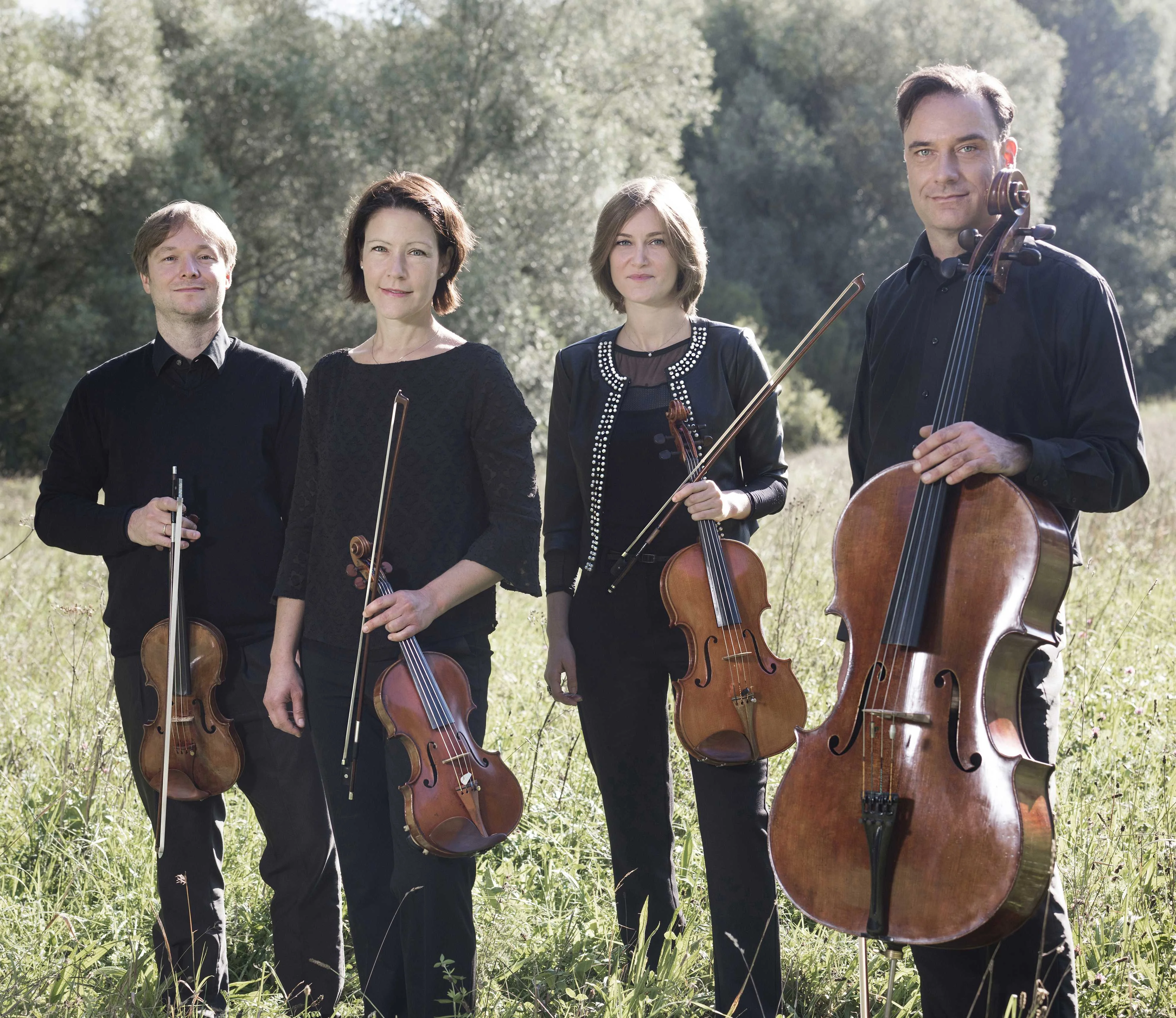
Image from Wikipedia
Image from Wikipedia
Diogenes Quartet – Sound Culture, Exploratory Spirit, and the Art of the String Quartet
A Munich Ensemble with Profile, Depth, and Endurance
The Diogenes Quartet is one of the most distinctive German string quartets of its generation. The ensemble was founded in 1998 and is based in Munich, comprising Stefan Kirpal and Gundula Kirpal (violin), Alba González i Becerra (viola), and Stephen Ristau (cello). This lineup has sustained a musical career for many years, characterized by continuity, stylistic curiosity, and a clear chamber music identity. ([de.wikipedia.org](https://de.wikipedia.org/wiki/Diogenes_Quartett))
What sets the quartet apart is not merely its sheer stage presence, but above all the combination of classical discipline and intellectual curiosity. The name refers to a long-standing friendship with Rudolph C. Bettschart from the Diogenes Publishing House, highlighting the cultural dimension of the ensemble: music as dialogue, as attitude, as a form of lived collaboration. ([de.wikipedia.org](https://de.wikipedia.org/wiki/Diogenes_Quartett))
Biography and Artistic Influence
The Diogenes Quartet received early impulses from members of the Amadeus Quartet and the LaSalle Quartet. These influences represent an aesthetic where sonic transparency, structural precision, and interpretative seriousness play a central role. In its early years, the ensemble thus developed an artistic foundation that goes far beyond routine repertoire maintenance. ([de.wikipedia.org](https://de.wikipedia.org/wiki/Diogenes_Quartett))
Particularly formative was the ensemble's own concert series "rückblicke," which ran from 2000 to 2008 at the Gasteig in Munich. There, the quartet built a broad repertoire, focusing not only on canonical works but also on unknown or forgotten compositions. This early programmatic breadth explains why the ensemble is now perceived not merely as an interpretative quartet but as a musical discovery institution. ([de.wikipedia.org](https://de.wikipedia.org/wiki/Diogenes_Quartett))
Career Path Between Concert Stage and Repertoire Exploration
In over 25 years of concert activity, the Diogenes Quartet has earned a reputation as a highly regarded German string quartet. Regular tours take the Munich ensemble across Europe and as far as Mexico; for the 2025/26 season, a tour of Spain featuring a Beethoven cycle has been announced, which will continue in the following seasons. This planning demonstrates an ensemble that thinks long-term about its artistic development and views major cycles as part of its profile formation. ([schimmer-pr.de](https://www.schimmer-pr.de/en/artists-projects/diogenes-quartet/))
The concert practice also remains versatile. The quartet has performed at festivals such as the Mozartfest Würzburg and the Festival de Radio France et Montpellier; in addition, guest tours to Italy, Spain, Greece, and Mexico are on the calendar. Such stops confirm the ensemble's international reach and connect the classical quartet format with a clear festival and outreach culture. ([in-muenchen.de](https://www.in-muenchen.de/events/diogenes-quartett.html))
Repertoire, Curiosity, and Musical Identity
The repertoire of the Diogenes Quartet spans from classical to romantic to modern works. It is precisely this range that defines the strength of the ensemble: It presents traditional quartet playing not as museum maintenance but as a vibrant engagement with style, structure, and historical sound discourse. The musicians consciously complement well-known repertoire with new and lesser-known works from various eras. ([schimmer-pr.de](https://www.schimmer-pr.de/en/artists-projects/diogenes-quartet/))
This attitude is particularly evident in the ensemble's engagement with Friedrich Gernsheim, a contemporary of Brahms, whose works the quartet has been intensively studying for years. From this research arose a complete recording of his string quartets and quintets on the cpo label; work on this was completed in spring 2025, and the third of a total of four volumes is set to be released in March 2026. Here, interpretative artistry merges with music-historical rediscovery at a level that remains exciting for many listeners and experts alike. ([schimmer-pr.de](https://www.schimmer-pr.de/en/artists-projects/diogenes-quartet/))
Discography: From Schubert to Gernsheim
The discography of the Diogenes Quartet is extensive and stylistically diverse. The chronological list on Wikipedia features early recordings with Haydn and Dohnányi, Mozart, Humperdinck, and Brahms, as well as recordings of Onslow and Cherubini, Joseph Haas and Egon Kornauth, as well as Friedrich Gernsheim, Franz Schubert, Friedrich Ernst Fesca, and other composers. This selection showcases an ensemble that cannot be reduced to a narrow repertoire profile but consciously explores chamber music landscapes. ([de.wikipedia.org](https://de.wikipedia.org/wiki/Diogenes_Quartett))
Noteworthy among the highlighted recordings is the complete recording of all string quartets by Franz Schubert, which has been highly praised in professional circles. Also significant is the recording of the complete string quartets by Max Bruch, which includes the long-lost and rediscovered string quartet in C minor from 1852, premiered by the musicians in Frankfurt in 2014. In this way, the quartet combines discographic authority with editorial and interpretative exploration. ([de.wikipedia.org](https://de.wikipedia.org/wiki/Diogenes_Quartett))
Current Projects and Releases
Currently, the Diogenes Quartet is focusing strongly on Friedrich Gernsheim. The current concert and project communication points to the completion of the full recording of his string quartets and quintets, with the fourth and final part scheduled for 2026. Additionally, in March 2020, a CD featuring works by Max Reger was released, including the string sextet in F major, Op. 118 and the clarinet quintet in A major, Op. 146, in collaboration with other instrumentalists. ([schimmer-pr.de](https://www.schimmer-pr.de/en/artists-projects/diogenes-quartet/))
Outreach also remains part of the quartet's present. The official website mentions internationally-oriented chamber music courses in Nußdorf am Inn, as well as a continued engagement with Gernsheim in 2025. Such projects demonstrate that the ensemble is not only present in recordings and concert stages but also works pedagogically and curatorially. ([diogenes-quartett.de](https://diogenes-quartett.de/news/?lang=en&utm_source=openai))
Style, Sound Language, and Artistic Attitude
The Diogenes Quartet thinks of chamber music as a balance between architectural clarity and emotional density. The sound is undoubtedly characterized in the best sense by classical ensemble culture: precisely intonated, transparently led, and oriented towards a shared phrasal breathing. The repeated engagement with Schubert, Bruch, and Gernsheim also shows that the quartet prefers music in which formal awareness and lyrical tension meet directly. ([de.wikipedia.org](https://de.wikipedia.org/wiki/Diogenes_Quartett))
Moreover, there is a clear openness to contemporary and unusual concert formats. The press describes, for instance, a crossover project with the Max Grosch Jazz Quartet, and the ensemble has also established programs with children, workshop concerts, and chamber music workshops. This blend of tradition-conscious interpretation and contemporary communication is an essential part of the quartet's artistic identity. ([in-muenchen.de](https://www.in-muenchen.de/events/diogenes-quartett.html))
Cultural Influence, Awards, and Reception
The response to the Diogenes Quartet is closely linked with professional press, festival presence, and repertoire policy. In concert announcements and PR materials, the ensemble is referred to as one of the most renowned German string quartets; additionally, a favorable stance from the Süddeutsche Zeitung is cited, describing the gathering of the four musicians as a stroke of luck. Such attributions clarify that the quartet not only impresses technically but is also perceived as an artistic unit. ([schimmer-pr.de](https://www.schimmer-pr.de/en/artists-projects/diogenes-quartet/))
Among the publicly highlighted successes is the nomination of a Reger release for the International Classical Music Awards 2021, along with a long list of CD recommendations and positive reviews in classical-related media. Taken together, this creates an image of an ensemble that derives its authority not from marketing but from depth of repertoire, recording quality, and continuous work on substance. ([diogenes-quartett.de](https://diogenes-quartett.de/news/?lang=en&utm_source=openai))
Commitment to Youth and Social Responsibility
The Diogenes Quartet sees its role not only as a performing ensemble but also as a cultural mediation instance. Chamber music workshops, workshop concerts, and special programs for children and young people have long been part of the quartet's practice. Since 2015, the musicians have also committed themselves as ambassadors for SOS Children's Village, adding a social and humanitarian dimension to their artistic work. ([de.wikipedia.org](https://de.wikipedia.org/wiki/Diogenes_Quartett))
This mix of pedagogical ambition, artistic reliability, and curiosity about repertoire history makes the ensemble exciting for music lovers. Those who listen to the Diogenes Quartet experience not just a mere quartet performance but a thoughtful musical narrative where every voice counts and every work appears as part of a larger cultural context. ([de.wikipedia.org](https://de.wikipedia.org/wiki/Diogenes_Quartett))
Conclusion: Why the Diogenes Quartet Remains Relevant Today
The Diogenes Quartet is exciting because it understands the string quartet as a living art form: historically informed, sonically demanding, and curious about repertoire beyond the obvious. Between Schubert, Bruch, Gernsheim, and Reger, the ensemble unfolds a musical career characterized by depth, consistency, and a spirit of discovery. Those seeking chamber music excellence and interpretative substance will find here an ensemble with an unmistakable profile. ([de.wikipedia.org](https://de.wikipedia.org/wiki/Diogenes_Quartett))
Especially live, this quartet exerts its full power: in the precision of ensemble playing, in the tension of musical development, and in the presence of an ensemble that takes every work seriously. A concert with the Diogenes Quartet is an invitation to experience the art of the string quartet as contemporary music in the best sense. ([schimmer-pr.de](https://www.schimmer-pr.de/en/artists-projects/diogenes-quartet/))
Official Channels of the Diogenes Quartet:
- Instagram: https://www.instagram.com/diogenes_quartett/
- Facebook: https://www.facebook.com/profile.php?id=100082859618510
- YouTube: no official profile found
- Spotify: no official profile found
- TikTok: no official profile found
Sources:
- Wikipedia - Diogenes Quartet
- Schimmer PR - Diogenes Quartet
- Schimmer PR - Diogenes Quartet – String Quartets No 1 & 3 by Friedrich Gernsheim
- Diogenes Quartet - Contact
- Diogenes Quartet - News
- inMünchen - Diogenes Quartet in Munich
- Cultural Association - Program Book 2025/26
- Apple Music Classical - Gernsheim: String Quartets, Vol. 1
Upcoming Events
The Munich Violin Days 2026 – Opening Concert
Celebrate the start of the Munich Violin Days with the Diogenes Quartet. An evening full of classical music awaits you on April 30 in Munich.
Opening Concert - Diogenes Quartet
A great evening for chamber music in Munich: The Diogenes Quartet opens the Munich Violin Days in the Mars-Venus Hall. Haydn, Beethoven, Brahms. #Classical
Diogenes Quartet live in Weiden - Old Town Hall Concert 2026
An evening full of chamber music and historic atmosphere: The Diogenes Quartet is visiting the Old Town Hall in Weiden. Mark your calendar now! #Concert
Diogenes Quartet: Kössler Meets Regemer
Chamber Music with Goosebumps: The Diogenes Quartet makes Weiden resonate at the Old Town Hall. Historic ambience, fine timbres, great proximity. #Weiden #ChamberMusic
Diogenes Quartet: Kößler Meets Reger in Weiden
Chamber music with special radiance in Weiden: The Diogenes Quartet meets strong guests at the Old Town Hall. An evening full of sound and history. #ChamberMusic