
Hille Perl
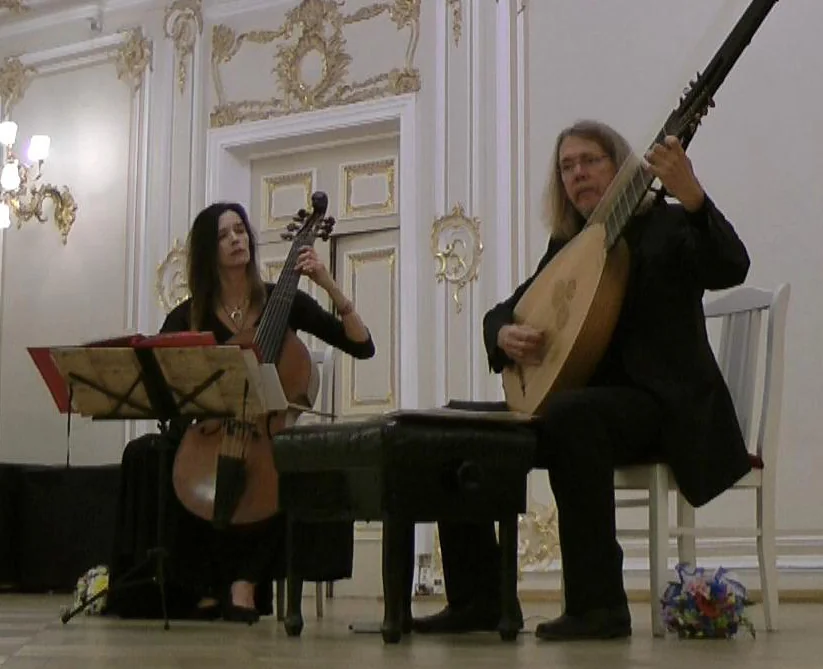
Image from Wikipedia
Image from Wikipedia
Hille Perl – The Great Master of the Viola da Gamba Between Historical Performance Practice and Vibrant Present
An internationally renowned gambist who makes early music resonate with personality, intensity, and stylistic depth
Hille Perl, whose full name is Hildegard Perl, is one of the defining figures in German early music and is internationally recognized as one of the foremost interpreters of the viola da gamba. Born in 1965 in Bremen, she grew up in a musically rich environment and developed a deep connection to the gamben family from an early age. Her artistic profile combines historical performance practice with a rare blend of expressiveness, tonal discipline, and improvisational freedom. ([de.wikipedia.org](https://de.wikipedia.org/wiki/Hille_Perl))
What makes her music career remarkable is the combination of international concert activity, pedagogical authority, and a consistent stylistic signature. Perl embodies not just virtuosity but also a lively and breathing interpretation of the repertoire from the 17th and 18th centuries. This is where her charisma lies: she transforms the viola da gamba from a museum instrument into a relevant medium for musical communication. ([hfk-bremen.de](https://www.hfk-bremen.de/en/person/hille-perl/145))
Early Influences: Bremen, Family, and the Path to the Gamba
Musical heritage played a central role in Hille Perl's development. She is the daughter of musicologist, harpsichordist, and organist Helmut Perl; she began her viola da gamba lessons at the age of five. Initially, she was taught by Niklas Trüstedt in Berlin, later studying with Pere Ros and Ingrid Stampa in Hamburg, culminating in her graduation from the Academy for Early Music in Bremen with Jaap ter Linden and Sarah Cunningham. Master classes with Wieland Kuijken and Jordi Savall rounded out her early education. ([de.wikipedia.org](https://de.wikipedia.org/wiki/Hille_Perl))
This biographical line is crucial to her artistic self-understanding. Perl is not a musician who turned to the historical repertoire later in life; she was educated in its language and has refined it over decades. This has resulted in a sovereign mastery of stylistic nuances, ornamentation, expression, and tonal discourse that continues to characterize her interpretations today. ([de.wikipedia.org](https://de.wikipedia.org/wiki/Hille_Perl))
Career and Breakthrough: Concert Tours, Ensembles, and International Presence
Perl's career developed from Bremen into the international early music scene. She has performed with renowned ensembles such as the Freiburg Baroque Orchestra and the Balthasar-Neumann-Ensemble, appeared as a soloist, and collaborated in a duo with Lee Santana, her husband and long-time musical partner. Since 1984, they have shared an artistic collaboration that has manifested in numerous projects, recordings, and concert formats. ([de.wikipedia.org](https://de.wikipedia.org/wiki/Hille_Perl))
A significant milestone was the founding of the ensemble Los Otros in 2001, together with Lee Santana and Steve Player. This trio developed an open, chamber music concept based on improvisation, spontaneity, and strong personal chemistry. The group embarked on numerous national and international tours, adding a vibrant, almost theatrical dimension to Perl's music-making. ([de.wikipedia.org](https://de.wikipedia.org/wiki/Hille_Perl))
Her duo work with Santana and her participation in projects such as The Sirius Viols, Why Not Here, The Age Of Passions, and the Baroque Trio demonstrate the breadth of her artistic field. Rather than confining herself to a narrow solo repertoire, Perl moves within ensemble structures that connect continuo culture, chamber music, and historical color with contemporary musicality. This versatility is one of the hallmarks of her stage presence. ([de.wikipedia.org](https://de.wikipedia.org/wiki/Hille_Perl))
Musical Development: Sound, Improvisation, and Interpretative Signature
Hille Perl's playing is characterized by tonal control and striking expressiveness. Critics repeatedly highlight her "virtuosic playing," which combines passion, seriousness, and lightness, as well as her talent for improvisation. This is particularly critical in early music: Perl thinks not only in terms of notation but also in rhetorical gestures, arcs of tension, and colorful articulations. ([de.wikipedia.org](https://de.wikipedia.org/wiki/Hille_Perl))
Her interpretative strength lies in connecting historical knowledge with immediate impact. Whether performing French viola da gamba repertoire, arrangements of Bach, Italian improvisation practices from around 1600, or Baroque concert literature: Perl shapes each score into its own musical narrative. In doing so, her tonal language remains transparent, physical, and elegant without ever appearing academic. ([hfk-bremen.de](https://www.hfk-bremen.de/en/person/hille-perl/145))
Discography: Important Recordings and Artistic Milestones
Perl's discography documents an exceptionally consistent engagement with the repertoire of the viola da gamba and the early Baroque soundscape. Notable early releases include Sainte-Colombe – Retrouvé & Changé (1997), …per la viola da gamba… (1999), and Doulce Memoire (2000). These recordings not only showcase technical sovereignty but also her intent to present the instrument as a vehicle for profound differentiation. ([de.wikipedia.org](https://de.wikipedia.org/wiki/Hille_Perl))
Later, significant recordings followed, including The Star and the Sea with Lee Santana, Tinto with Lee Santana and Steve Player, Marin Marais – Pour la Violle et le Théorbe, Telemann Concertos for Viola da Gamba with the Freiburg Baroque Orchestra, Marais – Les Voix Humaines, Dowland – In darkness let me dwell, and Biber – Rosenkranzsonaten. These releases reflect an artistic trajectory that ranges from solo concentration to dialogic ensemble formats. ([de.wikipedia.org](https://de.wikipedia.org/wiki/Hille_Perl))
Her activities with labels such as Deutsche Harmonia Mundi, Sony BMG, Carpe Diem Records, Harmonia Mundi, and Coviello Classics underscore the wide-ranging impact of her work. The combination of repertoire maintenance, recording aesthetics, and label continuity has permanently established Hille Perl in the field of early music. Her discography thus functions not only as a catalogue of works but also as a resonant biography. ([de.wikipedia.org](https://de.wikipedia.org/wiki/Hille_Perl))
Awards, Recognition, and Cultural Authority
Experts have repeatedly recognized Hille Perl's achievements. In 2001, she received the ECHO Klassik award as "Instrumentalist of the Year" for Doulce Memoire, followed by further ECHO Klassik awards, including in 2008 and 2011 in the category of chamber music recordings for ensembles of the 17th and 18th centuries. In 2012, she was also awarded the Prize of the German Record Critics for the 2011 production Biber – Rosenkranzsonaten. ([de.wikipedia.org](https://de.wikipedia.org/wiki/Hille_Perl))
These awards represent more than mere decorative milestones. They affirm the authority of a musician who not only performs historical performance practice but actively shapes it. That her work is also acknowledged on an academic level is evidenced by her professorship at the Bremen University of the Arts as well as her role as deputy rector from 2005 to 2007 and 2015 to 2017. ([de.wikipedia.org](https://de.wikipedia.org/wiki/Hille_Perl))
Teaching, Responsibility, and Presence at the Bremen University of the Arts
Since 2002, Hille Perl has taught viola da gamba at the Bremen University of the Arts, shaping an entire generation of young musicians. Her teaching encompasses solo repertoire, improvisation classes, gamba consort, chamber music, project work, and collaboration with guest lecturers. In doing so, she places emphasis on professionalism, independence, and artistic presence – precisely the skills that are indispensable in today's concert life. ([hfk-bremen.de](https://www.hfk-bremen.de/en/person/hille-perl/145))
Currently, her role as a professor is visibly active. HfK events from 2025 and 2026 repeatedly mention the "Class of Prof. Hille Perl," documenting her ongoing pedagogical presence. This connection between stage and university is essential to her profile: Perl is not only an interpreter but also a mediator of a musical culture based on exchange, style consciousness, and craftsmanship excellence. ([hfk-bremen.de](https://www.hfk-bremen.de/de/veranstaltungen/a-new-year-s-gift-klasse-prof-hille-perl/14524?utm_source=openai))
Current Projects and Artistic Presence
Although there is no large-scale current album campaign indicated for 2024 or 2025 in the sources reviewed here, Hille Perl remains musically active. Official information points to ongoing concert activities, teaching at the HfK Bremen, and projects surrounding her ensembles and partners. Her website features sections for News, Concerts, Teaching, Recordings, Projects, and Media, confirming the continuous nurture of her artistic endeavors. ([hillenet.net](https://www.hillenet.net/contact))
Furthermore, concert agencies and label sites show that Perl remains anchored within the professional concert scene and continues her work with Lee Santana and other long-time collaborators. This continuity makes her highly present in the field: Hille Perl stands for a lively understanding of early music as a contemporary art form. ([test-dhm.sonyclassical.de](https://test-dhm.sonyclassical.de/kuenstler/artist-products/los-otros))
Cultural Influence: Why Hille Perl Remains Important
Hille Perl has made concert viola da gamba music visible in Germany and far beyond. Her influence lies not just in her technical prowess but in the way she has brought the viola da gamba to an audience beyond specialized circles. The wide resonance she has generated in an artistic niche speaks to her authority, charisma, and stylistic consistency. ([de.wikipedia.org](https://de.wikipedia.org/wiki/Hille_Perl))
Additionally, her role as a mediator of a historical sound language, which she always understands as a living process, is significant. Through concerts, recordings, teaching, and ensemble work, she creates cultural connections between centuries, countries, and musical contexts. This is where the lasting value of her music career lies: she shapes historical music not as a retrospective but as an intense, present-day experience. ([hfk-bremen.de](https://www.hfk-bremen.de/en/person/hille-perl/145))
Hille Perl captivates because she unites virtuosity, knowledge, and emotional depth in a rare balance. Those who experience her concerts encounter an artist who imbues early music with personality and poetic precision. A live experience with Hille Perl not only provides access to the world of the viola da gamba but also to a musician who transports the audience into another time with every phrase while simultaneously anchoring them in the present. ([de.wikipedia.org](https://de.wikipedia.org/wiki/Hille_Perl))
Official Channels of Hille Perl:
- Instagram: No official profile found
- Facebook: No official profile found
- YouTube: No official profile found
- Spotify: https://open.spotify.com/artist/5UvF2ZchjgelXllCgQiLUU
- TikTok: No official profile found