
Ian Bostridge
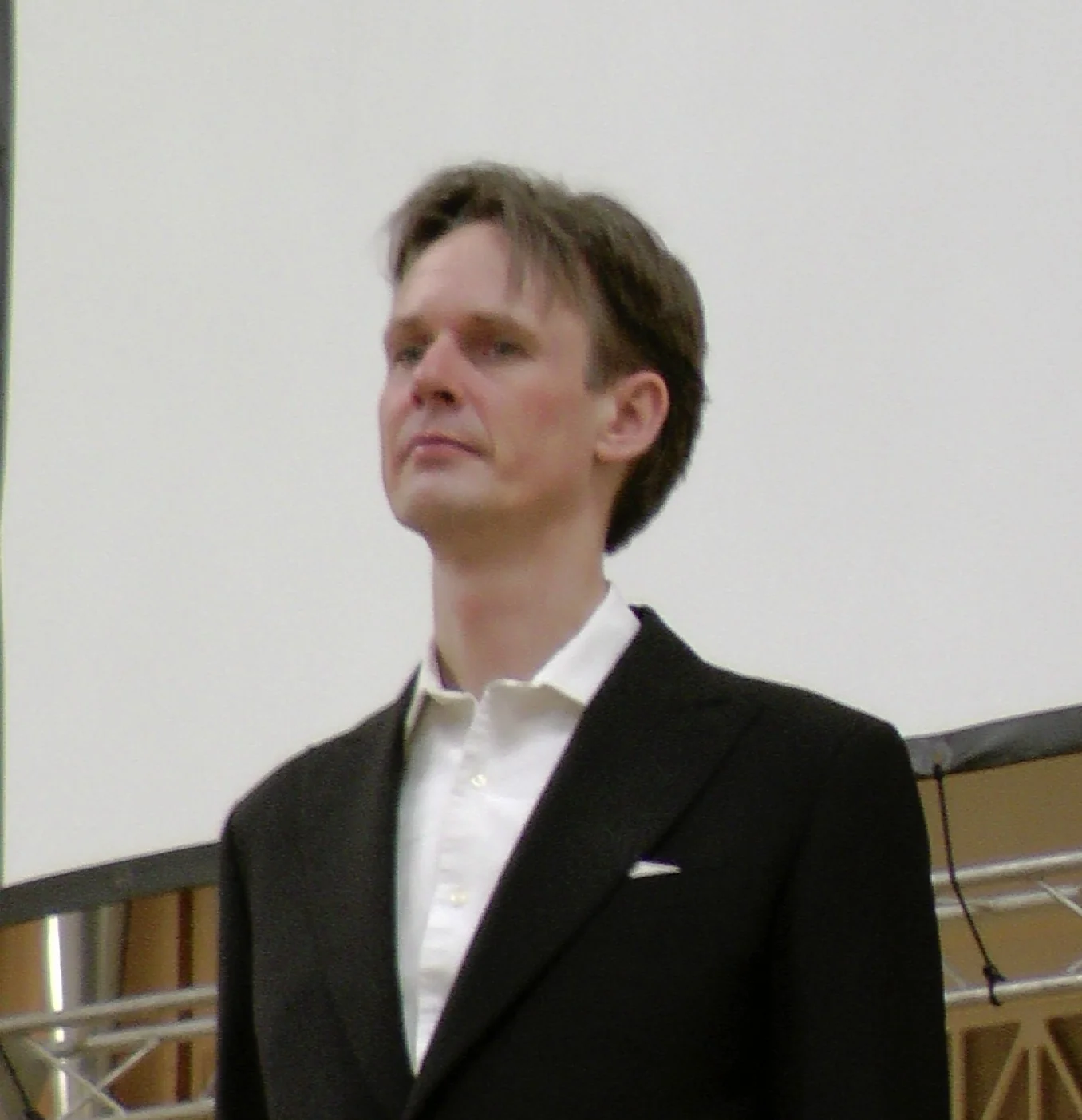
Image from Wikipedia
Image from Wikipedia
Ian Bostridge – the British tenor navigating song art, opera, and intellectual depth
An exceptional tenor making art song resonate anew
Ian Bostridge is one of the most distinctive British tenors of his generation. Born on December 25, 1964, in London, he combines an international music career with an unusual academic background and a stage presence rooted in textual interpretation, tonal precision, and dramatic intelligence. His career has taken him from a historian's path at Oxford to the major concert and opera stages around the world, where he has earned an excellent reputation, particularly in German song, with composers like Schubert, Schumann, Britten, and the expanded repertoire of the 20th century. (warnerclassics.com)
Biography: From Oxford scholar to globally sought-after singer
Before his breakthrough as a singer, Bostridge studied history and philosophy at Oxford and earned his doctorate; he subsequently taught history and political theory before fully dedicating himself to singing. Key to this transition were early competition successes, including finalist positions at the Kathleen Ferrier and Richard Tauber Competitions and winning the National Federation of Music Societies/Esso Award in 1991. These milestones marked the moment when a highly gifted academic transformed into a professional tenor with a clear artistic vision. (open.spotify.com)
His public debut at London’s Wigmore Hall in 1993 and his Aldeburgh Festival debut in 1994 are regarded as early markers in a career that rapidly gained prominence. In the following years, Bostridge developed into an interpreter who does not merely produce notes but reveals meaning in every phrase. His closeness to the music of Benjamin Britten has profoundly shaped his artistic self-understanding; simultaneously, Schubert remained the center of his song repertoire, particularly with the famous Winterreise cycle. (warnerclassics.com)
Career: International recital culture and character-driven opera roles
Bostridge’s international recital career has taken him to festivals in Salzburg, Edinburgh, Munich, Vienna, Aldeburgh, and Schwarzenberg, as well as to the main stages of Carnegie Hall and La Scala in Milan. He has been an Artist in Residence at institutions such as the Vienna Konzerthaus, the Schwarzenberg Schubertiade, Carnegie Hall, the Barbican, and Wigmore Hall. This presence in the centers of classical music underscores his status as a world artist who does not view art song as a niche, but rather as a highly relevant form of musical storytelling. (warnerclassics.com)
His versatility is also evident in opera. His roles include Tamino in Die Zauberflöte, Jupiter in Semele, Peter Quint in The Turn of the Screw, Don Ottavio in Don Giovanni, Caliban in Thomas Adès’ The Tempest, Lysander in A Midsummer Night’s Dream, and Aschenbach in Death in Venice. He has additionally performed at houses such as the Royal Opera, the English National Opera, the Bayerische Staatsoper, the Wiener Staatsoper, and Opera Australia. Thus, Bostridge is not only a song singer but an opera tenor who prioritizes psychological nuance over vocal effects. (warnerclassics.com)
Discography: Schubert, Britten, Schumann, and the 20th century
Ian Bostridge's discography is stylistically broad yet clearly defined. Among his defining recordings are Schubert's songs and major song cycles, Schumann's Liederkreis and Dichterliebe, Britten's The Turn of the Screw and Billy Budd, Janáček with Thomas Adès, Bach cantatas, Handel arias, Monteverdi’s Orfeo, and Adès’ The Tempest. Warner Classics emphasizes that his recordings have won all major international recording awards and garnered 14 Grammy nominations. (warnerclassics.com)
His connection to Schubert is particularly strong. Reference recordings include Die schöne Müllerin, Winterreise, and Schwanengesang, which consistently appear as the core of his artistic profile. The current publication landscape shows that this thread continues: In February 2025, Twilight Schumann Songs, with pianist Saskia Giorgini, was released on Pentatone. This release seamlessly fits into Bostridge's lifelong work on song as a literary-musical art form. (music.apple.com)
The 2024/2025 season remains active and productive. For 2025, recital performances with Julius Drake are scheduled, including at the Shriver Hall Concert Series in Baltimore, featuring a program centered around Shakespeare and Britten's Holy Sonnets. Concurrently, current label and streaming sites show that Bostridge continues to be a sought-after interpreter with ongoing releases and concert dates. His career does not dwell in nostalgia, but rather persists in a constant present. (musicalamerica.com)
Style and artistic signature
What makes Bostridge unique is the combination of a lean, lyric tenor voice and a radically text-oriented interpretive approach. Warner Classics describes him as a highly independent artist whose fundamentally lyrical voice achieves dramatic effect. Reviews in the music press emphasize his ability to merge words, phrasing, and timbre in such a way that each song becomes a psychological miniature. (warnerclassics.com)
This interpretation is particularly evident in Schubert and Britten. With Schubert, Bostridge is less concerned with mere beauty than with the inner tension between poem, harmony, and affect; with Britten, he is fascinated by the proximity of language, identity, and musical structure. His books Schubert’s Winter Journey: Anatomy of an Obsession and Song and Self demonstrate that as a singer and author, he grapples with the same questions: How does music think? How does a text speak in sound? How does authenticity arise on stage? (ram.ac.uk)
Critical reception and cultural impact
The reception of Ian Bostridge has been extraordinarily consistent. In the music press, he is described as one of the leading Schubert tenors of his generation; at the same time, newspapers such as The Guardian, The New York Times, and the Financial Times have lauded his clarity, expressiveness, and intellectual sharpness. Being perceived not only as an interpreter but also as an author and academic thinker has further solidified his status in the world of classical music. (warnerclassics.com)
His cultural impact extends beyond mere performance practice. Bostridge embodies an artistic image that does not separate scholarship, repertoire awareness, and stage presence but intertwines them productively. His essays and books have sharpened the understanding of art song in the 21st century, while his recordings serve as an entry point into Schubert, Britten, and Schumann for many listeners. This is precisely where his radiance lies: he combines musicological authority with immediate emotional effect. (ram.ac.uk)
Current projects, recordings, and awards
Among his recent activities are the 2025 release of the recording Twilight Schumann Songs and an extensive concert program with Julius Drake, featuring Shakespeare settings and Britten's Holy Sonnets. Warner Classics also documents recent and thematically significant releases such as Tormento d’amore, Beethoven Songs and Folksongs, Shakespeare Songs, and other stages of a repertoire that connects historical depth with contemporary relevance. Consequently, Bostridge remains an artist whose work is simultaneously archival, interpretative, and current. (music.apple.com)
The list of awards confirms this status. His recordings have received Gramophone Awards, a Grammy Award, and other international prizes; he has also been appointed Commander of the Order of the British Empire. For a singer whose art relies so heavily on nuance, this record is more than mere decoration: it documents an extraordinarily stable and permanently relevant music career. (warnerclassics.com)
Conclusion: Why Ian Bostridge remains so exciting today
Ian Bostridge is exciting because he treats art song not as a museum artifact, but as a living, intellectually charged contemporary art. His interpretations of Schubert, Britten, Schumann, and the modern repertoire are substantial, daring, and demonstrate a rare sensitivity to language. Anyone wishing to experience how a tenor fills the space not with volume, but with meaning, should definitely hear Ian Bostridge live. (warnerclassics.com)
Official channels of Ian Bostridge:
- Instagram: no official profile found
- Facebook: no official profile found
- YouTube: https://www.youtube.com/channel/UCNPmfWOwyjBhns0cBOT34SA
- Spotify: https://open.spotify.com/artist/0QVlaFCrge4YWt0yftF8FE
- TikTok: no official profile found
Sources:
- Warner Classics – Ian Bostridge
- Warner Classics – News on Ian Bostridge
- Apple Music – Twilight Schumann Songs
- Spotify – Ian Bostridge
- YouTube – Ian Bostridge
- Musical America – Shriver Hall Concert Series Presents March Concerts Feat. Ian Bostridge, Leif Ove Andsnes & Ivalas Quartet
- AllMusic – Ian Bostridge Biography & Discography
- Wikipedia: Image and text source