
Jacques Offenbach
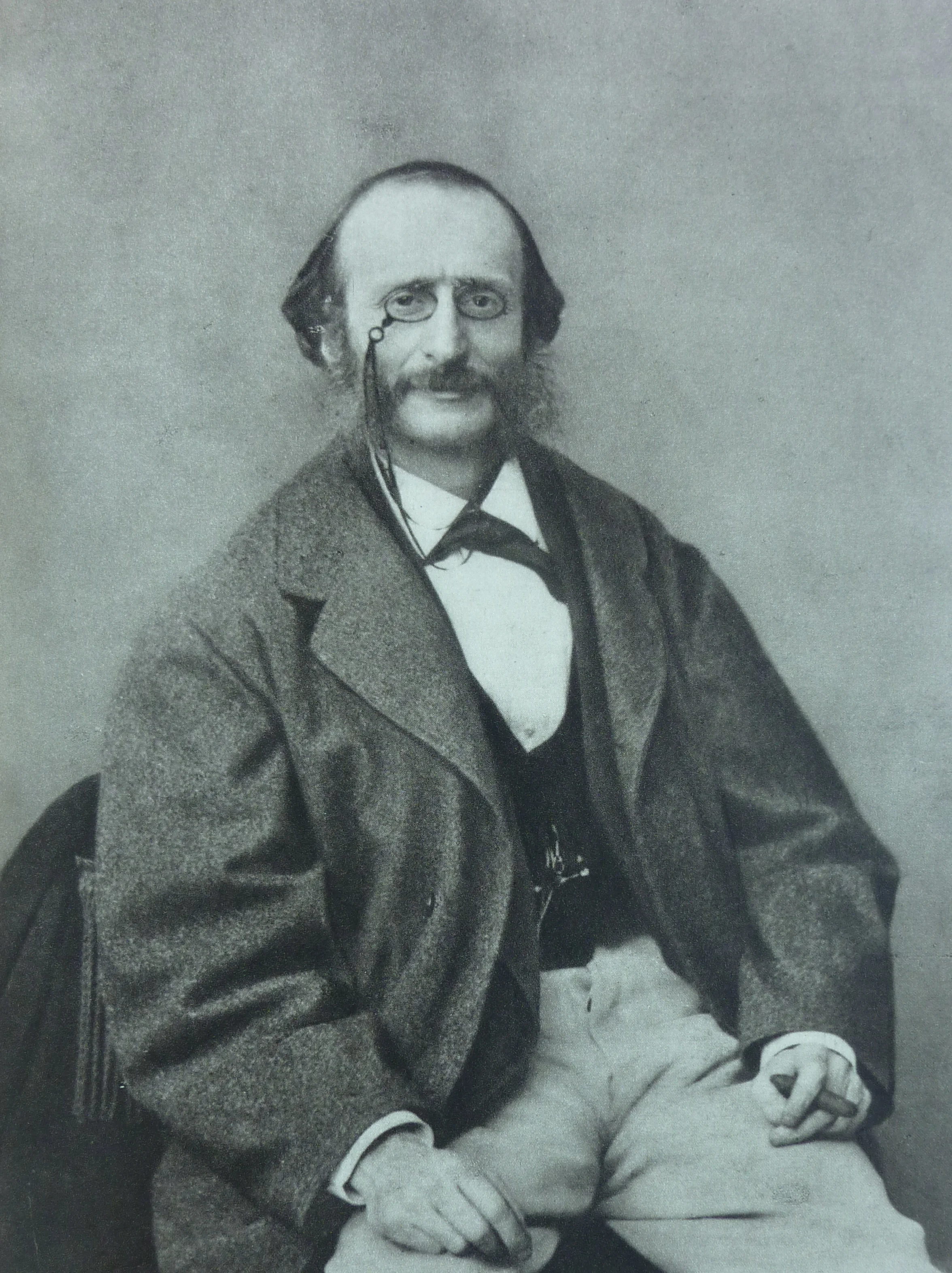
Image from Wikipedia
Image from Wikipedia
Jacques Offenbach – The Inventor of Operetta and Master of Musical Satire
A Composer Who Changed the Stage of Europe
Jakob “Jacques” Offenbach, born on June 20, 1819, in Cologne and died on October 5, 1880, in Paris, is one of the most influential figures in European music theater. The German-French composer and cellist is regarded as the founder of modern operetta and as an artist who transformed wit, elegance, and satirical sharpness into a new form of musical theater. Among his most famous works are the Cancan dance number from Orpheus in the Underworld and the Barcarolle from Hoffmann’s Tales. ([britannica.com](https://www.britannica.com/biography/Jacques-Offenbach?utm_source=openai))
Offenbach's career represents mobility, virtuosity, and a fine sense of the zeitgeist. Early on, he combined instrumental brilliance with theatrical instinct and developed a distinctive artistic language in Paris that entertained as well as provoked the audience. His music was immediate, pointed, and simultaneously sophisticated, which is why it remains present in the repertoire to this day. ([deutschegrammophon.com](https://www.deutschegrammophon.com/de/komponist-innen/jacques-offenbach/biografie?utm_source=openai))
From Cologne to Paris: The Early Years of a Musical Prodigy
Offenbach was born in Cologne to the son of a cantor and received musical encouragement early on. Biographical sources describe that he played music as a child and performed with his family in Cologne before moving to Paris as a teenager in 1833 to continue his career. This change of location profoundly shaped his identity: the Rhineland up-and-coming musician became a composer who artistically conquered the French capital. ([opera-online.com](https://www.opera-online.com/fr/articles/les-contes-dhoffmann-une-apotheose-ou-un-renouveau?utm_source=openai))
In Paris, Offenbach found the ideal environment for his music career. He moved in salons, worked as a cellist, and gradually built a reputation as a musician with a strong stage presence. His recognition not only as a composer but also as an instrumentalist early on granted him credibility and artistic authority. ([deutschegrammophon.com](https://www.deutschegrammophon.com/en/composers/jacques-offenbach/biography?utm_source=openai))
The Breakthrough with the Operetta
Offenbach achieved his actual breakthrough with the establishment of operetta as an independent genre. Deutsche Grammophon explicitly describes him as the “inventor of operetta,” and Britannica emphasizes his role as a central figure in the development of this form. Offenbach’s works combined melodic catchiness with pointed social satire, and it was precisely this mixture that made his style so innovative. ([deutschegrammophon.com](https://www.deutschegrammophon.com/de/komponist-innen/jacques-offenbach/biografie?utm_source=openai))
Works like Orpheus in the Underworld demonstrated how radically Offenbach broke traditional music theater. The famous Cancan became a sounding symbol of irony, tempo, and urban life, while the opera as a whole caricatured bourgeois conventions and courtly forms. His operettas tackled social patterns without losing their musical substance. ([deutschegrammophon.com](https://www.deutschegrammophon.com/de/komponist-innen/jacques-offenbach/biografie?utm_source=openai))
Composition, Satire, and Parisian Elegance
Offenbach’s hallmark lies in precision in arrangement, sharply drawn rhythms, and comedic intensity that never remains merely decorative. His works are viewed as critically insightful concerning the habits of the time of Napoleon III; at the same time, they maintain lightness and melodic brilliance. This combination of entertainment and social commentary made Offenbach a musical chronicler of the Second Empire. ([deutschegrammophon.com](https://www.deutschegrammophon.com/de/komponist-innen/jacques-offenbach/biografie?utm_source=openai))
With the end of the Second Empire, Offenbach faced difficulties for a time due to a shift in the tastes of the Paris audience, and his proximity to imperial culture became problematic. Nevertheless, his artistic strength remained unbroken. This tension between popularity, political friction, and aesthetic sophistication makes his music career historically interesting. ([deutschegrammophon.com](https://www.deutschegrammophon.com/de/komponist-innen/jacques-offenbach/biografie?utm_source=openai))
Hoffmann’s Tales and the Legacy of the Great Melodist
Hoffmann’s Tales became Offenbach’s most famous and frequently performed work. The Barcarolle from this piece is still a hallmark of his art and showcases the lyrical side of a composer who was capable of far more than mere effects. That the work remained unfinished and exists in various versions underscores its special status in the history of reception. ([opera-online.com](https://www.opera-online.com/fr/articles/les-mots-de-lopera-barcarolle?utm_source=openai))
The critical reception repeatedly emphasizes that Offenbach conceals a sensitive, fine emotionality beneath the Gaudriole. Opera Online describes how later productions and rediscoveries have made not only the wit but also the emotional depth of his oeuvre visible again. This duality explains why Offenbach continues to resonate so vividly in music theater today. ([opera-online.com](https://www.opera-online.com/fr/columns/manu34000/michel-fau-signe-une-belle-helene-potache-a-lausanne?utm_source=openai))
Discography, Rediscoveries, and Cultural Influence
Although Offenbach himself left no modern discography in the current sense, his work is ubiquitous on recordings, stages, and in countless performances. Central titles include Orpheus in the Underworld, La Vie parisienne, La Belle Hélène, La Périchole, Le Roi Carotte, and Hoffmann’s Tales. The lasting presence of these works demonstrates how permanently Offenbach’s compositional ideas are anchored in the opera house and recording history. ([opera-online.com](https://www.opera-online.com/fr/items/productions/la-vie-parisienne-opera-de-lyon-2011-2007?utm_source=openai))
His influence extended far beyond his own era. Britannica and historical music reception indicate that Offenbach shaped later operetta composers, thus opening a line of tradition that ranges from the French opéra-bouffe to later forms of music theater. His blend of satirical sharpness, dance energy, and melodic directness made him a precursor to modern entertainment culture. ([britannica.com](https://www.britannica.com/biography/Jacques-Offenbach?utm_source=openai))
Current Relevance: Offenbach’s Works Today
As a deceased composer, Jacques Offenbach does not have any new projects or releases in the contemporary sense. Nevertheless, he remains present on theater schedules: For the Met Live in Movie season 2024/2025, Les Contes d’Hoffmann has been highlighted again, and industry media reported in 2025 about new versions and Blu-ray/CD releases of this work. Offenbach's music thus continues to live on in the present, supported by productions, recordings, and rediscoveries. ([leoninestudios.com](https://www.leoninestudios.com/news/artikel/clasart-classic-startet-mit-jacques-offenbachs-oper-les-contes-dhoffmann-die-met-live-im-kino-saison-2024-2025-1-2986?utm_source=openai))
This very aspect underscores his extraordinary position in music history: a 19th-century composer whose work still captivates stages, concert halls, and opera lovers in the 21st century. Offenbach remains a master of balance between lightness and substance, between parody and poetic power. Those who experience his operettas live immediately understand why his name still stands for spirit, tempo, and musical intelligence today. ([deutschegrammophon.com](https://www.deutschegrammophon.com/de/komponist-innen/jacques-offenbach/biografie?utm_source=openai))
Conclusion: Why Jacques Offenbach Continues to Fascinate
Jacques Offenbach is more than a historical operetta composer. He is the architect of a form that uniquely combines social criticism, melody, and theatrical pleasure. His works sound fresh to this day because they not only entertain the audience but also sharpen their view of the world with subtle irony. Anyone who listens to Offenbach encounters a composer who has conquered the stage with wit, elegance, and human warmth. ([britannica.com](https://www.britannica.com/biography/Jacques-Offenbach?utm_source=openai))
A live experience of his music particularly demonstrates how precise his sense of rhythm is, how clever his dramaturgy is, and how contagious his energy is. Offenbach remains a must-know for all who wish to not just consume but passionately experience music theater. His operettas and operas invite us to rediscover the theater as a place of joy, critique, and great musical form. ([deutschegrammophon.com](https://www.deutschegrammophon.com/de/komponist-innen/jacques-offenbach/biografie?utm_source=openai))
Official Channels of Jacques Offenbach:
- Instagram: No official profile found
- Facebook: No official profile found
- YouTube: No official profile found
- Spotify: No official profile found
- TikTok: No official profile found
Sources:
- Wikipedia – Jacques Offenbach
- Britannica – Jacques Offenbach
- Deutsche Grammophon – Jacques Offenbach: Biografie
- Deutsche Grammophon – Jacques Offenbach: Biography
- Opera Online – Les mots de l'opéra: Barcarolle
- Opera Online – Les Contes d’Hoffmann, une apothéose ou un renouveau ?
- Opera Online – Orphee in Salzburg
- Opera Online – Le Roi Carotte
- Discography of American Historical Recordings – Jacques Offenbach
- LEONINE Studios – Met live in Kino Saison 2024/2025
- Klassik begeistert – CD/Blu-ray: Jacques Offenbach, Les Contes d’Hoffmann