
Jan Plewka
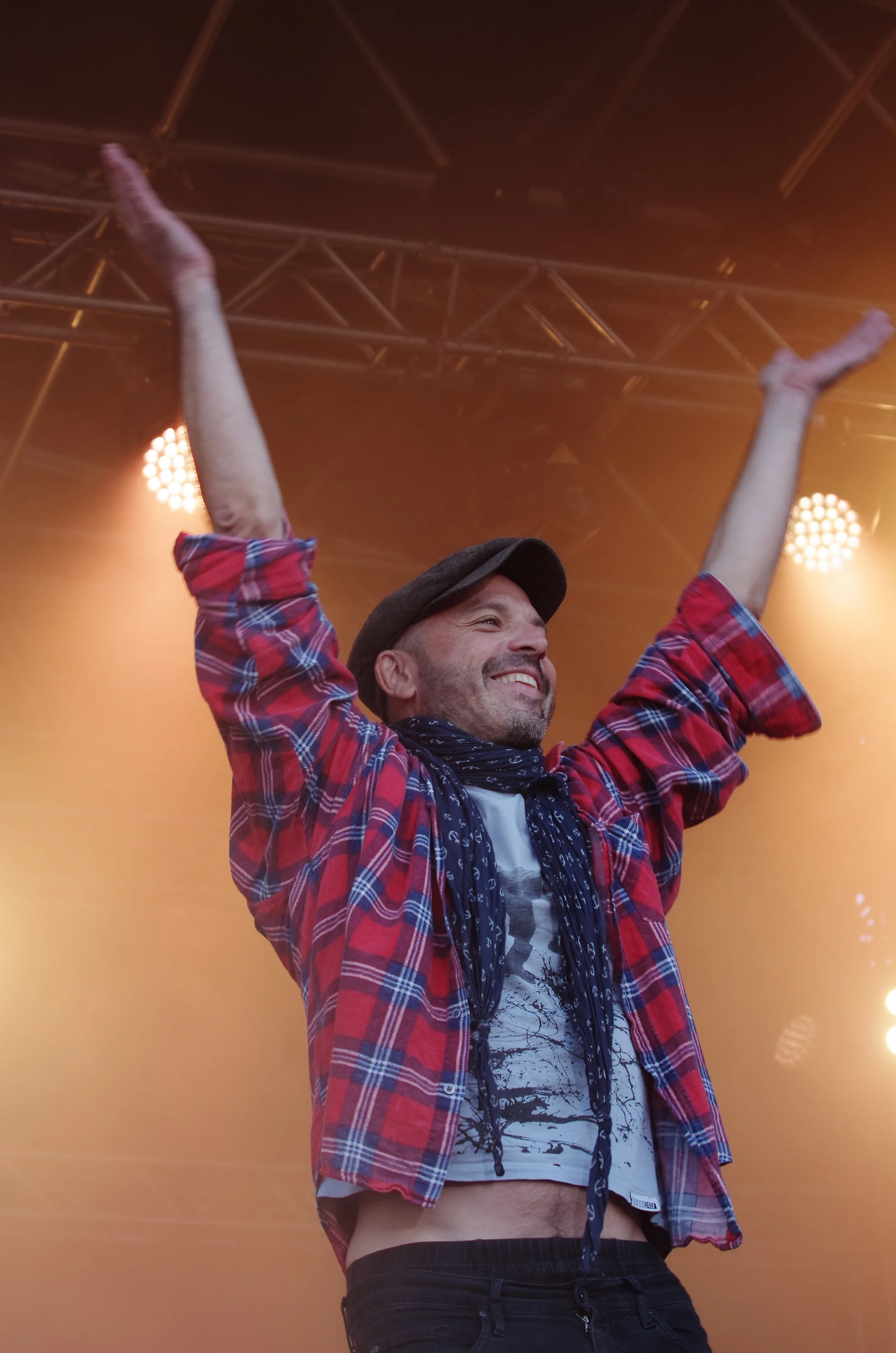
Image from Wikipedia
Image from Wikipedia
Jan Plewka: The Voice Between Rock, Poetry, and Artistic Freedom
A German Exceptional Artist with a Rock Heart and Poetic Handwriting
Jan Plewka, born on October 29, 1970, in Ahrensburg, is considered one of the most distinctive voices in German rock music. Since the 1990s, he has shaped a generation of listeners as the singer of Selig, who recognize a unique sound in his blend of raw energy, melancholy, and lyrical depth. Moreover, he has long transcended the role of frontman: as a solo artist, an interpreter of Rio Reiser, a theater artist, and a visual artist.
His music career tells a story of transformation without a loss of identity. Plewka combines stage presence, compositional sensitivity, and a strong sense of atmosphere into an artistic profile that has become rare in the German pop and rock context. This very complexity makes him a figure who not only sings songs but also conveys attitudes, moods, and stories.
The Early Years: Ahrensburg, Hamburg, and the Path to Rock Music
Jan Plewka grows up in northern Germany and finds his way to music early on. His journey leads him to the creative environment of Hamburg, where Selig is formed in the early 1990s and quickly becomes one of the most important German rock bands. Even at this stage, his talent for voice and expression is evident: not polished, not calculated, but with an emotional directness that connects grunge, seventies rock, and German lyrical culture in an independent way.
The basic data from Wikipedia and later biographical notes from his official website show an artist who wanted to be more than just a singer from the very beginning. Plewka developed a dual identity of music and art early on. This connection significantly shapes his later career, as he understands artistic cross-border experiences not as exceptions but as the norm.
Selig: The Breakthrough with a Defining Voice
Jan Plewka gains fame as the frontman of Selig, a band that has had a lasting impact on German rock in the 1990s. The blend of 70s rock and grunge gave the group a sound that remained both internationally relevant and clearly rooted in the German language. Plewka's voice became the emotional center: powerful, fragile, urgent, and always close to the lyrics.
The influence of Selig goes beyond individual hits. The band represents a phase where German-language rock regained confidence and distanced itself from merely replicating Anglo-American models. In this context, Plewka became a voice that also had a cultural impact: as a singer with depth, an interpreter with conviction, and a frontman with remarkable expressiveness.
Between Dissolution and New Beginnings: Solo Projects and Collaborations
After the temporary dissolution of Selig, Plewka opened his career to new forms. He worked as a solo artist, releasing his first solo album, Zuhause da war ich schon, and sought new sonic realms in various formations. His projects include TempEau and Zinoba, and he also collaborated with Marek Harloff in the context of TempEau and later with Marco Schmedtje.
This phase shows a musician who does not remain in his comfort zone. Plewka expands his repertoire, explores other arrangements, and navigates between rock, songwriter pop, and lyrical introspection. His artistic development remains consistent: he seeks not for effects but for authenticity in sound.
Rio Reiser and Ton Steine Scherben: Interpretation as Artistic Responsibility
Plewka's work with the songs of Rio Reiser and Ton Steine Scherben is particularly formative. According to web results, he has been touring with this program for many years, which is now described as legendary and looks back on over 200 sold-out performances. Here, nostalgia is not the only focus, but a conscious, respectful reinterpretation of political and poetic songs.
The connection to Reiser fits Plewka's artistic personality. Both share an attitude that understands music as an expression of utopia, emotion, and societal friction. Plewka does not translate these songs distantly, but with a voice that communicates between fragility and defiance. This lies at the core of the power of his interpretations.
Current Phase: A New Solo Album as a Personal Artwork
2025 marks another important point in Jan Plewka's career. His new solo album Eine Art Soloalbum will be released on October 10, 2025, and has been described on the official website as a work that connects music and visual art. After five years of work, Plewka emerges here as an independent creative voice, transforming personal themes into poetic songs.
The described contents revolve around the cycle of life, farewell, love, longing, pain, and new beginnings. Guests such as Lina Maly, Mieze Katz, and Marianne Rosenberg enrich the album with additional tonal colors. That the work will also be released in a limited art edition emphasizes Plewka's aspiration to think of music as a total work: as composition, visual language, and emotional narrative in one.
Tour 2025/2026 and the Return to the Stage
A tour accompanies the album, starting in October 2025 and continuing in the spring of 2026. The concerts will take Jan Plewka through several German cities, including Osnabrück, Hannover, Cologne, Munich, Leipzig, Dresden, Berlin, Rostock, Lübeck, and Hamburg. These dates show that the artist is continuing to rely on the immediate impact of the live moment in this current phase of his career.
His stage presence remains an essential part of his success. Plewka is not a distant studio musician but a performer who charges songs with physical and emotional energy. The connection between voice, text, and atmosphere unfolds particularly impressively in a live setting.
From Solo Album to Vinyl Reissue: Catalog and Continuity
Older works are also being made visible again. The 2002 album Zuhause da war ich schon was re-released in 2024 as a remastered vinyl version. This brings an early solo album back to consciousness, which at that time already documented Plewka's introspective, quieter side and consciously differed from the rock-heavy impact of Selig.
This re-release shows that his discography consists not just of isolated milestones but of a coherent artistic arc. From band work to solo albums to Reiser programs, a picture emerges of a musician who productively connects continuity and change.
Discography and Musical Development
The most significant reference in Plewka's discography remains Selig, the band with which he significantly shaped German rock in the 1990s. Additionally, there are solo works like Zuhause da war ich schon and the current Eine Art Soloalbum. Apple Music also references projects such as the soundtrack for Schule and releases with Zinoba and TempEau.
His collaboration with Marco Schmedtje is also part of his expanded body of work. The joint release Between the 80s and the single Forever Young showcase Plewka's interest in reinterpretation and stylistic openness. Instead of committing to a single sound, he utilizes different formats to sharpen his artistic profile.
Stylistics: Between Grunge, Seventies-Rock, and Songwriter-Poetry
Jan Plewka's style is difficult to narrow down because he consciously works between genres. In Selig, he combined the raw energy of grunge with the melodic openness of classic rock. In his solo work, however, lyrical condensation, intimate mood, and a finer arrangement come to the fore more prominently. This range makes him so interesting as a singer and lyricist.
Especially striking is his ability to not over-elaborate emotions but shape them precisely. He does not just sing about longing, loss, or hope but models these states in sound and language. This grants his work an authenticity that is rarely pursued so consistently in German-speaking pop.
Stage, Theater, and Visual Art: The Artist as a Whole Figure
Plewka is not only a musician but also an actor and visual artist. His website describes him as an artist who intertwines music, language, and visual language. This approach aligns with a career that does not end with the rock band but includes theater, performance, and painting.
This becomes particularly evident in the official communication about Eine Art Soloalbum, where a connection between music and visual art is discussed. His work as a painter, which has already been exhibited in Germany, is also part of his identity. Plewka thinks of creativity not in terms of categories but as an overarching expression of personality.
Current Reception and Cultural Influence
The music press continues to describe Jan Plewka as a charismatic singer and versatile artist. Reports about his new works emphasize his authenticity, artistic maturity, and ability to shape songs with significant emotional range from personal experiences. The new solo album, in particular, is perceived as a statement from a matured, yet unyielding musician.
His cultural influence ranges from Selig’s significance in the German indie and rock discourse to his much-acclaimed Rio Reiser programs. Plewka represents a form of German rock culture that focuses not on pose but on substance. His career illustrates how musical identity can renew itself over decades without losing its core.
Voices of the Fans
In the reactions surrounding his current releases and tour announcements, it is particularly noticeable how much Jan Plewka's voice, presence, and poetic language are appreciated. Many listeners associate him with a rare mix of intensity, vulnerability, and attitude. This connection ensures that his songs are not only heard but experienced.
The appreciation for Selig, for the Rio Reiser evenings, and for his solo work reveals an audience that is not just seeking hits but character. Plewka appeals to people who take rock music seriously as an artistic and emotional form. In this loyal resonance lies a significant part of his enduring relevance.
Conclusion: Why Jan Plewka Remains So Exciting Today
Jan Plewka is exciting because he never allows himself to be reduced to a single role. He is a rock voice, song poet, interpreter, actor, and visual artist in one. His music career narrates a story of transformation, artistic discipline, and the courage to continually find new forms.
Those who experience him live do not encounter a nostalgia project but a vibrant artist with a strong stage presence and a clear aesthetic standpoint. Therein lies his power: Plewka makes music not just audible, but tangible. A concert with him is not merely a retrospective, but an event in the here and now.
Official Channels of Jan Plewka:
- Instagram: https://www.instagram.com/janplewka_official/
- Facebook: No official profile found
- YouTube: No official profile found
- Spotify: No official profile found
- TikTok: No official profile found
Sources:
- Jan Plewka – official website
- Jan Plewka – official website / project page
- Jan Plewka – contact / management
- Apple Music – Jan Plewka
- Universal Music – Selig Biography
- Penguin Random House – Jan Plewka
- kulturnews.de – Jan Plewka on "Eine Art Soloalbum"
- WAZ – New Album by Jan Plewka
- Unser Lübeck – Concert report on Jan Plewka
- Wikipedia: Jan Plewka
Upcoming Events
Jan Plewka live in Munich
Jan Plewka live at Ampere in Muffatwerk: an evening full of poetry, energy, and great closeness to the stage. Secure tickets now! #MunichLive
Jan Plewka singt Rio Reiser, Teil 1
Some of the data collected by this provider is for the purposes of personalization and measuring advertising effectiveness. „Lass uns ein Wunder sein“ Sommer 1970: Rio Reiser singt „Macht kaputt, was Euch kaputt macht“ – die Geburtsstunde der Polit- und Kultrockband Ton Steine Scherben. Wie keine andere deutsche Band drücken die Scherben das Lebensgefühl ihrer Generation aus. Doch Rio Reiser ist auch ein charismatischer Einzelgänger. Als sich die Band 1985 trennt, beginnt Rio seine Solokarriere. Hinter dem Polit-Rocker kommt der romantische Träumer zum Vorschein, der in seinen Liedern der Sehnsucht nach Geborgenheit und Liebe Ausdruck gibt. Jan Plewka und die Schwarz-Rote Heilsarmee stellen diesen verletzlichen Rio ins Zentrum ihres Abends. Und wenn sie die Lieder des ehemaligen „Königs v
Jan Plewka sings Rio Reiser - Let's be a miracle
Experience an emotional evening with Jan Plewka, who brings Rio Reiser's songs to life at the Stadttheater Fürth.
Jan Plewka sings Rio Reiser – Let Us Be a Miracle
Don't miss Jan Plewka on June 19, 2026, at the Fürth City Theater. A musical tribute to Rio Reiser.