
Pjotr Iljitsch Tschaikowski
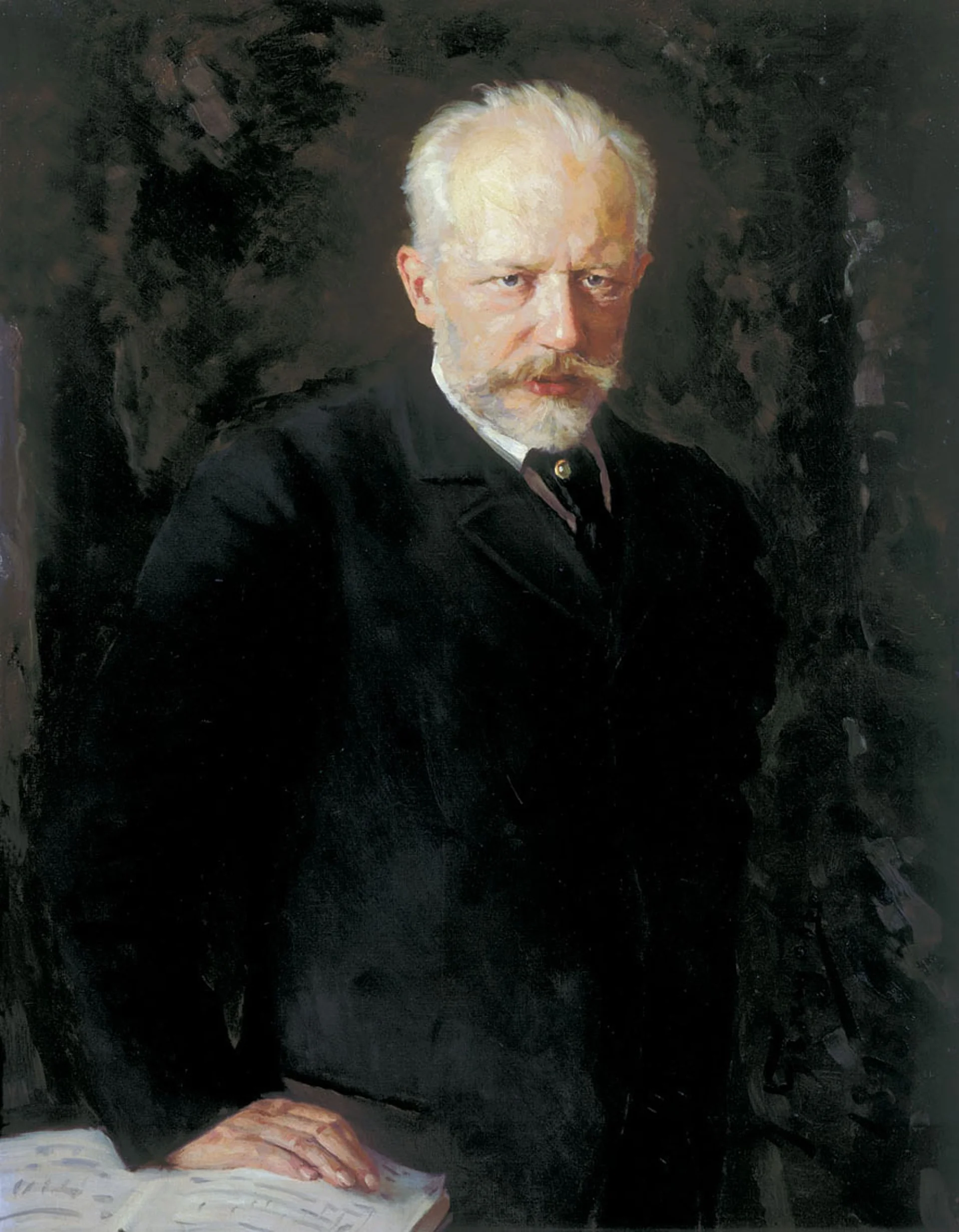
Image from Wikipedia
Image from Wikipedia
Pyotr Ilyich Tchaikovsky – the great Romantic between Russian soul and European sound art
A composer who transforms feelings into timeless music
Pyotr Ilyich Tchaikovsky is one of the defining composers of the Romantic era and is one of those artists whose work garnered international attention during his lifetime. Born in 1840 in Votkinsk and passing away in 1893 in Saint Petersburg, he developed a musical career that continues to set standards for expression, melody, and orchestral color to this day. In Russia, he is regarded as the most significant composer of the 19th century, as he combined Western-influenced composition with an unmistakable personal signature. ([britannica.com](https://www.britannica.com/biography/Pyotr-Ilyich-Tchaikovsky?utm_source=openai))
Tchaikovsky's name is synonymous with a vast emotional range, clear thematic progression, and a compositional language that creates an immediate impact. His works navigate between symphonic architecture, lyrical intimacy, and dramatic tension. This very blend makes him a pivotal figure in music history and a composer whose discography remains remarkably present in concert halls, on the recording market, and in the international repertoire to this day. ([britannica.com](https://www.britannica.com/biography/Pyotr-Ilyich-Tchaikovsky?utm_source=openai))
From law school to music: the early years
Tchaikovsky was not born a musical prodigy; he found his way through a bourgeois education and an initially entirely different career path. After law school in Saint Petersburg, he worked in the Ministry of Justice before seriously making music the center of his life. This late decision continues to shape his biography: Tchaikovsky is the great late-bloomer who shaped an exceptionally mature musical language through discipline, observation, and inner drive. ([staatsoper.de](https://www.staatsoper.de/biographien/tschaikowsky-peter-i?utm_source=openai))
An important turning point was his education in Moscow, where he worked as a teacher of music theory at the newly opened conservatory while also commenting on the musical scene as a music critic. During these years, he immersed himself in the genres of his time and developed a style that was not limited to folkloric programmability but rather focused on formal precision and emotional directness. His contacts with Western influences such as Meyerbeer, Berlioz, and Liszt further sharpened his perspective. ([staatsoper.de](https://www.staatsoper.de/biographien/tschaikowsky-peter-i?utm_source=openai))
The breakthrough of a distinct voice
Tchaikovsky's international breakthrough did not come from a single hit but rather through a succession of works that made his signature increasingly visible. The years 1877 and 1878 are particularly considered crucial, as he achieved artistic maturity with the Fourth Symphony and Eugene Onegin, which established him as the leading Russian composer of his generation. His music gained dramatic depth, structural security, and psychological tension during this phase. ([staatsoper.de](https://www.staatsoper.de/biographien/tschaikowsky-peter-i?utm_source=openai))
Essential to his work was also the support from Nadezhda von Meck, whose financial backing allowed him to focus on composing between 1878 and 1890. This independence created space for works that today rank among the most performed in the classical repertoire. Tchaikovsky's career thus became not only more productive but also stylistically cohesive; his music acquired melodic grandeur and orchestral brilliance. ([stage-plus.com](https://www.stage-plus.com/de/klassikakzente/peter-tschaikowsky/biografie?utm_source=openai))
The great masterpieces: symphonies, concertos, operas, and ballets
Among Tchaikovsky's most famous compositions are his last three symphonies, the Violin Concerto, the First Piano Concerto in B minor, the 1812 Overture, and the opera Eugene Onegin. These works form the centerpiece of his discography in a broader sense, representing the living repertoire that is continually reinterpreted in concert halls, opera houses, and recordings. The First Piano Concerto premiered successfully in Boston in 1875 and established his reputation as a master of the grand, virtuosic concert style. ([britannica.com](https://www.britannica.com/biography/Pyotr-Ilyich-Tchaikovsky?utm_source=openai))
Particularly radiant are the ballets Swan Lake, The Sleeping Beauty, and The Nutcracker. They are among the most famous ballets in music history and showcase Tchaikovsky as a composer who uniquely combined dance elegance, symphonic thinking, and melodic invention. The fact that these works are regarded today as cultural icons is due to their immediate stage impact as well as their refined composition and instrumentation. ([britannica.com](https://www.britannica.com/biography/Pyotr-Ilyich-Tchaikovsky?utm_source=openai))
Style, sound language, and musical development
Tchaikovsky's style unites Western-influenced form with Russian expressive depth, without limiting himself to the national school of the so-called five. Instead, he continued the line shaped by Anton Rubinstein and formed it into his own sound world, characterized by expansive melodic arcs, passionate harmonies, and a strong affinity for the orchestra. It is precisely this fusion of European tradition and personal emotionality that makes his music immediately accessible yet artistically complex. ([britannica.com](https://www.britannica.com/biography/Pyotr-Ilyich-Tchaikovsky?utm_source=openai))
In Tchaikovsky's musical development, there is a remarkable journey from early uncertainties to a highly concentrated, expressive compositional style. His works often resemble dramatic landscapes of the soul: themes are not merely exposed but are psychologically charged, contrasted, and intensified in orchestral climaxes. The art of his production lies in the balance between catchiness and structural sophistication, between lyrical song and passionate emphasis. ([hof-news.de](https://www.hof-news.de/kuenstler/pjotr-iljitsch-tschaikowski-26010915523510?utm_source=openai))
A life characterized by success, inner conflict, and creative intensity
Tchaikovsky's biography was marked by tensions that also reflect in his music. Sources describe him as a doubting, torn individual whose personal life was not free from crises; his unhappy marriage to Antonina Milyukova and the burdensome social situation left marks. It was precisely from this inner friction, however, that the expressive depth emerged, making his works so unmistakable. ([de.wikipedia.org](https://de.wikipedia.org/wiki/Violinkonzert_%28Tschaikowski%29?utm_source=openai))
Even during difficult phases, Tchaikovsky remained productive and stylistically adaptable. The years from 1878 to 1884 are often referred to as a creative low, yet it was precisely in this period that a body of work emerged that further solidified his position in the canon. The composer collaborated with publishers, traveled as a conductor of his own pieces throughout Russia and Western Europe, and even performed in New York, Baltimore, and Philadelphia in 1891. His stage presence as a conductor further augmented the international reach of his music. ([de.wikipedia.org](https://de.wikipedia.org/wiki/Pjotr_Iljitsch_Tschaikowski?utm_source=openai))
Cultural influence and lasting impact to this day
Tchaikovsky's cultural influence extends far beyond classical music. His works continue to shape perceptions of Russian Romanticism, great emotional intensity, and orchestral splendor. In many countries, his ballets and concerts have become resonant symbols of concert life, while his symphonies are considered benchmarks for orchestras and conductors. ([britannica.com](https://www.britannica.com/biography/Pyotr-Ilyich-Tchaikovsky?utm_source=openai))
His reception also demonstrates how enduring a composer can be when musical substance and emotional immediacy come together. Music press and concert culture frequently refer to his melodic catchiness, psychological depth, and the special colorfulness of his orchestration. The fact that his works remain not only historically important but also vibrant is due to this rare combination of artistic authority and immediate listening impact. ([hof-news.de](https://www.hof-news.de/kuenstler/pjotr-iljitsch-tschaikowski-26010915523510?utm_source=openai))
Current projects and present-day presence
As a historical composer, Tchaikovsky does not have new albums, singles, or tours in the modern sense. His presence continues in new recordings, concert cycles, ballet productions, and ongoing interpretations of his works. The relevance of his art is evident in the fact that his compositions are constantly reexamined and performed today without losing their emotional directness. ([britannica.com](https://www.britannica.com/biography/Pyotr-Ilyich-Tchaikovsky?utm_source=openai))
Especially his symphonies, piano and violin concertos, as well as the major ballets, remain reference points for international orchestras, soloists, and opera houses. The ongoing wealth of recordings and performances makes Tchaikovsky one of the most prominent composers of classical music. His music is not museum-like but present anew in every concert hall. ([britannica.com](https://www.britannica.com/biography/Pyotr-Ilyich-Tchaikovsky?utm_source=openai))
Conclusion: Why Tchaikovsky continues to electrify today
Pyotr Ilyich Tchaikovsky fascinates because his music never leaves great feelings to chance. Behind the melodic beauty lie precise composition, conscious dramaturgy, and a sound language that reaches the heart and mind simultaneously. Those who experience Tchaikovsky live encounter a composer who not only shaped Romantic music but redefined it in all its emotional breadth. ([britannica.com](https://www.britannica.com/biography/Pyotr-Ilyich-Tchaikovsky?utm_source=openai))
It is precisely the combination of cultural authority, emotional depth, and timeless stage impact that makes him so intriguing. His works are among the great peaks of the repertoire and deserve every live experience, as they unleash their full dramatic and lyrical power in the concert hall. Therefore, Tchaikovsky remains not only a classic but a living standard of musical greatness. ([hof-news.de](https://www.hof-news.de/kuenstler/pjotr-iljitsch-tschaikowski-26010915523510?utm_source=openai))
Official channels of Pyotr Ilyich Tchaikovsky:
- Instagram: no official profile found
- Facebook: no official profile found
- YouTube: no official profile found
- Spotify: no official profile found
- TikTok: no official profile found
Sources:
- Wikipedia – Pyotr Ilyich Tchaikovsky
- Britannica – Pyotr Ilyich Tchaikovsky
- Bavarian State Opera – Biographies: Tchaikovsky, Peter I.
- STAGE+ – Fascinating Works by Pyotr Ilyich Tchaikovsky
- Notenspur Leipzig – Composers in Leipzig: Pyotr Ilyich Tchaikovsky
- Petersburger.info – Pyotr Ilyich Tchaikovsky, the Late Bloomer
- Hof-News – Pyotr Ilyich Tchaikovsky
- Lernhelfer – Pyotr (Peter) Ilyich Tchaikovsky