
Uwe Steimle
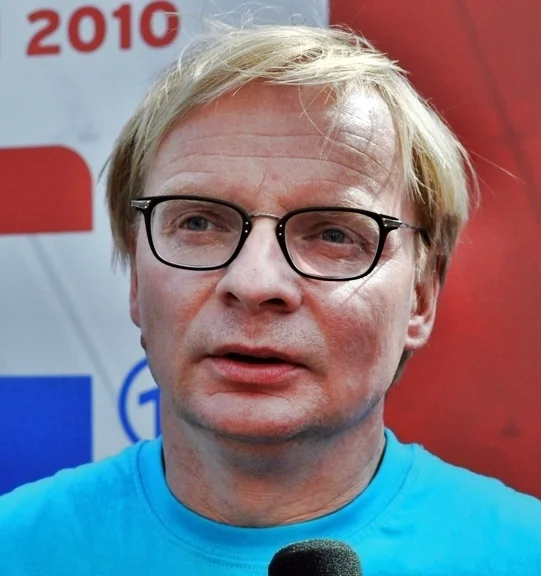
Image from Wikipedia
Image from Wikipedia
Uwe Steimle: Saxon Cabaret Artist, Actor, and a Defining Voice of East German Zeitgeist
An Artist Between Dialect, Stage, and Television
Uwe Steimle is one of the most prominent figures in German cabaret and television. Born on June 20, 1963, in Dresden, he developed an artistic profile early on that is strongly shaped by his origins, language, and attitudes. His Saxon dialect became a hallmark, his stage persona a cultural-political point of contention, and his name a fixture in the German media landscape. ([munzinger.de](https://www.munzinger.de/register/portrait/biographien/Uwe%20Steimle/00/25666))
Steimle's work spans acting, cabaret, authorship, and television formats. He became nationally known as Chief Inspector Jens Hinrichs in "Polizeiruf 110," but his artistic center remained in cabaret: a form where observational skill, linguistic wit, and political sharpness merge. This very mix made him visible, debatable, and unmistakable to many viewers over decades. ([munzinger.de](https://www.munzinger.de/register/portrait/biographien/Uwe%20Steimle/00/25666?utm_source=openai))
Biographical Roots: Dresden, Education, and Early Influences
Uwe Steimle grew up in Dresden as the son of a working-class family. His father was a professional officer in the National People’s Army, and his mother worked at VEB Polypack. This biographical background explains part of the perspective from which Steimle often spoke about everyday life, memory, and East German realities. ([munzinger.de](https://www.munzinger.de/register/portrait/biographien/Uwe%20Steimle/00/25666))
Before studying acting, Steimle took an unusual path: he attended a children's and youth sports school, becoming vice champion of the GDR in a 4 x 100 meters relay, and initially trained as an industrial blacksmith at the stainless steel factory in Freital. Only after that did he begin his acting studies at the Hans Otto Theatre School in Leipzig, which he attended from 1985 to 1989. These stages give his art a groundedness that is rarely felt so clearly in German cabaret. ([munzinger.de](https://www.munzinger.de/register/portrait/biographien/Uwe%20Steimle/00/25666))
The Path to the Stage: Cabaret, Language, and Attitude
After his studies, Steimle initially worked in established ensembles: from 1989 to 1991, he was a member of the Dresden cabaret "Die Herkuleskeule," and then from 1991 to 1994, he joined the State Theatre Dresden. It was here that what would shape his artistic development became apparent: precise linguistic observation, a strong stage presence, and the ability to translate societal tensions into pointed characters. ([munzinger.de](https://www.munzinger.de/register/portrait/biographien/Uwe%20Steimle/00/25666))
Among his well-known cabaret programs are titles like "Ostalgie" – co-created with Tom Pauls –, "Günther allein zu Haus," and "Uns fragt ja keener." Furthermore, Steimle gained recognition as a voice imitator of Erich Honecker. It is precisely in this combination of imitation, satire, and regional coloring that the core of his popularity lies: he works with language as others do with music, using rhythm, pauses, and tone as dramatic means. ([munzinger.de](https://www.munzinger.de/register/portrait/biographien/Uwe%20Steimle/00/25666))
Breakthrough on Television: Polizeiruf 110 and National Fame
The significant nationwide breakthrough came with his role as Chief Inspector Jens Hinrichs in the TV series "Polizeiruf 110." There, he combined an approachable presence with a distinctive, unmistakable manner of speaking that made him immediately recognizable to a broad audience. For many viewers, Steimle became the face of East German television life, which felt authentic and strong in character rather than glossed over. ([munzinger.de](https://www.munzinger.de/register/portrait/biographien/Uwe%20Steimle/00/25666?utm_source=openai))
Later, he took on further roles in television and film, such as in "Das Konto," "Heimat 3 - Chronik einer Zeitenwende," and "Sushi in Suhl." The filmography showcases an actor who did not limit himself to a single character but shifted between crime, homeland stories, and comedic sharpenings. This versatility made him a staple in German-speaking television. ([munzinger.de](https://www.munzinger.de/register/portrait/biographien/Uwe%20Steimle/00/25666))
Ostalgie, Home, and Cultural Friction
In 1992, Steimle coined the term Ostalgie, referring to the nostalgic, often conflict-laden reflection on everyday life in the GDR and East German identity. With this, he struck a chord during the post-reunification period when many lives were caught between loss, upheaval, and self-assertion. His art is therefore never just entertainment, but always a commentary on cultural memory in reunited Germany. ([uwe-steimle.de](https://www.uwe-steimle.de/biographie/?utm_source=openai))
At the same time, Steimle's public perception is accompanied by controversies. In 2019, Der Tagesspiegel described him as a cabaret artist whose statements sparked discussions because they were seen as potentially sympathetic to the right; at that time, MDR announced a reorientation of its cabaret and satire projects. This classification is part of a complete consideration of his persona, as it shows how closely art, politics, and the public sphere are intertwined in Steimle's work. ([tagesspiegel.de](https://www.tagesspiegel.de/gesellschaft/medien/mdr-druckt-sich-um-entscheidung-uber-uwe-steimle-4112554.html))
Writing, Books, and Expansion of the Artistic Persona
Uwe Steimle is not only a stage and television face but also an author. His books include "Meine Oma, Marx & Jesus Christus," "Heimatstunde. Neues vom Zauberer von Ost," and "Steimles Welt." These titles show a clear line: Steimle writes from the perspective of an observer intertwining regional culture, political experience, and personal memory. ([munzinger.de](https://www.munzinger.de/register/portrait/biographien/Uwe%20Steimle/00/25666))
In his official environment, it is also evident how strongly language and merchandising are tailored to his persona. The fan shop offers books, CDs, LPs, DVDs, and numerous products featuring sayings coded in Saxon dialect. This reflects a brand that has long outgrown the classic cabaret evening and asserts itself as a cultural whole. ([shop.uwesteimle.de](https://shop.uwesteimle.de/?utm_source=openai))
Current Projects and Performances
Even in 2025 and 2026, Steimle will remain active live. The schedule on his official site lists numerous appearances with programs like "Gesichert: Unbequem," "Friedenshetzer," "MIR san MIR," and "Nu! - KEEN GETUE, KEEN GEMACHE...". The dates indicate that his stage work continues to be in high demand, and he consistently maintains direct contact with his audience. ([uwesteimle.de](https://www.uwesteimle.de/auftritte/?utm_source=openai))
In addition, there are original formats and digital activities. His official site highlights "Steimles Welt" and new YouTube episodes that are to be released on Sundays at 7 PM. With this, Steimle combines traditional live cabaret with a media-extended presence that has become typical for today's artist biographies. ([uwesteimle.de](https://www.uwesteimle.de/index.php/shop.php))
Style, Impact, and Cultural Influence
Steimle's artistic style thrives on the tension between folk appeal and political sharpness. His Saxon dialect is not just a tonal color but a dramatic tool: it shapes characters, delivers punchlines, and creates intimacy. In this regard, Steimle works almost like a musical storyteller, modeling entire moods with timing, repetition, and tone. ([munzinger.de](https://www.munzinger.de/register/portrait/biographien/Uwe%20Steimle/00/25666))
His influence extends far beyond the cabaret scene. For many viewers, he represents an East German self-description after 1990, and for others, a problematic approach to political sharpness. This ambivalence makes him culturally and historically interesting: Steimle is not just an entertainer but a seismograph of societal tensions who works at the intersection of memory, identity, and media public life. ([tagesspiegel.de](https://www.tagesspiegel.de/gesellschaft/medien/mdr-druckt-sich-um-entscheidung-uber-uwe-steimle-4112554.html))
Discography and Media Publications
In a narrower sense, Uwe Steimle does not have a traditional music career or a typical album discography like a singer or band artist. Nevertheless, his official environment shows a range of CDs, DVDs, and stage programs that document and preserve his work. These include primarily cabaret programs, television projects, and book-like publications that bear the character of documented stage art. ([shop.uwesteimle.de](https://shop.uwesteimle.de/?utm_source=openai))
For searches related to "discography," it is important to note that, for Steimle, this refers less to recordings in the pop sense and more to an overview of works from programs, television formats, books, and live recordings. His artistic development can therefore be read best as a multimedia overall work, not as a linear music career. This classification also corresponds to his position as a cabaret artist and actor, not as a musician in the narrower sense. ([munzinger.de](https://www.munzinger.de/register/portrait/biographien/Uwe%20Steimle/00/25666))
Conclusion: An Artist with Edges, Distinctiveness, and Recognition Value
Uwe Steimle remains captivating because he embodies a rare mix of regional authenticity, linguistic precision, and media presence. His career narrates a journey through stage work, television fame, literary expansion, and societal controversy. Experiencing Steimle means seeing not a polished star but an artist with attitude, friction, and an unmistakable voice. ([munzinger.de](https://www.munzinger.de/register/portrait/biographien/Uwe%20Steimle/00/25666))
This very tension makes his performances interesting: he works closely with the audience, plays with language and memory, and transforms East German experiences into vivid cabaret. Anyone who appreciates German cultural history, political satire, and strong stage presence should experience Uwe Steimle live. ([uwesteimle.de](https://www.uwesteimle.de/auftritte/?utm_source=openai))
Official Channels of Uwe Steimle:
- Instagram: No official profile found
- Facebook: No official profile found
- YouTube: No official profile found
- Spotify: No official profile found
- TikTok: No official profile found
Sources:
Upcoming Events
Uwe Steimle - Nu!
Uwe Steimle: „Nu!“