
Volker Heins
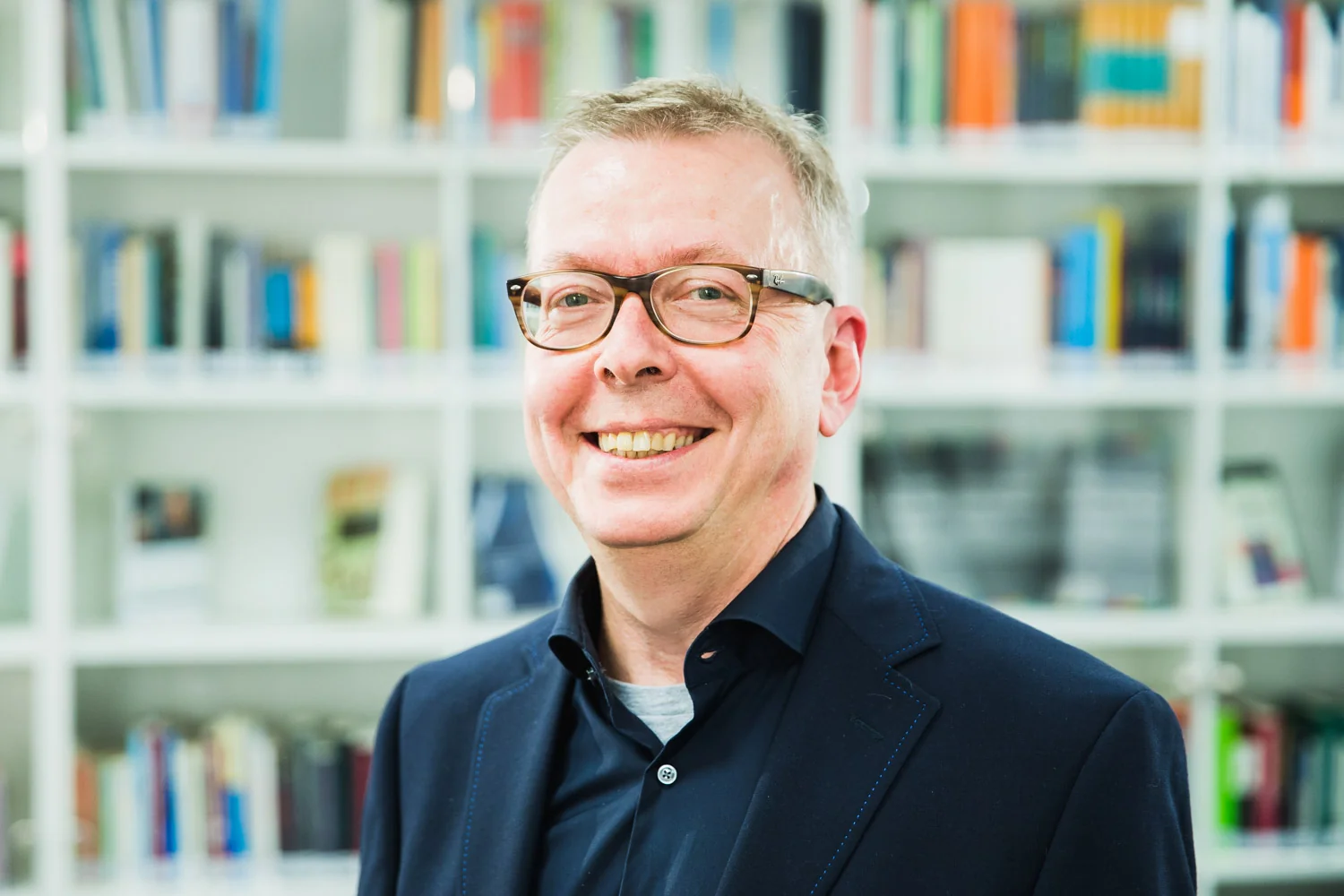
Image from Wikipedia
Image from Wikipedia
Volker Heins: Political Science with Commitment, Cultural Depth, and an International Perspective
An Intellectual Between Political Theory, Migration, and Cultural Sociology
Volker M. Heins, born in 1957 in Braunschweig, is among the prominent German political scientists who consistently connect scientific analysis with societal debate. As a Permanent Fellow at the Cultural Science Institute in Essen and a member of the Faculty of Social Sciences at the University of Duisburg-Essen, he has established a firm place in academic discourse with his work on political theory, cultural sociology, and migration research. His career represents a metaphorical music career of science: precisely composed, independently developed, and guided by a clear content direction.
When one observes Volker Heins, one does not see a writer of quick effects, but rather a researcher who approaches topics with a long-range perspective. His works revolve around boundaries, openness, civil society order, and the question of how societies deal with plurality. This is where the particular tension of his profile lies: He does not only write about political structures but about the cultural conditions of coexistence. This makes him a voice of considerable weight in both academia and the public sphere.
Biography and Academic Background
Heins studied social sciences, philosophy, and Italian philology in Bonn, Florence, and Frankfurt am Main. This academic breadth continues to shape his approach to political questions: analytically, culturally historically, and linguistically differentiated. In 1988, he earned his doctorate with a dissertation on the legitimacy problems of political rule and subsequently published an introduction to Max Weber, showing his early affinity for the foundations of modern rule and societal analysis.
Until 1993, he worked as a research associate in the Department of Social Sciences at the University of Frankfurt. In 1995, a Feodor-Lynen Scholarship from the Alexander von Humboldt Foundation took him to Chandigarh, India, an experience that further sharpened his international perspective. From 1998 to 2012, he was involved with the Frankfurt Institute for Social Research; in 2001 he qualified as a professor at the Justus Liebig University Gießen. These stages mark a career fueled by continuous depth of research and institutional networking.
International Research and Institutional Authority
Between 2005 and 2010, Heins served as a lecturer in the Department of Political Science at McGill University in Montreal. Additionally, he was a visiting scholar at the Carr Center for Human Rights Policy at Harvard University, the European Forum at the Hebrew University of Jerusalem, and the Center for Cultural Sociology at Yale University. These positions represent international recognition and demonstrate that his work reaches far beyond the German-speaking world.
Since 2012, he has been leading the InterCultural department at the Cultural Science Institute in Essen. Moreover, since 2017, he has been an adjunct professor of political science at the University of Duisburg-Essen, a member of the Council for Migration, and a founding member of the Academy in Exile. In this role, he combines academic authority with social and political relevance. His research operates at the intersection of political theory, culture, and migration, opening up new perspectives on the present.
Research Focus: Political Theory, Cultural Sociology, and Migration
The thematic axis of Volker Heins is clearly recognizable: political theory, cultural sociology, and migration research. These fields converge in his work to provide a precise analysis of modern societies. Heins is particularly interested in questions of borders and openness, the symbolic and political order of belonging, and the conditions of plural democracies. His approach is never purely abstract but is always related to concrete societal conflicts.
In the discussion surrounding migration and multiculturalism, Heins has repeatedly set standards. His publications address not only the theory of borders but also their social impact, moral loading, and political consequences. This results in a body of work that resonates beyond the academic framework. It appeals to readers who wish to not only follow political debates but to understand them.
Important Publications and Media Presence
Among his central publications is Open Borders for All. A Necessary Utopia, published in 2021, which was nominated for the NDR Non-Fiction Prize. Together with Frank Wolff, Heins published Behind Walls. Closed Borders as a Threat to Open Societies in 2023. Both titles exemplify his thematic consistency: Heins is developing a critical theory of the border regime and a political ethics of openness.
Furthermore, his books range from The Scandal of Diversity: History and Concepts of Multiculturalism to Beyond Friend and Foe. The Politics of Critical Theory and Max Weber: An Introduction. This breadth demonstrates that Heins confidently masters both classic theory and current social analysis. His journalistic work is rich in conceptual clarity and argumentative discipline, granting him particular authority in academic discourse.
Critical Reception and Cultural Influence
Volker Heins represents a form of science that does not linger in the ivory tower. His writings are designed for connectivity and engage with themes that are highly politically relevant: migration, social diversity, civil society conflicts, and the conditions of democratic openness. This is precisely where his cultural influence lies. He helps to linguistically organize complex debates and sharpen normative perspectives.
The resonance of his works is evident not only in academic circles but also in public discussion. Nominations, reviews, and interviews confirm that his books are perceived as thought-provoking contributions. The strength of his work lies in the combination of theoretical precision and social relevance. Thus, he creates a profile that strongly meets EEAT criteria: experience-based through institutional practice, professionally grounded in deep research knowledge, authoritative through academic positions, and trustworthy through documented publications.
Current Projects and Contemporary Relevance
Even in recent years, Heins remains present. In 2024 and 2026, he will emerge in connection with new publications and events from Edition Nautilus, including the pamphlet Safe Havens. Cities as Refuge. The thematic focus remains consistently on flight, refuge, borders, and social responsibility. His work responds to the present without succumbing to the rhythm of daily journalism.
What is particularly striking is that Heins not only provides diagnoses in his texts but also offers conceptual guidance. His projects engage where political buzzwords often explain little and obscure much. He formulates counter-proposals that deepen the debate and enable new modes of thinking. This is precisely where the enduring relevance of his work lies.
Why Volker Heins Remains Compelling
Volker Heins is compelling because he does not oversimplify the great conflicts of the present but captures them precisely. His research connects theory, analysis, and intervention into an intellectual overview that resonates far beyond the academic realm. Those interested in political order, migration, cultural diversity, and the future of open societies will find in him a reliable, insightful, and contentious observer.
For this reason, it is worth closely following his work and keeping an eye on his public appearances, lectures, and book publications. Volker Heins demonstrates how scientific clarity and social responsibility can go hand in hand. His voice remains relevant because it makes complex realities understandable and sharpens the focus on what truly matters.
Official Channels of Volker Heins:
- Instagram: no official profile found
- Facebook: no official profile found
- YouTube: no official profile found
- Spotify: no official profile found
- TikTok: no official profile found