
Wolfgang Buck
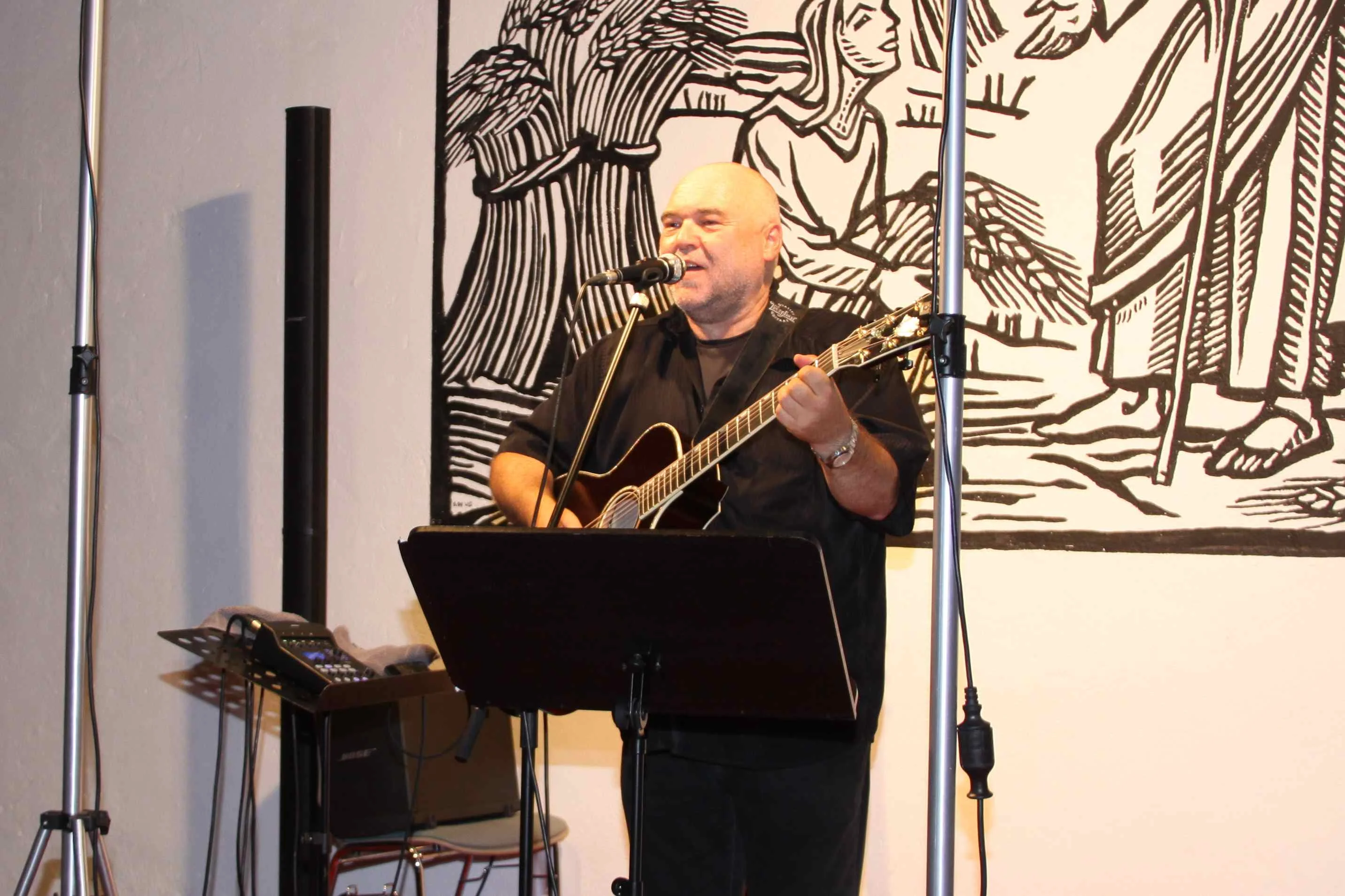
Image from Wikipedia
Image from Wikipedia
Wolfgang Buck – Franconian Song Art Between Humor, Stance, and Fine Observation
A Singer-Songwriter with a Pastor's Soul, Cabaret Instinct, and Franconian Character
Wolfgang Buck, born in 1958 in Puschendorf, is one of the most distinctive voices in the Franconian singer-songwriter scene. The artist combines the perspectives of a pastor, a cabaret performer, and a song poet into an unmistakable stage figure, performing for decades with Franconian dialect, pointed humor, and humanistic warmth. His work represents a music career in which language, everyday life, and attitude converge in precisely formulated songs. ([de.wikipedia.org](https://de.wikipedia.org/wiki/Wolfgang_Buck?utm_source=openai))
Biographical Roots: From Theology Studies to a Career as a Singer-Songwriter
Growing up in Puschendorf, Buck studied theology and worked for 14 years as a Protestant pastor in Trabelsdorf near Bamberg. Even during this time, he wrote songs in Franconian dialect, performed on small stages, and released his first recordings. As his artistic activities began to take up more space, he took a leave of absence from his pastoral duties and focused entirely on the stage and songwriting. This biographical duality explains much of his art: clear language, ethical sensitivity, and a loving gaze at human weaknesses. ([de.wikipedia.org](https://de.wikipedia.org/wiki/Wolfgang_Buck?utm_source=openai))
This very mixture makes Wolfgang Buck more than a regional cult author. He is an observer of the everyday, shaping small musical narratives from conversations, pub moments, family stories, and societal frictions. The Franconian dialect serves him not as a folk accessory but as an aesthetic tool: pointed, melodic, rhythmic, and full of character. Thus, an artistic development emerges that is consistently nourished by the region while simultaneously touching on universal themes. ([liederbestenliste.de](https://www.liederbestenliste.de/empfehlungen-album/2012.html))
The Breakthrough: Early Visibility on Stages and in the Opening Act of Big Names
Particularly with the programs and CDs Schaunerhie and Gemmeraweng, Buck gained great popularity in the 1990s in Eastern Southern Germany. The productions were recorded with his band and horn players from the former Berlin soul band Die Zöllner, marking an important step toward a broader audience. Additionally, performances as the opening act for Hubert von Goisern and Joan Baez garnered greater attention and permanently anchored his name in the German-speaking singer-songwriter scene. ([de.wikipedia.org](https://de.wikipedia.org/wiki/Wolfgang_Buck?utm_source=openai))
His stage presence is regarded as warm, direct, and self-assured. A report from 2024 describes him as a “simple yet nuanced” Franconian singer-songwriter, pastor, and cabaret performer who has been on stage for over 30 years, combining cosmopolitan, tolerant lyrics with mischievous humor. This blend of charming groundedness and subtle wit continues to characterize his performances today. ([wiesentbote.de](https://www.wiesentbote.de/2024/10/16/wolfgang-buck-kommt-nach-graefenberg/))
Discography: A Body of Work Full of Life, Dialect, and Musical Colors
The official CD overview on his website traces a long, continuous discography that begins in 1988 with Unkraud vergehd ned and spans through Grüne Streifm im Nudella (1990), Schaunerhie (1993), Gemmeraweng (1996), Aganzallaans (1998), Sambesi (2001), Nedsulaud (2003), Flusszigeiner (2005), Asu werd des nix (2009), Genau underm Himml (2012), Kummdmernaham (2015), Des Gwärch und des Meer (2018), to the current CD Visäwie. This sequence not only demonstrates productivity but also artistic consistency over decades. ([wolfgang-buck.de](https://wolfgang-buck.de/cds/))
Particularly interesting is how Buck has navigated over the years between solo aesthetics, band sound, and live documentation. Aganzallaans was described as a live recording "without a net and double bottom," featuring guitar, attentive audience, and quirky, idiosyncratic songs. Sambesi emphasized a "flowing and pulsating" sound, combining Franconian wilderness with pub observations, everyday comedy, and satirical sharpness. Such productions illustrate a discography that not only collects songs but organizes life worlds. ([wolfgang-buck.de](https://wolfgang-buck.de/cds/aganzallaans/?utm_source=openai))
Musical Development: Between Folk, Blues, Swing, and Narrative Chanson Art
Musically, Wolfgang Buck does not fit into rigid categories but thrives in a lively hybrid of singer-songwriter traditions, folk, chanson, blues, and cabaret song art. A review of Genau underm Himml highlights that his band can sound like both a rock formation and a small entertainment orchestra. At times, the blues rolls, the swing dances, and an organ carries the song with a heavier beat; yet, the dynamics always serve the text. ([liederbestenliste.de](https://www.liederbestenliste.de/empfehlungen-album/2012.html))
This balance between arrangement and language is central to Buck's work. His songs function not only through melody but also through timing, punchlines, pauses, and the precise placement of individual images. The website also notes that many songs were composed on the guitar and that harmony and finger positioning are vital components of his compositional practice. The result is music that is both technically precise and relatable. ([wolfgang-buck.de](https://wolfgang-buck.de/di-fresch-vom-weiher-rieber/?utm_source=openai))
Current Projects and New Releases: An Artist Who Continues to Work
In 2025 and 2026, Wolfgang Buck will remain active. His official site announces the new program immerweider and states that the songs and sequences are already in place. At the same time, Gemmeraweng has been remastered after 29 years, underscoring the long-lasting value of this recording and documenting the ongoing care of his catalog. The current website also lists numerous concert dates for 2026, including stops in Schweinfurt, Neuenmarkt, Heilsbronn, Kunreuth, Bamberg, and Welzheim. ([wolfgang-buck.de](https://wolfgang-buck.de/))
The relevance of his work is also evident in the newer programs Visäwie and Is letzte Hemmerd. Visäwie is presented as a current solo program, while Is letzte Hemmerd deals with themes such as death, dying, and transience. This indicates an artistic evolution that does not rely on nostalgia but, with increasing maturity, brings existential themes into musical form. ([wolfgang-buck.de](https://wolfgang-buck.de/))
Critical Reception: Precise Observations, Great Respect, Loyal Audience
The reception of his work is remarkably respectful according to the sources. Liederbestenliste describes Buck as a precise guitarist, a keen observer, and a humorous contemporary whose Franconian language makes "grumpiness binding" and the punchlines mischievous. At the same time, his 2012 album Genau underm Himml is praised as a CD that excels with subtle band work, fine dynamics, and textual diversity. ([liederbestenliste.de](https://www.liederbestenliste.de/empfehlungen-album/2012.html))
Recent reports also emphasize the quality of his lyrics and the reliability of his live presence. Infranken described Des Gwärch und des Meer as a successful total artwork of everyday observations, current events, and places of longing. The website of his label, as well as his own artist page, reinforces this image through curated, over the years established release and program work that stands for artistic authority. ([infranken.de](https://www.infranken.de/lk/bamberg/neue-cd-von-wolfgang-buck-der-liedermacher-aus-franken-singt-ueber-des-gwerch-und-des-meer-art-3315302))
Cultural Influence: Franconian Dialect as Literary and Musical Identity
Wolfgang Buck has given the Franconian dialect its own artistic stage. In his songs, dialect serves not as a gag or as a museum piece, but as a style-defining form of authenticity. His lyrics negotiate food, work, neighborhood, religion, zest for life, skepticism, and hope with a language that is rooted regionally yet remains comprehensible far beyond Franconia. ([liederbestenliste.de](https://www.liederbestenliste.de/empfehlungen-album/2012.html))
It is precisely here that his cultural influence lies: He demonstrates that regional identity and sophisticated songwriting are not contradictory. Buck embodies a form of singer-songwriting that lives on careful observation, musical discipline, and human connection. His work is part of the German-speaking singer-songwriter tradition and simultaneously bears a distinct Franconian signature with high recognition value. ([de.wikipedia.org](https://de.wikipedia.org/wiki/Wolfgang_Buck?utm_source=openai))
Conclusion: Why Wolfgang Buck Endures
Wolfgang Buck is fascinating because he has consistently remained independent in every phase of his career. He combines the pastor's view, cabaret sharpness, and song poetry into an art that sounds warm, intelligent, and full of character. Those who appreciate Franconian music, clever lyrics, and vibrant stage presence will find an artist with depth, humor, and substance here. Experiencing him live means experiencing song art in its most human form. ([wolfgang-buck.de](https://wolfgang-buck.de/))
Official Channels of Wolfgang Buck:
- Instagram: No official profile found
- Facebook: No official profile found
- YouTube: No official profile found
- Spotify: No official profile found
- TikTok: No official profile found
Sources:
- Wolfgang Buck – Official Website
- Wolfgang Buck – CDs
- Wolfgang Buck – Artist Page
- Wikipedia – Wolfgang Buck
- inFranken – New CD by Wolfgang Buck: The Singer-Songwriter from Franconia Sings about “Des Gwärch und des Meer”
- Liederbestenliste – Wolfgang Buck: Genau underm Himml
- Der Neue Wiesentbote – Wolfgang Buck is Coming to Gräfenberg
- Wolfgang Buck – Gemmeraweng Remastered After 29 Years
Upcoming Events
Concert with Wolfgang Buck
Wolfgang Buck - Franconian Song Evening