
Hof
Plauener Str. 1, 95028 Hof, Deutschland
Cemetery Hof | Opening Hours & Site Plan
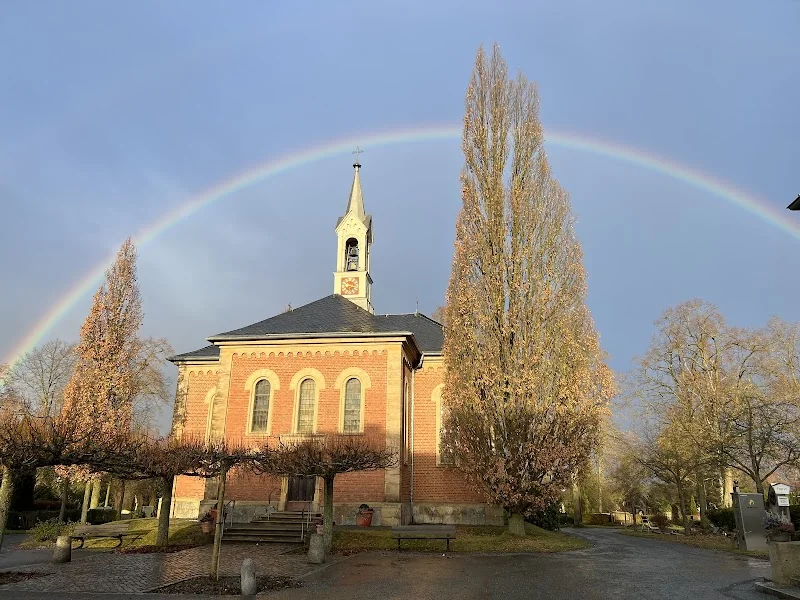
The Cemetery Hof on Plauener Straße is the central municipal main cemetery of the city of Hof and at the same time a place of significant historical and cultural importance. The city of Hof not only operates the listed main cemetery with crematorium on Plauener Straße but also a facility that has been used since 1878 as a permanent solution for the burial situation of the growing city. Today, the facility stands for peace, orientation, and dignified remembrance; at the same time, it is an important point of contact for burials, memorial services, and the maintenance of graves. Those searching for Cemetery Hof, site plan, opening hours, or directions will find consolidated information on visiting hours, administration, parking, and the most important types of graves. Additionally, the official city administration shows that Hof has a total of three cemeteries: the main cemetery on Plauener Straße, the former village cemetery in Moschendorf, and the Jewish cemetery. Therefore, it is particularly important for visitors to choose the correct location and to keep the cemetery plan and opening hours in mind when planning. ([hof.de](https://www.hof.de/bauen-wirtschaft/kommunales-planen-und-bauen/gruenanlagen/friedhoefe))
Opening Hours and Cemetery Administration in Hof
The opening hours are the first point of orientation for many visitors when they wish to visit Cemetery Hof. The city of Hof specifies clear seasonal times for the cemetery on Plauener Straße: From April 1 to October 31, the facility is open daily from 07:00 to 20:30, and from November 1 to March 31, daily from 08:00 to 18:00. This is helpful for all who maintain graves, lay flowers, participate in a burial, or simply plan a quiet visit. The cemetery administration itself is located at Plauener Straße 1 in 95028 Hof and can be reached by phone at 09281 / 815 - 1750 or via email at friedhof@stadt-hof.de. The city also points out that personal visits for municipal matters often work better with an appointment to avoid waiting times. Therefore, anyone with questions about types of graves, burials, extensions, general cemetery matters, or procedures in case of mourning should contact the administration in advance. Especially with sensitive topics, direct, well-prepared contact is advisable, as it allows many organizational steps to be clarified more quickly and calmly. Cemetery Hof is thus not only a place of remembrance but also a well-structured municipal service point where the city of Hof brings together information, responsibilities, and practical support. ([hof.de](https://www.hof.de/rathaus-service/rathaus/oeffnungszeiten?utm_source=openai))
Directions, Parking, and Barrier-Free Access
Those wishing to reach Cemetery Hof by public transport will find good connections via several bus lines. The official brochure from the city of Hof mentions lines 3, 4, and 21 for the cemetery on Plauener Straße; the appropriate stop is called Schleizer Straße, Cemetery. For the crematorium, lines 3 and 21 are mentioned with the stop Zoo. This is particularly convenient for mourners, older visitors, or people who consciously want to forgo the car. The location on Plauener Straße is also well described for those arriving by car: The city of Hof lists a Plauener Straße parking lot with 150 spaces and additionally notes two disabled parking spaces directly at the main entrance of the cemetery and two more at the crematorium parking lot. For larger groups, bus parking spaces are also marked on Plauener Straße. These details make it clear that the facility is not only historically significant but also practically accessible. The Volksbund also marks the cemetery area on Plauener Straße as barrier-free and equipped with public restrooms, which makes visits easier for many people. Especially at a cemetery, good orientation is an essential part of dignity and accessibility: Knowing where to park, which stop fits, and where the correct access is allows for a calmer visit without unnecessary haste. Therefore, the site plan, bus connections, and parking information for Cemetery Hof are not secondary matters but a central part of visitor information. ([hof.de](https://www.hof.de/fileadmin/user_upload/rathaus_service/buergerservice/einwohnermeldeamt/Friedhofsbrosch-re_26_09_2013.pdf))
History of the Cemetery on Plauener Straße
The history of Cemetery Hof is closely linked to the development of the city. In the historical depiction of the city of Hof, it is described that in the Middle Ages, burials initially took place in close proximity to churches and chapels, such as near St. Lorenz or later also in the area of the Michaeliskirche. However, with the growth of the city, these old burial sites were no longer sufficient. In the 18th and 19th centuries, the population increased significantly, the existing cemeteries became overcrowded, and the intervals between burials had to be shortened further. During this phase, several alternative solutions were created, including a branch of the Lorenz cemetery in 1759 and a new facility at Sophienberg in 1863. However, these cemeteries soon became too small as well. Only in 1878 did Hof find a permanent solution on Plauener Straße. The new location was then far outside the city, offered plenty of space, and could be expanded as needed. In 1906, the old cemetery at Lorenzkirche was redesigned into Lorenzpark, and in 1910, the Sophienberger cemetery became Wittelsbacher Park. The cemetery on Plauener Straße remained as a permanent burial site and was supplemented in 1928/29 with a representative crematorium. A further important milestone occurred in 1973 when the entire facility was designated as a historic monument due to the numerous historically and artistically valuable grave monuments, the cemetery chapel from the 19th century, and the crematorium from the 1920s. Thus, Cemetery Hof is not only a place of burial but also a documented piece of city history that vividly illustrates the development of Hof from a church-adjacent burial site to a modern municipal cemetery facility. ([hof.de](https://www.hof.de/bauen-wirtschaft/kommunales-planen-und-bauen/gruenanlagen/friedhoefe))
Types of Graves, Urn Areas, and Crematorium
For many relatives, the question of the right type of grave is a crucial point. The municipal cemetery on Plauener Straße offers an unusually wide selection that covers different needs and family situations. According to the city of Hof, this includes row graves, facility grave sites for one or more coffin spaces, family grave sites for 2, 4, or 6 coffin spaces, as well as various forms of urn selection grave sites. The urn forms include urn placement sites, urn spots, urn wall niches, placement niches, and wall niches at the crematorium building. Additionally, there are urn graves in the new urn grove, an urn garden, and a communal urn facility. This variety is practical as it allows for different forms of remembrance, maintenance effort, and grave design. Those wishing for a more traditional coffin burial will find suitable options just as families preferring a clearly structured urn solution. The presence of a crematorium at the site is another central point: it shapes the character of the entire facility and explains why Cemetery Hof is an important point of contact for many people in the region. The historical significance is further emphasized by the monument protection. The city of Hof highlights that the facility is considered a historic monument not only because of its overall impact but also because of the cemetery chapel from the 19th century and the crematorium from the 1920s. This means for visitors and relatives that here function, history, and design are closely intertwined. The cemetery is thus not an interchangeable place but a developed, self-contained facility with its own character, clear grave forms, and a very conscious urban planning integration. ([hof.de](https://www.hof.de/bauen-wirtschaft/kommunales-planen-und-bauen/gruenanlagen/friedhoefe))
War Graves, Honor Fields, and Remembrance
One of the most impressive features of Cemetery Hof is the war graves and honor fields, which make the place a memorial site. The city of Hof describes that a total of almost 1,000 graves are maintained and cared for at the cemetery on Plauener Straße, where soldiers, bombing victims, and displaced persons have found their final resting place. Notably highlighted are grave field XIV with 123 war graves from World War I, grave field XV for the fallen and deceased of World War II, and grave field XII, where 234 citizens of the city of Hof are buried, who lost their lives in the Allied bombing raids in February and April 1945. The Volksbund adds to this picture with further numbers: it mentions a total occupancy of 979 dead; additionally, a facility for the 360 bombing victims is mentioned, a grave field for 123 soldiers from World War I, as well as two grave fields for 459 soldiers and foreigners who mostly died in hospitals during World War II. The grave fields are maintained by the city of Hof, supported by the Reservists' Association Hof, which has updated names and life data in several operations. These details show that Cemetery Hof is not only a place of individual mourning but also a place of collective historical memory. The cemetery thus conveys a dual message: personal remembrance of the deceased and public preservation of history. Those visiting the facility encounter not only well-maintained rows of graves but also a documented part of the city's and war history. It is precisely this combination of dignified care, historical responsibility, and visible remembrance that makes Cemetery Hof a special place in the city for many people. ([hof.de](https://www.hof.de/bauen-wirtschaft/kommunales-planen-und-bauen/gruenanlagen/friedhoefe))
Cemetery Plan, Contact, and Practical Information
For all those visiting Cemetery Hof for the first time or looking for a specific grave site, the official cemetery plan is particularly valuable. The city of Hof provides the cemetery plan for Plauener Straße as a download; it shows field numbers, pathways, and the most important areas of the site, which is helpful for orientation in a large, developed facility, especially when planning memorial services, maintenance visits, or simply quiet visits. Equally important are the practical contact details: The Cemetery Administration Hof is located at Plauener Straße 1, phone number 09281 / 815 - 1750, email friedhof@stadt-hof.de. Those wishing to clarify organizational questions can obtain information there about burials, types of graves, extensions, or general cemetery matters. The official brochure from the city of Hof also describes the usual procedure in case of death: First, the doctor is notified, then relatives are informed, followed by the funeral home, registry office, and cemetery administration; there, the type and timing of the memorial service, the burial, the choice of grave, and possibly a viewing are coordinated. This procedure shows how important coordinated collaboration between relatives, funeral homes, and cemetery administration is. Therefore, anyone planning to visit Cemetery Hof not just as a search term but as a specific location in Hof should take a look at the site plan in advance, check the opening hours, and contact the administration if necessary. This way, the visit is better prepared, the journey clearer, and the stay calmer. In a city with three cemeteries, this preparation additionally helps to choose the correct location: the main cemetery on Plauener Straße with crematorium, the cemetery in Moschendorf, or the Jewish cemetery. Therefore, Cemetery Hof, site plan, opening hours, and directions are search terms that are closely related in practice. ([hof.de](https://www.hof.de/bauen-wirtschaft/kommunales-planen-und-bauen/gruenanlagen/friedhoefe))
Sources:
Mehr anzeigenWeniger anzeigen
Cemetery Hof | Opening Hours & Site Plan
The Cemetery Hof on Plauener Straße is the central municipal main cemetery of the city of Hof and at the same time a place of significant historical and cultural importance. The city of Hof not only operates the listed main cemetery with crematorium on Plauener Straße but also a facility that has been used since 1878 as a permanent solution for the burial situation of the growing city. Today, the facility stands for peace, orientation, and dignified remembrance; at the same time, it is an important point of contact for burials, memorial services, and the maintenance of graves. Those searching for Cemetery Hof, site plan, opening hours, or directions will find consolidated information on visiting hours, administration, parking, and the most important types of graves. Additionally, the official city administration shows that Hof has a total of three cemeteries: the main cemetery on Plauener Straße, the former village cemetery in Moschendorf, and the Jewish cemetery. Therefore, it is particularly important for visitors to choose the correct location and to keep the cemetery plan and opening hours in mind when planning. ([hof.de](https://www.hof.de/bauen-wirtschaft/kommunales-planen-und-bauen/gruenanlagen/friedhoefe))
Opening Hours and Cemetery Administration in Hof
The opening hours are the first point of orientation for many visitors when they wish to visit Cemetery Hof. The city of Hof specifies clear seasonal times for the cemetery on Plauener Straße: From April 1 to October 31, the facility is open daily from 07:00 to 20:30, and from November 1 to March 31, daily from 08:00 to 18:00. This is helpful for all who maintain graves, lay flowers, participate in a burial, or simply plan a quiet visit. The cemetery administration itself is located at Plauener Straße 1 in 95028 Hof and can be reached by phone at 09281 / 815 - 1750 or via email at friedhof@stadt-hof.de. The city also points out that personal visits for municipal matters often work better with an appointment to avoid waiting times. Therefore, anyone with questions about types of graves, burials, extensions, general cemetery matters, or procedures in case of mourning should contact the administration in advance. Especially with sensitive topics, direct, well-prepared contact is advisable, as it allows many organizational steps to be clarified more quickly and calmly. Cemetery Hof is thus not only a place of remembrance but also a well-structured municipal service point where the city of Hof brings together information, responsibilities, and practical support. ([hof.de](https://www.hof.de/rathaus-service/rathaus/oeffnungszeiten?utm_source=openai))
Directions, Parking, and Barrier-Free Access
Those wishing to reach Cemetery Hof by public transport will find good connections via several bus lines. The official brochure from the city of Hof mentions lines 3, 4, and 21 for the cemetery on Plauener Straße; the appropriate stop is called Schleizer Straße, Cemetery. For the crematorium, lines 3 and 21 are mentioned with the stop Zoo. This is particularly convenient for mourners, older visitors, or people who consciously want to forgo the car. The location on Plauener Straße is also well described for those arriving by car: The city of Hof lists a Plauener Straße parking lot with 150 spaces and additionally notes two disabled parking spaces directly at the main entrance of the cemetery and two more at the crematorium parking lot. For larger groups, bus parking spaces are also marked on Plauener Straße. These details make it clear that the facility is not only historically significant but also practically accessible. The Volksbund also marks the cemetery area on Plauener Straße as barrier-free and equipped with public restrooms, which makes visits easier for many people. Especially at a cemetery, good orientation is an essential part of dignity and accessibility: Knowing where to park, which stop fits, and where the correct access is allows for a calmer visit without unnecessary haste. Therefore, the site plan, bus connections, and parking information for Cemetery Hof are not secondary matters but a central part of visitor information. ([hof.de](https://www.hof.de/fileadmin/user_upload/rathaus_service/buergerservice/einwohnermeldeamt/Friedhofsbrosch-re_26_09_2013.pdf))
History of the Cemetery on Plauener Straße
The history of Cemetery Hof is closely linked to the development of the city. In the historical depiction of the city of Hof, it is described that in the Middle Ages, burials initially took place in close proximity to churches and chapels, such as near St. Lorenz or later also in the area of the Michaeliskirche. However, with the growth of the city, these old burial sites were no longer sufficient. In the 18th and 19th centuries, the population increased significantly, the existing cemeteries became overcrowded, and the intervals between burials had to be shortened further. During this phase, several alternative solutions were created, including a branch of the Lorenz cemetery in 1759 and a new facility at Sophienberg in 1863. However, these cemeteries soon became too small as well. Only in 1878 did Hof find a permanent solution on Plauener Straße. The new location was then far outside the city, offered plenty of space, and could be expanded as needed. In 1906, the old cemetery at Lorenzkirche was redesigned into Lorenzpark, and in 1910, the Sophienberger cemetery became Wittelsbacher Park. The cemetery on Plauener Straße remained as a permanent burial site and was supplemented in 1928/29 with a representative crematorium. A further important milestone occurred in 1973 when the entire facility was designated as a historic monument due to the numerous historically and artistically valuable grave monuments, the cemetery chapel from the 19th century, and the crematorium from the 1920s. Thus, Cemetery Hof is not only a place of burial but also a documented piece of city history that vividly illustrates the development of Hof from a church-adjacent burial site to a modern municipal cemetery facility. ([hof.de](https://www.hof.de/bauen-wirtschaft/kommunales-planen-und-bauen/gruenanlagen/friedhoefe))
Types of Graves, Urn Areas, and Crematorium
For many relatives, the question of the right type of grave is a crucial point. The municipal cemetery on Plauener Straße offers an unusually wide selection that covers different needs and family situations. According to the city of Hof, this includes row graves, facility grave sites for one or more coffin spaces, family grave sites for 2, 4, or 6 coffin spaces, as well as various forms of urn selection grave sites. The urn forms include urn placement sites, urn spots, urn wall niches, placement niches, and wall niches at the crematorium building. Additionally, there are urn graves in the new urn grove, an urn garden, and a communal urn facility. This variety is practical as it allows for different forms of remembrance, maintenance effort, and grave design. Those wishing for a more traditional coffin burial will find suitable options just as families preferring a clearly structured urn solution. The presence of a crematorium at the site is another central point: it shapes the character of the entire facility and explains why Cemetery Hof is an important point of contact for many people in the region. The historical significance is further emphasized by the monument protection. The city of Hof highlights that the facility is considered a historic monument not only because of its overall impact but also because of the cemetery chapel from the 19th century and the crematorium from the 1920s. This means for visitors and relatives that here function, history, and design are closely intertwined. The cemetery is thus not an interchangeable place but a developed, self-contained facility with its own character, clear grave forms, and a very conscious urban planning integration. ([hof.de](https://www.hof.de/bauen-wirtschaft/kommunales-planen-und-bauen/gruenanlagen/friedhoefe))
War Graves, Honor Fields, and Remembrance
One of the most impressive features of Cemetery Hof is the war graves and honor fields, which make the place a memorial site. The city of Hof describes that a total of almost 1,000 graves are maintained and cared for at the cemetery on Plauener Straße, where soldiers, bombing victims, and displaced persons have found their final resting place. Notably highlighted are grave field XIV with 123 war graves from World War I, grave field XV for the fallen and deceased of World War II, and grave field XII, where 234 citizens of the city of Hof are buried, who lost their lives in the Allied bombing raids in February and April 1945. The Volksbund adds to this picture with further numbers: it mentions a total occupancy of 979 dead; additionally, a facility for the 360 bombing victims is mentioned, a grave field for 123 soldiers from World War I, as well as two grave fields for 459 soldiers and foreigners who mostly died in hospitals during World War II. The grave fields are maintained by the city of Hof, supported by the Reservists' Association Hof, which has updated names and life data in several operations. These details show that Cemetery Hof is not only a place of individual mourning but also a place of collective historical memory. The cemetery thus conveys a dual message: personal remembrance of the deceased and public preservation of history. Those visiting the facility encounter not only well-maintained rows of graves but also a documented part of the city's and war history. It is precisely this combination of dignified care, historical responsibility, and visible remembrance that makes Cemetery Hof a special place in the city for many people. ([hof.de](https://www.hof.de/bauen-wirtschaft/kommunales-planen-und-bauen/gruenanlagen/friedhoefe))
Cemetery Plan, Contact, and Practical Information
For all those visiting Cemetery Hof for the first time or looking for a specific grave site, the official cemetery plan is particularly valuable. The city of Hof provides the cemetery plan for Plauener Straße as a download; it shows field numbers, pathways, and the most important areas of the site, which is helpful for orientation in a large, developed facility, especially when planning memorial services, maintenance visits, or simply quiet visits. Equally important are the practical contact details: The Cemetery Administration Hof is located at Plauener Straße 1, phone number 09281 / 815 - 1750, email friedhof@stadt-hof.de. Those wishing to clarify organizational questions can obtain information there about burials, types of graves, extensions, or general cemetery matters. The official brochure from the city of Hof also describes the usual procedure in case of death: First, the doctor is notified, then relatives are informed, followed by the funeral home, registry office, and cemetery administration; there, the type and timing of the memorial service, the burial, the choice of grave, and possibly a viewing are coordinated. This procedure shows how important coordinated collaboration between relatives, funeral homes, and cemetery administration is. Therefore, anyone planning to visit Cemetery Hof not just as a search term but as a specific location in Hof should take a look at the site plan in advance, check the opening hours, and contact the administration if necessary. This way, the visit is better prepared, the journey clearer, and the stay calmer. In a city with three cemeteries, this preparation additionally helps to choose the correct location: the main cemetery on Plauener Straße with crematorium, the cemetery in Moschendorf, or the Jewish cemetery. Therefore, Cemetery Hof, site plan, opening hours, and directions are search terms that are closely related in practice. ([hof.de](https://www.hof.de/bauen-wirtschaft/kommunales-planen-und-bauen/gruenanlagen/friedhoefe))
Sources:
Cemetery Hof | Opening Hours & Site Plan
The Cemetery Hof on Plauener Straße is the central municipal main cemetery of the city of Hof and at the same time a place of significant historical and cultural importance. The city of Hof not only operates the listed main cemetery with crematorium on Plauener Straße but also a facility that has been used since 1878 as a permanent solution for the burial situation of the growing city. Today, the facility stands for peace, orientation, and dignified remembrance; at the same time, it is an important point of contact for burials, memorial services, and the maintenance of graves. Those searching for Cemetery Hof, site plan, opening hours, or directions will find consolidated information on visiting hours, administration, parking, and the most important types of graves. Additionally, the official city administration shows that Hof has a total of three cemeteries: the main cemetery on Plauener Straße, the former village cemetery in Moschendorf, and the Jewish cemetery. Therefore, it is particularly important for visitors to choose the correct location and to keep the cemetery plan and opening hours in mind when planning. ([hof.de](https://www.hof.de/bauen-wirtschaft/kommunales-planen-und-bauen/gruenanlagen/friedhoefe))
Opening Hours and Cemetery Administration in Hof
The opening hours are the first point of orientation for many visitors when they wish to visit Cemetery Hof. The city of Hof specifies clear seasonal times for the cemetery on Plauener Straße: From April 1 to October 31, the facility is open daily from 07:00 to 20:30, and from November 1 to March 31, daily from 08:00 to 18:00. This is helpful for all who maintain graves, lay flowers, participate in a burial, or simply plan a quiet visit. The cemetery administration itself is located at Plauener Straße 1 in 95028 Hof and can be reached by phone at 09281 / 815 - 1750 or via email at friedhof@stadt-hof.de. The city also points out that personal visits for municipal matters often work better with an appointment to avoid waiting times. Therefore, anyone with questions about types of graves, burials, extensions, general cemetery matters, or procedures in case of mourning should contact the administration in advance. Especially with sensitive topics, direct, well-prepared contact is advisable, as it allows many organizational steps to be clarified more quickly and calmly. Cemetery Hof is thus not only a place of remembrance but also a well-structured municipal service point where the city of Hof brings together information, responsibilities, and practical support. ([hof.de](https://www.hof.de/rathaus-service/rathaus/oeffnungszeiten?utm_source=openai))
Directions, Parking, and Barrier-Free Access
Those wishing to reach Cemetery Hof by public transport will find good connections via several bus lines. The official brochure from the city of Hof mentions lines 3, 4, and 21 for the cemetery on Plauener Straße; the appropriate stop is called Schleizer Straße, Cemetery. For the crematorium, lines 3 and 21 are mentioned with the stop Zoo. This is particularly convenient for mourners, older visitors, or people who consciously want to forgo the car. The location on Plauener Straße is also well described for those arriving by car: The city of Hof lists a Plauener Straße parking lot with 150 spaces and additionally notes two disabled parking spaces directly at the main entrance of the cemetery and two more at the crematorium parking lot. For larger groups, bus parking spaces are also marked on Plauener Straße. These details make it clear that the facility is not only historically significant but also practically accessible. The Volksbund also marks the cemetery area on Plauener Straße as barrier-free and equipped with public restrooms, which makes visits easier for many people. Especially at a cemetery, good orientation is an essential part of dignity and accessibility: Knowing where to park, which stop fits, and where the correct access is allows for a calmer visit without unnecessary haste. Therefore, the site plan, bus connections, and parking information for Cemetery Hof are not secondary matters but a central part of visitor information. ([hof.de](https://www.hof.de/fileadmin/user_upload/rathaus_service/buergerservice/einwohnermeldeamt/Friedhofsbrosch-re_26_09_2013.pdf))
History of the Cemetery on Plauener Straße
The history of Cemetery Hof is closely linked to the development of the city. In the historical depiction of the city of Hof, it is described that in the Middle Ages, burials initially took place in close proximity to churches and chapels, such as near St. Lorenz or later also in the area of the Michaeliskirche. However, with the growth of the city, these old burial sites were no longer sufficient. In the 18th and 19th centuries, the population increased significantly, the existing cemeteries became overcrowded, and the intervals between burials had to be shortened further. During this phase, several alternative solutions were created, including a branch of the Lorenz cemetery in 1759 and a new facility at Sophienberg in 1863. However, these cemeteries soon became too small as well. Only in 1878 did Hof find a permanent solution on Plauener Straße. The new location was then far outside the city, offered plenty of space, and could be expanded as needed. In 1906, the old cemetery at Lorenzkirche was redesigned into Lorenzpark, and in 1910, the Sophienberger cemetery became Wittelsbacher Park. The cemetery on Plauener Straße remained as a permanent burial site and was supplemented in 1928/29 with a representative crematorium. A further important milestone occurred in 1973 when the entire facility was designated as a historic monument due to the numerous historically and artistically valuable grave monuments, the cemetery chapel from the 19th century, and the crematorium from the 1920s. Thus, Cemetery Hof is not only a place of burial but also a documented piece of city history that vividly illustrates the development of Hof from a church-adjacent burial site to a modern municipal cemetery facility. ([hof.de](https://www.hof.de/bauen-wirtschaft/kommunales-planen-und-bauen/gruenanlagen/friedhoefe))
Types of Graves, Urn Areas, and Crematorium
For many relatives, the question of the right type of grave is a crucial point. The municipal cemetery on Plauener Straße offers an unusually wide selection that covers different needs and family situations. According to the city of Hof, this includes row graves, facility grave sites for one or more coffin spaces, family grave sites for 2, 4, or 6 coffin spaces, as well as various forms of urn selection grave sites. The urn forms include urn placement sites, urn spots, urn wall niches, placement niches, and wall niches at the crematorium building. Additionally, there are urn graves in the new urn grove, an urn garden, and a communal urn facility. This variety is practical as it allows for different forms of remembrance, maintenance effort, and grave design. Those wishing for a more traditional coffin burial will find suitable options just as families preferring a clearly structured urn solution. The presence of a crematorium at the site is another central point: it shapes the character of the entire facility and explains why Cemetery Hof is an important point of contact for many people in the region. The historical significance is further emphasized by the monument protection. The city of Hof highlights that the facility is considered a historic monument not only because of its overall impact but also because of the cemetery chapel from the 19th century and the crematorium from the 1920s. This means for visitors and relatives that here function, history, and design are closely intertwined. The cemetery is thus not an interchangeable place but a developed, self-contained facility with its own character, clear grave forms, and a very conscious urban planning integration. ([hof.de](https://www.hof.de/bauen-wirtschaft/kommunales-planen-und-bauen/gruenanlagen/friedhoefe))
War Graves, Honor Fields, and Remembrance
One of the most impressive features of Cemetery Hof is the war graves and honor fields, which make the place a memorial site. The city of Hof describes that a total of almost 1,000 graves are maintained and cared for at the cemetery on Plauener Straße, where soldiers, bombing victims, and displaced persons have found their final resting place. Notably highlighted are grave field XIV with 123 war graves from World War I, grave field XV for the fallen and deceased of World War II, and grave field XII, where 234 citizens of the city of Hof are buried, who lost their lives in the Allied bombing raids in February and April 1945. The Volksbund adds to this picture with further numbers: it mentions a total occupancy of 979 dead; additionally, a facility for the 360 bombing victims is mentioned, a grave field for 123 soldiers from World War I, as well as two grave fields for 459 soldiers and foreigners who mostly died in hospitals during World War II. The grave fields are maintained by the city of Hof, supported by the Reservists' Association Hof, which has updated names and life data in several operations. These details show that Cemetery Hof is not only a place of individual mourning but also a place of collective historical memory. The cemetery thus conveys a dual message: personal remembrance of the deceased and public preservation of history. Those visiting the facility encounter not only well-maintained rows of graves but also a documented part of the city's and war history. It is precisely this combination of dignified care, historical responsibility, and visible remembrance that makes Cemetery Hof a special place in the city for many people. ([hof.de](https://www.hof.de/bauen-wirtschaft/kommunales-planen-und-bauen/gruenanlagen/friedhoefe))
Cemetery Plan, Contact, and Practical Information
For all those visiting Cemetery Hof for the first time or looking for a specific grave site, the official cemetery plan is particularly valuable. The city of Hof provides the cemetery plan for Plauener Straße as a download; it shows field numbers, pathways, and the most important areas of the site, which is helpful for orientation in a large, developed facility, especially when planning memorial services, maintenance visits, or simply quiet visits. Equally important are the practical contact details: The Cemetery Administration Hof is located at Plauener Straße 1, phone number 09281 / 815 - 1750, email friedhof@stadt-hof.de. Those wishing to clarify organizational questions can obtain information there about burials, types of graves, extensions, or general cemetery matters. The official brochure from the city of Hof also describes the usual procedure in case of death: First, the doctor is notified, then relatives are informed, followed by the funeral home, registry office, and cemetery administration; there, the type and timing of the memorial service, the burial, the choice of grave, and possibly a viewing are coordinated. This procedure shows how important coordinated collaboration between relatives, funeral homes, and cemetery administration is. Therefore, anyone planning to visit Cemetery Hof not just as a search term but as a specific location in Hof should take a look at the site plan in advance, check the opening hours, and contact the administration if necessary. This way, the visit is better prepared, the journey clearer, and the stay calmer. In a city with three cemeteries, this preparation additionally helps to choose the correct location: the main cemetery on Plauener Straße with crematorium, the cemetery in Moschendorf, or the Jewish cemetery. Therefore, Cemetery Hof, site plan, opening hours, and directions are search terms that are closely related in practice. ([hof.de](https://www.hof.de/bauen-wirtschaft/kommunales-planen-und-bauen/gruenanlagen/friedhoefe))
Sources:
Frequently Asked Questions
Reviews
No reviews found