
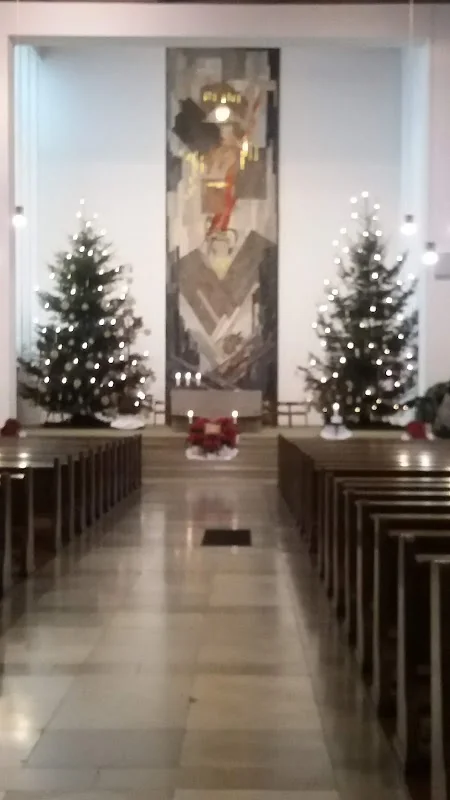
Hof
Ernst-Reuter-Straße 114, 95030 Hof, Deutschland
St. Konrad Hof | Services & Rooms
St. Konrad in Hof is a place where church life, community work, and space for encounters connect in remarkable ways. Those looking for a church in the Hof district of Neuhof will find here not only a liturgical center of the parish Bernhard-Lichtenberg but also a house that is used for services, conversations, lectures, conferences, and concerts. The address at Ernst-Reuter-Straße 114 is familiar to many people in Hof, as St. Konrad has been a fixed part of the western and northern urban area for decades. At the same time, the name stands for more than just a pure church space: St. Konrad is also a place where history, architecture, music, and community life overlap and reinforce each other.
Especially for search queries related to St. Konrad Hof, St. Konrad Church, St. Konrad photos, services, programs, directions, or renting space, this location is interesting because it fulfills multiple levels. On one hand, it is a sacred place with regular services and firmly established celebrations in the church year. On the other hand, the parish's environment provides an infrastructure that is practical for events: a large hall, a small hall, a group room, a kitchen, and additional equipment upon request. There is also a long, well-documented development from the purchase of the building site in 1951 through the church consecration in 1954 to renovations in the 1970s. This very mix makes St. Konrad Hof a location that is relevant not only in a religious sense but also in an organizational sense.
Services and Current Program in St. Konrad Hof
When people search for St. Konrad Hof, the topic of service is almost always at the top. The church is not just any event space, but a vibrant liturgical place within the parish Bernhard-Lichtenberg. Particularly important is the fixed service time on Saturday evenings at 6:30 PM, which is published on the official parish website. This reliable structure is crucial for many visitors because it shows: St. Konrad is firmly anchored in the spiritual everyday life of the community and is not only open for special occasions. Those who wish to inform themselves about the current program will also find regularly updated service orders in the parish, where St. Konrad repeatedly appears as a place for Eucharistic celebrations, rehearsals, confirmations, special liturgical celebrations, or even language services.
This is particularly important for the search intention behind keywords like St. Konrad program, St. Konrad service, or St. Konrad confirmation. St. Konrad is not only used as a weekend church but also for special dates in the pastoral annual cycle. According to the published plans, these include confirmation celebrations, rehearsals for confirmation, graduation services, and Eucharistic celebrations in various settings. The church thus fulfills a function that goes far beyond the classic Sunday pattern: It is a place for generations, for families, for young people, and for community members who gather in different life situations. This broad area of application makes St. Konrad so valuable for the parish.
Even though St. Konrad is not known as a large concert hall in the classical sense, the program plays a special role. The rooms around the church are used for lectures, conferences, and concerts, making St. Konrad a place where faith and culture come together. For seekers looking for a quiet, authentic, and well-organized place in Hof, this is a strong signal. The atmosphere is neither anonymous nor overly staged but characterized by community life, reliability, and a clear church identity. Especially in conjunction with the historical development of the church, it becomes clear that the program at St. Konrad was not created by chance but is part of a community culture that has grown over decades.
Another important aspect is the multilingualism and openness of use. In current service orders, St. Konrad also appears for celebrations in Polish, which makes the international and diverse character of the community visible. This is a detail that often only becomes apparent upon closer inspection but means a lot for the practical relevance of the location. A church that is open to both the classic parish community and different language and origin groups offers a special added value. So, those searching for St. Konrad Hof today or St. Konrad Hof currently rightly expect not just an address but a functioning community life with reliable dates and an open structure.
For visitors, it is also helpful that the official parish provides clear contact paths. Especially in the case of short-term changes, special services, or inquiries about specific celebrations, direct contact through the parish office is recommended. This is particularly sensible because church plans can naturally change, and current information is always essential. From an SEO perspective, this mix of fixed times, current dates, and personal approachability is crucial: The search query is not only served but directed to a place where information and reality fit well together.
Rooms, Capacity, and Equipment in the Parish Center
A large part of the relevance of St. Konrad Hof lies in the room structure. Those searching for St. Konrad room rental, St. Konrad parish center, or St. Konrad capacity usually want to know not only where the church is located but also what options are available on-site. The official description mentions various halls and rooms around St. Konrad that can be used for events. These include a large hall with a speaker system for about 150 people, a small hall for around 30 people, a group room for about 10 people, and a kitchen. For many organizations, groups, and church circles, this combination is ideal because it allows for flexible use: from small meetings to larger events.
The capacity of the large hall is a real plus because it covers a well-utilized medium event size for Hof and the surrounding area. 150 people are enough for lectures, community events, festive receptions, small concerts, or larger meetings, but not so large that the space loses its personal impact. This is an important difference from very large halls: St. Konrad offers closeness, overview, and a church atmosphere. In addition, the speaker system is particularly advantageous for word events and musical formats. Those looking for a place with clear functionality but without the character of a purely technical event machine will find a good balance here.
The additional resources are also interesting for organizers. Projectors and flip charts can be rented additionally, as well as equipment for tables and kitchens. This shows that St. Konrad is not only intended for liturgical celebrations but also for educational and group formats. A parish hall that is suitable for lectures, conferences, and team meetings is a practical added value in a city like Hof. Smaller institutions, associations, church groups, or volunteer initiatives benefit when they find not only a circle of chairs but a functioning infrastructure. This is an aspect that is often underestimated in digital search behavior but ultimately determines the quality of a place.
For concerts, another detail is noteworthy: A Bechstein grand piano is available. This instrument is not only a practical extra but a clear sign that musical events are explicitly considered in St. Konrad. A high-quality concert grand piano changes the perception of a space because it opens it up for classical music, song evenings, or special church music formats. In conjunction with the church architecture, this creates an atmosphere that works both emotionally and acoustically. Those searching for St. Konrad photos often come across impressions of a place where space, sound, and light belong together.
The room structure is also relevant for families and groups who need spaces for meetings, preparation, exchange, or joint celebrations in church life. A group room for about 10 people is suitable for small gatherings, preparation evenings, or meetings. The small hall is a middle type for moderately larger groups that need more space than a side room but less than the large hall. This tiering makes the location flexible and economically sensible. Instead of renting an oversized space, the appropriate size can be chosen depending on the occasion. This is a strong argument in today's use of community rooms.
In summary, St. Konrad Hof is not only a church in the narrower sense but a cleverly structured ensemble of liturgical space and functional infrastructure. This is equally important for SEO and for real users: The location fulfills a spiritual function and at the same time a practical event function. Those searching for room rental in Hof, parish hall Hof, concert space, or church event venue will find an offer here that is well understandable in its size and equipment.
History and Architecture of the Church in Neuhof
The history of St. Konrad Hof is closely linked to the growth of the city and the development of the Catholic community after World War II. As early as 1951, the Hof parish of St. Marien acquired a building site for a second church at Ernst-Reuter-Straße in the Neuhof district. The planning was undertaken by architect Franz Raith, and construction began in the summer of 1953. On October 13, 1954, the new church was consecrated by Archbishop Josef Otto Kolb of Bamberg. These dates mark the origin of a place that was intended from the very beginning not as a provisional solution but as a permanently planned church center.
Only two years after the church consecration, St. Konrad was detached from the city parish church in 1956 and elevated to an independent parish. This also changed the pastoral structure of the city of Hof. The parish area was divided, and St. Konrad took over the western and northern part of the city. This spatial separation remains an important part of the community's identity to this day. Therefore, when visiting St. Konrad, one does not only feel a sacred place but also a piece of post-war history, urban development, and church reorganization. The first pastor advocated that the pastoral care in St. Konrad would later be led by Jesuits, which further underscores the spiritual character of the place.
In the early years, the church was still relatively simply equipped. In 1959, a baptismal chapel with a baptismal font and bronze Christ was created to the left of the main entrance. In 1967, the extension building located on Ernst-Reuter-Straße with a parish hall and kindergarten was inaugurated. This step is particularly important for today's understanding of St. Konrad because it shows that the church was early on envisioned as the center of an entire community structure. Not only worship but also education, encounters, and childcare were spatially considered. This is a feature that continues to shape the location today.
In 1971 and 1972, a redesign followed in the spirit of the Second Vatican Council. The artist Hubert Weber from Lichtenfels designed new windows, furnishings, and other art objects. The new altar was set up in early 1972 and consecrated a few months later. In front of the tabernacle stands a life-sized bronze sculpture of Saint Brother Konrad, and the large mosaic on the choir wall also comes from Weber. This artistic redesign gives the church a strong visual identity to this day. Those searching for St. Konrad photos will therefore find not only a simple church space but an ensemble of bronze, stone, light, and religious symbolism.
The portals are also art historically noteworthy. The Easter gate on the north facade and the Christmas gate on the west facade were made by Hubert Weber; the Christmas gate was installed in 1980, and the Easter gate in 1983. These gates connect biblical imagery with architectural function and are a good example of how St. Konrad has been further developed over the last decades. The church is therefore not a frozen monument but a building that has changed over time without losing its character. In addition, a chime of four bells acoustically anchors the church's presence in the district.
Architecturally and historically, St. Konrad is thus a typical yet special example of a Catholic church of the post-war period in Bavaria. The combination of functionality, liturgical clarity, and artistic elaboration makes the place interesting for visitors who are interested in church building, community history, or religious places with a developed identity. This very multilayeredness is crucial for SEO relevance: St. Konrad Hof is not just a name but a story that can still be read in the architecture and uses today.
Directions, Address, and Practical Tips for Visitors
In search queries like St. Konrad directions, St. Konrad contact, or St. Konrad parking, it is usually about very concrete questions of everyday visits. The most important basis is the address: Ernst-Reuter-Straße 114, 95030 Hof. This places St. Konrad in the Neuhof district and makes it easily identifiable for community members from Hof as well as guests from outside. Those planning the way there can rely on the fact that the official address is clear and the church can be clearly located in the Hof urban area. This is particularly helpful for a spontaneous visit, as orientation in the district becomes significantly easier.
The official parish also provides contact information through which inquiries regarding use, dates, or room allocation can be clarified. This is especially important if one wants to book a hall, plan an event, or inquire about current service times. For visitors, St. Konrad is thus not only findable but also approachable. Especially in church locations, this personal contact is a great advantage over anonymous booking portals. So, if someone wants to know how to best arrive on-site or how an event can be organized, a direct call to the parish office is usually the fastest way.
Regarding parking: The publicly available information focuses primarily on address, use, and contact. A detailed official parking list is not prominently displayed on the central pages. Therefore, it is advisable for visitors to briefly inquire at the parish office before larger events or in uncertain parking situations. This is not a disadvantage but an expression of a more community-oriented structure where direct contact is more important than a standardized parking system. For inquiries regarding St. Konrad Hof parking, the combination of address, time planning, and personal consultation is therefore the most practical way.
For those searching for St. Konrad Hof for the first time, the location in Neuhof is advantageous. The district is easily accessible within Hof, and the church clearly belongs to the local neighborhood. This makes the journey straightforward and avoids the typical problems that arise at very large event venues. Those looking for a place with a church atmosphere and a manageable location will find it here. This applies both to regular service visits and events in the parish center. Especially for family celebrations, lectures, or concert performances, this combination of a clear address and manageable structure is valuable.
In practice, it is worthwhile to plan the visit to St. Konrad with some time buffer. This is generally sensible for church visits, especially when a service, rehearsal, or group event is taking place. Even though the location is not designed as a huge event complex, it shows a high reliability, especially in preparation and organization. The rooms are functional, the address is clear, and the church use ensures a calm, orderly atmosphere. This creates a visit experience that does not rely on spectacle but on calm, orientation, and genuine usability.
Concerts, Confirmation, and Special Community Moments
St. Konrad Hof is not only a place of regularity but also a space for special moments. This is particularly evident in concerts, confirmations, and other occasions that go beyond the usual weekly rhythm. The official description of the rooms makes it clear that lectures, conferences, and concerts are explicitly provided for. In conjunction with the Bechstein grand piano, this creates a location that can also have a cultural impact. Music in a church space often unfolds a special intensity because acoustics, architecture, and liturgical symbolism interact. St. Konrad offers exactly this connection.
Confirmation is also an important building block of local significance. In the parish Bernhard-Lichtenberg, St. Konrad is regularly used for confirmation celebrations. This makes the church a place of life change, where young people and families take an important step in their faith life. For search queries like St. Konrad confirmation or St. Konrad program, this is a strong signal: Here, not only routine services take place but also centrally significant sacramental celebrations. Such occasions shape the memories of many people particularly sustainably because they are associated with family, music, community, and a festive framework.
Also particularly interesting is the range of use, which is reflected in the current service orders. In addition to normal Eucharistic celebrations, rehearsals for confirmation, graduation services, and celebrations in other languages also appear. This clarifies that St. Konrad does not function as an isolated sacred space but as an active part of a vibrant parish. The church is thus a place where different groups can meet. For SEO, this means: Those searching for a church with genuine depth of use will find it here. The location is not only beautiful but actually needed.
Additionally, the historical depth further enriches special occasions. When a confirmation, concert, or festive Eucharist takes place in St. Konrad today, it happens in a building that has been continuously expanded and designed since the 1950s. This grown atmosphere makes every special moment credible and sustainable. People often intuitively sense whether a space is merely decorative or if it carries a story. St. Konrad clearly belongs to the latter category. This is exactly why the location is convincing for both festive and cultural occasions.
For groups, choirs, parishes, associations, and families, this versatility is a real argument. A place that combines services, spaces for events, musical opportunities, and church sacraments is valuable in a city like Hof. It connects spiritual depth with organizational usability. So, those looking for an event venue with a Christian character, good room structure, and genuine community ties will find a convincing address in St. Konrad Hof.
Why St. Konrad in Hof Convincingly Meets Community, Culture, and Planning Needs
St. Konrad Hof is particularly convincing because various requirements come together here that often appear separately in practice. A church should provide spiritual support, a parish hall should function, an event should be well organized, and a visitor should be able to orient themselves quickly. St. Konrad fulfills exactly this mix. The place is manageable, historically grown, liturgically active, and at the same time technically equipped so that cultural and educational formats are also well possible. This is a rarely good combination for a church location in the medium size range.
For the community, St. Konrad is an anchor point in the Neuhof district and beyond. The fixed service time on Saturday evening, the use for confirmations and special celebrations, as well as the integration into the parish Bernhard-Lichtenberg make the church a stable part of church everyday life. For groups and organizers, the rooms, capacities, and equipment are interesting. The large hall with about 150 people, the small hall, the group room, the kitchen, and the Bechstein grand piano open realistic possibilities for different formats. This ranges from small work meetings to festive concert evenings. This versatility is important for seekers today.
From an SEO perspective, St. Konrad Hof is an exciting topic because user intentions are very clear. Those searching for church, photos, contact, directions, parking, program, service, or room rental expect concrete and trustworthy information. The official data provides a solid basis for this: Address, capacities, use, history, and current service times are well documented. For content, this means that the presentation can be factual and at the same time attractive without resorting to invented details. Especially in the area of event venues, accuracy is more important than promotional language.
St. Konrad Hof is therefore not only a religious place but also a well-structured location for encounters. The history of the church since 1951, the consecration in 1954, the detachment in 1956, the expansion in 1967, and the artistic redesign in the 1970s show a continuity that builds trust. Those looking for a space for faith, music, and community will find a credible environment here. And those simply wanting to know where St. Konrad is located, when services are held, or how many people fit in the hall will receive clear answers.
That is why St. Konrad Hof is a place that works well both in search results and in real use. The location has identity, utility, and history. It is locally anchored, understandable for visitors, and practical for events. This makes it one of the more interesting church addresses in Hof, especially for those seeking a combination of sacred space, community center, and cultural usability. Those visiting St. Konrad experience not an anonymous event venue but a church with character, structure, and grown significance.
Sources:
Mehr anzeigenWeniger anzeigen
St. Konrad Hof | Services & Rooms
St. Konrad in Hof is a place where church life, community work, and space for encounters connect in remarkable ways. Those looking for a church in the Hof district of Neuhof will find here not only a liturgical center of the parish Bernhard-Lichtenberg but also a house that is used for services, conversations, lectures, conferences, and concerts. The address at Ernst-Reuter-Straße 114 is familiar to many people in Hof, as St. Konrad has been a fixed part of the western and northern urban area for decades. At the same time, the name stands for more than just a pure church space: St. Konrad is also a place where history, architecture, music, and community life overlap and reinforce each other.
Especially for search queries related to St. Konrad Hof, St. Konrad Church, St. Konrad photos, services, programs, directions, or renting space, this location is interesting because it fulfills multiple levels. On one hand, it is a sacred place with regular services and firmly established celebrations in the church year. On the other hand, the parish's environment provides an infrastructure that is practical for events: a large hall, a small hall, a group room, a kitchen, and additional equipment upon request. There is also a long, well-documented development from the purchase of the building site in 1951 through the church consecration in 1954 to renovations in the 1970s. This very mix makes St. Konrad Hof a location that is relevant not only in a religious sense but also in an organizational sense.
Services and Current Program in St. Konrad Hof
When people search for St. Konrad Hof, the topic of service is almost always at the top. The church is not just any event space, but a vibrant liturgical place within the parish Bernhard-Lichtenberg. Particularly important is the fixed service time on Saturday evenings at 6:30 PM, which is published on the official parish website. This reliable structure is crucial for many visitors because it shows: St. Konrad is firmly anchored in the spiritual everyday life of the community and is not only open for special occasions. Those who wish to inform themselves about the current program will also find regularly updated service orders in the parish, where St. Konrad repeatedly appears as a place for Eucharistic celebrations, rehearsals, confirmations, special liturgical celebrations, or even language services.
This is particularly important for the search intention behind keywords like St. Konrad program, St. Konrad service, or St. Konrad confirmation. St. Konrad is not only used as a weekend church but also for special dates in the pastoral annual cycle. According to the published plans, these include confirmation celebrations, rehearsals for confirmation, graduation services, and Eucharistic celebrations in various settings. The church thus fulfills a function that goes far beyond the classic Sunday pattern: It is a place for generations, for families, for young people, and for community members who gather in different life situations. This broad area of application makes St. Konrad so valuable for the parish.
Even though St. Konrad is not known as a large concert hall in the classical sense, the program plays a special role. The rooms around the church are used for lectures, conferences, and concerts, making St. Konrad a place where faith and culture come together. For seekers looking for a quiet, authentic, and well-organized place in Hof, this is a strong signal. The atmosphere is neither anonymous nor overly staged but characterized by community life, reliability, and a clear church identity. Especially in conjunction with the historical development of the church, it becomes clear that the program at St. Konrad was not created by chance but is part of a community culture that has grown over decades.
Another important aspect is the multilingualism and openness of use. In current service orders, St. Konrad also appears for celebrations in Polish, which makes the international and diverse character of the community visible. This is a detail that often only becomes apparent upon closer inspection but means a lot for the practical relevance of the location. A church that is open to both the classic parish community and different language and origin groups offers a special added value. So, those searching for St. Konrad Hof today or St. Konrad Hof currently rightly expect not just an address but a functioning community life with reliable dates and an open structure.
For visitors, it is also helpful that the official parish provides clear contact paths. Especially in the case of short-term changes, special services, or inquiries about specific celebrations, direct contact through the parish office is recommended. This is particularly sensible because church plans can naturally change, and current information is always essential. From an SEO perspective, this mix of fixed times, current dates, and personal approachability is crucial: The search query is not only served but directed to a place where information and reality fit well together.
Rooms, Capacity, and Equipment in the Parish Center
A large part of the relevance of St. Konrad Hof lies in the room structure. Those searching for St. Konrad room rental, St. Konrad parish center, or St. Konrad capacity usually want to know not only where the church is located but also what options are available on-site. The official description mentions various halls and rooms around St. Konrad that can be used for events. These include a large hall with a speaker system for about 150 people, a small hall for around 30 people, a group room for about 10 people, and a kitchen. For many organizations, groups, and church circles, this combination is ideal because it allows for flexible use: from small meetings to larger events.
The capacity of the large hall is a real plus because it covers a well-utilized medium event size for Hof and the surrounding area. 150 people are enough for lectures, community events, festive receptions, small concerts, or larger meetings, but not so large that the space loses its personal impact. This is an important difference from very large halls: St. Konrad offers closeness, overview, and a church atmosphere. In addition, the speaker system is particularly advantageous for word events and musical formats. Those looking for a place with clear functionality but without the character of a purely technical event machine will find a good balance here.
The additional resources are also interesting for organizers. Projectors and flip charts can be rented additionally, as well as equipment for tables and kitchens. This shows that St. Konrad is not only intended for liturgical celebrations but also for educational and group formats. A parish hall that is suitable for lectures, conferences, and team meetings is a practical added value in a city like Hof. Smaller institutions, associations, church groups, or volunteer initiatives benefit when they find not only a circle of chairs but a functioning infrastructure. This is an aspect that is often underestimated in digital search behavior but ultimately determines the quality of a place.
For concerts, another detail is noteworthy: A Bechstein grand piano is available. This instrument is not only a practical extra but a clear sign that musical events are explicitly considered in St. Konrad. A high-quality concert grand piano changes the perception of a space because it opens it up for classical music, song evenings, or special church music formats. In conjunction with the church architecture, this creates an atmosphere that works both emotionally and acoustically. Those searching for St. Konrad photos often come across impressions of a place where space, sound, and light belong together.
The room structure is also relevant for families and groups who need spaces for meetings, preparation, exchange, or joint celebrations in church life. A group room for about 10 people is suitable for small gatherings, preparation evenings, or meetings. The small hall is a middle type for moderately larger groups that need more space than a side room but less than the large hall. This tiering makes the location flexible and economically sensible. Instead of renting an oversized space, the appropriate size can be chosen depending on the occasion. This is a strong argument in today's use of community rooms.
In summary, St. Konrad Hof is not only a church in the narrower sense but a cleverly structured ensemble of liturgical space and functional infrastructure. This is equally important for SEO and for real users: The location fulfills a spiritual function and at the same time a practical event function. Those searching for room rental in Hof, parish hall Hof, concert space, or church event venue will find an offer here that is well understandable in its size and equipment.
History and Architecture of the Church in Neuhof
The history of St. Konrad Hof is closely linked to the growth of the city and the development of the Catholic community after World War II. As early as 1951, the Hof parish of St. Marien acquired a building site for a second church at Ernst-Reuter-Straße in the Neuhof district. The planning was undertaken by architect Franz Raith, and construction began in the summer of 1953. On October 13, 1954, the new church was consecrated by Archbishop Josef Otto Kolb of Bamberg. These dates mark the origin of a place that was intended from the very beginning not as a provisional solution but as a permanently planned church center.
Only two years after the church consecration, St. Konrad was detached from the city parish church in 1956 and elevated to an independent parish. This also changed the pastoral structure of the city of Hof. The parish area was divided, and St. Konrad took over the western and northern part of the city. This spatial separation remains an important part of the community's identity to this day. Therefore, when visiting St. Konrad, one does not only feel a sacred place but also a piece of post-war history, urban development, and church reorganization. The first pastor advocated that the pastoral care in St. Konrad would later be led by Jesuits, which further underscores the spiritual character of the place.
In the early years, the church was still relatively simply equipped. In 1959, a baptismal chapel with a baptismal font and bronze Christ was created to the left of the main entrance. In 1967, the extension building located on Ernst-Reuter-Straße with a parish hall and kindergarten was inaugurated. This step is particularly important for today's understanding of St. Konrad because it shows that the church was early on envisioned as the center of an entire community structure. Not only worship but also education, encounters, and childcare were spatially considered. This is a feature that continues to shape the location today.
In 1971 and 1972, a redesign followed in the spirit of the Second Vatican Council. The artist Hubert Weber from Lichtenfels designed new windows, furnishings, and other art objects. The new altar was set up in early 1972 and consecrated a few months later. In front of the tabernacle stands a life-sized bronze sculpture of Saint Brother Konrad, and the large mosaic on the choir wall also comes from Weber. This artistic redesign gives the church a strong visual identity to this day. Those searching for St. Konrad photos will therefore find not only a simple church space but an ensemble of bronze, stone, light, and religious symbolism.
The portals are also art historically noteworthy. The Easter gate on the north facade and the Christmas gate on the west facade were made by Hubert Weber; the Christmas gate was installed in 1980, and the Easter gate in 1983. These gates connect biblical imagery with architectural function and are a good example of how St. Konrad has been further developed over the last decades. The church is therefore not a frozen monument but a building that has changed over time without losing its character. In addition, a chime of four bells acoustically anchors the church's presence in the district.
Architecturally and historically, St. Konrad is thus a typical yet special example of a Catholic church of the post-war period in Bavaria. The combination of functionality, liturgical clarity, and artistic elaboration makes the place interesting for visitors who are interested in church building, community history, or religious places with a developed identity. This very multilayeredness is crucial for SEO relevance: St. Konrad Hof is not just a name but a story that can still be read in the architecture and uses today.
Directions, Address, and Practical Tips for Visitors
In search queries like St. Konrad directions, St. Konrad contact, or St. Konrad parking, it is usually about very concrete questions of everyday visits. The most important basis is the address: Ernst-Reuter-Straße 114, 95030 Hof. This places St. Konrad in the Neuhof district and makes it easily identifiable for community members from Hof as well as guests from outside. Those planning the way there can rely on the fact that the official address is clear and the church can be clearly located in the Hof urban area. This is particularly helpful for a spontaneous visit, as orientation in the district becomes significantly easier.
The official parish also provides contact information through which inquiries regarding use, dates, or room allocation can be clarified. This is especially important if one wants to book a hall, plan an event, or inquire about current service times. For visitors, St. Konrad is thus not only findable but also approachable. Especially in church locations, this personal contact is a great advantage over anonymous booking portals. So, if someone wants to know how to best arrive on-site or how an event can be organized, a direct call to the parish office is usually the fastest way.
Regarding parking: The publicly available information focuses primarily on address, use, and contact. A detailed official parking list is not prominently displayed on the central pages. Therefore, it is advisable for visitors to briefly inquire at the parish office before larger events or in uncertain parking situations. This is not a disadvantage but an expression of a more community-oriented structure where direct contact is more important than a standardized parking system. For inquiries regarding St. Konrad Hof parking, the combination of address, time planning, and personal consultation is therefore the most practical way.
For those searching for St. Konrad Hof for the first time, the location in Neuhof is advantageous. The district is easily accessible within Hof, and the church clearly belongs to the local neighborhood. This makes the journey straightforward and avoids the typical problems that arise at very large event venues. Those looking for a place with a church atmosphere and a manageable location will find it here. This applies both to regular service visits and events in the parish center. Especially for family celebrations, lectures, or concert performances, this combination of a clear address and manageable structure is valuable.
In practice, it is worthwhile to plan the visit to St. Konrad with some time buffer. This is generally sensible for church visits, especially when a service, rehearsal, or group event is taking place. Even though the location is not designed as a huge event complex, it shows a high reliability, especially in preparation and organization. The rooms are functional, the address is clear, and the church use ensures a calm, orderly atmosphere. This creates a visit experience that does not rely on spectacle but on calm, orientation, and genuine usability.
Concerts, Confirmation, and Special Community Moments
St. Konrad Hof is not only a place of regularity but also a space for special moments. This is particularly evident in concerts, confirmations, and other occasions that go beyond the usual weekly rhythm. The official description of the rooms makes it clear that lectures, conferences, and concerts are explicitly provided for. In conjunction with the Bechstein grand piano, this creates a location that can also have a cultural impact. Music in a church space often unfolds a special intensity because acoustics, architecture, and liturgical symbolism interact. St. Konrad offers exactly this connection.
Confirmation is also an important building block of local significance. In the parish Bernhard-Lichtenberg, St. Konrad is regularly used for confirmation celebrations. This makes the church a place of life change, where young people and families take an important step in their faith life. For search queries like St. Konrad confirmation or St. Konrad program, this is a strong signal: Here, not only routine services take place but also centrally significant sacramental celebrations. Such occasions shape the memories of many people particularly sustainably because they are associated with family, music, community, and a festive framework.
Also particularly interesting is the range of use, which is reflected in the current service orders. In addition to normal Eucharistic celebrations, rehearsals for confirmation, graduation services, and celebrations in other languages also appear. This clarifies that St. Konrad does not function as an isolated sacred space but as an active part of a vibrant parish. The church is thus a place where different groups can meet. For SEO, this means: Those searching for a church with genuine depth of use will find it here. The location is not only beautiful but actually needed.
Additionally, the historical depth further enriches special occasions. When a confirmation, concert, or festive Eucharist takes place in St. Konrad today, it happens in a building that has been continuously expanded and designed since the 1950s. This grown atmosphere makes every special moment credible and sustainable. People often intuitively sense whether a space is merely decorative or if it carries a story. St. Konrad clearly belongs to the latter category. This is exactly why the location is convincing for both festive and cultural occasions.
For groups, choirs, parishes, associations, and families, this versatility is a real argument. A place that combines services, spaces for events, musical opportunities, and church sacraments is valuable in a city like Hof. It connects spiritual depth with organizational usability. So, those looking for an event venue with a Christian character, good room structure, and genuine community ties will find a convincing address in St. Konrad Hof.
Why St. Konrad in Hof Convincingly Meets Community, Culture, and Planning Needs
St. Konrad Hof is particularly convincing because various requirements come together here that often appear separately in practice. A church should provide spiritual support, a parish hall should function, an event should be well organized, and a visitor should be able to orient themselves quickly. St. Konrad fulfills exactly this mix. The place is manageable, historically grown, liturgically active, and at the same time technically equipped so that cultural and educational formats are also well possible. This is a rarely good combination for a church location in the medium size range.
For the community, St. Konrad is an anchor point in the Neuhof district and beyond. The fixed service time on Saturday evening, the use for confirmations and special celebrations, as well as the integration into the parish Bernhard-Lichtenberg make the church a stable part of church everyday life. For groups and organizers, the rooms, capacities, and equipment are interesting. The large hall with about 150 people, the small hall, the group room, the kitchen, and the Bechstein grand piano open realistic possibilities for different formats. This ranges from small work meetings to festive concert evenings. This versatility is important for seekers today.
From an SEO perspective, St. Konrad Hof is an exciting topic because user intentions are very clear. Those searching for church, photos, contact, directions, parking, program, service, or room rental expect concrete and trustworthy information. The official data provides a solid basis for this: Address, capacities, use, history, and current service times are well documented. For content, this means that the presentation can be factual and at the same time attractive without resorting to invented details. Especially in the area of event venues, accuracy is more important than promotional language.
St. Konrad Hof is therefore not only a religious place but also a well-structured location for encounters. The history of the church since 1951, the consecration in 1954, the detachment in 1956, the expansion in 1967, and the artistic redesign in the 1970s show a continuity that builds trust. Those looking for a space for faith, music, and community will find a credible environment here. And those simply wanting to know where St. Konrad is located, when services are held, or how many people fit in the hall will receive clear answers.
That is why St. Konrad Hof is a place that works well both in search results and in real use. The location has identity, utility, and history. It is locally anchored, understandable for visitors, and practical for events. This makes it one of the more interesting church addresses in Hof, especially for those seeking a combination of sacred space, community center, and cultural usability. Those visiting St. Konrad experience not an anonymous event venue but a church with character, structure, and grown significance.
Sources:
St. Konrad Hof | Services & Rooms
St. Konrad in Hof is a place where church life, community work, and space for encounters connect in remarkable ways. Those looking for a church in the Hof district of Neuhof will find here not only a liturgical center of the parish Bernhard-Lichtenberg but also a house that is used for services, conversations, lectures, conferences, and concerts. The address at Ernst-Reuter-Straße 114 is familiar to many people in Hof, as St. Konrad has been a fixed part of the western and northern urban area for decades. At the same time, the name stands for more than just a pure church space: St. Konrad is also a place where history, architecture, music, and community life overlap and reinforce each other.
Especially for search queries related to St. Konrad Hof, St. Konrad Church, St. Konrad photos, services, programs, directions, or renting space, this location is interesting because it fulfills multiple levels. On one hand, it is a sacred place with regular services and firmly established celebrations in the church year. On the other hand, the parish's environment provides an infrastructure that is practical for events: a large hall, a small hall, a group room, a kitchen, and additional equipment upon request. There is also a long, well-documented development from the purchase of the building site in 1951 through the church consecration in 1954 to renovations in the 1970s. This very mix makes St. Konrad Hof a location that is relevant not only in a religious sense but also in an organizational sense.
Services and Current Program in St. Konrad Hof
When people search for St. Konrad Hof, the topic of service is almost always at the top. The church is not just any event space, but a vibrant liturgical place within the parish Bernhard-Lichtenberg. Particularly important is the fixed service time on Saturday evenings at 6:30 PM, which is published on the official parish website. This reliable structure is crucial for many visitors because it shows: St. Konrad is firmly anchored in the spiritual everyday life of the community and is not only open for special occasions. Those who wish to inform themselves about the current program will also find regularly updated service orders in the parish, where St. Konrad repeatedly appears as a place for Eucharistic celebrations, rehearsals, confirmations, special liturgical celebrations, or even language services.
This is particularly important for the search intention behind keywords like St. Konrad program, St. Konrad service, or St. Konrad confirmation. St. Konrad is not only used as a weekend church but also for special dates in the pastoral annual cycle. According to the published plans, these include confirmation celebrations, rehearsals for confirmation, graduation services, and Eucharistic celebrations in various settings. The church thus fulfills a function that goes far beyond the classic Sunday pattern: It is a place for generations, for families, for young people, and for community members who gather in different life situations. This broad area of application makes St. Konrad so valuable for the parish.
Even though St. Konrad is not known as a large concert hall in the classical sense, the program plays a special role. The rooms around the church are used for lectures, conferences, and concerts, making St. Konrad a place where faith and culture come together. For seekers looking for a quiet, authentic, and well-organized place in Hof, this is a strong signal. The atmosphere is neither anonymous nor overly staged but characterized by community life, reliability, and a clear church identity. Especially in conjunction with the historical development of the church, it becomes clear that the program at St. Konrad was not created by chance but is part of a community culture that has grown over decades.
Another important aspect is the multilingualism and openness of use. In current service orders, St. Konrad also appears for celebrations in Polish, which makes the international and diverse character of the community visible. This is a detail that often only becomes apparent upon closer inspection but means a lot for the practical relevance of the location. A church that is open to both the classic parish community and different language and origin groups offers a special added value. So, those searching for St. Konrad Hof today or St. Konrad Hof currently rightly expect not just an address but a functioning community life with reliable dates and an open structure.
For visitors, it is also helpful that the official parish provides clear contact paths. Especially in the case of short-term changes, special services, or inquiries about specific celebrations, direct contact through the parish office is recommended. This is particularly sensible because church plans can naturally change, and current information is always essential. From an SEO perspective, this mix of fixed times, current dates, and personal approachability is crucial: The search query is not only served but directed to a place where information and reality fit well together.
Rooms, Capacity, and Equipment in the Parish Center
A large part of the relevance of St. Konrad Hof lies in the room structure. Those searching for St. Konrad room rental, St. Konrad parish center, or St. Konrad capacity usually want to know not only where the church is located but also what options are available on-site. The official description mentions various halls and rooms around St. Konrad that can be used for events. These include a large hall with a speaker system for about 150 people, a small hall for around 30 people, a group room for about 10 people, and a kitchen. For many organizations, groups, and church circles, this combination is ideal because it allows for flexible use: from small meetings to larger events.
The capacity of the large hall is a real plus because it covers a well-utilized medium event size for Hof and the surrounding area. 150 people are enough for lectures, community events, festive receptions, small concerts, or larger meetings, but not so large that the space loses its personal impact. This is an important difference from very large halls: St. Konrad offers closeness, overview, and a church atmosphere. In addition, the speaker system is particularly advantageous for word events and musical formats. Those looking for a place with clear functionality but without the character of a purely technical event machine will find a good balance here.
The additional resources are also interesting for organizers. Projectors and flip charts can be rented additionally, as well as equipment for tables and kitchens. This shows that St. Konrad is not only intended for liturgical celebrations but also for educational and group formats. A parish hall that is suitable for lectures, conferences, and team meetings is a practical added value in a city like Hof. Smaller institutions, associations, church groups, or volunteer initiatives benefit when they find not only a circle of chairs but a functioning infrastructure. This is an aspect that is often underestimated in digital search behavior but ultimately determines the quality of a place.
For concerts, another detail is noteworthy: A Bechstein grand piano is available. This instrument is not only a practical extra but a clear sign that musical events are explicitly considered in St. Konrad. A high-quality concert grand piano changes the perception of a space because it opens it up for classical music, song evenings, or special church music formats. In conjunction with the church architecture, this creates an atmosphere that works both emotionally and acoustically. Those searching for St. Konrad photos often come across impressions of a place where space, sound, and light belong together.
The room structure is also relevant for families and groups who need spaces for meetings, preparation, exchange, or joint celebrations in church life. A group room for about 10 people is suitable for small gatherings, preparation evenings, or meetings. The small hall is a middle type for moderately larger groups that need more space than a side room but less than the large hall. This tiering makes the location flexible and economically sensible. Instead of renting an oversized space, the appropriate size can be chosen depending on the occasion. This is a strong argument in today's use of community rooms.
In summary, St. Konrad Hof is not only a church in the narrower sense but a cleverly structured ensemble of liturgical space and functional infrastructure. This is equally important for SEO and for real users: The location fulfills a spiritual function and at the same time a practical event function. Those searching for room rental in Hof, parish hall Hof, concert space, or church event venue will find an offer here that is well understandable in its size and equipment.
History and Architecture of the Church in Neuhof
The history of St. Konrad Hof is closely linked to the growth of the city and the development of the Catholic community after World War II. As early as 1951, the Hof parish of St. Marien acquired a building site for a second church at Ernst-Reuter-Straße in the Neuhof district. The planning was undertaken by architect Franz Raith, and construction began in the summer of 1953. On October 13, 1954, the new church was consecrated by Archbishop Josef Otto Kolb of Bamberg. These dates mark the origin of a place that was intended from the very beginning not as a provisional solution but as a permanently planned church center.
Only two years after the church consecration, St. Konrad was detached from the city parish church in 1956 and elevated to an independent parish. This also changed the pastoral structure of the city of Hof. The parish area was divided, and St. Konrad took over the western and northern part of the city. This spatial separation remains an important part of the community's identity to this day. Therefore, when visiting St. Konrad, one does not only feel a sacred place but also a piece of post-war history, urban development, and church reorganization. The first pastor advocated that the pastoral care in St. Konrad would later be led by Jesuits, which further underscores the spiritual character of the place.
In the early years, the church was still relatively simply equipped. In 1959, a baptismal chapel with a baptismal font and bronze Christ was created to the left of the main entrance. In 1967, the extension building located on Ernst-Reuter-Straße with a parish hall and kindergarten was inaugurated. This step is particularly important for today's understanding of St. Konrad because it shows that the church was early on envisioned as the center of an entire community structure. Not only worship but also education, encounters, and childcare were spatially considered. This is a feature that continues to shape the location today.
In 1971 and 1972, a redesign followed in the spirit of the Second Vatican Council. The artist Hubert Weber from Lichtenfels designed new windows, furnishings, and other art objects. The new altar was set up in early 1972 and consecrated a few months later. In front of the tabernacle stands a life-sized bronze sculpture of Saint Brother Konrad, and the large mosaic on the choir wall also comes from Weber. This artistic redesign gives the church a strong visual identity to this day. Those searching for St. Konrad photos will therefore find not only a simple church space but an ensemble of bronze, stone, light, and religious symbolism.
The portals are also art historically noteworthy. The Easter gate on the north facade and the Christmas gate on the west facade were made by Hubert Weber; the Christmas gate was installed in 1980, and the Easter gate in 1983. These gates connect biblical imagery with architectural function and are a good example of how St. Konrad has been further developed over the last decades. The church is therefore not a frozen monument but a building that has changed over time without losing its character. In addition, a chime of four bells acoustically anchors the church's presence in the district.
Architecturally and historically, St. Konrad is thus a typical yet special example of a Catholic church of the post-war period in Bavaria. The combination of functionality, liturgical clarity, and artistic elaboration makes the place interesting for visitors who are interested in church building, community history, or religious places with a developed identity. This very multilayeredness is crucial for SEO relevance: St. Konrad Hof is not just a name but a story that can still be read in the architecture and uses today.
Directions, Address, and Practical Tips for Visitors
In search queries like St. Konrad directions, St. Konrad contact, or St. Konrad parking, it is usually about very concrete questions of everyday visits. The most important basis is the address: Ernst-Reuter-Straße 114, 95030 Hof. This places St. Konrad in the Neuhof district and makes it easily identifiable for community members from Hof as well as guests from outside. Those planning the way there can rely on the fact that the official address is clear and the church can be clearly located in the Hof urban area. This is particularly helpful for a spontaneous visit, as orientation in the district becomes significantly easier.
The official parish also provides contact information through which inquiries regarding use, dates, or room allocation can be clarified. This is especially important if one wants to book a hall, plan an event, or inquire about current service times. For visitors, St. Konrad is thus not only findable but also approachable. Especially in church locations, this personal contact is a great advantage over anonymous booking portals. So, if someone wants to know how to best arrive on-site or how an event can be organized, a direct call to the parish office is usually the fastest way.
Regarding parking: The publicly available information focuses primarily on address, use, and contact. A detailed official parking list is not prominently displayed on the central pages. Therefore, it is advisable for visitors to briefly inquire at the parish office before larger events or in uncertain parking situations. This is not a disadvantage but an expression of a more community-oriented structure where direct contact is more important than a standardized parking system. For inquiries regarding St. Konrad Hof parking, the combination of address, time planning, and personal consultation is therefore the most practical way.
For those searching for St. Konrad Hof for the first time, the location in Neuhof is advantageous. The district is easily accessible within Hof, and the church clearly belongs to the local neighborhood. This makes the journey straightforward and avoids the typical problems that arise at very large event venues. Those looking for a place with a church atmosphere and a manageable location will find it here. This applies both to regular service visits and events in the parish center. Especially for family celebrations, lectures, or concert performances, this combination of a clear address and manageable structure is valuable.
In practice, it is worthwhile to plan the visit to St. Konrad with some time buffer. This is generally sensible for church visits, especially when a service, rehearsal, or group event is taking place. Even though the location is not designed as a huge event complex, it shows a high reliability, especially in preparation and organization. The rooms are functional, the address is clear, and the church use ensures a calm, orderly atmosphere. This creates a visit experience that does not rely on spectacle but on calm, orientation, and genuine usability.
Concerts, Confirmation, and Special Community Moments
St. Konrad Hof is not only a place of regularity but also a space for special moments. This is particularly evident in concerts, confirmations, and other occasions that go beyond the usual weekly rhythm. The official description of the rooms makes it clear that lectures, conferences, and concerts are explicitly provided for. In conjunction with the Bechstein grand piano, this creates a location that can also have a cultural impact. Music in a church space often unfolds a special intensity because acoustics, architecture, and liturgical symbolism interact. St. Konrad offers exactly this connection.
Confirmation is also an important building block of local significance. In the parish Bernhard-Lichtenberg, St. Konrad is regularly used for confirmation celebrations. This makes the church a place of life change, where young people and families take an important step in their faith life. For search queries like St. Konrad confirmation or St. Konrad program, this is a strong signal: Here, not only routine services take place but also centrally significant sacramental celebrations. Such occasions shape the memories of many people particularly sustainably because they are associated with family, music, community, and a festive framework.
Also particularly interesting is the range of use, which is reflected in the current service orders. In addition to normal Eucharistic celebrations, rehearsals for confirmation, graduation services, and celebrations in other languages also appear. This clarifies that St. Konrad does not function as an isolated sacred space but as an active part of a vibrant parish. The church is thus a place where different groups can meet. For SEO, this means: Those searching for a church with genuine depth of use will find it here. The location is not only beautiful but actually needed.
Additionally, the historical depth further enriches special occasions. When a confirmation, concert, or festive Eucharist takes place in St. Konrad today, it happens in a building that has been continuously expanded and designed since the 1950s. This grown atmosphere makes every special moment credible and sustainable. People often intuitively sense whether a space is merely decorative or if it carries a story. St. Konrad clearly belongs to the latter category. This is exactly why the location is convincing for both festive and cultural occasions.
For groups, choirs, parishes, associations, and families, this versatility is a real argument. A place that combines services, spaces for events, musical opportunities, and church sacraments is valuable in a city like Hof. It connects spiritual depth with organizational usability. So, those looking for an event venue with a Christian character, good room structure, and genuine community ties will find a convincing address in St. Konrad Hof.
Why St. Konrad in Hof Convincingly Meets Community, Culture, and Planning Needs
St. Konrad Hof is particularly convincing because various requirements come together here that often appear separately in practice. A church should provide spiritual support, a parish hall should function, an event should be well organized, and a visitor should be able to orient themselves quickly. St. Konrad fulfills exactly this mix. The place is manageable, historically grown, liturgically active, and at the same time technically equipped so that cultural and educational formats are also well possible. This is a rarely good combination for a church location in the medium size range.
For the community, St. Konrad is an anchor point in the Neuhof district and beyond. The fixed service time on Saturday evening, the use for confirmations and special celebrations, as well as the integration into the parish Bernhard-Lichtenberg make the church a stable part of church everyday life. For groups and organizers, the rooms, capacities, and equipment are interesting. The large hall with about 150 people, the small hall, the group room, the kitchen, and the Bechstein grand piano open realistic possibilities for different formats. This ranges from small work meetings to festive concert evenings. This versatility is important for seekers today.
From an SEO perspective, St. Konrad Hof is an exciting topic because user intentions are very clear. Those searching for church, photos, contact, directions, parking, program, service, or room rental expect concrete and trustworthy information. The official data provides a solid basis for this: Address, capacities, use, history, and current service times are well documented. For content, this means that the presentation can be factual and at the same time attractive without resorting to invented details. Especially in the area of event venues, accuracy is more important than promotional language.
St. Konrad Hof is therefore not only a religious place but also a well-structured location for encounters. The history of the church since 1951, the consecration in 1954, the detachment in 1956, the expansion in 1967, and the artistic redesign in the 1970s show a continuity that builds trust. Those looking for a space for faith, music, and community will find a credible environment here. And those simply wanting to know where St. Konrad is located, when services are held, or how many people fit in the hall will receive clear answers.
That is why St. Konrad Hof is a place that works well both in search results and in real use. The location has identity, utility, and history. It is locally anchored, understandable for visitors, and practical for events. This makes it one of the more interesting church addresses in Hof, especially for those seeking a combination of sacred space, community center, and cultural usability. Those visiting St. Konrad experience not an anonymous event venue but a church with character, structure, and grown significance.
Sources:
Frequently Asked Questions
Reviews
No reviews found