
Alexander von Zemlinsky
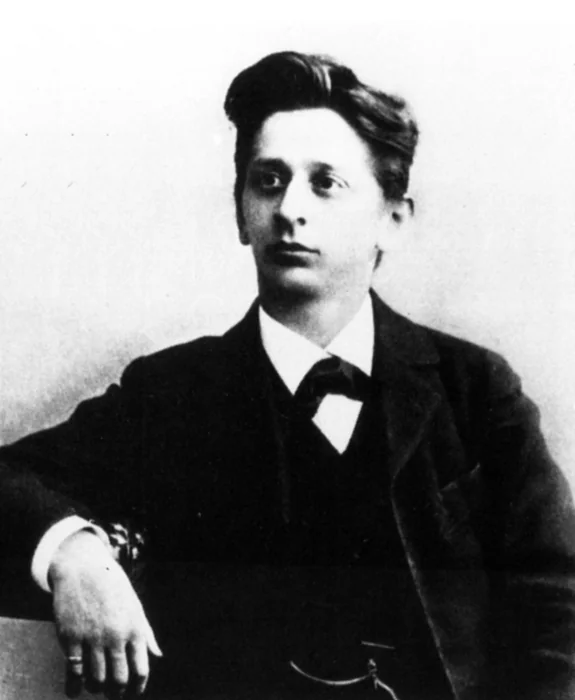
Image from Wikipedia
Image from Wikipedia
Alexander von Zemlinsky – Composer Between Late Romanticism and Modernity
The Great Quiet Voice of Vienna: Why Alexander von Zemlinsky Fascinates Us Today
Alexander (von) Zemlinsky, born on October 14, 1871 in Vienna and died on March 15, 1942 in Larchmont, New York, belongs to those music creators whose works elegantly cross the threshold between late Romanticism and new music. As a composer and conductor, he shaped the musical careers of numerous colleagues, promoted the avant-garde, and simultaneously developed a distinctive, highly expressive musical language. His stage presence as a conductor, his artistic evolution as a composer, and his influence as a teacher come together in a biography of rare density – a story that today is being told with renewed brilliance, thanks to new performances and editions.
Childhood, Education, and Early Successes
Growing up in Vienna, Zemlinsky received comprehensive training at the conservatory: piano lessons with Anton Door, composition with Franz Krenn, as well as with Robert and Johann Nepomuk Fuchs – a foundation that shaped his confident mastery of composition, arrangement, and counterpoint. He quickly made a name for himself as a pianist, organist, and composer; Brahms’ recognition of his clarinet trio opened doors for him in the publishing world. These early career milestones illustrate an artist who systematically advances his musical development and is regarded as a serious voice in Viennese musical life from a young age.
Viennese Years: Kapellmeister and Engine of Modernity
Around 1900, Zemlinsky solidified his rank in Vienna – as a Kapellmeister at the Carltheater and the Theater an der Wien, later at the Volksoper and for one season at the Hofoper. Although he often had to conduct operettas there, he developed a broad repertoire and a precise, stylistic signature at the podium. In 1904, together with Arnold Schönberg and supported by Gustav Mahler, he was one of the co-founders of the Association of Creative Musicians, which programmatically promoted new music in Vienna. This artistic initiative positioned him as an authority between tradition and avant-garde: he remained tonally rooted but opened his harmonics to colorful extensions and fluid chromaticism.
Conductor, Mentor, and Promoter of the Second Viennese School
Zemlinsky played a significant role not only as a composer but also as a formative conductor. Later, he found himself at the center of the reform-minded Krolloper in Berlin (1927–1931), a hub of modern music theater practice. He vigorously advocated for his colleagues, conducting premieres of significant works from the Second Viennese School and networking the repertoire of classical modernism. This stage presence sharpened his own sound conception: his orchestral treatment is characterized by transparent textures, finely balanced color mixtures, and a sense of dramatic ascent that is nourished by the practice of conducting.
Operas and Stage Works: Drama in Concentrated Form
As an opera composer, Zemlinsky favored compact, psychologically charged subjects. With his two one-act operas based on Oscar Wilde – “A Florentine Tragedy” (1915/16) and “The Dwarf” (1920/21) – he created sharply drawn chamber plays in which vocal lines and dense motivic work unfold a burning expressiveness. These works exemplify his dramatic sensibility: economical form, nuanced orchestration, and vocal parts that fluctuate between declamation and lyrical flow. The opera “The Chalk Circle” marked a promising moment in 1933, but its further breakthrough was hindered by political upheavals.
The Lyrical Symphony: Symphonic Confession
The central orchestral and vocal work is the “Lyrical Symphony” op. 18 (1922/23), a seven-movement sequence for soprano, baritone, and large orchestra set to poems by Rabindranath Tagore. In its architectural design and sonic aura, it is in dialogue with Mahler's genre syntheses and has demonstrably influenced Alban Berg’s “Lyrical Suite.” The score combines late-Romantic splendor with chamber music-like transparency, weaving motivic seeds into a grand love and farewell drama, demonstrating Zemlinsky's mastery in composition and instrumentation.
Style, Language, and Technique: Between Late Romanticism and Modernity
Zemlinsky’s music operates in extended tonality: lush chromaticism, fluid voice leading, refined distribution of instruments in woodwinds and brass, as well as velvety string textures endow his musical language with nobility. At the same time, he cultivates a dramatic economy – a precise timing between recitative closeness, arioso, and cantabile highlights. Unlike his brother-in-law Schönberg, he did not make the leap into atonality or twelve-tone technique. This decision represents an aesthetic position: a conscious working at the boundary that makes the pull of late-Romantic harmony productively compatible with modern expressivity.
Biographical Breaks: Exile and Silence
The Nazi seizure of power destroyed the blossoming operatic career in Germany in 1933. Zemlinsky returned to Vienna, fled in 1938 via Prague and Rotterdam to the USA, where he could no longer establish himself professionally. The biography of a celebrated European Kapellmeister and original composer ended in American exile, while his work was marginalized in the German-speaking world. Posthumously, manuscripts, letters, and programs shaped his afterlife in archives – a treasure that meticulously documents the genesis of his works and artistic development.
Reception and Renaissance Since the 1970s
After decades of silence, a significant renaissance began in the 1970s: The LaSalle Quartet recorded the string quartets, opera houses brought back the Wilde one-act plays “A Florentine Tragedy” and “The Dwarf” to the stage, and late premieres – including the staged encounter with “The King Kandaules” – profoundly changed perception. Editions, performances, and musicological studies reestablished Zemlinsky as a “junction” between Viennese tradition and avant-garde; voices from the Schönberg circle emphasized his authority as a composer.
Discography and Interpretative Tradition
The discography of Zemlinsky is now extensive: string quartets, orchestral works such as “The Mermaid,” and especially the “Lyrical Symphony” are available in benchmark recordings. His songs – including the Maeterlinck settings – have their own recording history, where sonic transparency and textually close diction are key. Labels, orchestras, and radio ensembles have systematically supplemented the oeuvre over the past decades; meticulously documented releases and reissues keep the interpretative debate alive. The variety of new editions sharpens the stylistic profile between opulent late Romanticism, impressionistic shimmering colors, and modern formal consciousness.
Current Projects, Performances, and Research (2024–2026)
The repertoire remains vibrant: the 2025/26 season schedules announce new productions and project evenings focused on Zemlinsky, while concert series prominently feature his symphonic works and vocal cycles. Theater and concert institutions translate the opera aesthetics of the interwar period into today’s narratives – a cultural-historical added value that transfers Zemlinsky’s music into new contexts. Meanwhile, scholarly publications and critical editions are emerging that further professionalize the source situation and performance practice; catalogs and publisher websites consolidate lists of works and materials for conducting, dramaturgy, and production.
Cultural Influence and Historical Context in Music
Zemlinsky stands at a crossroads of music history: he bridges Brahmsian discipline, Mahlerian expansiveness, and the reorientation of the Schönberg circle. His scores demonstrate how motivic work, coherent formal dramaturgy, and cultivated orchestration merge into a distinctive sonic language. For the operatic practice of the 20th century, his focus on psychologically motivated chamber plays remains groundbreaking. In the history of modern music, he marks the art of a “measured transition” – a composer who carries the magic of late Romantic sound fantasy to the threshold of innovation without becoming its victim.
Conclusion: Why Listen to Zemlinsky Today?
Zemlinsky’s music combines emotional directness with structural precision: it sounds rich in color, singer-friendly, and simultaneously well-crafted. Those interested in the great transitions of music history can hear in his scores the pulse of an era – from the salons of the turn of the century to the laboratories of modernity. His career as a conductor and composer, his authority in the maintenance of new music, and the increasing presence of his works on performance schedules make him a key figure whose rediscovery continues. The best access remains the live experience: When “The Dwarf,” the “Lyrical Symphony,” or “The Mermaid” fill the space, it becomes apparent how compelling this quiet great voice still sounds today.
Official Channels of Alexander von Zemlinsky:
- Instagram: No official profile found
- Facebook: No official profile found
- YouTube: No official profile found
- Spotify: No official profile found
- TikTok: No official profile found
Sources:
- Zemlinsky.at – Biography (Zemlinsky Fund Vienna)
- Universal Edition – Alexander Zemlinsky (Works, Reception, Editions)
- Encyclopaedia Britannica – Alexander Zemlinsky (Works, Operas, Lyrical Symphony)
- German Biography – Entry on Alexander von Zemlinsky (Exile, Career Path)
- Library of Congress – Alexander Zemlinsky Music Manuscripts and Other Papers (Biographical Data, Krolloper)
- Apple Music Classical – Alexander von Zemlinsky (Biography, New Releases)
- Atlanta Symphony Orchestra – Biography (Association of Creative Musicians)
- Theater in der Josefstadt – 2025/26 Season: Project on Zemlinsky
- Doblinger Music Publishing – Short Biography and Style Profile
- Durand/Salabert/Eschig – Critical Editions Catalog (Overview of Works)
- Naxos – Segment Catalog Alexander Zemlinsky (Recordings/Publications)
- Wikipedia: Image and text source