
Alexander von Zemlinsky
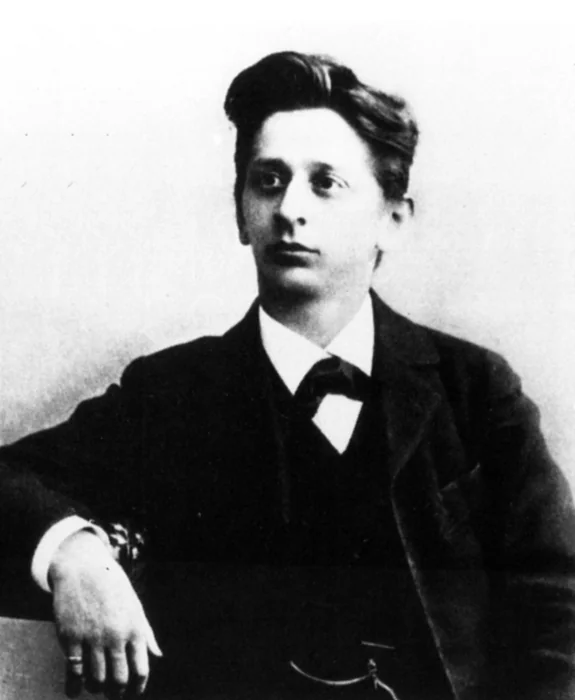
Image from Wikipedia
Image from Wikipedia
Alexander von Zemlinsky – the subtle architect between late Romanticism and modernity
A composer and conductor who shaped the musical turning point
Alexander von Zemlinsky was one of those great figures in music history whose significance is not exhausted in a loud myth, but in the substance of his work. Born on October 14, 1871, in Vienna and died on March 15, 1942, in Larchmont near New York, he embodied the tension between Viennese tradition, late Romantic expressiveness, and the unfolding modernity. As a composer, conductor, and teacher, he operated at the crucial intersection of the musical life of his time and left behind a body of work that uniquely blends opera, song, chamber music, and orchestral pieces in an unmistakable language. ([zemlinsky.at](https://www.zemlinsky.at/de/biographie))
Vienna as the origin of an artistic identity
Zemlinsky's musical career began in the culturally dense Vienna of the turn of the century, a city where musical tradition and aesthetic renewal continually collided. He came from an educated middle-class family; his father, Adolf von Zemlinszky, was a writer and journalist. His ability to connect musical thought with dramatic intuition was evident early on. The official biography describes him as an artist who stood between times and styles and found a rich, unmistakable language precisely in this "in-between." ([zemlinsky.at](https://www.zemlinsky.at/de/biographie))
His environment was also exceptionally vibrant: Zemlinsky briefly taught Arnold Schönberg in composition, and from this connection emerged a close familial and artistic relationship. At the same time, he was involved in an intense, unhappy love affair with Alma Schindler, which only ended with her meeting Gustav Mahler. Such biographical constellations are more than anecdotes; they mark the close intertwining of personal experience and artistic production in a Viennese milieu characterized by psychological intensity and aesthetic competition. ([zemlinsky.at](https://www.zemlinsky.at/de/biographie))
Conducting, theatrical practice, and the slow breakthrough
After 1900, Zemlinsky solidified his position as a musical leader in Vienna, initially as a composer, but primarily as a conductor. From 1900 to 1904, he served as a conductor at the Carl Theater and the Theater an der Wien, where he was entrusted exclusively with operettas. Only later did he have the opportunity to conduct a larger repertoire at the Vienna music scene, including at the Volksoper and for a season at the Hofoper. However, the big breakthrough eluded him, even though he had long been considered one of the serious voices of his environment. ([zemlinsky.at](https://www.zemlinsky.at/de/biographie))
This early theater work sharpened his perception of scenic effect, orchestral coloration, and dramatic condensation. During this phase, Zemlinsky increasingly composed for music theater and wrote four operas by 1910, demonstrating his assured grasp of the genre. His style did not develop abruptly but in a controlled movement from Brahmsian proximity to a musical language that combined late Romantic warmth with modern nervousness. The result was not a radical departure from tonality, but a highly individualized expansion of its expressive possibilities. ([zemlinsky.at](https://www.zemlinsky.at/de/biographie))
Prague: the most productive and successful phase
In 1911, Zemlinsky moved to Prague and became the musical director of the German Landestheater, a position he held until 1927. Here he experienced his greatest successes as a conductor, especially with works by Mozart, Wagner, as well as Mahler and Schönberg. His interpretations were considered natural, witty, and serviceable to the works; it was precisely this attitude that made him a formative figure in the repertoire operations of Central Europe. The Prague years thus became his most artistically stable and visible phase. ([zemlinsky.at](https://www.zemlinsky.at/de/biographie))
At the same time, his compositional work was restricted by the many conducting engagements, yet it was during this time that some of his most significant works were created. These include the 2nd String Quartet, the Lyrical Symphony, and the two one-acters based on Oscar Wilde. These pieces showcase Zemlinsky as a master of musical psychology, intertwining chromatic tension, orchestral transparency, and vocal declamation into dense, atmospherically charged forms. His art lies not in outer monumentality but in the precise organization of emotional energy. ([zemlinsky.at](https://www.zemlinsky.at/de/biographie))
Berlin, political rifts, and exile
In 1927, Zemlinsky moved to Berlin and became the conductor at the Kroll Opera, whose productions drew attention due to their stage aesthetics. Nevertheless, he remained in the shadow of younger conductors such as Otto Klemperer, Georg Szell, and Erich Kleiber. His Berlin years depict an artist who remained highly competent in opera practice but did not find the same resonance in a rapidly changing institutional landscape as he had in Prague. The modernity of the Weimar Republic offered him both opportunities and limitations. ([zemlinsky.at](https://www.zemlinsky.at/de/biographie))
In 1931, he took on a teaching position at the music conservatory but had to resign after the Nazis came to power and banned Jewish employment in 1933. In 1938, he fled Vienna with his second wife through Prague and Rotterdam to New York. There, he could not regain a foothold professionally; strokes and a nervous breakdown hindered his work, and his last opera, Der König Kandaules, remained unfinished. Zemlinsky died in 1942 in Larchmont as Europe sank into war and persecution. ([zemlinsky.at](https://www.zemlinsky.at/de/biographie))
Discography, profile of works, and critical reception
At the core of Zemlinsky's oeuvre are ten operas, including Eine florentinische Tragödie and Der Zwerg, both based on Oscar Wilde and still his best-known stage works. He also created the Lyrical Symphony for soprano, baritone, and orchestra, as well as numerous songs, choral pieces, chamber music, and orchestral works. The publisher Doblinger summarizes his output as bridging late Romantic musical language and new music; Zemlinsky remained within tonality and did not adopt the twelve-tone technique of his brother-in-law, Schönberg. ([britannica.com](https://www.britannica.com/biography/Alexander-Zemlinsky))
The critical reception experienced a long pause after his death before the revival began in the 1970s. Performances, recordings, and music historical retrospectives of his biography led to a renaissance that can be considered complete with the world premiere of Der König Kandaules in Hamburg in 1996. Today, Zemlinsky emerges as a composer whose music preserves the tensions of half a century in condensed form: between late Romanticism, symbolism, music theater, and modern expressive harmony. ([zemlinsky.at](https://www.zemlinsky.at/de/biographie))
Musical style: sensuality, dramaturgy, and refined harmony
Zemlinsky's style unfolds from the tension between controlled form and emotional density. Firmly rooted in the Brahms school, he developed a harmonic language that stretches the boundaries of tradition without leaving the ground of tonality. This balance makes his works unique: they neither sound academic nor revolutionary, but rather like a precise protocol of an era in transition. His music thinks dramatically, breathes vocally, and works with finely graduated orchestration that makes inner movements audible. ([doblinger-musikverlag.at](https://www.doblinger-musikverlag.at/de/komponistinnen/zemlinsky-alexander-235))
The most notable pieces exemplify how consistently Zemlinsky intertwines literary sources and musical form. Oscar Wilde, Maurice Maeterlinck, and Rabindranath Tagore are among the authors that hold a particularly resonant place in his work. The Lyrical Symphony is considered a masterpiece of this art: a large-scale but psychologically focused sound arc that forces singing and orchestra into a dense, almost chamber-music intimacy. ([britannica.com](https://www.britannica.com/biography/Alexander-Zemlinsky))
Cultural influence and contemporary significance
Zemlinsky was not a composer of the loud canon but one of the silent focal points of European modernity. His significance lies in mediation: between late Romanticism and the dawn of the 20th century, between operatic tradition and modern stage aesthetics, between the Viennese school and his own signature. That Schönberg referred to him as a great composer even in 1949 underscores this lasting impact within music history. Zemlinsky today stands for an art of transition that convinces not by breaks but by refinement. ([zemlinsky.at](https://www.zemlinsky.at/de/biographie))
For listeners, his work offers a special appeal: it combines intellectual deliberation with immediate expressiveness. Those who engage with Zemlinsky encounter not a museum phenomenon at the periphery but a voice with strong stage presence, fine awareness of form, and an unmistakable dramatic aura. This is precisely where his enduring attractiveness lies for both opera and concert audiences alike. ([britannica.com](https://www.britannica.com/biography/Alexander-Zemlinsky))
Conclusion: An underrated master with a significant legacy
Alexander von Zemlinsky continues to fascinate today because his work makes the great tensions of musical modernity experientially tangible, not just theoretically. He was a conductor, teacher, opera composer, and stylistically independent architect of a language bridging late Romanticism and new music. Those who experience his works live hear music shaped by experience, loss, elegance, and inner tension — and precisely because of that, it remains remarkably contemporary. ([zemlinsky.at](https://www.zemlinsky.at/de/biographie))
Official Channels of Alexander von Zemlinsky:
- Instagram: No official profile found
- Facebook: No official profile found
- YouTube: No official profile found
- Spotify: No official profile found
- TikTok: No official profile found