
Andreas Schurig
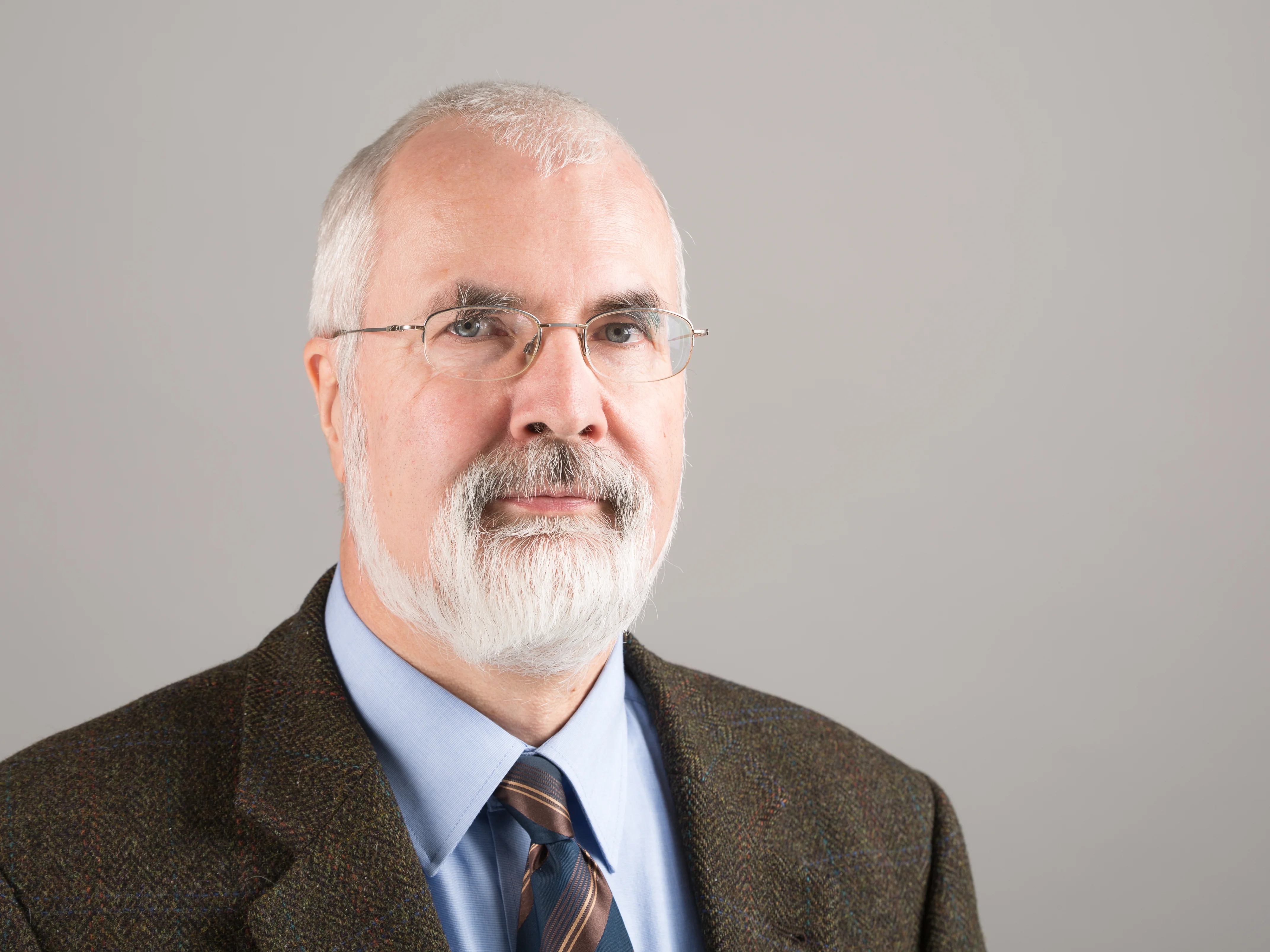
Image from Wikipedia
Image from Wikipedia
Andreas Schurig – a formative personality in Saxon data protection with an academic background
Classification: A public life between mathematics, theology, and state responsibility
Andreas Schurig, born in 1958 in Dresden, is a German mathematician and theologian who played a central role in Saxon data protection for many years. From 2004 until the end of 2021, he served as the Saxon Data Protection Commissioner, shaping an institution that gained significance far beyond administration in debates surrounding informational self-determination, digital order, and rule of law oversight. His biography combines academic discipline, political experience, and regulatory authority in a rare form. ([de.wikipedia.org](https://de.wikipedia.org/wiki/Andreas_Schurig?utm_source=openai))
Background and education
Schurig’s path begins in Dresden and initially leads to mathematics: from 1978 to 1983, he studied at the Technical University of Dresden. He then turned to theology, studying from 1983 to 1989 at the Church University of Leipzig and the Philosophical-Theological Study in Erfurt. This combination of analytical thinking and theological education continues to shape his public profile, as it merges technical understanding with ethical reflection. ([de.wikipedia.org](https://de.wikipedia.org/wiki/Andreas_Schurig?utm_source=openai))
As early as the late 1980s, Schurig also became politically active. In 1989, he co-founded the Social Democratic Party in East Germany in Leipzig. This role points to a generation of East Germans who not only experienced societal upheaval but also actively shaped it. His later career shows that he consistently transitioned from engaged citizen to institutional responsibility holder. ([de.wikipedia.org](https://de.wikipedia.org/wiki/Andreas_Schurig?utm_source=openai))
The path into administration and the establishment of professional authority
After the political turnaround, Schurig transitioned in 1990 to serve as an advisor at the municipal joint authority in Leipzig city hall, where he remained until 1993. From 1993 to 2003, he worked as the deputy Saxon Data Protection Commissioner and as the head of the department for computer science, technology, and new media. It was during this phase that he sharpened his profile as an expert on digital administrative issues and fundamental topics of data protection law. ([de.wikipedia.org](https://de.wikipedia.org/wiki/Andreas_Schurig?utm_source=openai))
His appointment as the Saxon Data Protection Commissioner occurred in 2004, with the official inauguration on January 20, 2004. Schurig succeeded Thomas Giesen, who held the office for twelve years, and was re-elected in 2009 and 2015. Thus, he led a supervisory authority for almost two decades, whose importance grew with the expansion of digital infrastructures, increasing data processing, and later the GDPR. ([de.wikipedia.org](https://de.wikipedia.org/wiki/Andreas_Schurig?utm_source=openai))
Tenure: Data protection as a safeguard of freedom
During his tenure, Schurig became one of the visible voices of Saxon data protection. The Free State of Saxony explicitly acknowledged at the end of his term in 2021 that he had held the office since 2004 and had advocated clearly for data protection as a cornerstone of a free society. He sharply articulated the notion that data protection is and remains a safeguard of freedom. This stance marks his public self-understanding and his role as a critic toward administration, business, and technology companies. ([medienservice.sachsen.de](https://medienservice.sachsen.de/medien/news/1033986?utm_source=openai))
His work also gained weight at the state level. The Saxon Parliament pointed out during the handover of office to his successor Juliane Hundert that the independent data protection supervisory authority is part of a free legal state. Schurig thus stood for not just administrative practice, but for a political culture that views data protection as a democratic task. His role was less technical than socio-political: he translated legal principles into public debates about digital power. ([landtag.sachsen.de](https://www.landtag.sachsen.de/de/aktuelles/veranstaltungen/feierliche-amtsuebergabe-beim-saechsischen-datenschutzbeauftragten-25065.cshtml?utm_source=openai))
Public perception and professional profiles
The official texts regarding Schurig depict a head of authority who did not treat data protection as a niche topic but as a cross-cutting issue. In reports and communications, he was linked with questions surrounding schools, customer profiles, deletion concepts, information security, and the handling of third-party data processing. Topics like European Data Protection Day or criticism of a "transparent citizen" were also part of his public work. Consequently, his name became a fixed point of reference in the German data protection landscape. ([medienservice.sachsen.de](https://www.medienservice.sachsen.de/medien/news/253323?utm_source=openai))
In 2020, Schurig also held the chair of the German Data Protection Conference for one year. This role underscores his authority beyond the Free State and demonstrates that he was recognized as a significant voice nationwide. His professional reputation stemmed from long-standing practice, institutional experience, and a clear normative language that linked administrative logic with citizens' rights. ([de.wikipedia.org](https://de.wikipedia.org/wiki/Andreas_Schurig?utm_source=openai))
Why Andreas Schurig remains an interesting personality
Andreas Schurig fascinates through the rare combination of mathematical precision, theological reflection, and state responsibility. His career illustrates how public authority can emerge from academic education when expertise, attitude, and institutional experience come together. Those interested in the history of data protection, transformation biographies after 1989, and the development of German supervisory authorities will find Schurig's journey an enlightening example. ([de.wikipedia.org](https://de.wikipedia.org/wiki/Andreas_Schurig?utm_source=openai))
What remains particularly compelling is his role as someone who has not only managed data protection but has also infused it with political and societal significance. Schurig represents the attempt to balance technical development, state responsibility, and citizens' rights. To understand him, one should view his tenure as a contribution to democratic culture and his work as an example of how effective a clear public voice can be in times of digital acceleration. ([medienservice.sachsen.de](https://medienservice.sachsen.de/medien/news/1033986?utm_source=openai))
Official channels of Andreas Schurig:
- Instagram: No official profile found
- Facebook: No official profile found
- YouTube: No official profile found
- Spotify: No official profile found
- TikTok: No official profile found
Sources:
- Wikipedia – Andreas Schurig
- Free State of Saxony – The term of Andreas Schurig comes to an end
- Saxon Parliament – Ceremonial handover of office at the Saxon Data Protection Commissioner
- Saxon Data Protection and Transparency Commissioner – History
- Saxon Data Protection and Transparency Commissioner – Transparent citizen through the register modernization law
- Saxon Data Protection and Transparency Commissioner – Activity Report 2021
- Wikipedia: Image and text source