
Andreas Zumach
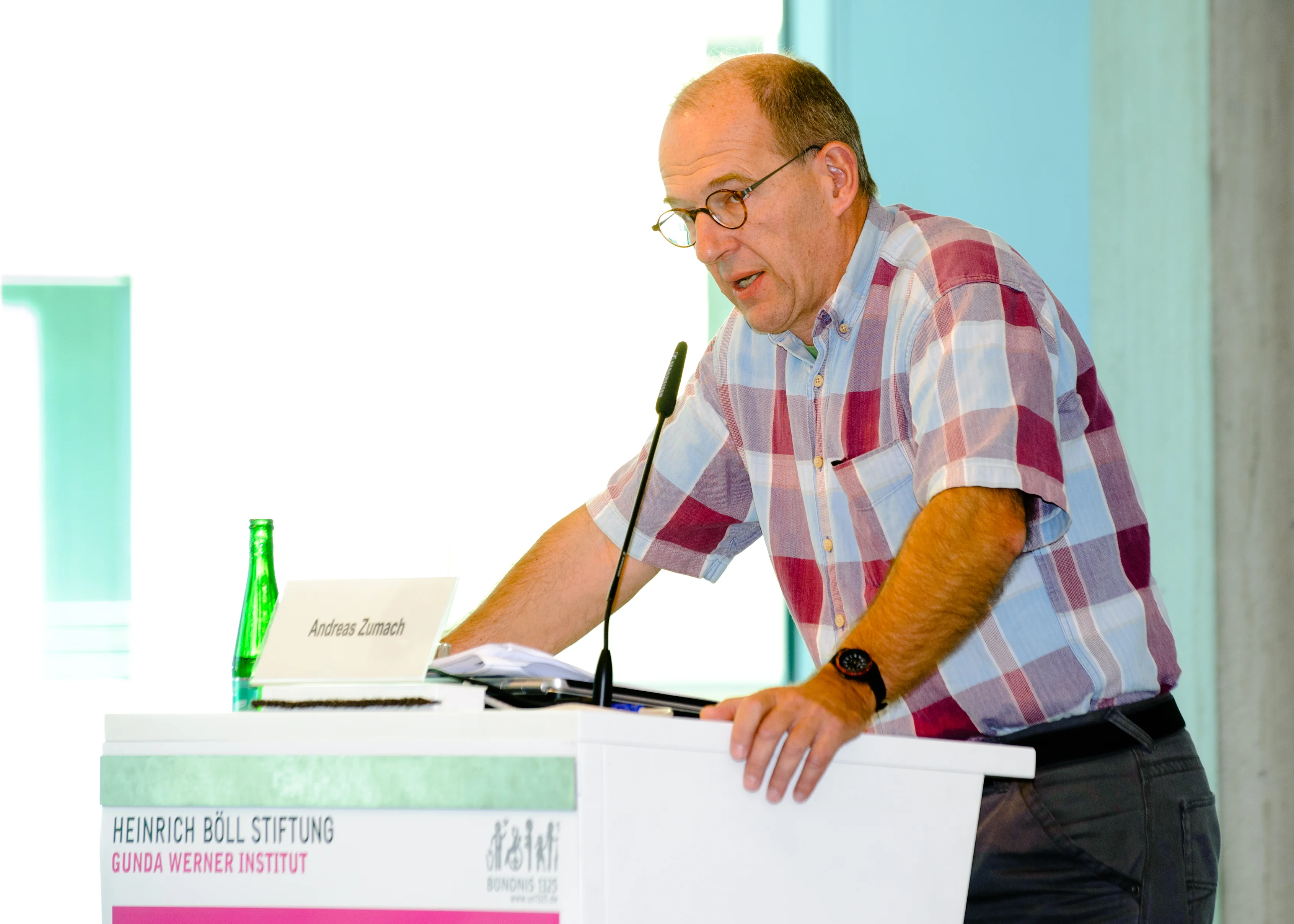
Image from Wikipedia
Image from Wikipedia
Andreas Zumach – The Precise Chronicler of the UN, Conflicts, and Peace Politics
A Journalistic Profile Between Global Politics, Analysis, and Uncompromising Stance
Andreas Zumach, born on July 30, 1954, in Cologne, is one of the most prominent German journalists and publicists in the field of international relations, conflicts, and peace politics. For decades, he has shaped the debates on the UN, OSCE, arms control, and human rights with a clear, pacifist perspective. He gained particular recognition as the Switzerland and UN correspondent for taz in Geneva, where he worked at the European headquarters of the United Nations from 1988 to 2020. ([taz.de](https://taz.de/Im-Iran-geht-es-um-ganz-harte-Interessen/%215472497/?utm_source=openai))
Biography: From Cologne to International Reporting
Zumach's journalistic career is closely linked to the political focal points of the post-war order. He reports not from a distance but from the proximity of the institutions where international conflicts, diplomatic compromises, and humanitarian crises occur. His journalistic fingerprint is characterized by precision, historical contextualization, and a stance that consistently opposes military logic and advocates for civilian conflict resolution. ([taz.de](https://taz.de/Im-Iran-geht-es-um-ganz-harte-Interessen/%215472497/?utm_source=openai))
As a long-standing correspondent in Geneva, he was for many years closely connected to the UN, observing the work of international bodies firsthand. This position made him an important commentator for German and English-speaking print and broadcast media. His texts and analyses appear in an environment where diplomatic language often obscures what is politically at stake – and this is where Zumach intervenes with analytical sharpness. ([taz.de](https://taz.de/Im-Iran-geht-es-um-ganz-harte-Interessen/%215472497/?utm_source=openai))
Career Path: The UN Correspondent as a Public Authority
His long tenure at taz is one of the central fixed points of his journalism career. From 1988 to 2020, Zumach covered Switzerland and UN reporting for the newspaper, becoming a steadfast voice of critical foreign policy. The media context in which he worked demanded not only timeliness but also the ability to translate global conflicts into understandable political contexts. ([download.taz.de](https://download.taz.de/Auch-wir-sind-taz-Gleichbehandlungsmanifest-der-taz-Freien-und-KorrespondentInnen.pdf?utm_source=openai))
Early on, he emerged as an author and commentator with clear positions on international crises. In taz debates and articles on Bosnia, Kosovo, Afghanistan, Iran, and UN reform, a recurring theme becomes apparent: Zumach analyzes power, language, and interests with great consistency. His work on security and peace politics establishes him as an authority for readers who wish to look beyond headlines. ([taz.de](https://taz.de/Unprofor-Ifor-SFOR-und-nun-die-Abschreckungstruppe-DFOR-Bei-den-Nato-Militaers-liegen-bereits-verschiedene-Modelle-fuer-eine-Verlaengerung-der-Truppenpraesenz-in-Bosnien-in-den-Schubladen-Doch-die-Verantwortlichen-fuerchten-die-Risiken-Von-Andreas-Zumach/%213204806/?utm_source=openai))
Focus Areas: UN, OSCE, Arms Control, and Human Rights
Content-wise, Zumach's texts revolve around the major questions of international order: How do the United Nations function under pressure? What role do security councils, humanitarian interventions, and international law play? How can disarmament and human rights protection be upheld against geopolitical interests? This thematic focus gives his journalistic work a clear contour and establishes him as one of the most well-known experts on global peace and security politics in the German-speaking world. ([dewiki.de](https://dewiki.de/Lexikon/Andreas_Zumach?utm_source=openai))
His pacifism is not an abstract label but a consistent organizing principle of his analysis. In public debates, he repeatedly opposes simplistic military responses to complex conflicts, calling instead for political, diplomatic, and institutional solutions. This is where the tension of his work lies: he does not just write about crises; he questions the language with which power legitimizes its decisions. ([taz.de](https://taz.de/UNO-Debatte-beim-taz-Kongress/%215164435/?utm_source=openai))
Working Method and Style: Precision Over Pathos
Zumach's style is sober, argumentative, and strongly source-oriented. He works with historical references, institutional processes, and legal categories rather than simplifying political occurrences. This results in a journalistic form that does not aim for quick effects but for contextualization, comprehensibility, and analytical depth. ([dw.com](https://www.dw.com/en/opinion-carla-del-pontes-resignation-politically-shortsighted-and-naive/a-40001133?utm_source=openai))
Especially in conflict-laden debates, this approach is impactful. Whether it concerns Bosnia, Kosovo, Syria, or the Iranian nuclear conflict, Zumach relies on context, documentation, and the examination of official narratives. His journalistic authority draws from this persistence, which creates a rare form of credibility in political journalism. ([taz.de](https://taz.de/Unprofor-Ifor-SFOR-und-nun-die-Abschreckungstruppe-DFOR-Bei-den-Nato-Militaers-liegen-bereits-verschiedene-Modelle-fuer-eine-Verlaengerung-der-Truppenpraesenz-in-Bosnien-in-den-Schubladen-Doch-die-Verantwortlichen-fuerchten-die-Risiken-Von-Andreas-Zumach/%213204806/?utm_source=openai))
Reception: A Sought-After Expert with a Clear Stance
The reception of his work is closely tied to his role as a critical observer of international politics. Media, debate events, and documentaries draw on his assessments regarding UN reforms, security architecture, or human rights issues. The fact that he has been regarded as a key contact in these fields over the years demonstrates the stability of his profile in a media landscape that otherwise changes rapidly. ([dw.com](https://www.dw.com/en/opinion-carla-del-pontes-resignation-politically-shortsighted-and-naive/a-40001133?utm_source=openai))
His contributions have not only been read but also discussed, challenged, and repurposed – a typical feature of journalistic authority. This is particularly evident in the internationally oriented reporting on the UN and crisis regions, where Zumach is perceived as a voice for nuanced analysis. In this sense, he is less a commentator of the day and more a long-term cartographer of political conflict lines. ([dw.com](https://www.dw.com/en/opinion-carla-del-pontes-resignation-politically-shortsighted-and-naive/a-40001133?utm_source=openai))
Cultural Influence: Peace Politics as a Journalistic Theme
Zumach's cultural influence lies in the consistency with which he brings peace politics into public discourse. He makes visible that international relations consist not only of summits, treaties, and resolutions, but also of interests, power asymmetries, and moral dilemmas. Those who read his works encounter journalism that emphasizes democratic enlightenment over polarization. ([taz.de](https://taz.de/UNO-Debatte-beim-taz-Kongress/%215164435/?utm_source=openai))
Thus, he represents a form of political feuilleton that combines expertise and stance. Especially in times of global crises, this approach gains weight because it does not oversimplify complex interconnections but clarifies them. Zumach demonstrates how important persistent, fact-based reporting remains when international politics operates within a permanent tension of security, law, and power. ([dw.com](https://www.dw.com/en/opinion-carla-del-pontes-resignation-politically-shortsighted-and-naive/a-40001133?utm_source=openai))
Conclusion: Why Andreas Zumach Remains Intriguing
Andreas Zumach is compelling because he does not treat political conflicts as mere headline material, but as systems of causes, interests, and consequences. His long experience at taz, his proximity to the United Nations, and his consistent pacifist perspective make him a defining voice in German-language political journalism. Anyone interested in international relations, peace politics, and the mechanics of global crises will find in him a precise, uncomfortable, and highly competent observer. ([taz.de](https://taz.de/Im-Iran-geht-es-um-ganz-harte-Interessen/%215472497/?utm_source=openai))
His texts are particularly worthwhile where simple answers fall short. Zumach demands attention, accuracy, and a willingness to understand conflicts in detail. Those who encounter him in interviews, debates, or analyses experience journalism as an intellectual practice with a clear stance. ([dw.com](https://www.dw.com/en/opinion-carla-del-pontes-resignation-politically-shortsighted-and-naive/a-40001133?utm_source=openai))
Official Channels of Andreas Zumach:
- Instagram: No official profile found
- Facebook: No official profile found
- YouTube: No official profile found
- Spotify: No official profile found
- TikTok: No official profile found
Sources:
- Wikipedia – Andreas Zumach
- taz.de – Unprofor, Ifor, SFOR and now the "Deterrent Force" DFOR
- taz.de – UN Debate at the taz Congress: "There's no point in glossing over the world"
- taz.de – The Today's Inaugural Visit of the UN Secretary-General in Bonn ... By Andreas Zumach
- DW – Del Ponte's naive, myopic resignation
- DW – Nestle under fire
- DeWiki – Andreas Zumach
- Wikipedia: Image and text source