
Anton Pawlowitsch Tschechow
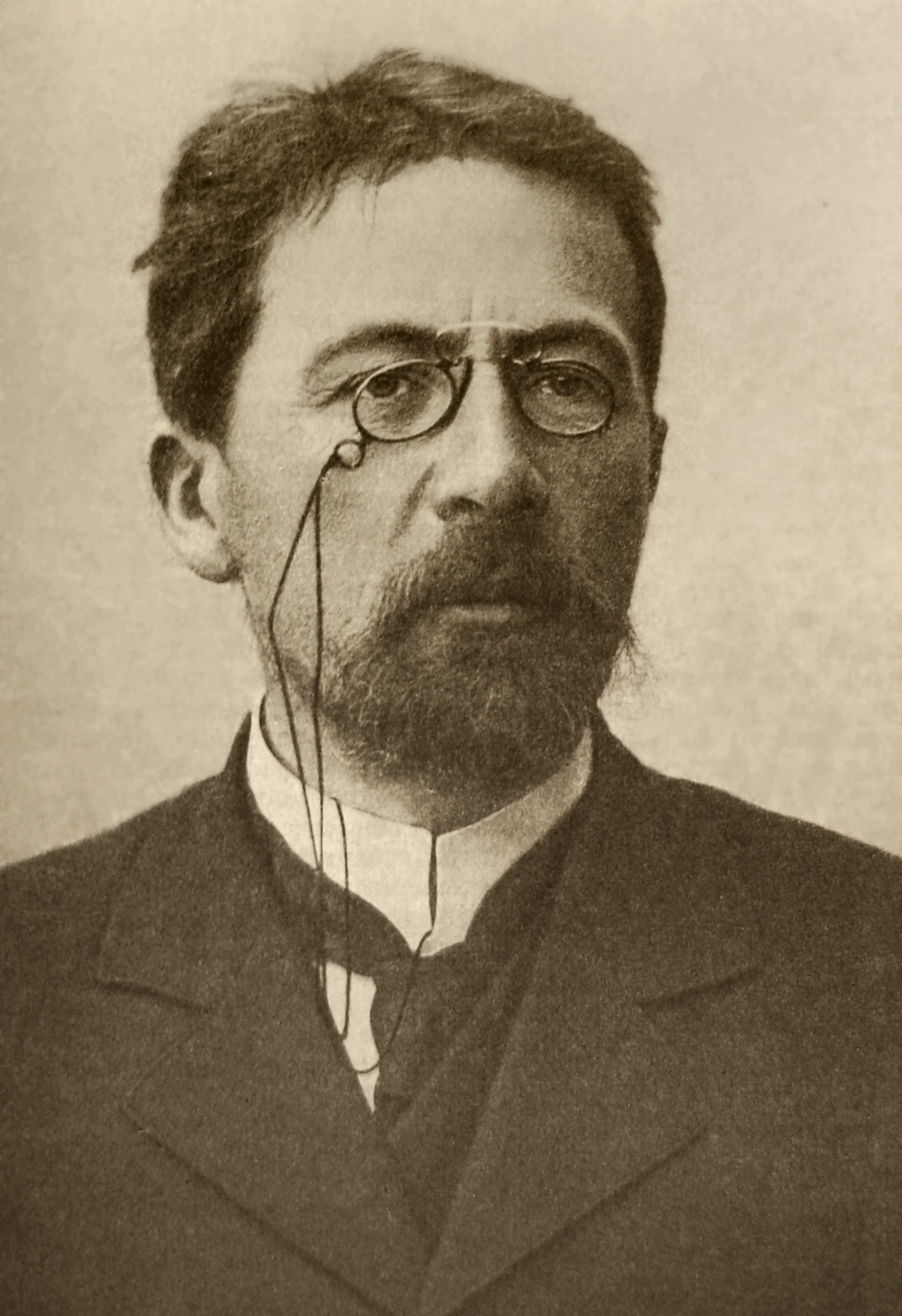
Image from Wikipedia
Image from Wikipedia
Anton Pavlovich Chekhov – the Master of Subtle Tension and Modern World Literature
An Author Who Redefined the Stage and the Short Story
Anton Pavlovich Chekhov, born in 1860 in Taganrog and died in 1904 in Badenweiler, is one of the defining voices in Russian literature. He worked as a doctor from 1884, but between 1880 and 1903, he wrote more than 600 literary works, combining medical experience with precise observation and psychological depth. Internationally, he is best known as a playwright for works such as The Seagull, Uncle Vanya, Three Sisters, and The Cherry Orchard. ([biography.com](https://www.biography.com/authors-writers/anton-chekhov?utm_source=openai))
Biography: Origins, Education, and the Dual Life Path
Chekhov came from a small bourgeois family in southern Russia, whose social reality early sensitized him to the nuances of everyday life. His medical education in Moscow and later work as a doctor shaped his view of human weakness, social tensions, and physical and mental burdens. Although he took medicine seriously, he primarily practiced it voluntarily and made writing his true artistic center. ([biography.com](https://www.biography.com/authors-writers/anton-chekhov?utm_source=openai))
This dual existence as a doctor and author shaped Chekhov's distinctive perspective. His texts do not look down on their characters but instead observe with sober empathy the province, family, dependence, and missed opportunities. This is precisely where his historical significance lies: he brought unspectacular reality into a literary form that still feels modern today. ([pubmed.ncbi.nlm.nih.gov](https://pubmed.ncbi.nlm.nih.gov/8633989/?utm_source=openai))
The Literary Breakthrough: From Early Stories to Great Drama
As early as the 1880s, Chekhov published a huge number of texts under great pressure. His literary ascent gained weight with the serious stories of the mid-1880s and with works such as The Steppe, which earned him the Pushkin Prize in 1888. In parallel, he developed a new form of theater: short farces, and later plays, in which comedy and tragedy intertwine inseparably. ([biography.com](https://www.biography.com/authors-writers/anton-chekhov?utm_source=openai))
The turning point for his stage career came with The Seagull. After an initially disappointing reception in 1896, the revival at the Moscow Art Theatre in 1898 led to a celebrated reassessment. This collaboration with Stanislavski and the Moscow Art Theatre made Chekhov a central figure in modern theater and solidified his status as an internationally renowned playwright. ([campuspress.yale.edu](https://campuspress.yale.edu/modernismlab/anton-chekhov/?utm_source=openai))
The Major Plays: Four Dramas, a New Relationship with the Stage
The Seagull, Uncle Vanya, Three Sisters, and The Cherry Orchard are at the core of Chekhov's dramatic legacy. These works shift the focus from external events to inner movements, from classical action to atmosphere, silence, delay, and emotional undercurrents. It is this fine dramaturgy that has made him a reference point for directors, actors, and later theatrical aesthetics. ([en.wikipedia.org](https://en.wikipedia.org/wiki/The_Cherry_Orchard?utm_source=openai))
Particularly, Uncle Vanya showcases Chekhov's ability to rework older material: the play originated from an earlier version titled The Wood Demon. The works of his late phase condense his art of suggestion, where dialogues often conceal more than they explain, and what is left unsaid becomes the actual dramatic motor. ([en.wikipedia.org](https://en.wikipedia.org/wiki/Anton_Chekhov_bibliography?utm_source=openai))
Narrative Art and Language: The Poetics of the Unexcited
As a storyteller, Chekhov was early recognized as one of the most significant masters of the short form. Literary historians emphasize his influence on the development of the modern short story because his texts do not require spectacular plot constructions to create psychological depth. Instead, he relies on observation, condensation, and a language that maintains distance, thereby stirring emotions. ([encyclopedia.com](https://www.encyclopedia.com/arts/encyclopedias-almanacs-transcripts-and-maps/chekhov-anton-pavlovich?utm_source=openai))
His medical practice directly influenced his prose. The acute understanding of body, illness, social pressure, and life circumstances sharpened his perception of human ambivalence. This combination of experience and literary control produces the characteristic Chekhovian tension: nothing is loud, yet everything is significant. ([pubmed.ncbi.nlm.nih.gov](https://pubmed.ncbi.nlm.nih.gov/8633989/?utm_source=openai))
Style and Artistic Development: Between Tragedy, Comedy, and Subtext
Chekhov's style is marked by restraint, precision, and a deep trust in subtext. His characters often speak casually, yet beneath the surface, disappointment, longing, social constraints, and existential weariness are at work. In this art of omission lies his modernity, which has profoundly influenced the theater and prose of the 20th century. ([nupress.northwestern.edu](https://nupress.northwestern.edu/9780810110489/chekhov-for-the-stage/?utm_source=openai))
Chekhov also consciously dissolves genre boundaries. He labeled some of his plays as comedies, even though they possess a deeply melancholic foundation, thus evading any simple categorization. This aesthetic tension between form and feeling has kept his works alive on the great stages of the world and continuously open to reinterpretation. ([campuspress.yale.edu](https://campuspress.yale.edu/modernismlab/anton-chekhov/?utm_source=openai))
Literary Discography: Works, Presence, and Canon
While Chekhov does not have a music discography, he does possess a literary canon of extraordinary richness. His most frequently mentioned major works include the plays The Seagull (1896), Uncle Vanya (1897), Three Sisters (1901), and The Cherry Orchard (1904). This core is complemented by hundreds of short stories that underscore his status as a master of the short form. ([en.wikipedia.org](https://en.wikipedia.org/wiki/Anton_Chekhov_bibliography?utm_source=openai))
His work garnered international attention early on and was disseminated worldwide through translations, theater productions, and reception in England and America. Particularly, his collaboration with the Moscow Art Theatre shaped his reputation as an author whose plays reveal their full intensity only on stage. Thus, Chekhov became a fixed part of the global theater repertoire. ([cambridge.org](https://www.cambridge.org/core/journals/american-slavic-and-east-european-review/article/abs/chekhovs-reception-in-england-and-america/AA66E0D752C51E80D1EE1110ADA4AA95?utm_source=openai))
Critical Reception and Cultural Influence
Chekhov's impact extends far beyond Russian literature. His influence on modern drama, directorial aesthetics, and acting techniques is firmly established in theater history, particularly through the concept of subtext and the focus on characters' inner worlds. Numerous later theater makers, translators, and literary critics describe him as an author who has radically refined modern sensibility. ([nupress.northwestern.edu](https://nupress.northwestern.edu/9780810110489/chekhov-for-the-stage/?utm_source=openai))
Even in the 21st century, Chekhov remains present. Current theater programs, new translations, and contemporary adaptations of his plays demonstrate how relevant his themes remain: stagnation, the desire for change, social friction, and the fragile dignity of humanity. His works not only survive in the canon but continue to thrive in every new production. ([broadwayworld.com](https://www.broadwayworld.com/off-broadway/article/Lita-Lofton-Directs-All-Black-Cast-in-Chekhov-Adaptation-at-Theaterlab-20250212?utm_source=openai))
Current Projects and Publications Related to Chekhov
As a historical author, Chekhov himself does not publish new albums or singles, but his plays continue to shape the current theater landscape. In 2024 and 2025, new productions, adaptations, and workshop productions will emerge in different cities, underscoring his lasting relevance. This vibrant tradition of performance keeps his work alive in cultural conversations. ([offi.fr](https://www.offi.fr/artiste/anton-tchekhov-87390.html?utm_source=openai))
Conclusion: Why Anton Pavlovich Chekhov Continues to Electrify Today
Chekhov is compelling because he finds the great in the quiet. He combines medical observation, literary mastery, and an almost radical attention to human nuances. Anyone who reads his plays or stories encounters an author who anticipated modern sensibility and whose presence on stage continues to be felt on major playbills today. ([pubmed.ncbi.nlm.nih.gov](https://pubmed.ncbi.nlm.nih.gov/8633989/?utm_source=openai))
Those who love theater should experience Chekhov live: in a production of The Seagull, Uncle Vanya, Three Sisters, or The Cherry Orchard, his full power unfolds. It shows how precise his dramaturgy is, how timeless his characters are, and how strongly his artistic development has shaped modern theater. ([en.wikipedia.org](https://en.wikipedia.org/wiki/The_Cherry_Orchard?utm_source=openai))
Official Channels of Anton Pavlovich Chekhov:
- Instagram: no official profile found
- Facebook: no official profile found
- YouTube: no official profile found
- Spotify: no official profile found
- TikTok: no official profile found
Sources:
- Wikipedia – Anton Pavlovich Chekhov
- Wikipedia – Anton Chekhov
- Biography.com – Anton Chekhov Biography
- PubMed – Anton P. Chekhov, MD (1860-1904): dual medical and literary careers
- Royal Society of Medicine – Anton Chekhov
- Northwestern University Press – Chekhov for the Stage
- Bakhrushin State Central Theatre Museum – Chekhov Institute
- Wikipedia: Image and text source