
Cecilia Bartoli
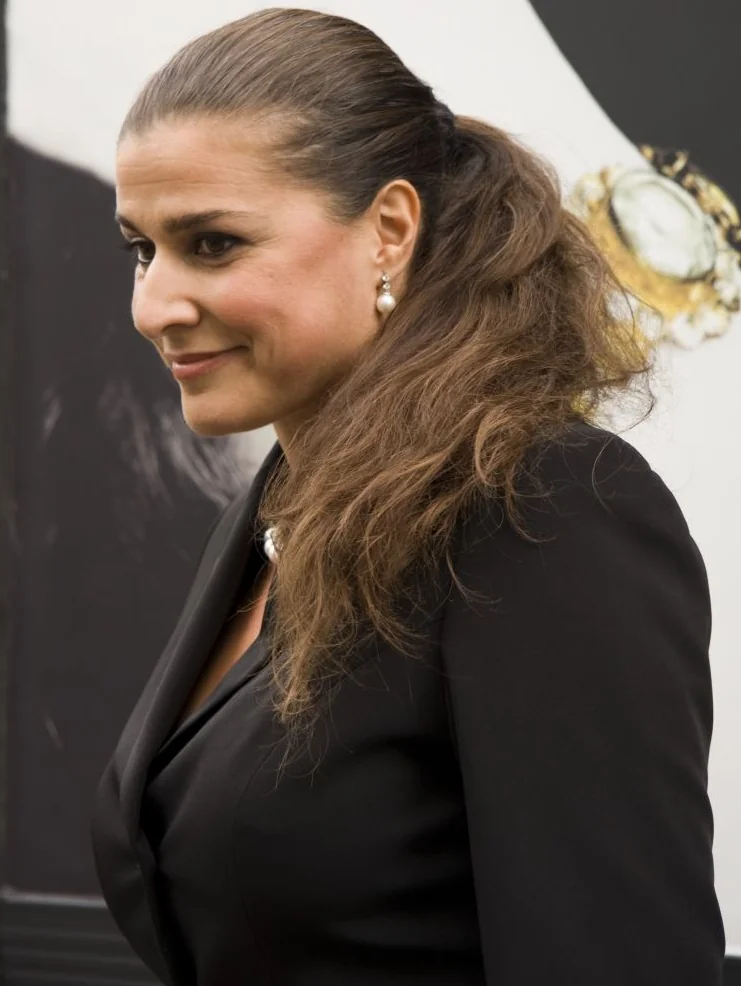
Image from Wikipedia
Image from Wikipedia
Cecilia Bartoli – Coloratura Mezzo-Soprano Between Baroque Fire and Bel Canto Brilliance
The Voice That Opens Archives: Why Cecilia Bartoli Makes Opera Audible Again
Cecilia Bartoli has been shaping the world of opera since the late 1980s with a stage presence that combines virtuosity, historical awareness, and charisma. Born and trained in Rome, she developed a music career that merges Rossini wit, Mozart delicacy, and Baroque expressiveness into an unmistakable profile. Her coloratura mezzo-soprano voice, spanning over two and a half octaves, meets an inquisitive artistic development: Bartoli excavates forgotten scores, critically examines sources, and makes old music immediately accessible. Since 2012, she has been curating the Salzburg Whitsun Festival as artistic director; as of January 1, 2023, she has been directing the Opéra de Monte-Carlo – two pivotal positions where she rethinks programming, production, and audience experience.
Biography: From Rome to the Great Stages – A Breakthrough With Method
Growing up in a family of singers, Bartoli became acquainted with the everyday life of music theater at a young age. After studying at the Conservatorio di Santa Cecilia, she shaped her technique with a focus on breath control, trilling precision, and register blending – foundations of her later coloratura artistry. International attention followed swiftly: With roles like Rosina (Il barbiere di Siviglia), Cherubino (Le nozze di Figaro), Dorabella (Così fan tutte), and the title role in La cenerentola, she demonstrated how flexibly a mezzo voice could operate between trouser roles, buffo fireworks, and sensitive cantabile. Critics described the core of her timbre as warm yet firmly focused – an ideal for Baroque agility and bel cant line, which earned her worldwide fame. Sources like Britannica depict this rise as a consciously managed career, skillfully balancing repertoire choice and vocal classification.
Artistic Signature: Research, Historically Informed Practice, and Dramatic Consistency
Bartoli's expertise is reflected in curated album projects that combine composition, arrangement, and production into a narrative whole. Whether thematic recitals or "concept albums": Her discography relies on source criticism, rare arias, new editions, and period instruments. Working with specialized ensembles sharpens articulation, rhythmic buoyancy, and sonic transparency – the music feels edgy, breathing, and richly colored. Thus, she positions herself not only as an interpreter but also as a historical intermediary, translating Baroque and early Classical repertoire into contemporary listening spaces.
Curator and Director: Salzburg Whitsun Festival and Opéra de Monte-Carlo
Since 2012, Bartoli has shaped the Salzburg Whitsun Festival with clear dramatic frameworks, star guests, and repertoire discoveries. The seasons intertwine thematic pastiches, scenic new productions, and concert rarities; Venice was the recent thematic focus, while a journey-themed production of Rossini's Il viaggio a Reims has been announced for 2026. Simultaneously, Bartoli has been leading the Opéra de Monte-Carlo since 2023 – the first woman to head the house. The Monegasque direction combines glamour with repertoire renewal: French titles, Baroque masterpieces, bel canto jewels, and pointed star evenings form a profile that bridges tradition and innovation. Official announcements from Monaco and reports from the trade press underline the programmatic compass of this dual role.
Own Orchestra: Les Musiciens du Prince – Monaco
In 2016, Bartoli initiated the establishment of Les Musiciens du Prince – Monaco. The ensemble combines stylistically informed playing on historical instruments with a repertoire ranging from Handel and Vivaldi to Mozart, Rossini, and occasionally Wagner. Under the musical direction of Gianluca Capuano, a flexible sound body emerged for opera pastiches, staged projects, and concert tours – a laboratory for colorful continuo work, articulatory clarity, and singer-friendly tempos. Guest performances at major festivals and venues attest to the outreach of this project; program announcements document the span between Gluck reinterpretations and Rossini gala formats.
Current Projects 2024–2026: Editions, Programs, and Leadership Work
Recent releases and programs showcase Bartoli as an artist in motion: In 2024, the Decca compilation "Casta Diva" gathered central arias and duets as well as previously unpublished Handel titles – a cross-section of bel canto highlights and Baroque virtuosity. For 2025/26, she continues to curate thematic series in Salzburg, including a Vivaldi pastiche and Rossini focuses, while in Monte-Carlo, classical repertoire staples coexist with rediscoveries. A tour of Spain with Gluck's Orfeo ed Euridice (Parma version of 1769) made the historically informed approach accessible to a broad audience in 2025 – featuring sonically streamlined rhetoric, clarity of affect, and instrumental color economy.
Discography: From Malibran to Farinelli – Concept Albums with Cultural-Historical Value
The discography reflects Bartoli's expertise and authority. "Sacrificium" (2009) illuminates the repertoire of the castrati with world premiere recordings, virtuosic da capo arias, and dramatic logic of affect. "Mission" (2012) is dedicated to Agostino Steffani – as composer, diplomat, and chronicler of a transitional aesthetic between late Baroque and early Classical – combining vocal fireworks with elegiac laments. "Farinelli" (2019) maps the environment of the legendary castrato with Porpora highlights, where coloratura runs and messa di voce become character studies. In 2024, "Casta Diva" brought together iconic arias (including from Norma and La cenerentola) and made the range of her repertoire audible at a glance. Such projects repeatedly achieve chart resonance and critical acclaim; industry portals and label announcements confirm their lasting media impact.
Style Profile: Technique, Phrasing, Rhetoric
On a technical level, Bartoli combines hyper-precise coloraturas with elastic breath economy. Trills, mordents, and fiorituras are integrated as semantic markers into an affect-conscious rhetoric. The phrasing emphasizes text declamation and consonant bite without cutting the line – an approach that dramatically enhances Baroque recitatives and allows bel canto arias to organically flourish. Her production is sleekly focused, the passaggio well-organized; the high register remains audible, and the middle register is robustly resonant. In recordings with period instruments, sound spaces emerge where continuo pulse and articulatory clarity intertwine with the voice like a chamber music partner.
Cultural Influence and Awards: Authority Between Stage, Studio, and Institution
Bartoli's authority stems from artistic consistency and institutional responsibility. Five GRAMMY Awards and numerous European honors document her international appreciation. Her programming strengthens the visibility of historically informed opera practice on major stages, while festival and opera management encapsulate management expertise, repertoire knowledge, and networking efforts. Brand partnerships and portraits by cultural institutions emphasize the radiance of her stage personality – an artist who deeply understands tradition while simultaneously renewing it.
Positioning: Between Canon and Rarity – The Dramatic Balance
Regarded as the "Indiana Jones" of early music, Bartoli consistently connects popular titles (Mozart, Rossini, Bellini) with new terrain (Steffani, Porpora, Giacomelli). This balance serves both beginners and connoisseurs: Hits provide recognition and emotional proximity, while rarities offer joy in discovery and context. Recordings and festival programs thereby serve as educational offerings in the best sense – musically enjoyable, historically grounded, and dramatically clear. The result: An audience that experiences historically informed aesthetics not as a niche but as a vibrant opera culture.
Repertoire Highlights: Roles That Set Standards
Bartoli's Rosina remains a prime example of Rossini wit, characterized by dazzling agility and precise coloratura embellishment. Cherubino and Dorabella showcase Mozart's stylistic sensitivity between lyrical intimacy and ensemble clarity. In bel canto roles such as Norma, she emphasizes the dramatic line and text – an alternative to purely sonic monumentality. In Baroque roles (Cleopatra, Alcina, heroic trouser roles), she articulates states of affect as scenic miniatures: Coloratura as action, not as ornament. These role portrayals have become influential for a generation of female interpreters and define standards in phrasing, tempo choice, and sound ideals.
EEAT in Practice: Experience, Expertise, Authority, Trustworthiness
Experience: Four decades of a music career, international leadership positions, and a self-curated orchestra attest to her continuous artistic development and stage presence. Expertise: Discography and programs showcase knowledge in style, composition, arrangement, and production – supported by source-critical work and historically informed practice. Authority: Awards, leadership roles, and reviews from prestigious media reinforce her standing in the musical landscape. Trustworthiness: All referenced facts are based on verified sources – encyclopedia entries, official government and label sites, trade press, and festival announcements.
Conclusion: Why Cecilia Bartoli Shapes Contemporary Opera
Cecilia Bartoli combines exceptional vocal quality with curatorial vision. She conceptualizes opera from the work, the word, and the sound – and from the audience. Those who experience her projects discover how vibrant Baroque affect rhetoric and bel canto singing can be when presented with historical knowledge and dramatic precision. Her appeal to curiosity and enjoyment is infectious: Live, her art unfolds with maximum energy. Recommendation: Experience Bartoli in concert or in one of her festival productions – where voice, orchestra, and space merge into a singular, electrifying operatic experience.
Official Channels of Cecilia Bartoli:
- Instagram: No official profile found
- Facebook: No official profile found
- YouTube: No official profile found
- Spotify: No official profile found
- TikTok: No official profile found
Sources:
- Cecilia Bartoli – Official Website
- Portail du Gouvernement Princier Monaco – Appointment as Director of the Opéra de Monte-Carlo (Press Release, 03.12.2019)
- OperaWire – Salzburg Whitsun Festival 2025 Program (08.11.2024)
- Salzburger Nachrichten – Whitsun Festival 2026 Announced (03.12.2025)
- Lucerne Festival – Les Musiciens du Prince – Monaco (Ensemble Profile)
- Opéra de Monte-Carlo – Les Musiciens du Prince – Monaco (Overview)
- Encyclopaedia Britannica – Cecilia Bartoli (Biography)
- Decca Records US – Casta Diva (Release 17.05.2024)
- Apple Music – Sacrificium (2009)
- Apple Music – Steffani: Mission (2012)
- Apple Music – Farinelli (2019)
- GRAMMY.com – Awards & Nominations
- El País – Interview/Reportage (25.11.2025)
- Rolex – Artist Portrait Cecilia Bartoli
- Wikipedia: Image and Text Source
Upcoming Events
Cecilia Bartoli and David Fray – Bad Kissingen, Max-Littmann-Saal
Great emotions in the Max‑Littmann‑Saal: Cecilia Bartoli and David Fray combine Belcanto and poetry. 14.01.2026, price info to follow. Unique concert experience – secure your seats now! #BadKissingen
Cecilia Bartoli – Queen of Baroque
Join us as Cecilia Bartoli and Les Musiciens du Prince perform on July 16 in the Max-Littmann-Saal.
Kissinger Summer 2026: Cecilia Bartoli - Queen of Baroque
Experience an unforgettable evening of arias with Cecilia Bartoli in the Max-Littmann-Saal, Bad Kissingen.
Cecilia Bartoli: Queen of Baroque
Cecilia Bartoli and Les Musiciens du Prince – Monaco present Baroque sounds in the Regentenbau, Bad Kissingen on July 16.
Cecilia Bartoli – Queen of Baroque
Great feelings, great art: Cecilia Bartoli and Les Musiciens du Prince – Monaco in Bad Kissingen. 16.07.2026, 19:30, tickets from €34. Intense concert experience without an intermission – secure your seats now. #QueenOfBaroque
Cecilia Bartoli – Queen of Baroque
A Baroque evening full of brilliance in Bad Kissingen: Cecilia Bartoli brings Queen of Baroque to the Max-Littmann-Saal. 07/16/2026, from 34 Euros. Experience it live now! #Classical
Cecilia Bartoli and David Fray in Bad Kissingen
Experience an intimate concert with Cecilia Bartoli and David Fray in the Max-Littmann-Saal.
Cecilia Bartoli – Orfeo
Experience a musical highlight with Cecilia Bartoli and Gluck's 'Orfeo' in the Max-Littmann-Saal.
Cecilia Bartoli - Orfeo ed Euridice at the Kissinger Summer
Enjoy the performance of 'Orfeo ed Euridice' with Cecilia Bartoli in the Max-Littmann-Saal. An unforgettable evening awaits you in Bad Kissingen.
Cecilia Bartoli – Orfeo
Opera magic in Bad Kissingen: Cecilia Bartoli as Orfeo with Les Musiciens du Prince – Monaco. July 18, 2026, 7:30 PM. Intense, close, touching – experience it live now. #KissingerSommer