
Claude Monet
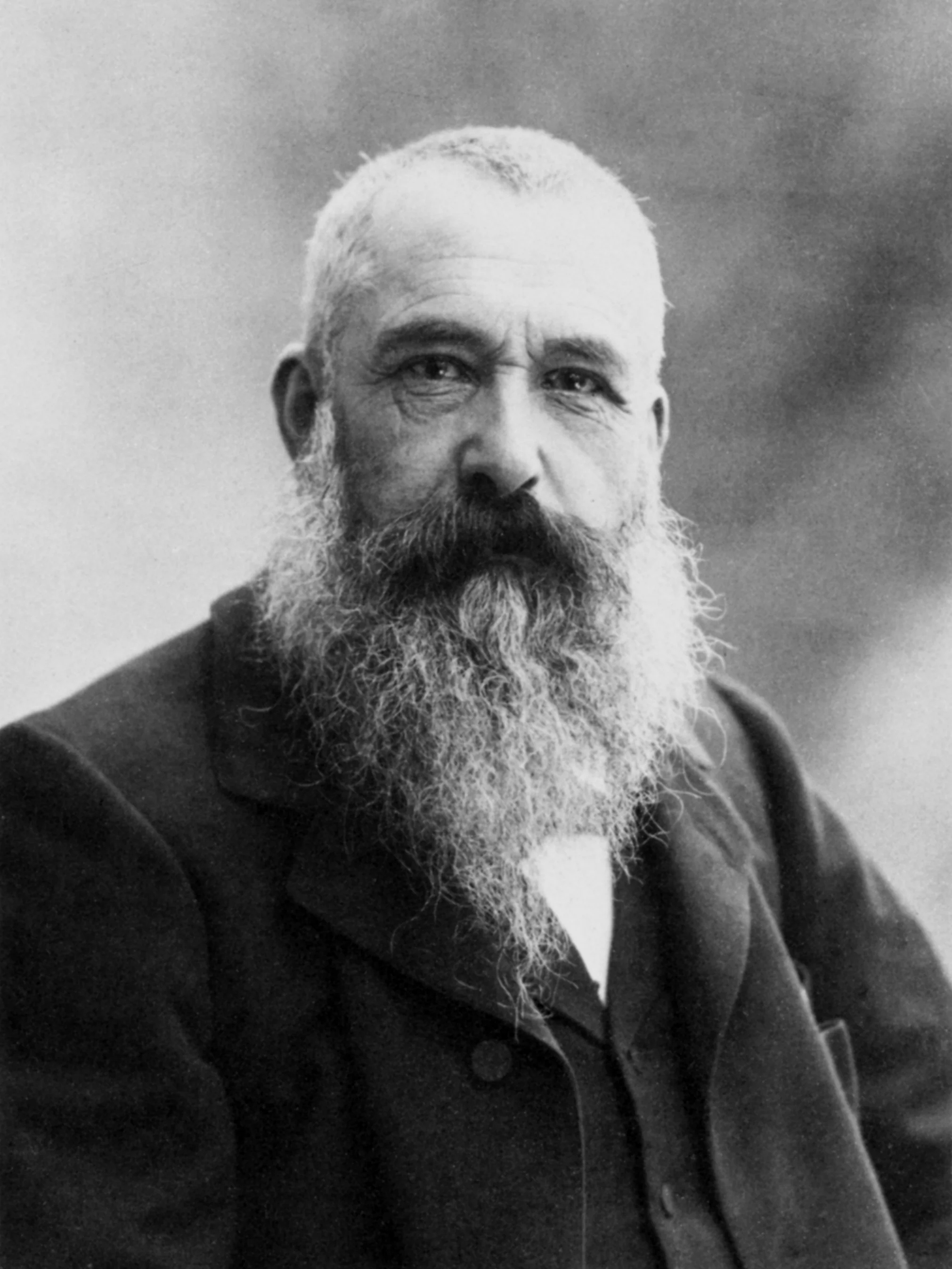
Image from Wikipedia
Image from Wikipedia
Claude Monet: The Painter of Light Who Reinvented Impressionism
A Life Marked by Color, Perception, and Radical Modernity
Claude Monet, born in 1840 in Paris and died in 1926 in Giverny, is considered one of the defining figures in art history. As a French painter and founding figure of Impressionism, he made the fleeting appearance of nature, changing light, and immediate perception the center of his art. His paintings not only transformed 19th-century painting but also paved the way for modernity. ([en.wikipedia.org](https://en.wikipedia.org/wiki/Claude_Monet))
Monet's work derives its strength from an uncompromising view of the world. He did not seek academic perfection but rather the impression of the moment, life at the instant of seeing. It is precisely this that lends his work historical significance: Monet made seeing itself an artistic theme and established standards that resonate to this day. ([en.wikipedia.org](https://en.wikipedia.org/wiki/Claude_Monet))
From Early Realism to the Revolution of Seeing
In his early years, he primarily produced realistic works that already displayed technical skill and attentive observation. Some of these early paintings were exhibited at the Paris Salon, but Monet's true artistic explosive power only became apparent when he distanced himself from prevailing artistic tastes. By the end of the 1860s, he turned to a painting style that centered on the instantaneous, atmospheric, and unstable. ([en.wikipedia.org](https://en.wikipedia.org/wiki/Claude_Monet))
With Impression, Sunrise, his artistic stance became a term of an era. The painting created in 1872 and exhibited in 1874 gave Impressionism its name and marked a turning point in European art. Monet and a group of like-minded artists organized the first Impressionist exhibition as an alternative to the Salon—a step that visibly and irrevocably broke with academic tradition. ([en.wikipedia.org](https://en.wikipedia.org/wiki/Claude_Monet))
The Impressionist Exhibitions and the Journey Against the Tide
In the 1870s, Monet participated in several Impressionist exhibitions alongside artists such as Pierre-Auguste Renoir and Edgar Degas. These years were not only artistically crucial but also economically challenging: The departure from the traditional art market significantly worsened his financial situation. Nevertheless, Monet remained true to his vision and defended the new painting style with remarkable consistency. ([en.wikipedia.org](https://en.wikipedia.org/wiki/Claude_Monet?utm_source=openai))
He received support, among others, from art dealer Paul Durand-Ruel, who played a central role in the dissemination of Impressionism. The combination of artistic innovation and market support made Monet's development possible in the long term. Without this tumultuous relationship of risk-taking, perseverance, and patronage, the global breakthrough of Impressionism would hardly have been conceivable. ([en.wikipedia.org](https://en.wikipedia.org/wiki/Claude_Monet?utm_source=openai))
Series as Artistic Research: Light, Time, and Repetition
In the 1890s, Monet developed the principle of the series into one of his most powerful forms of expression. He painted the same subject over and over, changing canvas by canvas, and examined how light, weather, and time of day affected perception. Haystacks, Poplars, and the Cathedrals of Rouen are among the most famous examples of this phase, where painting became visual research. ([metmuseum.org](https://www.metmuseum.org/toah/hd/cmon/hd%C3%A2%E2%82%AC%E2%80%9Dcmon.htm))
These series showcase Monet's unique combination of systematic approach and sensitivity. The subjects remain recognizable, yet their appearance transforms continuously; light and shadow become as significant as the object itself. It is this combination of repetition and variation that gives his work a modern, almost analytical dimension, extending far beyond the classical landscape. ([metmuseum.org](https://www.metmuseum.org/toah/hd/cmon/hd%C3%A2%E2%82%AC%E2%80%9Dcmon.htm))
Giverny: The Garden as a Living Atelier
With his house and garden in Giverny, Monet created not only a private retreat but an artistic total system. There he established the famous garden, which later became a central motif of his art. The water lily pond, bridges, plants, and reflections linked the experience of nature and picture composition into a late work of great coherence. ([britannica.com](https://www.britannica.com/biography/Claude-Monet))
In Giverny, Monet's focus shifted even more towards the interplay of surface and depth, reflection and dissolution. The water lilies are the most famous example: They condense Impressionism into an almost meditative visual language, in which the landscape is no longer described but experienced. The fact that his last series were created precisely there, where he shaped nature and design himself, constitutes one of the most impressive chapters of his biography. ([britannica.com](https://www.britannica.com/biography/Claude-Monet))
Style, Technique, and Artistic Handwriting
Monet's style is based on the radical decision to prioritize perception over academic regularity. As a proponent of plein air painting, he captured not the fixed object but the changeability of appearance. His compositions often feature open picture structures, vibrant brushwork, and a color dramaturgy that prioritizes atmosphere over detail accuracy. ([en.wikipedia.org](https://en.wikipedia.org/wiki/Claude_Monet))
Monet's approach to light is particularly important. Museums and institutions describe him as a painter fascinated by the beauty of natural light, from which he developed innovative landscape images. Whether Thames scenes, Parisian city views, or the later water lily paintings: His work always revolves around the question of how reality can not only be represented in the image but made palpable in its perception. ([courtauld.ac.uk](https://courtauld.ac.uk/about-us/press-office/press-releases/the-courtauld-gallery-announces-2024-exhibition-programme/))
Paris, London, and the Expansion of the Modern Gaze
Monet's art was never limited to a single motif or environment. In addition to the landscapes of Normandy and garden images, he created magnificent city views of Paris as well as the famous London series, which were produced between 1899 and 1901 during several stays along the Thames. These works reveal how Monet understood the modern city as a space for light, haze, and visual density. ([metmuseum.org](https://www.metmuseum.org/toah/hd/cmon/hd%C3%A2%E2%82%AC%E2%80%9Dcmon.htm))
The London paintings were presented in 1904 at a major exhibition at his dealer's in Paris, but a planned show in London did not materialize at that time. It was only in 2024/2025 that these works were once again focused on, highlighting Monet's lasting relevance. His city views demonstrate that Impressionism was not only about landscape painting but also about the art of the metropolis, weather, and urban atmosphere. ([courtauld.ac.uk](https://courtauld.ac.uk/about-us/press-office/press-releases/the-courtauld-gallery-announces-2024-exhibition-programme/))
Cultural Influence and Current Relevance
Monet is considered a leading figure of French Impressionism and a pioneer of modernity. His significance extends far beyond the art of his own time: His works continue to attract international exhibitions, are recontextualized in major museum shows, and are repeatedly associated in current programs with questions of nature, ecology, and perception. The Artizon Museum emphasizes, for instance, his engagement with light and the connection between landscape and presence. ([metmuseum.org](https://www.metmuseum.org/toah/hd/cmon/hd%C3%A2%E2%82%AC%E2%80%9Dcmon.htm))
In museum practice, Monet remains a focal point. The 2024/2025 season of the Musée de l’Orangerie continues to place the Nymphéas at the center of cultural formats, from exhibitions to readings and musical evenings. At the same time, exhibitions from 2024 to 2026 show that Monet is not only a classic but a living reference for curatorial narratives about light, nature, and modern perception. ([musee-orangerie.fr](https://www.musee-orangerie.fr/en/node/281318))
Current Projects and Exhibitions Related to Monet
For 2024 and 2025, several institutions refer to new Monet-related programs: The Courtauld Gallery presented a significant exhibition titled Monet and London: Views of the Thames, the Musée de l’Orangerie incorporated Monet into a contemporary cultural program, and in 2025/2026, other institutions focused on his city and landscape images. Such projects demonstrate that Monet's work continues to be read as contemporary art in museum contexts. ([courtauld.ac.uk](https://courtauld.ac.uk/about-us/press-office/press-releases/the-courtauld-gallery-announces-2024-exhibition-programme/))
The focus is not only on recognition but also on new visibility: Monet emerges as an artist who anticipated questions of perception, nature experience, and image construction. His art remains both historically canonical and surprisingly contemporary. This dual role makes him consistently intriguing for audiences, research, and exhibition practice. ([metmuseum.org](https://www.metmuseum.org/toah/hd/cmon/hd%C3%A2%E2%82%AC%E2%80%9Dcmon.htm))
Conclusion: Why Claude Monet Continues to Fascinate Today
Claude Monet is the painter who elevated the moment to a program and made light the main character of his art. His biography tells of artistic determination, economic setbacks, innovative series work, and the invention of a visual language that is still regarded as the epitome of Impressionism. Those who look at Monet see not only landscapes, gardens, or cities but the historical moment where modern painting begins. ([en.wikipedia.org](https://en.wikipedia.org/wiki/Claude_Monet))
His works remain fascinating because they never stand still: They change with the light, with the view, and with each new generation of observers. It is precisely this dynamism that lends them their greatness. Monet should not only be read but experienced live in museums repeatedly, as his paintings unfold their full power in direct confrontation. ([artizon.museum](https://www.artizon.museum/en/exhibition/detail/54))
Official Channels of Claude Monet:
- Instagram: No official profile found
- Facebook: No official profile found
- YouTube: No official profile found
- Spotify: No official profile found
- TikTok: No official profile found
Sources:
- Wikipedia – Claude Monet
- The Metropolitan Museum of Art – Claude Monet (1840–1926)
- Britannica – Claude Monet
- The Courtauld – Monet and London: Views of the Thames
- Brooklyn Museum – Monet and Venice
- Artizon Museum – Monet: Questioning Nature
- Musée de l’Orangerie – Season 2024-2025
- Allen Memorial Art Museum – Picturing Paris: Monet and the Modern City
Upcoming Events
Impressionism – Masterpieces from the Hasso Plattner Collection
Experience famous works by Impressionists and Post-Impressionists at the Museum Barberini in Potsdam.
Impressionism – Masterpieces from the Hasso Plattner Collection
Experience the masterpieces of Claude Monet and central positions of French landscape painting at the Barberini Museum.
Impressionism – Masterpieces from the Hasso Plattner Collection
Discover significant Impressionist works at the Museum Barberini in Potsdam starting from July 11, 2026.
Networks of Impressionism. Artists, Dealers, Collectors
A fascinating look behind the scenes of Impressionism at the Barberini Museum: Art, dealers, and collectors in dialogue. Discover now! #Impressionism #MuseumBarberini