
Comedian Harmonists
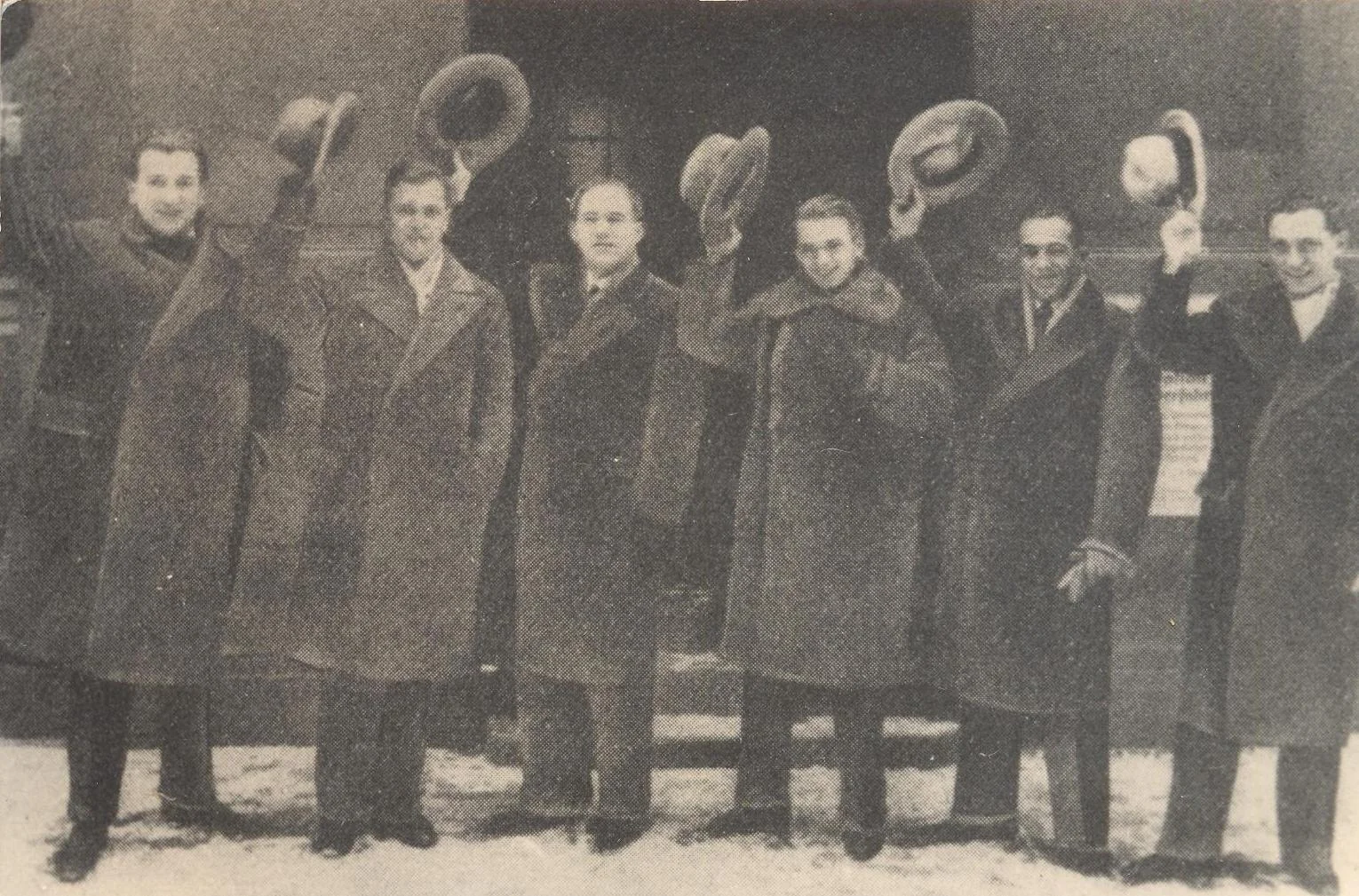
Image from Wikipedia
Image from Wikipedia
Comedian Harmonists
The Berlin Vocal Legend: How the Comedian Harmonists Unified Close-Harmony, Humor, and Global Fame
Berlin in the late twenties: A sound emerges between variety shows, radio broadcasts, and UFA studios that electrifies the republic. The Comedian Harmonists, founded in 1927/28, quickly rise within a few years to become an internationally celebrated vocal ensemble. With their precise close-harmony, infallible stage presence, and a repertoire encompassing jazz adaptations, operetta hits, and film music, they define the era. Their journey takes them from the first rehearsals in a Berlin apartment to the largest halls in Europe and the USA – a meteoric rise that abruptly ends in 1935 under the pressure of the Nazi regime, but resonates musically to this day.
Formation and Artistic DNA: From Living Room Auditions to Ensemble Sound
The trigger for their music career was the vision of young Harry Frommermann, who was fascinated by American close harmony groups – especially the Revelers. In Berlin-Friedenau, he forms a sextet through a newspaper ad: Ari Leschnikoff (first tenor), Erich A. Collin (second tenor), Frommermann himself as tenor buffo, Roman Cycowski (baritone), Robert Biberti (bass), and Erwin Bootz (piano). The core of their artistic development lies in arrangement: voices emerge solo, then merge again in tightly woven harmonics, with punchlines precisely composed onto syllables, consonants, and pauses. This vocal arrangement craft – combined with Bootz’s pianistic foundation – creates a distinctive ensemble sound that generates instant recognition.
Breakthrough: Stage, Radio, UFA – The Sound of Modernity
The first major boost occurs in 1928/29 with performances in Berlin revue productions and on the radio. Shortly thereafter, recordings follow that spread the group's brand identity widely. Key career milestones include engagements in film – an ideal platform for combining musical virtuosity with visual comedy and choreographed gestures. Their media presence creates an aura of contemporary spirit: The Comedian Harmonists represent urban lightness, international sonic influences, and a novel form of vocal entertainment that elegantly translates jazz idioms into German pop music.
Singing Style, Genre Mix, and Repertoire: Close-Harmony as the Art of Nuance
Musically, the sextet works with dynamic layering, pinpoint vocal blending, and a declamation of lyrics that emphasizes semantic punchlines. In practice, this means: jazz standards are newly instrumented – vocally, rather than with orchestral arrangements – operetta numbers gain swing accents, and film hits acquire a chamber music-like precision. The style extends from cheerful buffo articulation over legato-driven lyricism to onomatopoeic effects that make the ear smile. Thus, a connection between entertainment and compositional intricacy is created, which remains unique in the history of German popular music.
Discography and Milestones: Songs That Became Part of Cultural Memory
Among the major hits are “Veronika, der Lenz ist da,” “Wochenend und Sonnenschein,” “Das ist die Liebe der Matrosen,” “Ein Freund, ein guter Freund,” and various film titles. “Wochenend und Sonnenschein,” the German version of “Happy Days Are Here Again,” becomes a programmatic hit in 1930 for a generation seeking escapism and joy in economically tough times. “Veronika, der Lenz ist da” shines with foxtrot energy, clever double entendres, and a characteristic bass finale. Many recordings appear on 78 rpm shellac; later editions and remasters keep the oeuvre present in the catalog. The discography showcases the ensemble’s range between adapted jazz, operetta longing, film melodies, and humorous miniatures – a curated panorama of popular music from the interwar period.
Film and Media Resonance: From UFA Performances to the Film Renaissance
The career of the Comedian Harmonists is closely linked to film. Early UFA productions already utilize the magnetic stage presence of the sextet – popular numbers like “Das ist die Liebe der Matrosen” spread across the screen. Decades later, Joseph Vilsmaier’s film “Comedian Harmonists” (1997) sparks an international revival that introduces the history and music of the sextet to a new generation. The cinematic treatment – complemented by an extensive TV documentary by Eberhard Fechner in the 1970s – permanently anchors the ensemble in the canon of German cultural history.
Turning Point 1933–1935: Professional Ban, Separation, and Exile
With the rise of the Nazis, the situation changes dramatically. Three members – Frommermann, Collin, Cycowski – are of Jewish descent or deemed “non-Aryan.” In 1935, the group faces a professional ban that effectively tears the sextet apart. In Germany, the “Meistersextett (formerly Comedian Harmonists)” emerges, while the Jewish members perform as “Comedy Harmonists” in exile. Their artistic development splits: continuity in the trademark sound, but without the original, finely balanced harmony of the sextet. Tours lead the exiled group to the USA; however, the global political climate, experiences of emigration, and changing lineups gradually diminish their success.
Rediscovery, Reissues, and Honors: The Afterlife of a Legend
After the war, the Comedian Harmonists initially fade into the background until Eberhard Fechner’s sensitive oral history documentation in the 1970s triggers a broad rediscovery. In the 1990s, a feature film follows that not only reminds audiences of the historical context but also makes the musical virtuosity audible anew. Reissue series, compilations, and remasters ensure that central titles remain present in catalogs. In 1998, the German music industry honors the ensemble with an award – a late but significant act of cultural canonization.
Style Analysis: Arrangement, Articulation, Production
From a professional perspective, the discography stands out due to its consistent maintenance of a vocal “band sound.” The voices form an orchestral register: bass foundation, baritone colors, two tenors as upper voices, and the buffoonish tenor for comedic highlights. In the production of the time – mono, limited frequency range – precision is crucial: vocal blending, intonation, and synchronization must be so accurate that even rapid syllable sequences and scat-like passages remain intelligible. Arrangements employ sequences, modulating refrain returns, and dynamic crescendos that translate the live effect onto recordings. The result: music that is simultaneously danceable, cabaret-style, and technically demanding.
Cultural Influence: From Boy Band Rhetoric to Close Harmony School
In retrospect, the Comedian Harmonists are often referred to as an early “boy band” – less as a marketing term and more as an indicator of fan culture, media presence, and choreographed stage performance. However, their historical musical influence remains crucial: they shape the German-speaking vocal tradition and provide a reference model for ensembles that combine entertainment, irony, and precision singing. Tribute and successor formations – from Max Raabe’s Palast Orchester adaptations to Berlin tribute productions – demonstrate how adaptable and timeless the catalog remains. The presence of titles like “Wochenend und Sonnenschein” or “Veronika, der Lenz ist da” in cultural archives, museums, and playlists confirms their enduring establishment in collective memory.
Contextualization: Popular Music Between Weimar and Exile
The Comedian Harmonists exemplify the potential and ruptures of Weimar's music culture. Their artistic development embodies cosmopolitanism, media innovations (radio, sound film), jazz influences, and urban satire. At the same time, their dissolution marks the repressive takeover of musical life, which violently interrupted artistic biographies and severed lines of innovation. The later revivals thus serve not only as nostalgic reminiscences but as cultural memory practices: they make audible what was lost in diversity – and how much modern popular music lives on hybrid, cross-border sounds.
Reception and Awards: Canonization of a Sound
Critical reception since the 1970s emphasizes the craftsmanship of the arrangements, the comedic musicality, and the artful handling of language. Awards retrospectively acknowledge this status and support reissues, archival projects, and media presence. The combination of documentary film, feature film, and re-releases of recordings ensures intergenerational connectivity – a rarity in the popular vocal sector, where fashions change quickly. Thus, the Comedian Harmonists today stand as a synonym for close harmony at the highest level in both musicology and pop culture.
Conclusion: Why the Comedian Harmonists Still Resonate Today
The magic of the Comedian Harmonists arises from precision and lightness. Their best recordings sound spontaneous, yet behind every punchline lies a meticulously crafted arrangement. This tension between elegance, humor, and technical excellence makes the sextet immediately accessible to today’s listeners. To truly understand the magic, one should listen to the music loud – the layered voices, the buoyant piano, the punchlines on the consonants. The history of the ensemble tells of beginnings and breaks, triumphs and traumatic turning points. For this reason, it is worthwhile to rediscover the repertoire in the concert hall when tribute formations bring this sound to the stage of the present.
Official Channels of the Comedian Harmonists:
- Instagram: No official profile found
- Facebook: No official profile found
- YouTube: No official profile found
- Spotify: No official profile found
- TikTok: No official profile found
Sources:
- Wikipedia (de) – Comedian Harmonists
- Wikipedia (en) – Comedian Harmonists
- Jewish Museum Berlin – Klangraum (including “Wochenend’ und Sonnenschein”)
- WELT – “In the 1930s, the boy band gained global fame – until the Nazis shattered them” (22.02.2024)
- Wikipedia (en) – Bombs on Monte Carlo (1931) featuring the Comedian Harmonists
- Wikipedia (en) – Comedian Harmonists (Film by Joseph Vilsmaier, 1997)
- Wikipedia (de) – Echo Award 1998 (Honorary Award for the Comedian Harmonists)
- Wikipedia (de) – Eberhard Fechner (TV Documentary “Die Comedian Harmonists – Sechs Lebensläufe,” 1976)
- Wikipedia (de) – “Wochenend und Sonnenschein” (Origin, Reception)
- Wikipedia: Image and Text Source
Upcoming Events
The Comedian Harmonists (WA) – GLOBE Coburg
Experience close-harmony, humor, and moving history at the GLOBE Coburg: The Comedian Harmonists with elegant production. 16.12.2025, 19:30, from 21 €. An evening full of sound colors – secure seats now. #CoburgTheater
Comedian Harmonists in Concert in Neu-Ulm
Golden Twenties live in Ulm: The Comedian Harmonists celebrate great songs, humor, and goosebumps at Theater Ulm. On June 30, 2026, secure your seats now. #Ulm #Live
Berlin Comedian Harmonists
Braunschweig gets an evening full of harmony, wit, and great voices. Berlin Comedian Harmonists live in the Tent on 22.09.2026, tickets from 40 Euro. #Braunschweig #LiveMusic
Comedian Harmonists - Best of
Düsseldorf gets an evening full of harmony, wit, and goosebumps: Comedian Harmonists - Best of at the opera house. 30.09.2026, from €15. #Düsseldorf #ComedyMusic
Comedian Harmonists - Best of
An evening full of harmony and charm in Düsseldorf: Comedian Harmonists - Best of brings the legendary hits back to the stage live. 03.10.2026, from €17.50. #ComedianHarmonists
Comedy: The Fabulous Die
A poetic stage adventure at FFT Düsseldorf: The Fabulous Die connects revue, wordplay, and strong imagery. On 14.10.2026, 10 €. #Theater
Comedian Harmonists - Best of
An evening full of golden twenties shine in Düsseldorf: The Comedian Harmonists celebrate their best-of live at the opera house. On 24.10.2026 from 19:30, tickets from €17.50. #Düsseldorf #ComedianHarmonists
Comedian Harmonists - Best of
An evening full of the Golden Twenties in Düsseldorf: Comedian Harmonists - Best of combines catchy tunes, humor, and emotion. 06.11.2026 at 19:30. #Düsseldorf #Concert
THE REAL COMEDIAN HARMONISTS – The Christmas Show – Hell is the Night
Potsdam gets into the festive spirit: The Real Comedian Harmonists bring Hell is the Night to Nikolaisaal. Harmony, humor, and Christmas magic live. #Comedy
Comedian Harmonists - Somewhere in the World
Comedian Harmonists - Somewhere in the World