
Enjott Schneider
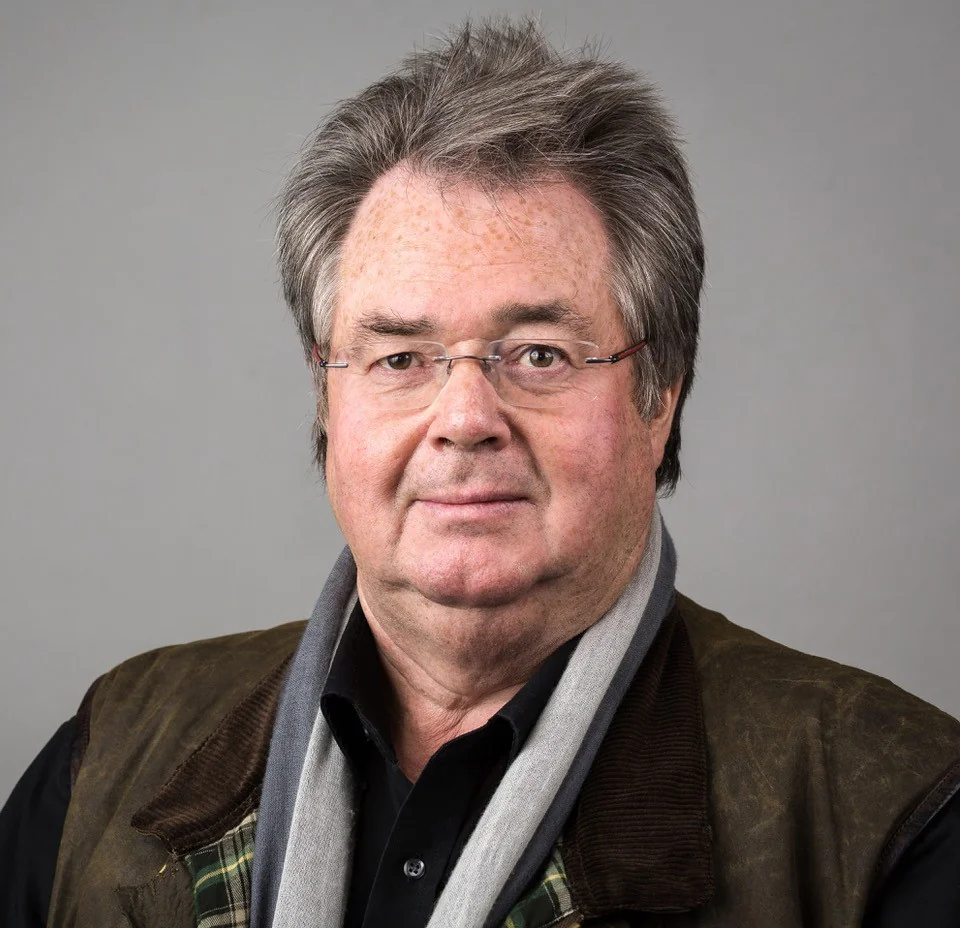
Image from Wikipedia
Image from Wikipedia
Enjott Schneider: The Sound Architect Between Film, Concert Hall, and Spiritual Vastness
A Composer with Universal Ambition and Distinctive Signature
Enjott Schneider, born in 1950 in Weil am Rhein as Norbert Jürgen Schneider, is one of the most influential German composers of his generation. His work combines concert music, film scores, choral and sacred compositions with a clear aesthetic stance: music as a language of freedom, as a cultural bridge, and as a quest for the deeper layers of world and humanity. This comprehensive artistic perspective has made him well-known beyond the borders of the classical scene. ([enjott.com](https://www.enjott.com/en/about?utm_source=openai))
Biographical Roots: From Weil am Rhein to Freiburg and Munich
Schneider studied music theory, music education, organ, and trumpet at the University of Music Freiburg starting in 1969; concurrently, he pursued musicology, German studies, and linguistics at the University of Freiburg, where he earned his doctorate in 1977. This dual foundation in practice and academia continues to shape his work today: analytical precision meets compositional imagination. Later, from 1979 to 2012, he taught at the University of Music and Performing Arts in Munich, first as a professor of music theory and from 1996 as a professor of film music composition. ([enjott.com](https://www.enjott.com/en/about?utm_source=openai))
His biographical journey also explains the stylistic breadth of his oeuvre. Schneider moves confidently between liturgical depth, symphonic opulence, and media-oriented visual music. He composes for concert halls, opera, festivals, churches, and television – and does not separate these spaces but rather hears them as parts of a shared sound world. ([enjott.com](https://www.enjott.com/en/?utm_source=openai))
The Breakthrough Through Film Music
For many listeners, the widespread recognition of Enjott Schneider began with the film score for Joseph Vilsmaier's Herbstmilch. The Bavarian Radio explicitly categorizes this moment as the start of a larger public presence. In the following years, Schneider solidified his reputation as a composer who not only accompanies images but also condenses them dramatically and sharpens their emotional impact. His music for films such as Stalingrad, Schlafes Bruder, Stauffenberg, and Die Flucht is among the most well-known highlights of his work. ([br-klassik.de](https://www.br-klassik.de/aktuell/news-kritik/enjott-schneider-75-geburtstag-komponist-filmmusik-100.html?utm_source=openai))
Additionally, there is his enormous presence in television: series and thematic music for formats like Weißblaue Geschichten, Marienhof, or Vater wider Willen made his name familiar to a wide audience. These works exemplify his ability to combine recognizability with atmospheric depth. This is particularly evident in his strength as a sound dramaturge: he composes not only themes but also characteristic musical worlds. ([enjott.com](https://www.enjott.com/fotos?utm_source=openai))
An Œuvre Between Concert Hall, Opera, and Sacred Music
Schneider's official work profile describes him as a composer for concert halls, stages, film, and sacred music. His music targets both grand forms and inner spaces: symphonic works, chamber music, choral pieces, oratorios, and operas coexist on equal footing. The website also documents an impressive catalog of over 50 CDs; particularly highlighted are the orchestral works from the label WERGO with distribution through Naxos as well as the Sacred-Music series at ambiente audio. ([enjott.com](https://www.enjott.com/en/?utm_source=openai))
Schneider summarizes his compositional self-understanding with the term Cross Culture Composing. He refers to music that interlinks geographical, historical, and cultural horizons without smoothing over their differences. In this sense, he processes ethnological source material as well as historical stylistic references. The music emerges as a dialogue of modernity and memory, of structure and imagination. ([enjott.com](https://www.enjott.com/about?utm_source=openai))
Stylistics: Postmodern with Spiritual and Cultural-Historical Depth
Characteristic of Enjott Schneider is a sound language that combines modern compositional techniques with traditional expressiveness. His website describes this mixture as a search for the "archaic roots" of life; at the same time, he points to the immaterial deep structure of a multilayered world. The result is not an abstract aesthetic for its own sake, but music with imagery, symbolism, and emotional gravity. ([enjott.com](https://www.enjott.com/en/?utm_source=openai))
This is particularly evident in works like Mystic Landscapes, where the composer connects the modernity of contemporary music with poetic traditions reminiscent of Sibelius, Dvořák, or Smetana. Works like Machine Worlds or Evolution also showcase his ability to translate programmatic concepts into concise musical forms. Here, Schneider works with contrasts, colors, and dramatic condensation while maintaining a grand symphonic scope. ([enjott.com](https://www.enjott.com/werke/mystic-landscapes-wergo-cd/?utm_source=openai))
Current Projects, Premieres, and New Releases
Enjott Schneider remains present in the current music scene. His official website documents new compositions and premieres for 2024; among these are pieces like TIME IS RUNNING and LIFE IS SO SHORT!!! as well as other premieres and performances. For 2026, SULAMITH with László Fenyő and the Polish Chamber Orchestra Radom is listed in the calendar. This shows that Schneider's work is not complete but is continually evolving. ([enjott.com](https://www.enjott.com/en/?utm_source=openai))
In April 2025, ORF Ö1 reported on a new CD featuring world premiere recordings by Enjott Schneider, performed by the Bodensee Philharmonie. This includes mentions of a violin concerto and a concert for viola and strings that reference historical and mythological contexts. Such releases demonstrate that Schneider, even in his recent work, engages in a vibrant exchange between spiritual reflection and concert form. ([oe1.orf.at](https://oe1.orf.at/programm/20250417/791713/Enjott-Schneider-und-oesterliche-Gesaenge-aus-Syrien?utm_source=openai))
Discography and Critical Reception
Enjott Schneider's discography is extensive and rich with thematic catalogs. His website features releases spanning decades in the areas of orchestral works, choral music, film music, and sacred music. Highlighted recordings include Magic of Irreality, China Meets Europe, Laconia, Fatal Harmonies, Talking Trees, and Soul Paintings. These titles showcase the programmatic diversity of his oeuvre and the strong connection to musical narrative forms. ([enjott.com](https://www.enjott.com/en/recordings?utm_source=openai))
The critical categorization is also clear: On the occasion of his 75th birthday, the Bavarian Radio emphasized the cinematic power of his music and the significance of Herbstmilch as a landmark. The official profile at Schott Music highlights that his music for cinema and television productions enjoys a similar popularity as his concert works. Schneider thus emerges as a composer who does not set popularity against ambition but productively merges both. ([br-klassik.de](https://www.br-klassik.de/aktuell/news-kritik/enjott-schneider-75-geburtstag-komponist-filmmusik-100.html?utm_source=openai))
The recognition of his work is also evident in the internationality of his performances and releases. Works are published by Schott Music, recordings appear on renowned labels, and the website documents international concerts, premieres, and revivals. His influence thus extends far beyond German contemporary music and reaches an audience that listens openly between art music, film, and spiritual sound exploration. ([schott-music.com](https://www.schott-music.com/en/person/enjott-schneider?utm_source=openai))
Cultural Influence and Artistic Authority
As President of the German Composers' Association and a member of the supervisory board of GEMA, Enjott Schneider also holds cultural-political weight. His official biography describes him as a vigorous representative of cultural diversity and as an opponent of the dominance of the mainstream. In this role, he connects artistic practice with institutional responsibility and lends his voice in the musical landscape additional prominence. ([enjott.com](https://www.enjott.com/en/about?utm_source=openai))
This dual role as a composer and cultural-political actor enhances his authority in the German-speaking music discourse. Schneider stands for an attitude that interconnects artistic freedom, historical education, and social responsibility. Therefore, his music functions not only as an aesthetic event but also as a cultural-historical statement. ([enjott.com](https://www.enjott.com/en/about?utm_source=openai))
Conclusion: A Composer with a Wide Open Horizon
Enjott Schneider fascinates through the rare combination of intellectual depth, melodic presence, and dramatic precision. His musical career traverses from a science-based education to influential film scores and a far-reaching oeuvre for concert halls, churches, and stages. Those who want to understand the complexity of contemporary German music encounter a central voice in Schneider. Experiencing him live means hearing a composer who shapes sound not merely as surface but as a space for thought. ([enjott.com](https://www.enjott.com/en/?utm_source=openai))
Official Channels of Enjott Schneider:
- Instagram: No official profile found
- Facebook: No official profile found
- YouTube: No official profile found
- Spotify: No official profile found
- TikTok: No official profile found
Sources:
Upcoming Events

3. Teddy Bear Concert: Ali and the Magic Jug
Visit the Teddy Bear Concert "Ali and the Magic Jug" at the State Theatre Darmstadt. A magical musical adventure awaits the little ones!
3rd Teddy Bear Concert
A musical highlight for the little ones: The 3rd Teddy Bear Concert at the State Theater Darmstadt invites families to an unforgettable afternoon.
Sancta Trinitas by Enjott Schneider
An evening full of spiritual sound power in Regensburg: Enjott Schneider's Sancta Trinitas meets choir, orchestra, and church space. 11.07.2026, from €25. #Regensburg