
Freya von Moltke
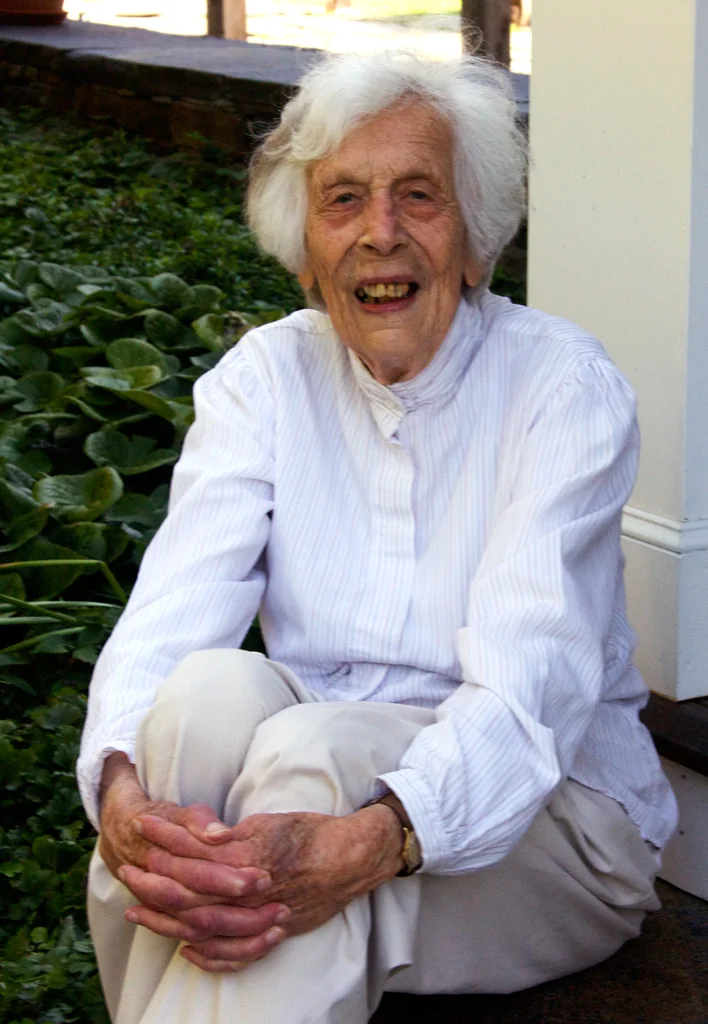
Image from Wikipedia
Image from Wikipedia
Freya von Moltke – Courage, Spirit, and European Responsibility
An extraordinary woman between resistance, law, and literary legacy
Countess Freya von Moltke is one of the defining figures of the German resistance against National Socialism. Born on March 29, 1911, in Cologne as Freya Maria Helene Ada Deichmann and died on January 1, 2010, in Norwich, Vermont, she became well-known primarily as the wife of Helmuth James Graf von Moltke, but her own life tells much more: of political conviction, legal education, intellectual clarity, and the lasting impact of the Kreisau Circle in Europe. ([gdw-berlin.de](https://www.gdw-berlin.de/vertiefung/biografien/gesamtliste-personen/biografie-detail/view-bio/freya-graefin-von-moltke?utm_source=openai))
Background, education, and early influences
Freya Deichmann grew up as the youngest child of a Cologne banking family and graduated from high school in 1930. She then studied law and earned her doctorate in Berlin in 1935, during a time when legal education for women was by no means standard. This academic foundation shaped her view of the state, law, and responsibility and is an important key to understanding her later decisions. ([gdw-berlin.de](https://www.gdw-berlin.de/vertiefung/biografien/gesamtliste-personen/biografie-detail/view-bio/freya-graefin-von-moltke?utm_source=openai))
Her life story is early intertwined with the political upheavals of the 20th century. Biographical sources depict her as a woman who acted and thought not from the sidelines, but right in the middle of a historically charged era. This connection of education, social background, and moral determination makes Freya von Moltke a figure whose significance transcends a mere accompanying role. ([gdw-berlin.de](https://www.gdw-berlin.de/vertiefung/biografien/gesamtliste-personen/biografie-detail/view-bio/freya-graefin-von-moltke?utm_source=openai))
The Kreisau Circle: Resistance as intellectual and practical work
At the center of her political life is the Kreisau Circle, the resistance network co-founded by Helmuth James von Moltke, to which Freya von Moltke was actively connected. The group consisted of women and men from diverse social backgrounds and ideological beliefs and developed plans for a democratic state after the end of National Socialism. Freya von Moltke's involvement remained hidden from the Gestapo, making her role in the resistance all the more remarkable. ([gdw-berlin.de](https://www.gdw-berlin.de/vertiefung/biografien/gesamtliste-personen/biografie-detail/view-bio/freya-graefin-von-moltke?utm_source=openai))
The Kreisau Circle is historically representative of a rare type of resistance: not only against a regime but for a vision of Europe’s future. Freya von Moltke was part of this intellectual and political project, which understood the concept of responsibility not in the abstract but in concrete terms. This enduring fascination with her biography lies in her embodiment of resistance as thought, action, and long-term remembrance. ([fvms.de](https://www.fvms.de/die-stiftung/?utm_source=openai))
End of the war, loss, and new beginnings in exile
After the war, Freya von Moltke continued her life’s work under completely changed conditions. In 1945, she left Kreisau with her sons and later moved to the USA, where she died in Norwich, Vermont. The separation from her homeland, the experience of loss, and the burden of German history condensed into a form of public memory practice that remains visible today. ([kreisau.de](https://www.kreisau.de/fileadmin/kreisau/Publikationen_und_Bildungsmaterialien/Kreisau-Initiative_Jahresrundbrief_2021_WEB.pdf?utm_source=openai))
Her commitment to preserving the Kreisau legacy became particularly important. After the upheaval in Eastern Europe, she became involved with the Kreisau Foundation for European Understanding, thus shaping the revival of the site as a European meeting place. Therefore, her name not only stands for historical resistance but also for reconciliation, education, and future work. ([en.wikipedia.org](https://en.wikipedia.org/wiki/Kreisau_Circle?utm_source=openai))
The literary legacy: Letters, memories, and historical self-interpretation
Freya von Moltke did not leave behind a musical work or discography, but she did leave a significant written legacy. Sources and secondary literature refer to her memories of Kreisau as well as the edition of the letters from the years 1939 to 1945, which constitute a central historical document of the resistance history. In this reception, her contribution is often seen as a testimony of a woman who not only experienced history but shaped and preserved it. ([welt.de](https://www.welt.de/print/die_welt/vermischtes/article104152007/Die-letzte-Kreisauerin.html?utm_source=openai))
The literary and documentary engagement with her life shows how closely the private and political were connected for Freya von Moltke. Biographical publications and film approaches emphasize the depth of her relationship with Helmuth James von Moltke as well as her own contributions to the intellectual culture of resistance. This creates the portrait of a woman whose voice lives on in letters, memories, and commemorative work. ([michaelsbund.de](https://www.michaelsbund.de/product/9783406613838-freya-von-moltke.html?utm_source=openai))
Foundation, culture of remembrance, and European presence
The Freya von Moltke Foundation for the New Kreisau continues her legacy to this day. The official website emphasizes that the foundation commemorates the NS resistance group Kreisau Circle while also engaging in international youth work, democratic education, and a peaceful Europe. This continuity makes Freya von Moltke’s name a living reference in German-Polish reconciliation. ([fvms.de](https://www.fvms.de/?utm_source=openai))
Current foundation activities also demonstrate how present this legacy remains. For 2025, the official pages document events, film screenings, and the Kreisau journey, formats in which remembrance is not fossilized in a museum but is passed on as a social practice. In this context, Freya von Moltke appears as the namesake of a project that connects history with the future. ([fvms.de](https://www.fvms.de/?utm_source=openai))
Reception and cultural significance
The critical reception describes Freya von Moltke as a symbol of civil resistance against Hitler, as a wise mediator of historical experience, and as an exceptionally steadfast personality. Press, biographies, and academic depictions emphasize her long life arc from Cologne through Berlin and Kreisau to the United States. This perspective clarifies why her name remains associated with moral authority to this day. ([rowohlt.de](https://www.rowohlt.de/buch/sylke-tempel-freya-von-moltke-9783499014673?utm_source=openai))
Her cultural influence is evident especially in the culture of remembrance. Whether in biographies, memorial work, or educational projects: Freya von Moltke represents a form of action that understands democratic responsibility not as a slogan but as a life’s mission. This is where her lasting impact lies – in the consistency of her thinking and the dignity of her actions. ([fvms.de](https://www.fvms.de/die-stiftung/?utm_source=openai))
Conclusion: Why Freya von Moltke continues to resonate today
Freya von Moltke fascinates because her life unites historical depth, moral clarity, and a European vision. She was a jurist, resistance fighter, author, and a central guardian of the Kreisau legacy. Anyone interested in the German resistance, the culture of remembrance, and the intellectual foundations of a democratic Europe encounters in her one of the most impressive personalities of the 20th century. ([gdw-berlin.de](https://www.gdw-berlin.de/vertiefung/biografien/gesamtliste-personen/biografie-detail/view-bio/freya-graefin-von-moltke?utm_source=openai))
Her legacy continues in the foundation, in publications, in exhibitions, and in the ongoing work towards understanding and democracy. For this reason, engaging with her life is always worth it. Freya von Moltke remains a woman whose story deserves not only to be read but to be understood. ([fvms.de](https://www.fvms.de/?utm_source=openai))
Official channels of Freya von Moltke:
- Instagram: No official profile found
- Facebook: No official profile found
- YouTube: No official profile found
- Spotify: No official profile found
- TikTok: No official profile found
Sources:
- Wikipedia – Freya von Moltke
- Memorial to the German Resistance – Biography of Countess Freya von Moltke
- Freya von Moltke Foundation for the New Kreisau – Homepage
- Freya von Moltke Foundation – The Foundation
- Freya von Moltke Foundation – Film Screening “A Story of Love – Freya”
- Rowohlt Publishing – Freya von Moltke
- The Guardian – Countess Freya von Moltke obituary
- German Bundestag – Freya von Moltke and the New Kreisau
Upcoming Events
Story of a Love - Freya
An intense movie evening in Aschaffenburg: Story of a Love - Freya combines cinema, contemporary history, and conversation with the creators. 18.04.2026, €12. #MovieEvening
Artists' Lives Out of Joint? Tour in Freising
Discover Freising's artistic past and future in a unique tour through museums and historic sites.