
Fritz Koenig
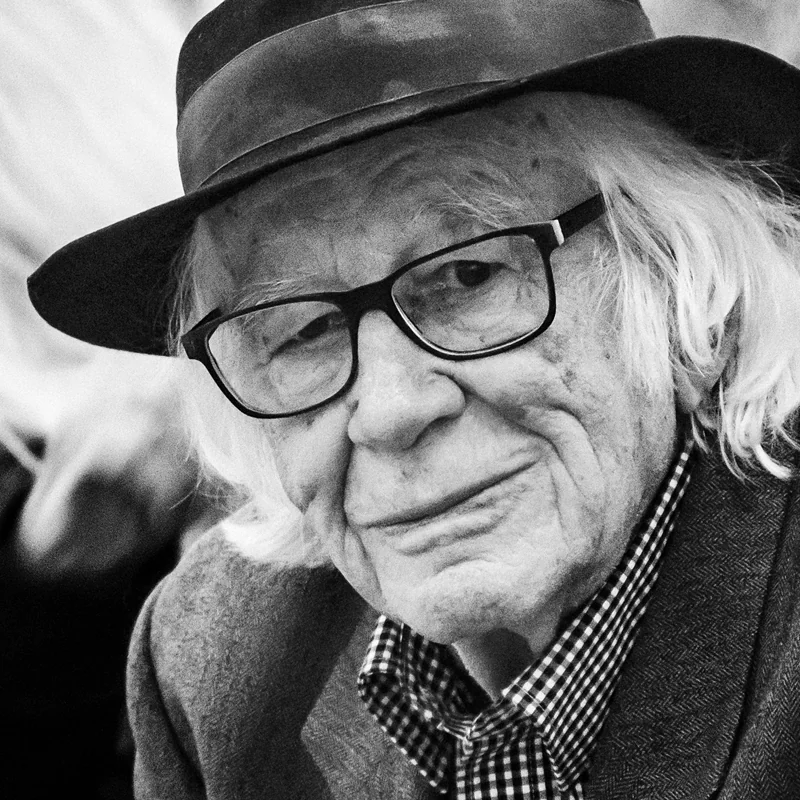
Image from Wikipedia
Image from Wikipedia
Fritz Koenig: The Sculptor of Monumental Form and Great Remembrance
An Artist Between Archaic Weight, Spiritual Density, and Global Impact
Fritz Koenig is one of the defining German sculptors of the 20th century. Born in 1924 in Würzburg and passing away in 2017 on Ganslberg near Landshut, he created a body of work that reaches far beyond regional art history, significantly influencing public spaces in Europe and the USA. His sculptures combine formal rigor with inner tension, archaic presence, and a profound engagement with transience, protection, sacrifice, and memory. ([koenigmuseum.de](https://koenigmuseum.de/fritz-koenig/biografie/))
Biographical Origins: War Experience, Studies, and Artistic Influence
Koenig's artistic development is inseparably linked to the upheavals of the 20th century. His years as a soldier on the Eastern Front were, according to the official museum biography, formative for his thinking about humanity in its vulnerability. After the war, he studied from 1946 to 1952 at the Academy of Fine Arts in Munich with Anton Hiller and deepened his impressions in Paris in 1951; there his interest in African sculpture grew, which he both collected and viewed as a source of inspiration. ([koenigmuseum.de](https://koenigmuseum.de/fritz-koenig/biografie/))
These early experiences laid the groundwork for work that was never decorative but always existentially conceived. Koenig shaped figures, groups, and animal forms with a reduced, stylized vocabulary that does not depict the body naturalistically but condenses it into a symbol. As early as the 1950s, he became an important voice in post-war sculpture in Munich, rapidly gaining visibility through exhibitions, awards, and international presentations. ([koenigmuseum.de](https://koenigmuseum.de/fritz-koenig/biografie/))
The Breakthrough: International Recognition and Early Masterpieces
The international breakthrough occurred in the late 1950s. In 1957, Koenig received a scholarship at the Villa Massimo in Rome; in 1958, he participated in the Venice Biennale and presented his work at the World Expo in Brussels, where his piece Maternitas was showcased. In 1959, he held his first solo exhibition in Munich and participated in documenta II in Kassel; in 1961, he had his first solo exhibition in the USA at Staempfli in New York. ([koenigmuseum.de](https://koenigmuseum.de/fritz-koenig/biografie/))
Koenig's early vocabulary was characterized by flat, stylized bodies, but in the 1960s, it progressed toward a more symbolically abstract form. The Museum of the City of Landshut emphasizes that Koenig thus became one of the most important protagonists of German sculpture in the second half of the 20th century. It is precisely this combination of reduction and expressiveness that makes his works distinctive to this day. ([koenigmuseum.de](https://koenigmuseum.de/fritz-koenig/biografie/))
Teaching, Atelier World, and the Work in Ganslberg
In 1964, Koenig was appointed to the Chair of Plastic Design at the Faculty of Architecture of the Technical University of Munich. Simultaneously, he developed in Ganslberg near Landshut a place of living and working that was much more than a studio: a house, workshop, stables, and an artistic environment formed an ensemble where production, collection, and daily practice merged closely. This spatial autonomy reinforced the continuity of his work over decades. ([koenigmuseum.de](https://koenigmuseum.de/fritz-koenig/biografie/))
His collection of African art and his interest in forms between human and animal also belong to this cosmos. The KOENIGmuseum and the Fritz Koenig Association highlight that his work should not be viewed in isolation, but as part of a comprehensive cultural and collecting mindset. Koenig's artistic authority is based on this rare unity of sculpture, drawing, collection, and way of life. ([koenigmuseum.de](https://koenigmuseum.de/fritz-koenig/biografie/))
The Large Ball-Caryatid N.Y.: A Work Becomes a Global Symbol
The artist's most famous work is the Große Kugelkaryatide N.Y., created between 1967 and 1971 for the plaza of the World Trade Center in New York. The monumental bronze sculpture became one of the most prominent works of post-war modernism in public space and remained a quiet yet unmistakable part of the Manhattan skyline experience for decades. Its formal presence was connected with an urban, international symbolism that transcended pure aesthetics. ([koenigmuseum.de](https://koenigmuseum.de/fritz-koenig/biografie/))
After the attacks of September 11, 2001, the sculpture was severely damaged but not destroyed. It remained as one of the few recognizable artworks from the debris, was salvaged, and later recontextualized as a memorial; since 2017, it stands in Liberty Park in close proximity to the 9/11 Memorial. In this transformation from artwork to memorial lies an extraordinary cultural historical densification, giving Koenig's work an additional layer of global significance. ([koenigmuseum.de](https://koenigmuseum.de/fritz-koenig/biografie/))
Memorial Sculptures: Mauthausen, Munich, and the Ethics of Remembrance
Koenig’s sculpture early on developed a strong dimension of remembrance. The museum in Landshut names the central works as the Pietà for Maria Regina Martyrum in Berlin-Plötzensee, the memorial of the Federal Republic of Germany in Mauthausen from 1981, and the monument for the victims of the terrorist attack during the 1972 Olympic Games in Munich, the so-called "Klagebalken" from 1995. These works demonstrate how Koenig combined formal rigor with an ethical task. ([koenigmuseum.de](https://koenigmuseum.de/fritz-koenig/biografie/))
His monuments avoid pathetic gestures and instead rely on density, weight, and quietness. It is precisely this approach that evokes a strong emotional impact in public space. Koenig did not work with illustrative symbolism but with a language of bodies, burdens, and tensions that makes memory a visible physical experience. ([koenigmuseum.de](https://koenigmuseum.de/fritz-koenig/biografie/))
Drawing, Material, and Stylistic Development
Although Koenig is mainly known as a sculptor, drawing and paper works became a central part of his artistic exploration towards the end of his life. The Guggenheim describes how his work evolved from early flat stylized figures toward a significantly symbolic abstraction; the Koenigmuseum emphasizes the importance of drawings, paper remnants, and reliefs within his overall oeuvre. Bronze, iron, stone, and occasionally wood form the material basis of a visual language that oscillates between body, organism, and monument. ([guggenheim-venice.it](https://www.guggenheim-venice.it/en/art/artists/fritz-koenig/))
Characteristic of Koenig are spherical heads, cylindrical limbs, and reduced, almost archaic proportions. This vocabulary appears strict at first glance but reveals great emotional depth in detail. His sculptures seem like introspective beings that are at once protective figures, bearers of burden, and symbols of human existence. ([en.wikipedia.org](https://en.wikipedia.org/wiki/Fritz_Koenig?utm_source=openai))
Exhibitions, Reception, and Cultural Influence
Koenig’s international reception has been supported by significant museums and exhibitions. The MoMA includes works like Camargue, X and Seesaw in its collection, while the Guggenheim highlights his education, his experiences in Paris, the Brussels World Exposition, and the symbolic abstraction of the 1960s. This firmly establishes Koenig in institutional art history; his works are visible not only in public spaces but also present in major modern collections. ([moma.org](https://www.moma.org/collection/artists/3183))
In addition, there have been exhibitions in Venice, Kassel, Munich, New York, and other art centers, as well as awards like the Bavarian Maximilian Order for Science and Art and the Grand Cross of the Order of Merit of the Federal Republic of Germany. The KOENIGmuseum in Landshut preserves his works and collection and demonstrates how closely Koenig’s life path remained connected with the city. His art has not only shaped the landscape of sculpture but also expanded the idea of what remembrance can look like in public spaces. ([koenigmuseum.de](https://koenigmuseum.de/fritz-koenig/biografie/))
Later Years, Legacy, and Museum Presence
Koenig passed away in 2017 in Ganslberg, but his work remains alive in museums, memorial places, and urban spaces. The KOENIGmuseum continues his work today with exhibitions, research, and educational formats; at the same time, the Fritz Koenig Association commemorates the significance of Ganslberg, the museum, and the collection of African art. This ensures that Koenig remains present not only as an artist but also as a cultural institution. ([koenigmuseum.de](https://koenigmuseum.de/fritz-koenig/biografie/))
His legacy lies in the rare combination of monumentality and intimacy. Koenig created forms of international resonance that nonetheless emerged from a very personal, almost quiet artistic discipline. It is precisely this tension that continues to fascinate art lovers, museum visitors, and cultural historians alike today. ([koenigmuseum.de](https://koenigmuseum.de/fritz-koenig/biografie/))
Conclusion: Why Fritz Koenig Remains Compelling Today
Fritz Koenig is an artist of great form and quiet, lasting impact. His sculptures connect post-war experience, formal rigor, material presence, and global historical remembrance into a body of work of extraordinary depth. Those who view Koenig do not just see sculpture but an uncompromising engagement with humanity in the 20th century. ([koenigmuseum.de](https://koenigmuseum.de/fritz-koenig/biografie/))
It is precisely for this reason that it is worthwhile to look at his works in the museum and in public space. The monuments, drawings, and collections unleash their full power in direct experience: as spatial bodies, as carriers of memory, and as impressive testimonies of a great artistic existence. Anyone wishing to understand Koenig's work should see it on-site. ([koenigmuseum.de](https://koenigmuseum.de/fritz-koenig/biografie/))
Official Channels of Fritz Koenig:
- Instagram: no official profile found
- Facebook: no official profile found
- YouTube: no official profile found
- Spotify: no official profile found
- TikTok: no official profile found
Sources:
- KOENIGmuseum – Biography of Fritz Koenig ([koenigmuseum.de](https://koenigmuseum.de/fritz-koenig/biografie/))
- KOENIGmuseum – Museums of the City of Landshut ([koenigmuseum.de](https://koenigmuseum.de/))
- Peggy Guggenheim Collection – Fritz Koenig ([guggenheim-venice.it](https://www.guggenheim-venice.it/en/art/artists/fritz-koenig/))
- MoMA – Fritz Koenig ([moma.org](https://www.moma.org/collection/artists/3183))
- Art of the World Trade Center – Fritz Koenig ([wtc.art](https://wtc.art/artwork/fritz-koenig/))
- Fritz Koenig Association e.V. – Homepage ([freunde-fritz-koenig.de](https://www.freunde-fritz-koenig.de/))
- Wikipedia: Image and text source ([en.wikipedia.org](https://en.wikipedia.org/wiki/Fritz_Koenig?utm_source=openai))