
Hape Kerkeling
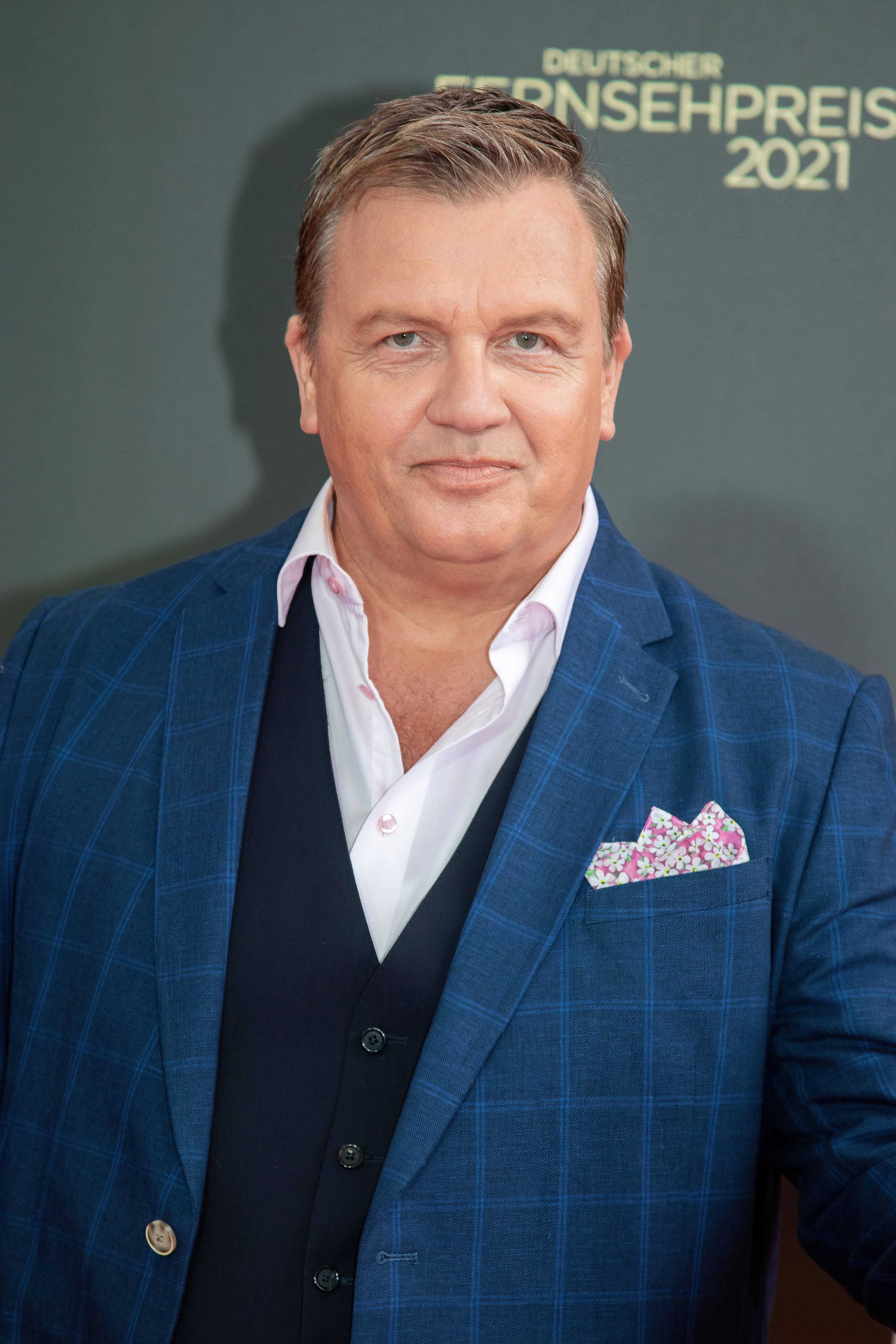
Image from Wikipedia
Image from Wikipedia
Hape Kerkeling: The Exceptional Entertainer Between Comedy, Music, and Cult Status
A Life for Stage, Television, and Pop Culture
Hape Kerkeling has been one of the most influential figures in German entertainment for decades. As a comedian, author, television host, actor, director, singer, and voice actor, he has distinguished himself across so many disciplines that his work extends far beyond a classic artist biography. Born on December 9, 1964, in Recklinghausen, he developed an early stage presence that uniquely combined humor, observational skills, and musical timing.
His career did not begin as a straightforward ascent, but rather as a result of curiosity, a willingness to transform, and a finely tuned sense of public sentiment. In the mid-1980s, Kerkeling became widely known through television formats such as Känguru; his real breakthrough came with Total Normal, a show that consolidated his anarchic comedy, character art, and media impact. To this day, his name stands for German entertainment that is sharply observant, musically inclined, and culturally resonant.
From Recklinghausen to the Limelight: The Early Years
Hape Kerkeling's biography is closely linked to the Ruhr area, a region where directness, self-irony, and social observation develop a special language. His beginnings as a young comedian occurred during a time when German television still strongly differentiated between cabaret, shows, and sketches. Kerkeling broke these boundaries early on, combining role work, improvisation, and comedic performance into a distinctive style.
Even at a young age, he was noted for his extraordinary versatility. He had the ability to not only portray characters but also to infuse them with precise facial expressions, vocal melody, and rhythm. This approach made him an artist who created entire characters that engraved themselves deeply into the collective memory, rather than simply delivering punchlines.
The Breakthrough with TV Formats and Cult Figures
The path to broad public recognition led through television, but Kerkeling was never limited to the role of a mere host. With formats such as Känguru, Total Normal, and later Darüber lacht die Welt, he shaped a German counter-model to the stiff Saturday night entertainment. His shows thrived on surprise, role play, satire, and an instinctive sense for situational comedy.
His artistic characters became particularly important for his cult status. Hannilein, Horst Schlämmer, Siegfried Schwäbli, Uschi Blum, and Evje van Dampen demonstrate how Kerkeling works with voices, dialects, body language, and social milieu. These characters are not mere gags; they are precisely constructed miniatures of German everyday culture in which provincialism, media criticism, and pop comedy reinforce each other.
Musical Works and the Rare Versatility as a Singer
Musically, Kerkeling has also carved out a distinctive place for himself. His work as a singer is closely tied to his comedic identity, but therein lies its strength: he uses music not just as a mere accessory but as a narrative tool. In 1991, the album Erwarten Se nix was released, documenting his mix of parody, cabaret, and Schlager pastiche.
In 2014, Kerkeling released the CD Ich lasse mir das Singen nicht verbieten, where he interprets familiar Schlager songs among other things. The title alone marks the playful seriousness of his musical work: singing is for him an expression, a bow to the genre, and an ironic twist all at once. In his recordings, a musician appears who does not merely imitate musical forms but consciously transforms them into his own narrative stance.
Discography, Soundtrack Character, and Reception
Hape Kerkeling's discography is more concise than his television and filmography, but that makes it remarkably concentrated. His releases range between comedy albums, Schlager influences, and soundtrack-like performances. Songs like Das ganze Leben ist ein Quiz or character and show numbers from his programs intertwine entertainment with a precise sense of recognizability.
The cultural impact of his musical works lies less in chart dominance than in their presence in the collective memory. Kerkeling has demonstrated how powerfully music can function as a stage medium in German pop culture: as punchline, comment, and staging of character and situation. This very connection between composition, performance arrangement, and spoken or sung role makes his musical work so special.
Film, Direction, and the Expansion of the Comedic Cosmos
Hape Kerkeling never limited himself to television. As an author, director, and actor, he developed several films for both cinema and television, where his character world met larger dramatic arcs. Films like Kein Pardon, Ein Mann, ein Fjord, or Samba in Mettmann illustrate how consistently he intertwines comedy, social studies, and pop aesthetics.
In particular, Kein Pardon is regarded as a key work in his career. The film combines media criticism with a lovingly coarse examination of the show business and was later adapted into a musical. Kerkeling's work on such projects affirms his authority as a storyteller who not only performs entertainment but also thinks structurally.
Recognizable Voice in Dubbing
Another important area of his career is voice acting. As the German voice of Panda Po in the Kung Fu Panda series or the snowman Olaf from the Frozen films, Kerkeling has transmitted his vocal versatility to an international family audience. Particularly in the realm of dubbing, his precise control over tempo, emphasis, and comedic timing is evident.
These voice roles add another dimension to his artistic profile. Kerkeling brings characters to life not only through their facial expressions or body language but also through voice as an instrument. His work as an audio play actor, audiobook narrator, and voice actor emphasizes how much his career thrives on tonal colors, rhythm, and presence.
Bestselling Author and Societally Relevant Narrative Voice
Alongside stage, television, film, and music, Kerkeling has also become one of the most read voices in Germany as an author. With Ich bin dann mal weg, he published the most successful German non-fiction book of the post-war period in 2006. The book about his pilgrimage on the Camino de Santiago combined personal experience, spiritual openness, and observations with a language that is light, accessible, and yet reflective.
The literary success demonstrated that Kerkeling is much more than a comedian with cult status. He possesses a precise sense of narrative pace, tone, and emotional setting. His books, columns, and audiobook works deepen the image of an artist who merges public entertainment and personal experience at a high level.
Current Projects and New Presence Until 2026
Hape Kerkeling remains present even in the 2020s. His official website points to new film projects such as Extrawurst and Horst Schlämmer sucht das Glück, where he will once again display his well-known comedic strengths. At the same time, the official site has highlighted an ARD theme day for his 60th birthday in December 2024, including documentaries, classics, and podcast offerings.
In 2024, a special episode of the podcast Unglaublich krank was also released, where Kerkeling advocated for people with rare diseases. The official website also mentions the return of Club Las Piranjas as a series and audiobook, along with other media formats. This range shows that Kerkeling is already a multimedia cultural actor whose work oscillates between nostalgia, relevance, and public importance.
Critical Reception, Awards, and Cultural Influence
The reception of Hape Kerkeling has long been characterized by recognition and high public sympathy. Reputable reports and retrospectives repeatedly emphasize his breakthrough with Total Normal, his iconic moments in television history, and the extraordinary range of his artistic spectrum. His awards and hosting roles in major television formats underscore the institutional recognition of his work.
Culturally, Kerkeling represents a form of German entertainment that has elevated distance, self-irony, and character comedy to a new level. His artistic figures, his books, his musical projects, and his voice roles have left their mark on several generations. The cultural influence lies in the fact that he was never merely an entertainer but a trendsetter who connected pop, cabaret, media criticism, and emotional openness.
Conclusion: Why Hape Kerkeling Continues to Fascinate
Hape Kerkeling remains compelling because he has infused German entertainment with intelligence, pace, and an unmistakable presence. His musical career, his TV history, his characters, and his books together form a body of work that entertains, comments on, and touches people. Few artists have so consistently shifted the boundaries between comedy, music, and narrative art.
Anyone who experiences Hape Kerkeling live, on television, on screen, or through his recordings encounters an artist who understands humor as a precise art form. This is precisely where his lasting impact lies: he transforms observation into pop culture, voice into character, and stage into memory. Hape Kerkeling is not a nostalgic figure but a living benchmark for German entertainment art.
Official Channels of Hape Kerkeling:
- Instagram: https://www.instagram.com/hapekerkeling.official/
- Facebook: https://www.facebook.com/people/Hape-Kerkeling/61570041747870/
- YouTube: https://www.youtube.com/@hapekerkelingofficial
- Spotify: no official profile found
- TikTok: https://www.tiktok.com/@hape.kerkeling
Sources:
- Hape Kerkeling - Official Website
- Hape Kerkeling - Contact / Social Links
- Wikipedia: Hape Kerkeling - Image and Text Source
- FAZ - Hape Kerkeling's New Book, 29.09.2024
- n-tv - Hape Kerkeling Joins Instagram
- Merkur - Hape Kerkeling on Instagram
- rtv.de - Hape Kerkeling: Life, Career & Best Cult Figures
Upcoming Events
Milkaus Filmcafé: Horst Schlämmer Searches for Happiness
Horst Schlämmer Searches for Happiness at the Astor Filmtheater Braunschweig: cinema evening with a cult figure, humor, and special premiere spirit. Save the date now! #Braunschweig #Cinema
Extrawurst
Cinema, April 12, 2026, 12:45 PM, Schauburg Filmpalast Comedy by Dietmar Jacobs and Moritz Netenjakob, based on their play featuring: Hape Kerkeling, Christoph Maria Herbst, Fahri Yardim, Anja Knauer, Friedrich Mücke, Gaby Dohm, Milan Peschel, Katrin Röver, and others; Germany 2026, 98 min; Rated: from 12 years. It’s actually a mere formality: Heribert (Hape Kerkeling), long-time chairman of the Lengenheide tennis club, and his ambitious deputy Matthias (Friedrich Mücke) are voting on the acquisition of a grill for the next club party. The trendy copywriter Torsten (Christoph Maria Herbst) throws out a catchy phrase to wrap up the dreary meeting quickly. Then Torsten's wife Melanie (Anja Knauer) suggests buying a second grill for her doubles partner Erol (Fahri Yardim), the only Muslim member of the club. Because devout Muslims, as is well known, cannot place their sausages on a grill that has been used for pork. The idea leads to a tumultuous exchange, where atheists and believers, Germans and Turks, do-gooders and hardliners clash head-on. It quickly becomes clear to everyone: This is about much more than just a grill. Director Marcus H. Rosenmüller has adapted the enormously successful play "Extrawurst" by STROMBERG author Dietmar Jacobs and comedian Moritz Netenjakob for the big screen. The result is a witty yet thought-provoking cinematic enjoyment with a distinctly prominent, eager-to-act cast. Presented in the KoKi series "New German Film".
Horst Schlämmer is searching for happiness – at the Weltspiegel Cottbus
Horst Schlämmer is searching for happiness at the Weltspiegel Cottbus: cult figure, travel satire, and fine humor in 93 minutes. April 23, 2026, 5:15 PM. #Cottbus #Cinema
Horst Schlämmer seeks happiness – at Weltspiegel Cottbus
Horst Schlämmer moves into Weltspiegel Cottbus: a quirky-happy quest for happiness full of satire and cult charm. 26.04.2026, 17:15 hrs. #Cottbus #Theater
Horst Schlämmer is Searching for Happiness – at Weltspiegel Cottbus
Horst Schlämmer is searching for happiness at Weltspiegel Cottbus – delivering great comedy moments, lots of charm, and the best cinema atmosphere. 27.04.2026, 5:15 PM. #Comedy #Cottbus
Horst Schlämmer is Searching for Happiness – at Weltspiegel Cottbus
Don't miss the humorous cinema screening of 'Horst Schlämmer is Searching for Happiness' at Weltspiegel Cottbus on April 28, 2026.
Horst Schlämmer seeks happiness – at Weltspiegel Cottbus
Horst Schlämmer returns to the big screen at Weltspiegel Cottbus: satire, cult figure, and cinema atmosphere on 04/28/2026 at 5:15 PM. #Cottbus #Cinema
Horst Schlämmer is searching for happiness
Horst Schlämmer brings filmforum Duisburg to chuckle: cult figure, cinema charm, and plenty of punchlines. Experience it on 15.05.2026 at 3:30 PM for 9.90 €. #Comedy #Duisburg
Horst Schlämmer is Seeking Happiness
Horst Schlämmer is seeking happiness at filmforum Duisburg – and hits the laughter center right on. Satire, cult figure, cinema atmosphere. 16.05.2026, 15:30, 9.90 €. #Comedy
Horst Schlämmer seeks happiness
Horst Schlämmer is back and seeks happiness in Duisburg. Cult comedy, satire, and great punchlines at the filmforum on 18.05.2026 from €7.90. #Comedy