
Ian Bostridge
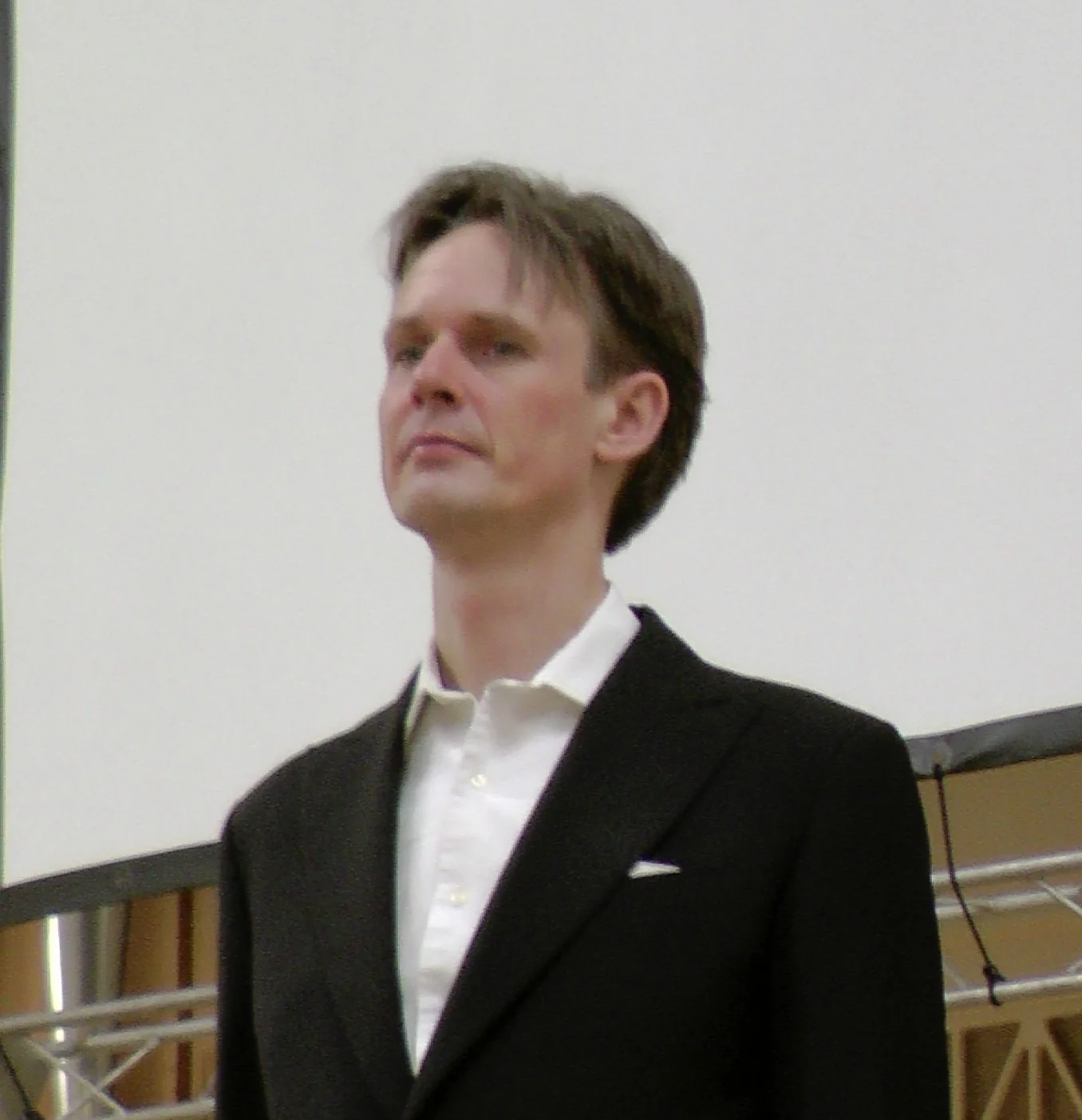
Image from Wikipedia
Image from Wikipedia
Ian Bostridge: The Tenor Who Redefines Song
A British Exceptional Artist Between Opera, Song Art, and Intellectual Depth
Ian Bostridge, CBE, born on December 25, 1964, in London, is one of the most influential British tenors of his generation. His artistic career connects opera, song, and musicological reflection in a way that has become rare in the international classical music scene. Before fully committing to music, he studied history and philosophy at Oxford and Cambridge, earning his doctorate in 1990 on witchcraft, which imparted a unique intellectual breadth to his later work. ([de.wikipedia.org](https://de.wikipedia.org/wiki/Ian_Bostridge?utm_source=openai))
From Academic to Singer: An Extraordinary Entry
Bostridge's path to a music career did not go through a conservatory, but rather through university and an intellectual engagement with literature, history, and culture. Early influences include school concerts and encounters with the song repertoire of Schubert and Dietrich Fischer-Dieskau; later significant steps included competitions such as the final of the Kathleen Ferrier and Richard Tauber Competitions, as well as the National Federation of Music Societies/Esso Award in 1991. His debuts at Wigmore Hall in 1993 and at the Aldeburgh Festival in 1994 marked the transition from academic thinking to the stage presence of an internationally sought-after song singer. ([munzinger.de](https://www.munzinger.de/register/portrait/biographien/bostridge%20ian/00/25278?utm_source=openai))
It is precisely this combination of scholarly precision and vocal expressiveness that makes Bostridge so distinctive. He not only brings texts to life but also interprets them, investigating their historical layers and shaping an interpretation that intertwines musical line with intellectual tension. The result is an artistic development that understands song as a dramatic, literarily informed art form. ([warnerclassics.com](https://www.warnerclassics.com/release/autograph?utm_source=openai))
International Career: From Wigmore Hall to La Scala
Ian Bostridge’s international career has taken him to the most significant concert and festival stages across Europe and North America, including Salzburg, Edinburgh, Munich, Vienna, Aldeburgh, and the Schubertiade in Schwarzenberg. Carnegie Hall and La Scala in Milan are also notable stops in his career, underscoring his status as a singer with worldwide appeal. The opera stage has remained as important as recital performances: his debut at La Scala as Peter Quint in Britten’s The Turn of the Screw is particularly highlighted. ([warnerclassics.com](https://www.warnerclassics.com/artist/ian-bostridge?utm_source=openai))
Additionally, he has had residences and curated concert series, such as at the Vienna Concert Hall scene, the Schubertiade in Schwarzenberg, the Amsterdam Concertgebouw, London’s Barbican, the Luxembourg Philharmonie, Wigmore Hall, and Hamburg's Laeiszhalle. These engagements demonstrate that Bostridge is seen not only as a guest soloist but as a shaping artistic personality who influences programs, repertoire, and contexts. His stage presence combines stylistic sovereignty with a distinct, often almost electric concentration. ([warnerclassics.com](https://www.warnerclassics.com/artist/ian-bostridge?utm_source=openai))
Repertoire and Discography: Schubert at the Center, Britten and Beethoven as Expansion
The core of Bostridge’s discography features the German lied, primarily Franz Schubert. Warner Classics points to central releases such as Die schöne Müllerin, Winterreise, and Schwanengesang, which bolster his reputation as an outstanding Schubert interpreter. AllMusic and MusicBrainz also document numerous recordings in the realms of song, opera, and oratorio, spanning composers from Bach and Mozart to Janáček, Monteverdi, and Britten. ([warnerclassics.com](https://www.warnerclassics.com/artist/ian-bostridge/releases?utm_source=openai))
His collaboration with pianists such as Julius Drake, Mitsuko Uchida, Leif Ove Andsnes, Antonio Pappano, and Thomas Adès has been especially close. These partnerships shape his artistic development by taking the song as a dialogical art seriously: not merely as accompaniment to a voice, but as a chamber music exchange. The album Shakespeare Songs won a Grammy in 2017 for Best Classical Vocal Album and stands out as one of his most visible international successes. ([warnerclassics.com](https://www.warnerclassics.com/artist/warsaw-philharmonic/news?utm_source=openai))
Thematically, his programs also showcase a remarkable coherence. Requiem, The Pity of War connected musical and historical perspectives on World War I in 2018, while Beethoven Songs and Folksongs illuminated the lyrical side of the composer through Bostridge’s nuanced text interpretation. In this way, his discography not only gathers works but also reveals musical and cultural connections. ([warnerclassics.com](https://www.warnerclassics.com/release/requiem-pity-war?utm_source=openai))
Current Projects and Releases: Focus on Schumann
Among his recent activities is the release of Twilight Schumann Songs with pianist Saskia Giorgini, which is set to be released on February 28, 2025, by Pentatone. This project continues Bostridge's long-standing engagement with the German song while shifting the focus to Robert Schumann’s song cycles and their poetic condensation. Pentatone describes the recording as part of a Schumann trilogy, highlighting the conceptual ambition of the project. ([music.apple.com](https://music.apple.com/us/album/twilight-schumann-songs/1783728430?utm_source=openai))
Bostridge also remains highly active in concert life. For the 2024/2025 season, NOSPR mentions a return to the Concertgebouw, a China tour with Daniel Harding, recitals with Piotr Anderszewski in Paris and Krakow, as well as a USA tour with Julius Drake, including performances in New York, Montreal, and Baltimore. Additionally, he continues his collaboration with Deborah Warner on a production of Winterreise. These activities illustrate an artist who regularly reassesses his repertoire while remaining anchored on prominent international stages. ([nospr.org.pl](https://nospr.org.pl/pl/kalendarz/artysci/ian-bostridge?utm_source=openai))
Style and Interpretation: Text, Sound, and Dramaturgy
Bostridge’s singing style is often described as linguistically precise, colorful, and intellectually profound. Warner Classics highlights his “vocally and linguistic colour” and his “commanding presence on the recital stage” as characteristic qualities. This aligns with a singer who does not rely on mere beauty of tone, but on differentiation, articulation, and interpretive tension. ([warnerclassics.com](https://www.warnerclassics.com/release/autograph?utm_source=openai))
In particular, this approach unfolds its powerful impact in song singing. Schubert’s Winterreise or Die schöne Müllerin do not appear in Bostridge’s performances as museum pieces, but as psychological dramas where language, harmony, and affect intertwine closely. His work on Britten, Janáček, and Monteverdi additionally illustrates that he is drawn to repertoires where the relationship between music, text, and existential questions is particularly intense. ([warnerclassics.com](https://www.warnerclassics.com/artist/ian-bostridge/releases?utm_source=openai))
Cultural Influence: The Intellectual Among Tenors
Bostridge’s cultural significance includes his expansion of the classical singer archetype. He is not only an interpreter but also an author, essayist, and teacher at the boundary of scholarship and stage. Warner Classics points to his academic career in Oxford, his honors, and his book Schubert’s Winter Journey: Anatomy of an Obsession, for which he received the Pol Roger Duff Cooper Prize in 2016. ([warnerclassics.com](https://www.warnerclassics.com/artist/ian-bostridge?utm_source=openai))
His essays and books, including Song and Self: A Singer’s Reflections on Music and Performance from 2023, show how seriously he considers questions of musical interpretation, historical contexts, and artistic responsibility. Thus, he also shapes the history of reception in song singing: he makes it clear that great interpretation always involves research, reflection, and positioning. This is where his influence on younger singers lies, who navigate between tradition and the contemporary. ([en.wikipedia.org](https://en.wikipedia.org/wiki/Ian_Bostridge?utm_source=openai))
Awards, Recognition, and Artistic Authority
The list of his awards underscores his prominence: in 2004, Ian Bostridge was appointed Commander of the Order of the British Empire. This includes an honorary doctorate from the University of St Andrews, honors from Corpus Christi College and St John’s College in Oxford, as well as his appointment as Humanitas Professor of Classical Music at the University of Oxford in 2014. Such milestones not only attest to success but to institutional authority in musical life. ([warnerclassics.com](https://www.warnerclassics.com/artist/ian-bostridge?utm_source=openai))
He has also set standards in recordings. Warner Classics emphasizes that his recordings have won all major international recording awards and received 14 Grammy nominations. Together with the Grammy Award for Shakespeare Songs, this paints a picture of an artist whose discography is not only extensive but critically recognized in the field. ([warnerclassics.com](https://www.warnerclassics.com/artist/ian-bostridge?utm_source=openai))
Conclusion: A Tenor for Mind, Heart, and History
Ian Bostridge remains fascinating because he understands classical singing as a mentally charged, deeply musical, and historically aware event. His music career combines academic discipline with emotional intensity, his stage presence with analytical clarity, and his discography with programmatic thinking. Those who experience him live do not merely hear an outstanding tenor; they encounter a whole world of text, sound, memory, and interpretation. ([warnerclassics.com](https://www.warnerclassics.com/artist/ian-bostridge?utm_source=openai))
It is precisely in this lies his greatness: Bostridge does not just sing works; he unlocks them. He leads the audience to the inner architecture of songs, operas, and sacred music, transforming each performance into an encounter with musical significance. Those who experience him on stage meet an artist who does not merely manage classical music but questions it anew and keeps it alive in each moment. ([warnerclassics.com](https://www.warnerclassics.com/release/autograph?utm_source=openai))
Official Channels of Ian Bostridge:
- Instagram: no official profile found
- Facebook: no official profile found
- YouTube: no official profile found
- Spotify: no official profile found
- TikTok: no official profile found
Sources:
- Warner Classics – Ian Bostridge ([warnerclassics.com](https://www.warnerclassics.com/artist/ian-bostridge?utm_source=openai))
- Warner Classics – Autograph ([warnerclassics.com](https://www.warnerclassics.com/release/autograph?utm_source=openai))
- Warner Classics – Beethoven ([warnerclassics.com](https://www.warnerclassics.com/release/beethoven?utm_source=openai))
- Warner Classics – Requiem, The Pity of War ([warnerclassics.com](https://www.warnerclassics.com/release/requiem-pity-war?utm_source=openai))
- Pentatone – Twilight Schumann Songs ([pentatonemusic.com](https://www.pentatonemusic.com/third-album-by-ian-bostridge-and-saskia-giorgini-a-dedication-to-schumanns-song-cycles/?utm_source=openai))
- NOSPR – Ian Bostridge ([nospr.org.pl](https://nospr.org.pl/pl/kalendarz/artysci/ian-bostridge?utm_source=openai))
- Wikipedia – Ian Bostridge ([de.wikipedia.org](https://de.wikipedia.org/wiki/Ian_Bostridge?utm_source=openai))
- MusicBrainz – Ian Bostridge ([musicbrainz.org](https://musicbrainz.org/artist/0165da55-50fe-4a50-9a85-339af82007bd?utm_source=openai))
- AllMusic – Ian Bostridge ([allmusic.com](https://www.allmusic.com/artist/ian-bostridge-mn0000168944?utm_source=openai))
- Apple Music – Ian Bostridge ([music.apple.com](https://music.apple.com/us/artist/ian-bostridge/579776?utm_source=openai))