
Jean-Luc Godard
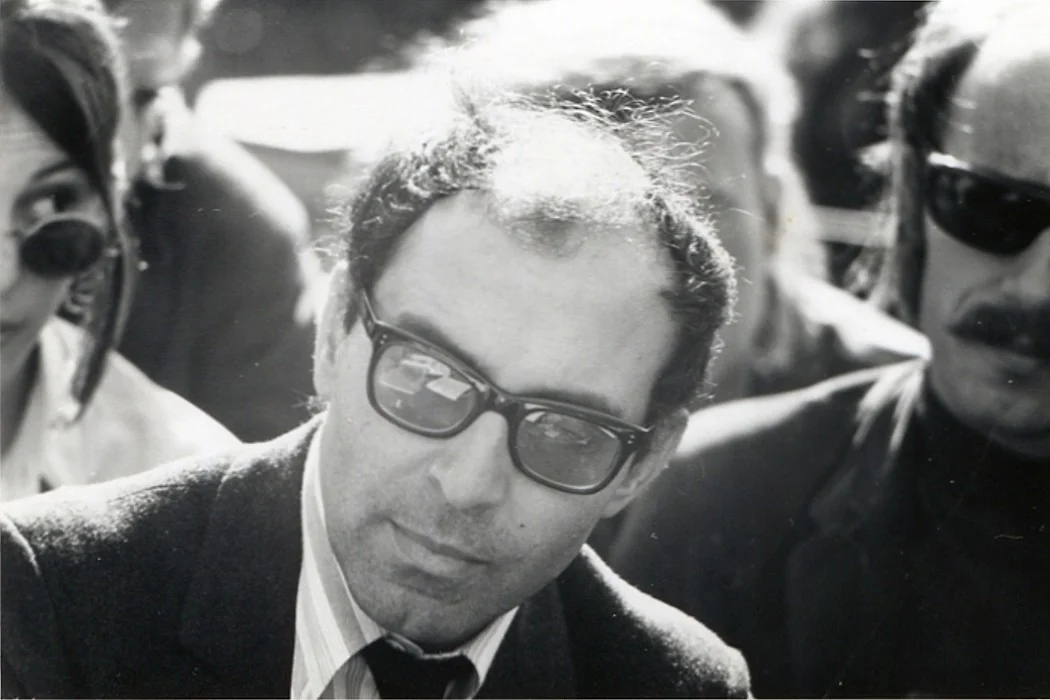
Image from Wikipedia
Image from Wikipedia
Jean-Luc Godard: The Discomfortable Innovator of World Cinema
A Portrait of the French-Swiss Exceptional Director Between Nouvelle Vague, Theory, and Radical Imagery
Jean-Luc Godard, born on December 3, 1930, in Paris and died on September 13, 2022, in Rolle, Switzerland, is considered one of the most influential directors in film history. As a French-Swiss filmmaker, screenwriter, and critic, he shaped the Nouvelle Vague with works like Breathless, Contempt, and Alphaville, pushing the boundaries of what cinema can tell, show, and comment on. ([en.wikipedia.org](https://en.wikipedia.org/wiki/Jean-Luc_Godard?utm_source=openai))
His name is still synonymous with aesthetic friction, intellectual curiosity, and formal restlessness. Godard viewed film not as a smooth narrative machine but as an open field for montage, quotation, political thought, and self-reflection; this is precisely the source of his enduring radiance in international film culture. ([britannica.com](https://www.britannica.com/biography/Jean-Luc-Godard?utm_source=openai))
From Paris to Film Critique: The Early Years of a Seeker
Godard grew up in a cosmopolitan environment and initially came to cinema through film criticism. In the Parisian debates of the post-war period, especially in the milieu of Cahiers du cinéma, his perspective on film as an art form emerged, one that must resist routine, academic rigidity, and conventional storytelling. Britannica describes him as a central figure of the French New Wave, which he significantly influenced alongside other later master directors. ([britannica.com](https://www.britannica.com/biography/Jean-Luc-Godard?utm_source=openai))
This background as a critic remained formative throughout his work. Godard argued not just with images but with movements of thought: every image should reveal something about society, power, desire, or language. This connection between cinema and theory made him an early director for viewers seeking not just entertainment in films but intellectual provocation. ([whoswho.de](https://whoswho.de/bio/jean-luc-godard.html?utm_source=openai))
The Breakthrough with Breathless and the Explosion of the Nouvelle Vague
The international breakthrough came with Breathless in 1960, Godard's first feature film, produced by François Truffaut and winning the Jean Vigo Prize. The film became a beacon of a new cinematic stance: mobile, cheeky, urban, improvised, and open to ruptures in narrative flow. ([britannica.com](https://www.britannica.com/biography/Jean-Luc-Godard?utm_source=openai))
With this work, Godard not only changed the aesthetics of French cinema but also the expectations of a global audience. His early films combined pop culture, crime elements, philosophical fragments, and a notably free editing practice. This made him a symbol of a generation that no longer saw cinema as a pleasing industrial form but as a living, sometimes unruly discourse. ([britannica.com](https://www.britannica.com/biography/Jean-Luc-Godard?utm_source=openai))
Stylistic Signature: Montage, Disruption, and Intellectual Energy
Godard's cinema thrives on jumps, interruptions, and a deliberately visible constructedness. He worked with the disruption of classical illusionary mechanisms, direct address, quotations, textual inserts, and an understanding of montage that does not smooth meanings but creates tension. Therefore, his films are not just narratives but spaces for thought and perception. ([whoswho.de](https://whoswho.de/bio/jean-luc-godard.html?utm_source=openai))
Especially notable is his treatment of acting, space, and rhythm. Instead of psychological closure, he favored characters that acted as carriers of ideas and images that showcased their own materiality. This formal consistency made him a director who was never satisfied with formulaic success but continuously reinvented his work. ([britannica.com](https://www.britannica.com/biography/Jean-Luc-Godard?utm_source=openai))
Political Intensification and the Radical Phase After 1968
Starting from 1968, Godard's work shifted into an openly political and experimental direction. His films became more essayistic, ideological, and increasingly focused on criticism of society, media, and power. In this phase, he consciously distanced himself from the role of a popular star and became a permanent disruptor of the canon. ([froelichundkaufmann.de](https://www.froelichundkaufmann.de/biografien/jean-luc-godard-der-permanente-revolutionaer-biografie.html?utm_source=openai))
The radicality of this development amplified his reputation as an author who provides no easy answers. Godard worked with fragments, collective forms, and video-aesthetic experiments; his works repeatedly questioned who produces images, who consumes them, and what political orders lie hidden within them. This is precisely where the cultural-historical value of his late work lies. ([en.wikipedia.org](https://en.wikipedia.org/wiki/Jean-Luc_Godard?utm_source=openai))
Late Work and Enduring Relevance to the Present Day
Godard's later works, including Notre musique, Film Socialisme, Goodbye to Language, and The Image Book, cemented his status as an uncompromising innovator. These films continued to be discussed at major festivals and in international criticism; The Image Book received the Special Palme d'Or at Cannes in 2018. ([chartsurfer.de](https://www.chartsurfer.de/artist/jean-luc-godard/biography-hrnvh.html?utm_source=openai))
Even after his death in 2022, the engagement with his work remains lively. In 2026, the Fondation Jean-Luc Godard was established to inventory, preserve, and disseminate his works; it is located in Rolle, his last residence, and is recognized as a nonprofit in the Canton of Vaud. The establishment of such an institution three years after his death underscores the unbroken relevance of his legacy. ([fondationjeanlucgodard.com](https://fondationjeanlucgodard.com/?utm_source=openai))
Discography? A Canon of Films Instead of a Music Catalog
Jean-Luc Godard did not have a discography in the musical sense, but he certainly had one of the densest and most influential canons in film history. His most important films include Breathless, Contempt, Alphaville, Weekend, Le Petit Soldat, Masculin féminin, La Chinoise, Passion, Notre musique, and The Image Book. These titles do not merely mark stations but aesthetic caesuras. ([britannica.com](https://www.britannica.com/biography/Jean-Luc-Godard?utm_source=openai))
The awards also reflect this significance: the Silver Bear for Breathless, the Golden Bear for Alphaville, the Golden Lion in Venice for lifetime achievement, the Honorary Oscar in 2010, and numerous other accolades underscore his rank as a global author of cinema. His reception in criticism often fluctuated between admiration and resistance, yet this tension is part of his myth. ([chartsurfer.de](https://www.chartsurfer.de/artist/jean-luc-godard/biography-hrnvh.html?utm_source=openai))
Cultural Influence: Why Godard Sets Standards Even Today
Godard's influence extends far beyond French cinema. Directors, curators, film archives, and festivals continue to reference his formal strategies and intellectual approaches to moving images. That institutions like the Fondazione Prada name their cinema after him points to his role as a cultural reference point far beyond film criticism. ([fondazioneprada.org](https://www.fondazioneprada.org/cinema-godard/?lang=en&utm_source=openai))
His work continues to resonate in contemporary productions. In 2025/2026, for instance, Richard Linklater's Nouvelle Vague brought the creation of Breathless back into public focus, demonstrating how strongly Godard's name is still associated with cinematic innovation, stylistic awareness, and historical relevance. The discourse around him remains vibrant because his cinema does not represent a completed past but an ongoing challenge. ([en.wikipedia.org](https://en.wikipedia.org/wiki/Nouvelle_Vague_%282025_film%29?utm_source=openai))
Conclusion: A Director Who Constantly Reinvented Cinema
Jean-Luc Godard remains intriguing because he never accepted cinema as a finished form. He dismantled conventions, questioned perception, and connected film art with political thought, pop aesthetics, and philosophical restlessness. Engaging with his work offers no comfortable storytelling but a living laboratory of seeing. ([britannica.com](https://www.britannica.com/biography/Jean-Luc-Godard?utm_source=openai))
This is precisely where his immortality lies: Godard is not a museum but a permanent invitation to rediscovery. His films belong on the big screen, in discourse, and in any serious engagement with the history of cinema. Experiencing him live today is only possible in a figurative sense — but his images continue to resonate, sharp, defiant, and unresolved. ([fiafnet.org](https://www.fiafnet.org/pages/News/Godard.html?utm_source=openai))
Official Channels of Jean-Luc Godard:
- Instagram: no official profile found
- Facebook: no official profile found
- YouTube: no official profile found
- Spotify: no official profile found
- TikTok: no official profile found
Sources:
- Britannica – Jean-Luc Godard Biography
- Wikipedia – Jean-Luc Godard
- Fondation Jean-Luc Godard – Official Website
- swissinfo.ch – New Swiss foundation to catalogue Jean-Luc Godard’s film archive
- FIAF – Jean-Luc Godard
- Fondazione Prada – Cinema Godard
- Britannica – Jean-Luc Godard, Biography, Movies, & Facts
- Wikipedia: Image and text source
Upcoming Events
Breathless – Jean-Luc Godard at filmforum Duisburg
An evening full of Nouvelle Vague at filmforum Duisburg: Breathless with Belmondo and Seberg on 09.04.2026 at 18:00. Experience the classic, secure your ticket! #Cinema #NouvelleVague
Breathless
Cinema, July 7, 2026, 5:45 PM, Schauburg Filmpalast Mystery / Thriller by Jean-Luc Godard with Jean-Paul Belmondo, Jean Seberg, Van Doude, Liliane David, Claude Mansard, Henri-Jacques Huet, Daniel Boulanger, among others; F 1960, 90 Min.; FSK: from 16 years. The small-time crook Michel (Jean-Paul Belmondo) is on his way to Paris in a stolen luxury limousine. When he falls into a speed control and gets caught, he shoots the police officer. In Paris, he hides with the attractive American student Patricia (Jean Seberg). Michel wants to escape to Italy with her, while the police press for her assistance. Patricia has to make a decision. Jean-Luc Godard's first feature film is an artistic homage to film noir, peppered with numerous directorial rule violations that were attributed to the inexperience of a beginner at the time and were only later recognized as sophisticated intent. Through the innovative use of stylistic elements, Godard revolutionized cinematic storytelling and became a co-founder of the Nouvelle Vague. Presented in the KoKi series "KoKi Classics". New prices for the municipal cinema! Admission: Regular price: €7.50 Reduced*: €6.50 GE-pass holders: €4.00 KoKi 10-ticket (regular): €60.00 KoKi 10-ticket (reduced*): €52.00 * The discount applies to students, pupils, seniors, unemployed individuals, disabled persons, as well as holders of the Gelsenkirchen volunteer pass upon presentation of valid identification.