
Jonas Kaufmann
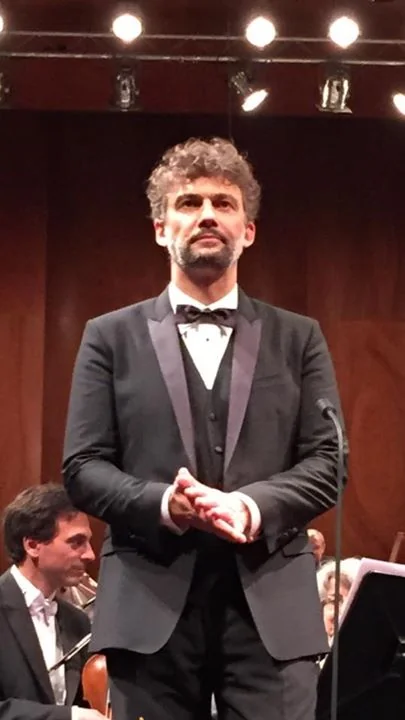
Image from Wikipedia
Image from Wikipedia
Jonas Kaufmann: The Tenor Between Opera Myth, Art Song, and International Stage Presence
A World-Class Classical Star with Munich at Heart and the Opera Stage as Home
Jonas Kaufmann, born on July 10, 1969, in Munich, is one of the defining tenors of his generation. The German-Austrian opera singer has carved out a solid place in international music history with his extraordinarily versatile voice, intense stage presence, and astute repertoire choices. His career combines Italian, French, and German specialties with a rare balance of dramatic power and lyrical detail. ([de.wikipedia.org](https://de.wikipedia.org/wiki/Jonas_Kaufmann))
What sets Kaufmann apart from many of his colleagues is the breadth of his artistic profile: he is an opera star, art song interpreter, concert artist, and since 2024, the artistic director of the Tiroler Festspiele Erl. His career showcases a consistent development from a music student in Munich to a globally sought-after singer on major stages in Chicago, London, Paris, Milan, Vienna, Berlin, and Bayreuth. At the same time, he remains committed to the idea of understanding singing not just as virtuosity but as dramatic storytelling. ([de.wikipedia.org](https://de.wikipedia.org/wiki/Jonas_Kaufmann))
Biography: From Mathematics Studies to the Pinnacle of Opera Art
Jonas Kaufmann grew up in Munich and initially began a mathematics degree before pursuing his true calling at the Hochschule für Musik und Theater München in 1989. There, he completed his studies as an opera and concert singer in 1994. Masterclasses with Hans Hotter, Josef Metternich, and James King, along with further instruction from Michael Rhodes, early shaped his vocal thinking and technical discipline. ([de.wikipedia.org](https://de.wikipedia.org/wiki/Jonas_Kaufmann))
He made his stage debut in 1993 as Caramello in Eine Nacht in Venedig at the Theater Regensburg. From 1994 to 1996, he was a member of the ensemble at the Saarländisches Staatstheater Saarbrücken before making significant steps in his international music career at the Staatsoper Stuttgart and later from 2001 at the Opernhaus Zürich. These stops are typical of his career: first solid ensemble work, then ascending to the forefront of international opera. ([de.wikipedia.org](https://de.wikipedia.org/wiki/Jonas_Kaufmann))
The International Breakthrough: Major Houses, Major Roles
The real breakthrough came with the major opera houses and the great roles. At the Royal Opera House in London, Kaufmann sang, among others, Don José, Cavaradossi, Alfredo, Don Carlo, Otello, and Andrea Chénier; at the Metropolitan Opera in New York, he was heard from 2006 as Alfredo and later in Carmen, Tosca, Werther, Parsifal, and Siegmund. These roles showcase his distinctive profile as a tenor with dramatic range, whose vocal color palette works equally well for heroic roles as it does for the French and Italian repertoire. ([de.wikipedia.org](https://de.wikipedia.org/wiki/Jonas_Kaufmann))
Kaufmann's artistic development can also be traced by the houses where he debuted: Lyric Opera Chicago, Paris Opera, La Scala, Deutsche Oper Berlin, and Wiener Staatsoper. Additionally, he has performed at the Salzburg Festival, Bayreuth, and other renowned festivals. His career is not a product of quick hype but the result of repertoire cultivation, resilience, and consistent work on his roles. ([jonaskaufmann.com](https://jonaskaufmann.com/ueber-mich/biographie/))
Repertoire and Musical Development: Between Verdi, Puccini, Wagner, and Art Song
Kaufmann's repertoire breadth is particularly impressive. He has sung Verdi's Otello, Massenet's Werther, and Wagner's Lohengrin on international stages, thus uniting three very different tenor traditions. The ability to combine Italian passion, French elegance, and German textual interpretation into one voice has made him an exceptional artist who interprets opera as a dramatic Gesamtkunst rather than merely a genre specialty. ([jonaskaufmann.com](https://jonaskaufmann.com/ueber-mich/biographie/))
Equally important is his art song and concert work. Recordings such as Schubert's Die schöne Müllerin, Winterreise, and Schwanengesang showcase a singer who finds another, often even more concentrated level of expression in the intimate format. Especially in art song, his control over phrasing, diction, and dynamic gradation becomes particularly clear; it complements the grand opera stage with a chamber music aspect. ([jonaskaufmann.com](https://jonaskaufmann.com/ueber-mich/biographie/))
Discography: Milestones of an Extraordinary Recording Career
Jonas Kaufmann's discography is broad and stylistically remarkable. Notable recordings include Romantic Arias, Strauss Lieder, Sehnsucht, Verismo Arias, Fidelio, Das Verdi Album, Puccini Programs, Wien, Otello, and Liszt: Freudvoll und Leidvoll. Recordings with Helmut Deutsch highlight the art song side of his career, while opera productions with conductors like Antonio Pappano, Franz Welser-Möst, Asher Fisch, or Jochen Rieder document his presence in the large repertoire. ([de.wikipedia.org](https://de.wikipedia.org/wiki/Jonas_Kaufmann))
Particularly prominent is the 2025 album Doppelgänger, which combines Schumann's Dichterliebe and Kerner Lieder along with Schubert's Schwanengesang. The official biography also refers to the 2025/2026 season with recitals, a Magic Sounds tour with Malin Byström, and current opera projects. This shows that Kaufmann does not rest on his successful pieces but continually expands his profile with new dramatic and vocal perspectives. ([jonaskaufmann.com](https://jonaskaufmann.com/en/about-me/biography/?utm_source=openai))
Current Projects and Releases: Present with Artistic Spannung
The years 2024 to 2026 show Kaufmann in a phase of remarkable activity. Since 2024, he has served as the artistic director of the Tiroler Festspiele Erl; 2025 will see the revival of I Pagliacci at the Wiener Staatsoper, an Asia tour with opera concerts and recitals, a song tour with Diana Damrau and Helmut Deutsch, as well as Parsifal in Erl. For 2026, his official site announces concerts with Malin Byström, Turandot at the Bayerische Staatsoper, and song performances in the park in Vienna, among others. ([jonaskaufmann.com](https://jonaskaufmann.com/ueber-mich/biographie/))
Additionally, accolades and public appearances underscore his standing: in 2025, he received the Golden Johann Strauss Award and was honored with the Menschen in Europa Award. Such recognitions are more than decorative footnotes; they anchor his name in a cultural context that connects musical excellence, social impact, and public perception. ([jonaskaufmann.com](https://jonaskaufmann.com/en/2025/09/08/the-golden-johann-strauss-award-for-jonas-kaufmann/?utm_source=openai))
Style, Vocal Character, and Artistic Authority
Jonas Kaufmann's voice is often described as darkly timbred, smooth in legato, and dramatically resilient. This very mix makes him interesting for roles like Otello, Lohengrin, Werther, or Cavaradossi: he combines a heroic tenor aura with lyrical control, thereby infusing even well-known roles with psychological depth. His stage presence appears concentrated, never arbitrary, and often carries the role from the very first phrases. ([jonaskaufmann.com](https://jonaskaufmann.com/ueber-mich/biographie/))
The professional world has also recognized this quality over the years with an extraordinary list of awards. This includes Gramophone Awards, Diapason d’Or, Echo Klassik, International Opera Awards, Opus Klassik, as well as state and cultural honors such as the Ordre des Arts et des Lettres, the Bavarian Constitutional Order, and the Austrian Kammersänger title. These awards not only attest to popularity but above all to artistic continuity and relevance. ([de.wikipedia.org](https://de.wikipedia.org/wiki/Jonas_Kaufmann))
Cultural Influence: An Opera Singer Making Classical Music Visible
Kaufmann has long been more than a celebrated tenor. He has helped shape the image of the opera star in the 21st century by combining classical singing art, media presence, and artistic seriousness. His performances at major festivals, his recordings, and his work in leading opera houses have helped present opera to a broader audience as a vibrant contemporary art form. ([jonaskaufmann.com](https://jonaskaufmann.com/ueber-mich/biographie/))
Moreover, he takes on the role of a cultural figure with social engagement and public resonance. The official website points to awards for art and social commitment, and the press frequently describes him as one of the most notable figures in the classical scene. Kaufmann thus represents a rare combination of virtuosity, seriousness, and charisma that keeps opera relevant in the digital age. ([jonaskaufmann.com](https://jonaskaufmann.com/aktuelles/))
Conclusion: Why Jonas Kaufmann Continues to Fascinate
Jonas Kaufmann fascinates because he combines operatic precision with emotional intensity. He is a singer who not only sings roles but shapes them, imbuing great opera figures with stylistic awareness, vocal authority, and dramatic credibility. Those who follow his career quickly realize: here is an artist who knows tradition, masters technique, and is simultaneously writing new chapters. ([de.wikipedia.org](https://de.wikipedia.org/wiki/Jonas_Kaufmann))
This greatness unfolds most strongly in live performance. Jonas Kaufmann on stage means excitement, richness of color, and an operatic evening that resonates long after. Anyone who has the chance to experience him in a concert or on an opera stage should seize it. ([jonaskaufmann.com](https://jonaskaufmann.com/en/schedule/?utm_source=openai))
Official Channels of Jonas Kaufmann:
- Instagram: https://www.instagram.com/tenorkaufmann
- Facebook: https://www.facebook.com/kaufmannjonas/
- YouTube: https://www.youtube.com/channel/UCvCcip2ahwZhSIh3tjqCbXQ
- Spotify: https://open.spotify.com
- TikTok: https://www.tiktok.com/@tenorkaufmann