
Joseph Moog
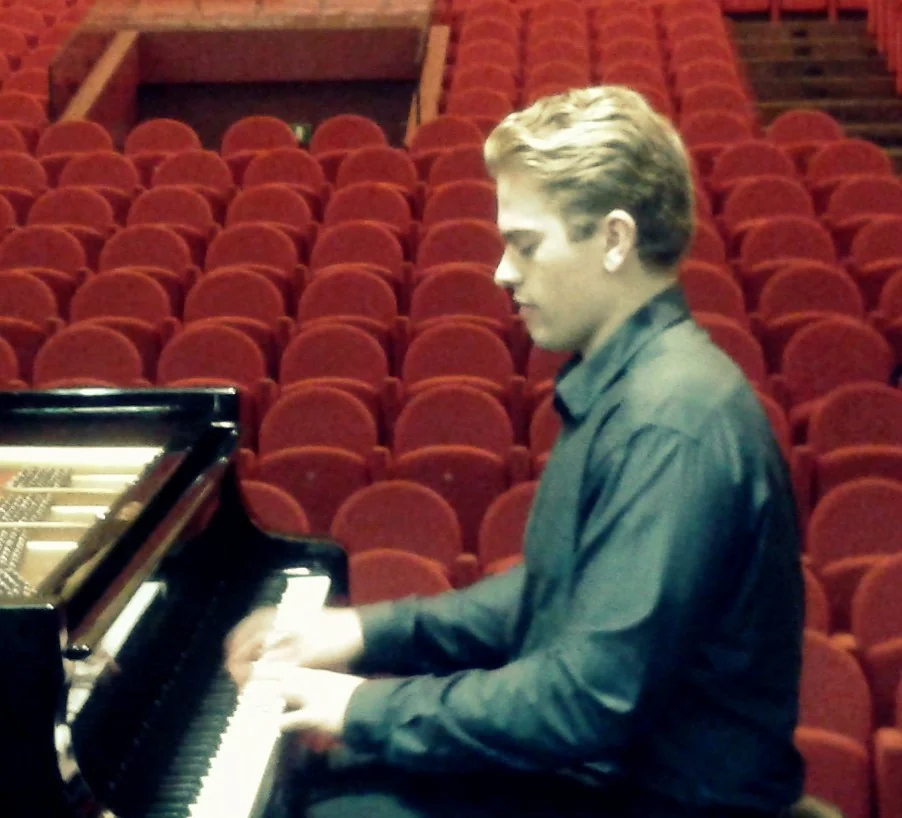
Image from Wikipedia
Image from Wikipedia
Joseph Moog – The German Pianist Between Virtuoso Brilliance, Thoughtful Programming, and Sonic Depth
An Exceptional Pianist with a Sense for Musical Adventure
Joseph Moog, born on December 26, 1987, in Neustadt an der Weinstraße, belongs to a generation of German pianists who do not view virtuosity as an end in itself, but rather as a means of artistic storytelling. The son of two professional orchestral musicians, he grew up in an environment where music was not decoration but everyday life and vocation. His career combines technical prowess, historical awareness, and a keen sense of repertoire rarities. ([de.wikipedia.org](https://de.wikipedia.org/wiki/Joseph_Moog?utm_source=openai))
Early Influence and Artistic Foundation
At the age of four, Joseph Moog regularly sat at the piano, and early on, a musicality developed that targeted substance rather than effects. The official artist profile describes his signature with a blend of innovative programs and an award-winning discography that emphasizes his "unique artistic personality" and closeness to the "Golden Age of piano music." This combination of historical depth and modern presentation power forms the core of his artistic identity. ([challengerecords.com](https://www.challengerecords.com/artist/1360925538/Joseph%20Moog?utm_source=openai))
Moog’s recognition not only as an interpreter but also as a musician with curatorial instinct is evident in his selection of works and composers. He moves confidently between established core repertoire and music beyond the standard canon, making him equally interesting for concert organizers, the specialized press, and a curious audience. This is a significant part of his authority: he does not just play the piano; he thinks in programs, contexts, and sound dramaturgy. ([josephmoog.com](https://www.josephmoog.com/about))
The International Breakthrough on Major Stages
Joseph Moog has built his reputation as a soloist on significant platforms in Europe, North America, and Asia. Venues include the Concertgebouw in Amsterdam, the Alte Oper Frankfurt, the Royal Albert Hall in London, the Musikverein in Vienna, the Auditorium du Louvre in Paris, the Tonhalle Zurich, as well as festivals such as La Roque d’Anthéron and the Ruhr Piano Festival. Such appearances not only mark reach but also the trust international venues place in a pianist with an extraordinary profile. ([josephmoog.com](https://www.josephmoog.com/about))
The collaboration with renowned orchestras and conductors further underscores his position in the concert world. Notable names include the Philharmonia Orchestra, the Royal Philharmonic, the Hallé Orchestra, the Deutsche Staatsphilharmonie, the Bruckner Orchestra Linz, the Orchestre Lamoureux Paris, and conductors like Yannick Nézet-Séguin, Christoph Poppen, Markus Poschner, and Michael Sanderling. This list points to an artistic profile that is firmly embedded in classical music life while remaining open to different interpretive styles. ([josephmoog.com](https://www.josephmoog.com/about))
Awards, Recognition, and Artistic Authority
Moog's biography is also marked by awards. His official website describes him as a recipient of the Gramophone Classical Music Award, two International Classical Music Awards, and a Grammy nominee; he also received the "Prix Groupe de Rothschild" and was named a Steinway Artist in 2009. These recognitions document not only industry resonance but also his perception as a serious artistic player at an international level. ([josephmoog.com](https://www.josephmoog.com/about))
The specialized press praises his brilliance in strong terms. His website quotes Bryce Morrison from Gramophone stating that Moog is "already among the most brilliant of pianists," while Jeremy Nicholas describes his approach as one that "revives the great names of the past." Such voices are more than PR platitudes: they refer to a pianist whose expressive power and sound culture generate attention both in the feuilleton and in the concert hall. ([josephmoog.com](https://www.josephmoog.com/about))
Discography of Rarities, Rediscoveries, and Stylistic Variety
Joseph Moog’s discography is a central argument for his position as a distinctive artist. His official website points to an "award-winning discography," and the current release "Belle Epoque" on the French label Naïve compiles works from the decades between 1860 and 1940, including composers such as Chaminade, Rachmaninoff, Bonis, Liszt, Bowen, Alkan, Godowsky, Rosenthal, and Ravel. This aligns Moog with a repertoire aesthetic that unites sonic refinement, historical curiosity, and pianistic virtuosity. ([josephmoog.com](https://www.josephmoog.com/about))
The reception of this album is correspondingly attentive. The Austrian broadcaster ORF describes "Belle Époque" as an autobiographical album and emphasizes that Moog embraces the term broadly, including not only the named composers but also other authors from that time. The dealer jpc emphasizes the nostalgic yet intellectually charged atmosphere of the recording and speaks of a panorama of an era when art and music reached new heights. This refers to an interpretive approach that is stylistically informed and emotionally open. ([oe1.orf.at](https://oe1.orf.at/programm/20250820/804357/Vorgestellt?utm_source=openai))
Moog has been engaged with challenging and rarely performed works from an early age. In a previous release on Apple Music Classical featuring Max Reger, his interpretation is described as particularly fitting; it states that he allows Reger’s music to "sing," merging orchestral grandeur and Chopin-inspired wit audibly, mastering the high technical demands with musical insight. This also demonstrates that his discography follows a consistent artistic line rather than a mere hits logic. ([classical.music.apple.com](https://classical.music.apple.com/us/album/1589951230?utm_source=openai))
Musical Development: Style, Sound, and Pianistic Language
According to available sources, Moog's playing combines fine touch culture, expansive sound spaces, and a clear affinity for colorful phrasing. The official biography speaks of "passionate musicianship," "multifaceted sound aesthetics," and "mesmerizing virtuosity"; these three characteristics remarkably hit the core of his art. His repertoire spans romantic opulence, late romantic density, and the elegant transparency of French-influenced piano music. ([josephmoog.com](https://www.josephmoog.com/about))
Particularly in works that bridge Romanticism and Modernism, his profile unfolds impressively. "Belle Époque" showcases a preference for pieces that demand not only technical control but also sound imagination, rubato-sensitive shaping, and a sensitivity to harmonic nuances. Moog relies on differentiated articulation and a programmatic dramaturgy that shapes individual movements and miniatures into a larger aesthetic arc. ([josephmoog.com](https://www.josephmoog.com/about))
Current Projects and Artistic Presence
In the 2025/2026 season, Joseph Moog remains present on major concert stages. The official website mentions debuts and return engagements including with the MDR Symphony Orchestra under Dennis Russell Davies at Gewandhaus Leipzig, at the Tonhalle Zurich, in the Auditorium du Louvre, at Piano à Lyon, at the Musikverein Vienna, with the Qatar Philharmonic, and with the Staatskapelle Halle. He also opens the SWR series "International Pianists" in Mainz. ([josephmoog.com](https://www.josephmoog.com/about))
His current recording "Belle Epoque" thus serves not only as a recording but also as a programmatic key to his current work. The release underscores his ability to connect artistic past and contemporary concert practice. Following Moog means experiencing a pianist who does not just manage his repertoire but continually questions it anew. ([josephmoog.com](https://www.josephmoog.com/about))
Cultural Influence and Special Position in German Musical Life
Joseph Moog is more than a virtuoso soloist. He is also a cultural mediator, festival initiator, and ambassador of his home region. His official website lists him as a founding member of the "Konz Music Festival" near Luxembourg and as a cultural ambassador for his hometown Neustadt an der Weinstraße. Such roles demonstrate that his work extends beyond mere concert performance and is embedded in a broader cultural engagement. ([josephmoog.com](https://www.josephmoog.com/about))
His international presence, choice of unusual programs, and recurring engagement with underrated works make him particularly exciting for today's classical audience. Moog represents a pianistic personality that does not juxtapose tradition consciousness and repertoire expansion but interweaves them productively. This is where his cultural-historical value lies: he keeps the great piano tradition alive without rendering it museum-like. ([josephmoog.com](https://www.josephmoog.com/about))
Conclusion: Why Joseph Moog Fascinates
Joseph Moog fascinates because he brings together technical excellence, stylistic intelligence, and curatorial courage. He is a pianist who fills large spaces but also understands the fine nuances, and whose discography as well as concert programs are carried by a clear artistic signature. Those who experience him live hear not only brilliant piano artistry but also a musical personality with presence, depth, and unmistakable charisma. ([josephmoog.com](https://www.josephmoog.com/about))
A concert by Joseph Moog is worthwhile for anyone who views classical piano not as routine but as discovery. His stage presence, interpretative curiosity, and ability to breathe life into rarely performed music make him one of the most interesting German pianists of his generation. Anyone who loves challenging piano artistry should definitely experience him live. ([josephmoog.com](https://www.josephmoog.com/about))
Official Channels of Joseph Moog:
- Instagram: No official profile found
- Facebook: No official profile found
- YouTube: No official profile found
- Spotify: No official profile found
- TikTok: No official profile found
Sources:
- Joseph Moog - The Official Website
- Joseph Moog - About
- Joseph Moog - Discography
- C. Bechstein - Joseph Moog, pianist biography
- Challenge Records International - Joseph Moog
- ORF Ö1 - Belle Époque with Joseph Moog
- jpc - Joseph Moog: Belle Epoque
- Apple Music Classical - Reger: Piano Concerto, 6 Intermezzi
- Wikipedia: Joseph Moog
Upcoming Events
Schubert!
An evening for authentic classical moments: Schubert! brings Joseph Moog, Marcus Bosch, and the orchestra of the Heidenheim Opera Festival to Bayreuth. #Classical #Bayreuth
9th Symphony Concert - Demons
An evening full of dark sound colors and great emotions: Joseph Moog, NPW, and Rasmus Baumann unleash symphonic tension in Gelsenkirchen. 06.07.2026, from 16 Euros. #Gelsenkirchen