
Karolina Kuszyk
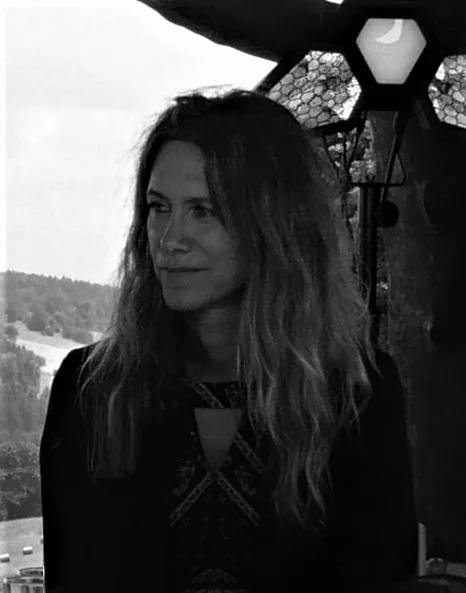
Image from Wikipedia
Image from Wikipedia
Karolina Kuszyk – the precise voice between memory, language, and German-Polish history
An author who makes hidden traces visible
Karolina Kuszyk is among the most compelling voices in contemporary literature within the German-Polish context. Born in 1977 in Legnica, she works as an author, literary translator, and lecturer, and currently resides in Berlin and Lower Silesia. She gained recognition with the book In den Häusern der anderen, which sparked a broad debate in Poland and became a Spiegel bestseller in Germany. Her work combines historical accuracy, personal memory, and cultural-historical sensitivity into a rare form of literary authority.
Biography: Origins, education, and literary influence
Karolina Kuszyk comes from a biographical space shaped by several cultural lines: family roots lead to Poland, Germany, and Ukraine. This plural identity continues to influence her perspective on history, language, and memory today. She studied at the Faculty of Humanities at the University of Warsaw, where she developed the literary and linguistic precision that later became a hallmark of her writing.
Kuszyk combined scientific curiosity with journalistic work early on. She wrote for Polish and German media, including Deutschlandradio Kultur and Die Zeit, gaining experience in journalistic condensation and cultural-historical framing. This dual role as an author and translator enhances the stylistic control of her prose and explains why her texts are both accessible, reflective, and rich in detail.
The breakthrough with “In den Häusern der anderen”
The central turning point of her career is the book Poniemieckie, published in 2019 and released in German translation in 2022 under the title In den Häusern der anderen: Spuren deutscher Vergangenheit in Westpolen. The work examines how, after 1945, houses, belongings, and cultural legacies of German inhabitants were dealt with in West Poland. Kuszyk describes not only objects and spaces but also the social logic of continuing to live, rebuild, and reinterpret.
The response was unusually strong. In Poland, the book sparked a lively discussion about dealing with the German heritage; in Germany, it became a Spiegel bestseller. This impact defines the book's significance: it is at once reportage, cultural history, and personal approach. Karolina Kuszyk demonstrates how a vast historical memory emerges from seemingly small everyday objects.
Author, translator, and mediator between literatures
Alongside her work as an author, Kuszyk is a prominent translator of German literature into Polish. Among the authors she has translated are Max Frisch, Ilse Aichinger, and Bernhard Schlink. This translation activity is more than a side aspect of her career; it is integral to her artistic identity. Working between two literatures develops a fine sense for tone, cultural nuances, and historical contexts.
As a lecturer at the European University Viadrina in Frankfurt (Oder), she continues this mediation ambition. Here, her experience as an author merges with academic practice and public cultural work. Kuszyk exemplifies a generation of female writers who do not perceive literature as an isolated space but as a vibrant form of exchange between countries, communities of memory, and linguistic realms.
The theme of memory: West Poland, postwar, and cultural memory
The thematic focus of Karolina Kuszyk's work lies in cultural memory, particularly concerning the management of the German heritage in West Poland. In den Häusern der anderen reconstructs the repurposing of apartments, furniture, and everyday objects after World War II, creating a literary panorama of postwar history. The book does not work with grand gestures but with observation, precision, and narrative patience.
This perspective gives her writing a unique authority. She not only asks what remains but also who speaks about it, who remains silent, and how identity emerges from materiality, loss, and appropriation. The cultural-historical significance of her work lies precisely in this: Kuszyk writes against forgetting without oversimplifying or dramatizing. Her prose remains close to the objects and thus achieves historical depth.
Reception, awards, and literary recognition
The literary and societal relevance of Kuszyk's work is reflected in several awards. In 2020, she received the Arthur Kronthal Prize, in 2023 the Cultural Prize Silesia from the state of Lower Saxony, and the Meißen Literary Festival Prize for In den Häusern der anderen. In 2024, she, along with her translator Bernhard Hartmann, was honored with the Georg Dehio Book Prize. These awards underline that her work extends far beyond a single non-fiction book and is regarded as a significant contribution to European memory culture.
The press reception also reflects the breadth of her impact. Daniel Siemens wrote in the Süddeutsche Zeitung that the book is an empathetic reconstruction of the various uses of everyday items and at the same time a sensitive journey into childhood and youth, as well as a contribution to the cultural history of modern Poland and reunified Germany. It is precisely in this combination of empathy, accuracy, and historical reflection that the strength of Kuszyk's writing lies.
Current projects and presence in the literary scene
Even after the success of In den Häusern der anderen, Karolina Kuszyk remains active in literary exchanges. In 2025, she co-led a translation workshop at Humboldt University in Berlin as part of the Literra [de] project with Bernhard Hartmann. She has also been visible at readings and discussion formats in Germany and Poland, including events in Berlin, Potsdam, Saxon Switzerland, Słubice, and Oberhausen. This presence shows that her work is not only being read but publicly discussed.
It is precisely in such formats that her role as a cultural mediator unfolds. Kuszyk does not present herself as a rigid authoritative figure but as a precise storyteller of history, language, and memory. Her projects combine literature, translation, and public conversation into a form of cultural education that rarely aligns so clearly in contemporary literary practice.
Style and literary signature
Karolina Kuszyk's style is characterized by observational sharpness, objectivity, and quiet intensity. She works with concrete things, houses, objects, and narrative traces, from which she shapes larger historical contexts. Her writing remains clear and accessible while retaining its analytical depth. This balance makes her texts appealing to both a broad audience and readers interested in cultural history.
As a translator, she brings a heightened awareness of language registers, context, and semantic subtleties. One can sense this in the composition of her texts, the rhythm of the sentences, and her handling of historical details. Kuszyk does not write loud books; she writes books that resonate long after reading, precisely because they start from where memory often continues inconspicuously in everyday life.
Cultural influence and significance for the present
The significance of Karolina Kuszyk lies in her ability to transform a complex historical theme into a literarily strong and socially relevant form. She makes visible how German-Polish history continues in not only archives but also houses, objects, and family narratives. Thus, she provides a vital contribution to the debate regarding origins, belonging, and post-historical responsibility.
Her work is also relevant for the present, as it provides language for ambivalences. Kuszyk illustrates that memory is not a static possession but an ongoing negotiation process. Readers of her books encounter not only an author but an excellent chronicler of European transitions.
Conclusion: An author who transforms history into literature
Karolina Kuszyk is fascinating because she discovers the grand in the small: in houses, objects, movements, and linguistic traces. Her books combine biographical experience, historical research, and literary precision into an impressive form of contemporary literature. Those who want to understand how memory is narrated, shifted, and reread between Poland and Germany will find an indispensable access point in her work. A reading or a conversation with Karolina Kuszyk is always worthwhile, as her texts not only inform but also open perspectives and resonate long after.
Official channels of Karolina Kuszyk:
- Instagram: no official profile found
- Facebook: no official profile found
- YouTube: no official profile found
- Spotify: no official profile found
- TikTok: no official profile found
Sources:
- Wikipedia – Karolina Kuszyk
- Aufbau Verlage – Karolina Kuszyk
- German Cultural Forum for Eastern Europe – Press Release on the Georg Dehio Book Prize 2024
- Polish Radio – Georg Dehio Prize 2024
- Herder Institute – Reading with Karolina Kuszyk “In den Häusern der anderen”
- Polish Institute Berlin – Literra [de] with Karolina Kuszyk and Bernhard Hartmann
- German Cultural Forum for Eastern Europe – Event with Karolina Kuszyk
- Süddeutsche Zeitung – Reception of “In den Häusern der anderen”
Upcoming Events
Karolina Kuszyk reads in Potsdam: "In the Houses of Others"
A literary evening full of memory and history in Potsdam: Karolina Kuszyk reads from In the Houses of Others. On 4.6.2026 at the Education Forum. #Literature
Reading and Conversation with Karolina Kuszyk in Potsdam
An evening full of memory, language, and history in Potsdam: Karolina Kuszyk reads and talks about In the Houses of Others. 04.06.2026, Am Kanal 47. #Reading #Potsdam