
Manfred Mann’s Earth Band
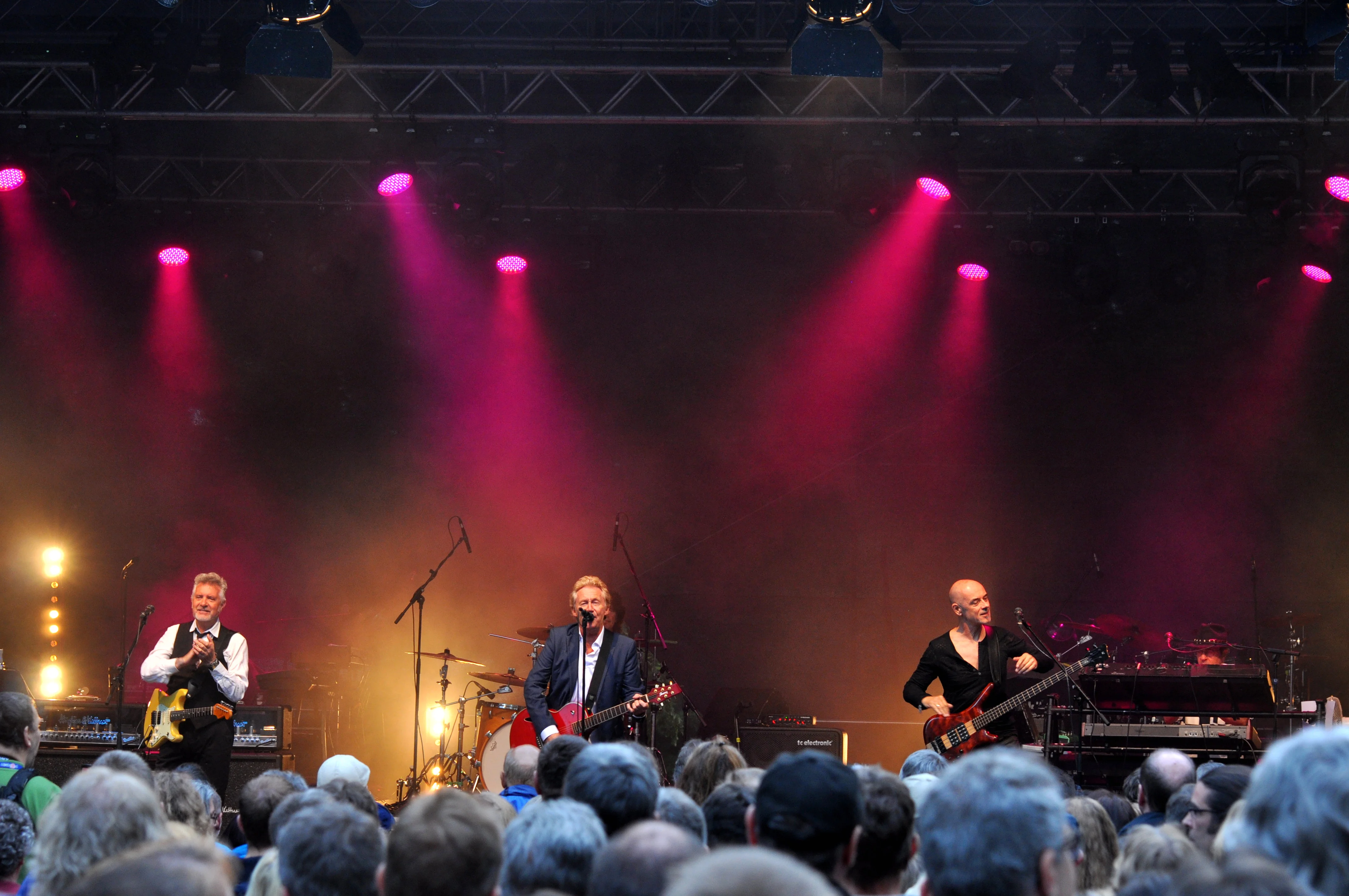
Image from Wikipedia
Image from Wikipedia
Manfred Mann’s Earth Band – Progressive Rock Pioneer with Global Hits and Distinctive Sound
From "Blinded by the Light" to "Davy’s on the Road Again" – The Story of a Band that Transforms Rock, Prog, and Pop into Independent Art
Manfred Mann’s Earth Band is a British rock formation led by South African keyboardist Manfred Mann, which has captivated audiences since 1971 with its characteristic blend of progressive rock, hard rock, and melodic songwriting. The group became internationally known for its artistically arranged cover versions of songs by Bruce Springsteen, Bob Dylan, and other songwriters, transforming them into anthems of rock history with Moog synthesizers, jazz inflections, and cinematic dynamics. Manfred Mann’s Earth Band celebrated its global breakthrough in 1976/77 with the number-one hit "Blinded by the Light" – a signature song that encapsulates the band’s virtuoso synthesizer sound and dramatic energy. To this day, the Earth Band tours regularly, maintains its rich repertoire, and sets standards in stage presence, sound aesthetics, and artistic development.
Founding and Artistic Vision: From Jazz Underground to Earth Band
After the successes of the 1960s formation Manfred Mann and the jazz-fusion transitional phase with Manfred Mann Chapter Three, Manfred Mann sought a band in the early 1970s that would combine stylistic openness with compositional precision. In 1971, the Earth Band was formed in London, initially comprising Manfred Mann (keyboards), Mick Rogers (guitar, vocals), Colin Pattenden (bass), and Chris Slade (drums). The name "Earth Band" connected to the prevailing ecological discussions of the time while also reflecting the earthy, band-oriented approach. Even the early releases showcased how confidently the group operated in arrangement, production, and sonic dynamics: Mann’s warm, flexible Moog synthesizer sound integrated organically with rock rhythms, both in the studio and on stage.
Early Albums and Stylistic Influence: Between Prog Architecture and Melodic Catchiness
With the early albums – from the self-titled debut in 1972 through Glorified Magnified to Solar Fire – the Earth Band established its hallmark: progressive song structures, nuanced compositions, precise guitar work, and a production style that left room for harmonies, counterpoints, and instrumental dialogues. Manfred Mann displayed a penchant for classical motifs: Holst's "Jupiter" inspired the UK hit "Joybringer," while themes from Schubert, Debussy, and Stravinsky served as thematic blueprints in pieces like "Questions," "Earth, the Circle, Pt. 1," or "Starbird." This sonic architecture was coupled with a pop sensibility that embraced hooks and choruses, integrating them aesthetically – a balancing act that set the Earth Band apart from the Prog mainstream early on.
The Breakthrough: The Roaring Silence and "Blinded by the Light"
In 1976, the album The Roaring Silence marked the commercial and artistic breakthrough. The band’s version of Springsteen's "Blinded by the Light" reached number one on the US Billboard Hot 100 in February 1977, catapulting the band into the international A-list. The song exemplifies the Earth Band's production artistry: a dynamic build-up, precisely placed synthesizer fanfares, intricate guitar figures, and a coherent arrangement that translates the poetic richness of the lyrics into energetic rock dramaturgy. Simultaneously, singles like "Spirit in the Night" and later "For You" defined the band’s radio and live canon – songs that continue to be streamed millions of times and remain deeply anchored in rock culture.
Late 1970s to 1980s: Watch, Angel Station, Somewhere in Afrika
With Watch (1978), which remained in the charts in West Germany for over 69 weeks, the Earth Band solidified its status in the European market. Angel Station (1979) showcased a modern, sometimes electronically accented production aesthetic, where the band merged its prog DNA with contemporary sound colors. The politically and culturally engaged concept of Somewhere in Afrika (1983) integrated African voices and rhythms and reflected Manfred Mann's clear stance against apartheid. "Runner" (1984) – a tribute to Terry Fox – brought the band back into the North American Top 40, highlighting its ability to encapsulate significant themes within concise rock narratives. Live releases such as Budapest Live additionally document the high stage intensity and precise interplay of the changing line-ups.
Line-ups, Voices, and Stage Presence: Change as Strength
The Earth Band has always viewed personnel changes as an opportunity to renew its sound. Besides the constant artistic core of Manfred Mann, musicians like Mick Rogers (guitar, vocals), Chris Thompson (vocals), Dave Flett (guitar), John Lingwood (drums), and Steve Kinch (bass) shaped key phases of the discography. Since 2011, Robert Hart has been fronting the band with a powerful rock voice, delivering the repertoire live with both punch and melody. This ability to combine voices, instrumentalists, and producers in a way that maintains a coherent band sound grants the Earth Band its unique authority in the classic rock cosmos. On stage, the group impresses with dramaturgically constructed setlists, room for solos, and an unmistakable synthesizer tonality that elevates songs into organic arcs of tension.
Discography, Chart Successes, and Streaming Resonance
The discography of the Earth Band includes studio milestones such as Manfred Mann’s Earth Band (1972), Solar Fire (1973), Nightingales & Bombers (1975), The Roaring Silence (1976), Watch (1978), Angel Station (1979), Chance (1980), Somewhere in Afrika (1983), Criminal Tango (1986), Masque (1987), Soft Vengeance (1996), and 2006 (2004). Compilations and anthologies – including Mannthology (2021) – along with extensive live and archival releases deepen the insight into the artistic development. Chart-wise, "Blinded by the Light" stands out as a number-one hit in the US and Canada; in Germany, albums like Watch became long-lasting bestsellers. The ongoing streaming demand, led by "Blinded by the Light," "For You," and "Davy’s on the Road Again," confirms the timeless appeal of the compositions and arrangements.
Composition, Production, and the Sound of the Earth Band
At the center is Manfred Mann's synthetic sound – a cantabile yet powerful Moog sound that leads themes, punctuates, and sets signals. The band works with clearly defined song architectures: intro motifs, dynamic verse-chorus contrasts, instrumental bridges, and final climaxes. Cover versions are not merely rehashed but rather compositedly transformed: tempos, keys, motif leadership, and rhythmic patterns shift in favor of a dramatic arc of tension. Guitar textures – ranging from singing leads to rhythmic arpeggios – intertwine with keyboard sounds; the rhythm section pulses between rock foundation and buoyant lightness. This production signature makes the Earth Band a prime example of style-conscious sound design in rock production.
Cultural Influence and Music Historical Context
Manfred Mann’s Earth Band is part of a tradition that converts British prog, US songwriting, and European classical reception into popular yet artistic rock. Its treatment of source material – Springsteen, Dylan, Marley, The Police – demonstrates respect for the original while daring to transform. In the 1970s, the band shaped the understanding that progressive rock music could also be radio-friendly without losing its complexity or integrity. In the 1980s and beyond, the group adhered to an ethos that combines musical quality and social awareness – visible in the Africa cycle as well as in projects that merge cultural memory and live energy. To this day, the Earth Band influences musicians who wish to combine prog colors with pop appeal and live power.
Present: Tours, Re-Issues, and a Vibrant Fan Base
Even after more than five decades, the Earth Band remains a live presence. Current tour dates in Germany and Europe underscore the endurance of the formation and the unwavering demand for their classics. Simultaneously, official channels and curated music platforms maintain the catalog repertoire – from remastered editions to anthologies. The community actively engages with concert announcements, historical retrospectives, and reissues; streaming figures and algorithmic playlists ensure that new generations discover the band. In this way, the Earth Band connects its history with contemporary listening habits – a model of a sustainable music career, supported by artistic evolution and reliable stage presence.
Conclusion: Why Manfred Mann’s Earth Band is Still Indispensable Today
This band unites craftsmanship and vision. It continues the story of progressive rock by transforming composition, arrangement, and production into a cohesive, recognizable sound. Classics like "Blinded by the Light," "For You," or "Davy’s on the Road Again" are more than hits – they are lessons on how song poetry, instrumental virtuosity, and studio aesthetics combine to create great rock music. Those who experience the Earth Band live feel the immediate impact of this concept: themes shine, grooves breathe, and solos tell stories. In short: Manfred Mann’s Earth Band remains one of the key voices of classic rock – timeless, powerful, and relevant. A must-see live.
Official Channels of Manfred Mann’s Earth Band:
- Instagram: No official profile found
- Facebook: No official profile found
- YouTube: No official profile found
- Spotify: No official profile found
- TikTok: No official profile found
Sources:
- Manfred Mann’s Earth Band – Official Website
- Wikipedia – Manfred Mann’s Earth Band
- Apple Music – Manfred Mann’s Earth Band (Artist Profile)
- Bandcamp – Manfred Mann’s Earth Band (Catalog & Releases)
- Kworb – Spotify Statistics for Earth Band Songs
- SWR4 – Concert Announcement & Band Info (2025)
- Wikipedia: Image and text source
Upcoming Events
Manfred Mann’s Earth Band – Live at the Old Opera
Look forward to an evening full of rock classics with Manfred Mann’s Earth Band at the Old Opera in Erfurt.
Manfred Mann’s Earth Band – Greatest Hits
Great emotions and analog Moog sound in the Max‑Littmann‑Saal: Manfred Mann’s Earth Band with Greatest Hits Show. 15.10.2026, 20:00 Uhr, tickets from €64.50. Experience, cheer, sing along. #BadKissingen