
Maria Imma Mack
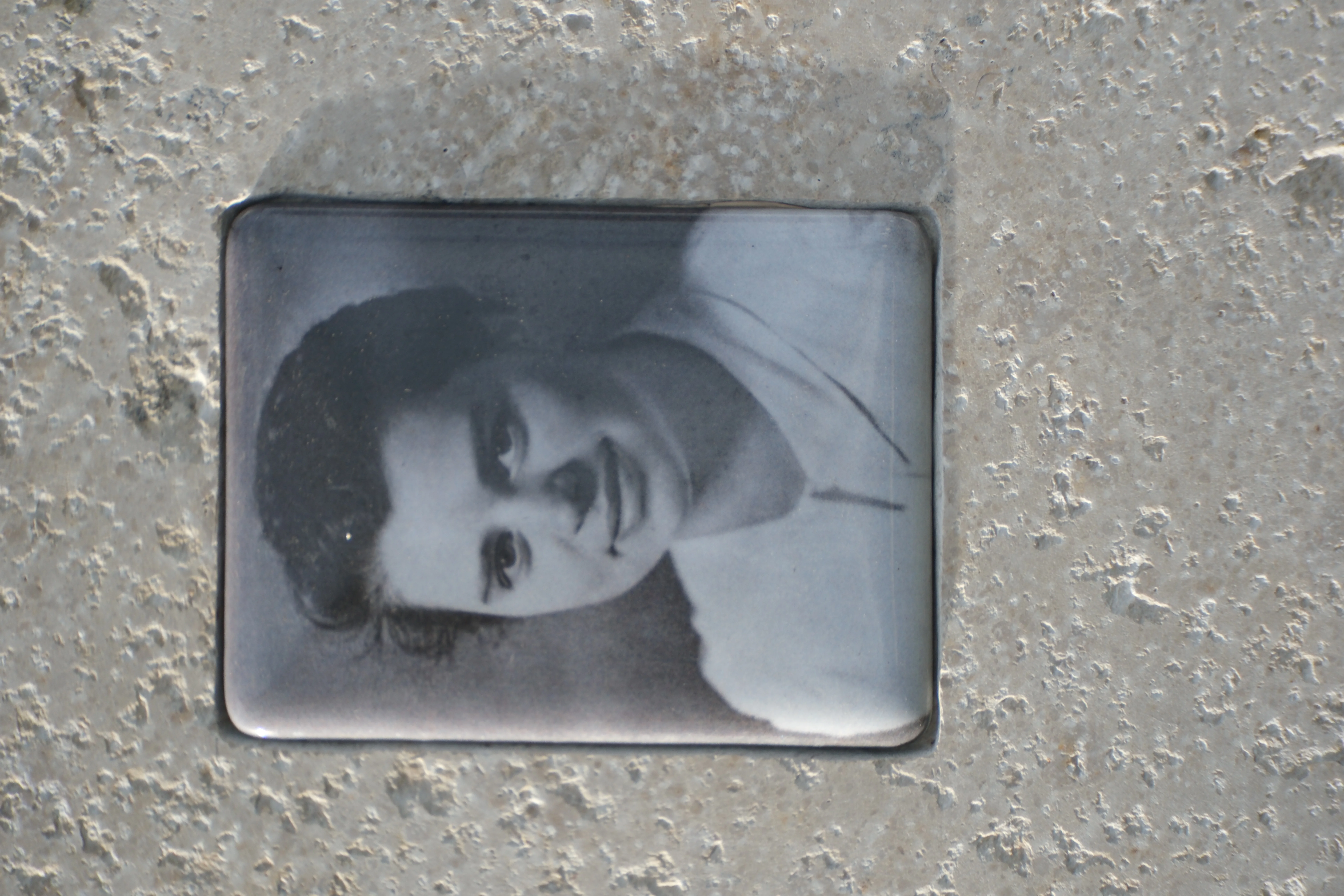
Image from Wikipedia
Image from Wikipedia
Maria Imma Mack: Civil Courage, Faith, and Quiet Grandeur in the Shadow of Dachau
A nun who preserved humanity at the risk of her life
Maria Imma Mack, born as Josefa Mack on February 10, 1924, in Möckenlohe near Eichstätt and died on June 21, 2006, in Munich, is one of the most remarkable figures in German contemporary history. As a sister of the Poor School Sisters of Our Lady, she combined religious vocation with courageous action during one of the darkest phases of the 20th century. Under the code name "Mädi," she secretly provided food, letters, and liturgical items to inmates of the Dachau concentration camp, putting her life at risk. ([schulschwestern.de](https://schulschwestern.de/sr-imma-mack-maedi/?utm_source=openai))
Background, Influence, and Early Vocation
Josefa Mack grew up in a family that rejected National Socialism from the very beginning; this attitude influenced her early on and formed the moral background of her later actions. At just 16 years old, she entered the postulancy of the Poor School Sisters in Munich and began her training as a handicrafts teacher in 1940. When the training facility in Munich's Au was forcibly closed by the National Socialists in January 1942, she continued to work in Freising St. Klara as an assistant in the children's home of the School Sisters. ([schulschwestern.de](https://schulschwestern.de/sr-imma-mack-maedi/?utm_source=openai))
These years illustrate a young woman whose life path was not marked by traditional career planning but by a deep inner decision. The religious community became a living space for her, where discipline, charity, and responsibility intersected. Even here, the quiet consistency that would later define her role as a helper in the context of the Dachau concentration camp is already apparent. ([schulschwestern.de](https://schulschwestern.de/sr-imma-mack-maedi/?utm_source=openai))
The Path to Dachau: Helping at the Risk of Life
On May 16, 1944, Josefa Mack traveled to the grounds of the Dachau concentration camp for the first time. There, she witnessed the misery of the inmates who had to work in the nursery under inhumane conditions, and she decided to take action. From May 1944 until the end of the war, she made around 60 trips to Dachau, sometimes by bicycle, and in winter on foot with a sled, to bring medicines, food, communion hosts, altar wine, and other aid supplies into the camp. ([schulschwestern.de](https://schulschwestern.de/sr-imma-mack-maedi/?utm_source=openai))
Her assistance was not limited to material support. She mediated between the Catholic priests interned in Dachau and Cardinal Michael Faulhaber, smuggled liturgical vestments, books, holy oils, and official church documents into the camp, thus helping to maintain religious life under extreme conditions. Her commitment was quiet, unobtrusive, and marked by admirable determination. This is precisely where the historical significance of Maria Imma Mack lies: She became a living connection between compassion, conscience, and actively lived solidarity. ([schulschwestern.de](https://schulschwestern.de/sr-imma-mack-maedi/?utm_source=openai))
Karl Leisner and the Unique Priestly Ordination in the Concentration Camp
One of the most consequential moments of her commitment was her involvement in the secret ordination of the seriously ill deacon Karl Leisner, who was imprisoned in the priest block of the Dachau concentration camp. Through her trips and contacts, the necessary documents and liturgical items reached the camp, allowing Leisner to be secretly ordained a priest in 1944. This ordination is considered the only priestly ordination ever celebrated in a concentration camp. ([schulschwestern.de](https://schulschwestern.de/sr-imma-mack-maedi/?utm_source=openai))
The historical significance of this act goes far beyond a singular religious ceremony. It represents a network of quiet assistance, clever organization, and moral steadfastness that marked the difference between despair and hope within a totalitarian environment. Maria Imma Mack acted silently, but her impact resonates to this day. Her contribution is part of the memory culture surrounding Dachau and serves as an example of how individual civil courage becomes visible in history. ([schulschwestern.de](https://schulschwestern.de/josefa-mack-maedi-engel-von-dachau-schwester-maria-imma-mack/?utm_source=openai))
From Silence to Remembrance: The Book "Why I Love Azaleas"
For a long time, Sister Imma remained silent about her experiences. It wasn't until 1989 that she documented her memories in the book "Why I Love Azaleas," which chronicles her trips to the grounds of the Dachau concentration camp and the experiences of those months. The title initially appears modest, almost poetic, yet the content refers to a radical reality: to fear, hope, duty, and the determination to help others. ([schulschwestern.de](https://schulschwestern.de/sr-imma-mack-maedi/?utm_source=openai))
Even in this publication, her characteristic style is evident: no pathos, no self-display, but a sober recollection of concrete actions and situations. The book is thus not only a personal document but also a primary historical source. Together with the reports from her community, it creates the image of a woman who defined her life not through grand words but through responsibility in everyday life. ([deutsche-digitale-bibliothek.de](https://www.deutsche-digitale-bibliothek.de/person/gnd/113520522?utm_source=openai))
Honors and Public Remembrance
For her courageous commitment, Maria Imma Mack received numerous awards. These include the Bavarian Order of Merit, the Federal Cross of Merit 1st Class, and the Cross of Honor Pro Ecclesia et Pontifice; she was also inducted as a "femme chevalier" in the French Legion of Honor. These honors underscore that her actions were recognized as extraordinary not only within the Church but also at state and international levels. ([schulschwestern.de](https://schulschwestern.de/sr-imma-mack-maedi/?utm_source=openai))
After her death on June 21, 2006, ecclesiastical and public entities once again honored her life's work. The official statement from the order emphasized her help for inmates of the Dachau concentration camp and her involvement in the ordination of Karl Leisner, while the School Sisters highlighted her human warmth, humility, and joy for life. The German Digital Library also recognizes her as a nun and refers to her written legacy. ([orden.de](https://www.orden.de/aktuelles/meldung/schwester-imma-mack-gestorben?utm_source=openai))
No Musical Classification Exists – But There Is Cultural Resonance
Maria Imma Mack was not a musician, singer, or artist in the musical sense; no discography, charts, or record releases exist about her. However, her biography possesses a strong cultural resonance often attributed to artists: it tells of attitude, impact, audience in the broadest sense, and of a memory that is carried across generations. In this sense, her life itself is a form of historical "composition" of conscience, courage, and precision in action. ([schulschwestern.de](https://schulschwestern.de/sr-imma-mack-maedi/?utm_source=openai))
Especially because her story was not based on self-promotion, it holds special credibility. She represents that rare kind of authority that arises from actions and not from self-presentation. Anyone engaging with the history of the Dachau concentration camp, ecclesiastical resistance, and female civil courage will inevitably come across her name. ([schulschwestern.de](https://schulschwestern.de/josefa-mack-maedi-engel-von-dachau-schwester-maria-imma-mack/?utm_source=openai))
Official Channels of Maria Imma Mack:
- Instagram: No official profile found
- Facebook: No official profile found
- YouTube: No official profile found
- Spotify: No official profile found
- TikTok: No official profile found
Conclusion: Why Maria Imma Mack Continues to Inspire Today
Maria Imma Mack fascinates because her life demonstrates how much strength there is in quiet determination. She was not a woman of grand gestures but an actor whose courage worked quietly yet wrote history. Those who read her biography encounter a personality that defended humanity under extreme conditions and thereby continues to set standards today. ([schulschwestern.de](https://schulschwestern.de/sr-imma-mack-maedi/?utm_source=openai))
For this reason, engaging with her life path is worthwhile: it reminds us that civil courage is always concrete, always has a cost, and unfolds its greatest strength precisely in the inconspicuous. Maria Imma Mack remains a figure of historical dignity and moral radiance. Her life deserves to be remembered, read, and told anew time and again. ([schulschwestern.de](https://schulschwestern.de/josefa-mack-maedi-engel-von-dachau-schwester-maria-imma-mack/?utm_source=openai))