
Maria Imma Mack
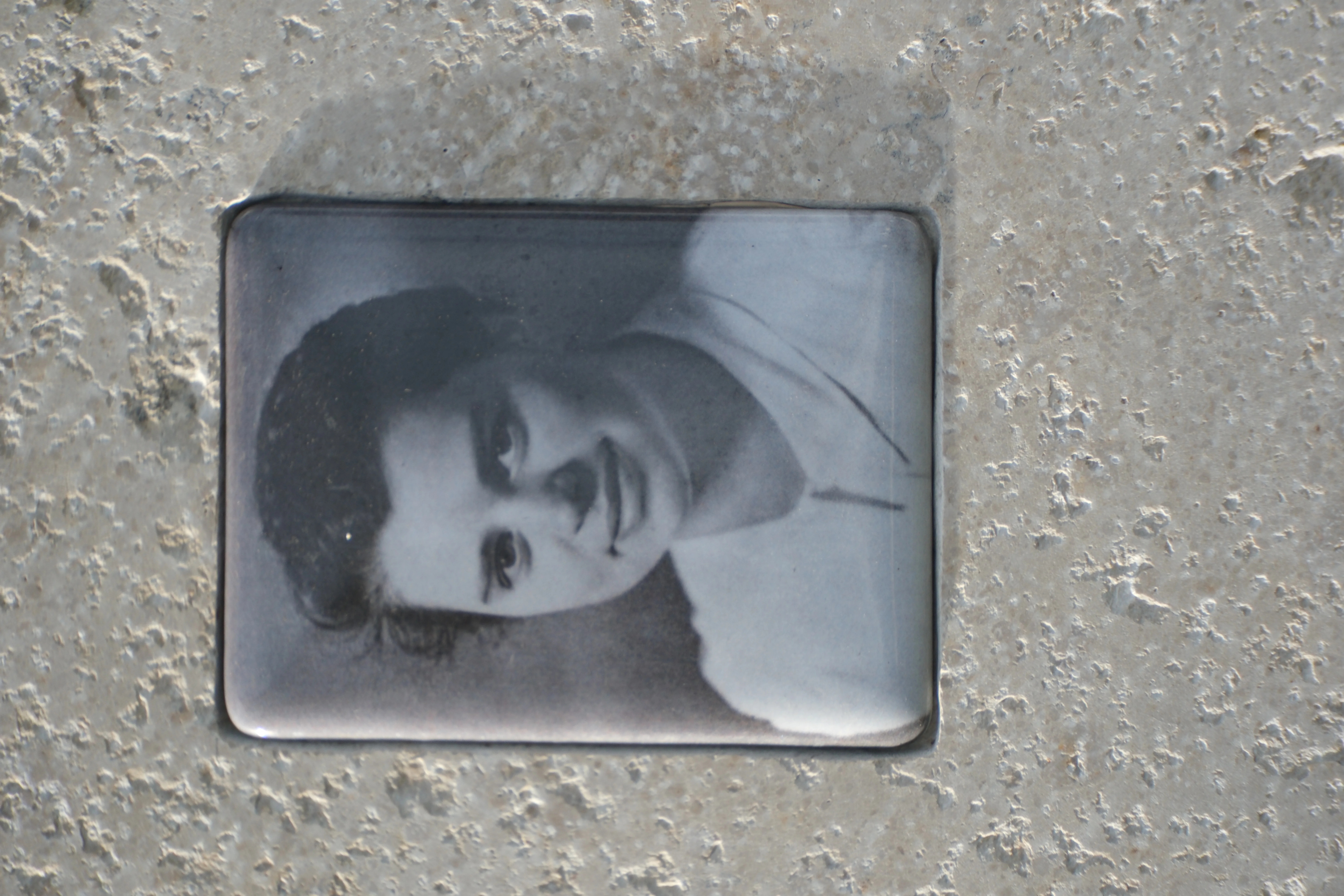
Image from Wikipedia
Image from Wikipedia
Maria Imma Mack: The Quiet Heroine of Dachau and a Life Against Forgetting
A woman who preserved humanity in the shadow of history
Maria Imma Mack, born on February 10, 1924, as Josefa Mack in Möckenlohe near Eichstätt and died on June 21, 2006, in Munich, is one of those personalities whose life path extends far beyond a mere biographical note. As a nun of the Congregation of the Poor School Sisters of Our Lady, she became a secret helper of the prisoners in the Dachau concentration camp under the alias "Mädi." Her name stands for courage, conscience, and practical neighborly love in a time when both were life-threatening. (stadt.muenchen.de)
Anyone who delves into Maria Imma Mack's life encounters not a glamorous career in the traditional sense, but a moral biography of extraordinary brilliance. Her story is closely linked to the culture of remembrance in Bavaria and is kept alive to this day through memorial plaques, street names, and ecclesiastical honors. It is precisely for this reason that her life does not seem concluded, but rather as a lasting commission. (stadt.muenchen.de)
Childhood in Möckenlohe and the path to religious life
Josefa Mack grew up in a family of craftsmen and entered the order of the Poor School Sisters at the age of 16. This early decision significantly shaped her further life path, as it combined religious calling with social responsibility. The transition from her hometown of Möckenlohe to the world of religious life marked the beginning of an attitude that was oriented not towards self-presentation but towards service. (donaukurier.de)
Her education and work took her to Freising, where she initially worked in a children's home run by the Sisters. There, she received a commission that would change her life: to procure flowers and vegetables from the Dachau concentration camp's gardening shop. From this initially mundane task developed an encounter with the extent of violence and inhumanity that she could not shake off. (bistum-eichstaett.de)
The breakthrough of the conscience: Help for prisoners in Dachau
In May 1944, Maria Imma Mack began to travel regularly to the Dachau concentration camp, bringing food, medicine, communion hosts, sacramental wine, candles, and letters to the prisoners. She acted under great risk, fully aware that such assistance could result in the death penalty. Her actions combined tangible support with an act of silent resistance, which occupies a special place in the history of camp assistance. (stadt.muenchen.de)
What is particularly impressive is that she did not stop at individual gestures but helped continuously over months, maintaining contact between the incarcerated and their relatives. Reports from ecclesiastical and historical sources describe how she even traveled in winter by bicycle or sled when snow and cold made the path difficult. This consistency makes her commitment a story of lived steadfastness. (english.katholisch.de)
Why I Love Azaleas: Remembrance as Testimony
A central document of her life is the book Why I Love Azaleas, in which she recalled her trips to the planting of Dachau concentration camp from May 1944 to April 1945. The work not only documents personal experiences but also offers the perspective of a young nun on suffering, fear, and hope amidst a system of annihilation. As an autobiographical testimony, it holds historical value and preserves experiential knowledge that was not publicly articulated as a matter of course in the post-war period. (deutsche-digitale-bibliothek.de)
Several library and publishing confirmations attest to the distribution of this memoir in various editions and languages. This clearly shows how strongly her report resonated beyond mere local memory. Maria Imma Mack thus became a contemporary witness whose voice makes the dimension of helping during National Socialism tangible. (librairietequi.com)
Delayed recognition and public commemoration
After the war, Maria Imma Mack was honored multiple times for her efforts. The Diocese of Eichstätt refers to her induction into the French Legion of Honor in 2004 and the Bavarian Order of Merit, which she received as early as 1986. These awards show that her actions were recognized not only ecclesiastically but also by the state as symbols of courage and reconciliation. (domradio.de)
Her name has also become firmly established in the public sphere. In Munich, the Imma Mack Path commemorates her, a memorial plaque was dedicated to her in Adelschlag on her 100th birthday, and other educational and residential sites bear her name. Such forms of remembrance make it clear that her life has entered regional and supra-regional historiography. (stadt.muenchen.de)
Musical context? No – but cultural relevance with documentary power
Maria Imma Mack is not a musician, and no discography in the musical sense exists. Nevertheless, her life possesses remarkable cultural resonance because it has been inscribed into books, memorial sites, ecclesiastical articles, and historical analysis. In a broad culture of remembrance, her testimony functions like a quiet but precise composition of attitude, action, and aftermath. (deutsche-digitale-bibliothek.de)
Especially in public representations, she is often described not merely as a historical figure but as a role model for civil courage. These attributions show why her name remains present in education, the church, and local history. Her biography illustrates that cultural influence does not arise solely from art but also through moral consequence. (bistum-eichstaett.de)
Official Channels of Maria Imma Mack:
- Instagram: No official profile found
- Facebook: No official profile found
- YouTube: No official profile found
- Spotify: No official profile found
- TikTok: No official profile found
Conclusion: Why Maria Imma Mack continues to resonate today
Maria Imma Mack fascinates because her life demonstrates how great the impact of quiet bravery can be. She acted not out of calculation but out of compassion, faith, and a sense of responsibility – risking her life for it. Those who read her story encounter not only a nun but a personality who made humanity tangible in one of the darkest hours of the 20th century. (stadt.muenchen.de)
For this reason, her biography remains relevant: it reminds us that civil courage always begins with a decision and that help remains possible even under pressure. Maria Imma Mack deserves to be read, remembered, and passed on – as a name against forgetting and as a poignant appeal to live humanity visibly. (bistum-eichstaett.de)
Sources:
- Wikipedia – Maria Imma Mack
- katholisch.de – With bike and sledge: how a nun helped concentration camp prisoners
- Landeshauptstadt München – Imma-Mack-Weg
- Bistum Eichstätt – Bewegt vom Heiligen Geist: Menschen, die etwas bewegen
- Donaukurier – Adelschlag gedenkt seiner großen Tochter Schwester Imma Mack
- Deutsche Digitale Bibliothek – Josefa Maria Imma Mack
- SSND / Gerhardinger.org – Sister M. Imma Mack
- DOMRADIO.DE – 100 years ago, the nun Imma Mack was born