
Markus (Evangelist)
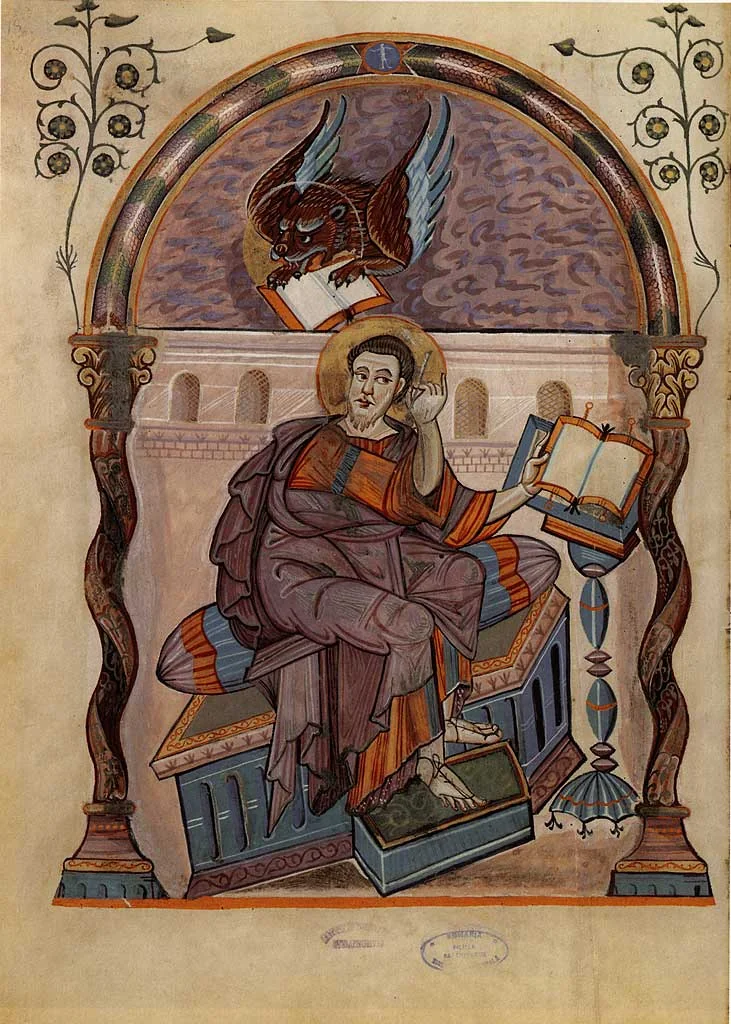
Image from Wikipedia
Image from Wikipedia
Markus (Evangelist) – the Tradition Behind the Oldest Gospel
An Evangelist Between Tradition, Anonymity, and Great Impact
Markus is one of the most influential figures in early Christian tradition: The ancient church tradition attributes to him the authorship of the probably oldest Gospel, even though the text itself does not mention his name. This creates the historical tension surrounding his persona: Markus appears simultaneously as a figure of tradition and a literary convention, as a name assigned by the church to an anonymous work. In Christian iconography, the Evangelist is linked to the Markus Lion, a symbol that makes his lasting presence in art and theology visible to this day. ([en.wikipedia.org](https://en.wikipedia.org/wiki/Mark_the_Evangelist?utm_source=openai))
Biographical Context: What Tradition Tells Us About Markus
The historical reconstruction of Markus is shaped by legends, church memory, and exegetical caution. According to widespread Christian tradition, he is identified with John Mark, the companion of Barnabas and Paul, as well as a figure associated with Peter in the early church. Britannica notes that he appears as a collaborator on a missionary journey in the Acts of the Apostles, and that Papias of Hierapolis describes Markus as someone who transmits Peter’s teachings. At the same time, modern research emphasizes the uncertainty of this attribution and carefully distinguishes between the Paul-companion Markus and the anonymous author of the Gospel. ([britannica.com](https://www.britannica.com/biography/Saint-Mark-the-Evangelist?utm_source=openai))
The Gospel According to Markus: Anonymous, Concise, Eloquent
The Gospel of Markus is considered the shortest of the canonical Gospels and a text of high narrative density. The ancient church tradition views Markus as the interpreter or secretary of Peter, whose proclamations he literarily condensed; modern biblical scholarship remains more cautious regarding authorship, referring to it as an anonymous work that was later associated with Markus. This combination of oral tradition, apostolic environment, and written form constitutes the cultural-historical significance of the Gospel of Markus: it is not just a religious text but also an early testimony of how memory becomes canonical literature. ([britannica.com](https://www.britannica.com/biography/Saint-Mark-the-Evangelist?utm_source=openai))
A Career Path of Tradition: From Jerusalem Through Rome to Alexandria
The tradition surrounding Markus extends far beyond a single place of life. Britannica cites the Jerusalem community of his mother as an early center of Christian life and refers to the connection to Antioch; other sources report his role in the spread of Christianity and his later veneration as the founder of the Church of Alexandria. Although the historical details are not certain in every respect, a remarkable pattern emerges here: Markus is remembered in tradition not as an isolated figure but as a nexus between proclamation, travel, missionary history, and regional church traditions. ([britannica.com](https://www.britannica.com/biography/Saint-Mark-the-Evangelist?utm_source=openai))
Style and Language: Why the Gospel of Markus Resonates So Directly
The literary power of the Gospel of Markus lies in its movement. The text employs concise language, dramatic density, and a clear preference for dynamic action, setting it apart from the other Gospels to this day. The closeness to Peter deeply anchored in tradition explains, from the perspective of many interpreters, why the narrative places such strong emphasis on events, pace, and vividness. This creates a literary allure that keeps the Gospel of Markus readable even today: it reads like a precise, unembellished narrative with high spiritual and narrative tension. ([biblegateway.com](https://www.biblegateway.com/resources/encyclopedia-of-the-bible/Gospel-Mark?utm_source=openai))
Symbolism and Cultural Influence: The Markus Lion as a Trademark
The Markus Lion is one of the most recognizable symbols in Christian cultural history. It represents the figure of the Evangelist among the four living beings of the apocalypse and has gained immense cultural significance, especially in Venice, where the city venerates Markus as its patron. Consequently, Markus has transcended the biblical and ecclesiastical sphere to become a cultural icon, whose symbolism has shaped architecture, art, heraldry, and religious identity. In the long history of Christian imagery, he stands as one of those names that are not just read but also seen. ([britannica.com](https://www.britannica.com/biography/Saint-Mark-the-Evangelist?utm_source=openai))
Critical Reception: Tradition and Modern Research in Dialogue
The critical reception of the figure of Markus is characterized by a productive tension. On one hand, church tradition maintains the connection between Markus, Peter, and the Gospel; on the other hand, historical research emphasizes that the Gospel itself is transmitted as anonymous, and the attribution was only stabilized in the early church. This dual perspective does not diminish Markus but rather adds depth: he exemplifies how early Christianity brought together authority, memory, and the form of text. In this way, Markus remains a key name in theology, exegesis, and cultural history. ([britannica.com](https://www.britannica.com/biography/Saint-Mark-the-Evangelist?utm_source=openai))
Current Projects, Social Media, and Digital Presence
No official social media channels exist for Markus as an Evangelist in the modern sense, and no verifiable accounts have been found on Instagram, Facebook, YouTube, Spotify, or TikTok. Similarly, there are no current music projects, albums, or tours, as Markus does not represent a contemporary music career in today’s sense, but rather a figure rooted in tradition and religion. Contemporary relevance is therefore not evidenced in releases but in continued liturgical, scholarly, and cultural presence. ([de.ra.co](https://de.ra.co/dj/markus-us/biography?utm_source=openai))
Conclusion: Why Markus Continues to Fascinate
Markus remains intriguing because at the heart of his figure are central questions of Christian tradition: Who writes history, who preserves memory, and how does lived experience transform into a canonical text? The blend of historical imprecision, literary clarity, and strong symbolic power makes the Evangelist one of the most impactful figures in the Bible. To understand Markus is to encounter not just a name but an original text of Christian culture. His impact unfolds to this day in liturgy, art, and interpretation – and therein lies his enduring greatness. ([britannica.com](https://www.britannica.com/biography/Saint-Mark-the-Evangelist?utm_source=openai))
Official Channels of Markus (Evangelist):
- Instagram: No official profile found
- Facebook: No official profile found
- YouTube: No official profile found
- Spotify: No official profile found
- TikTok: No official profile found