
Olivier Assayas
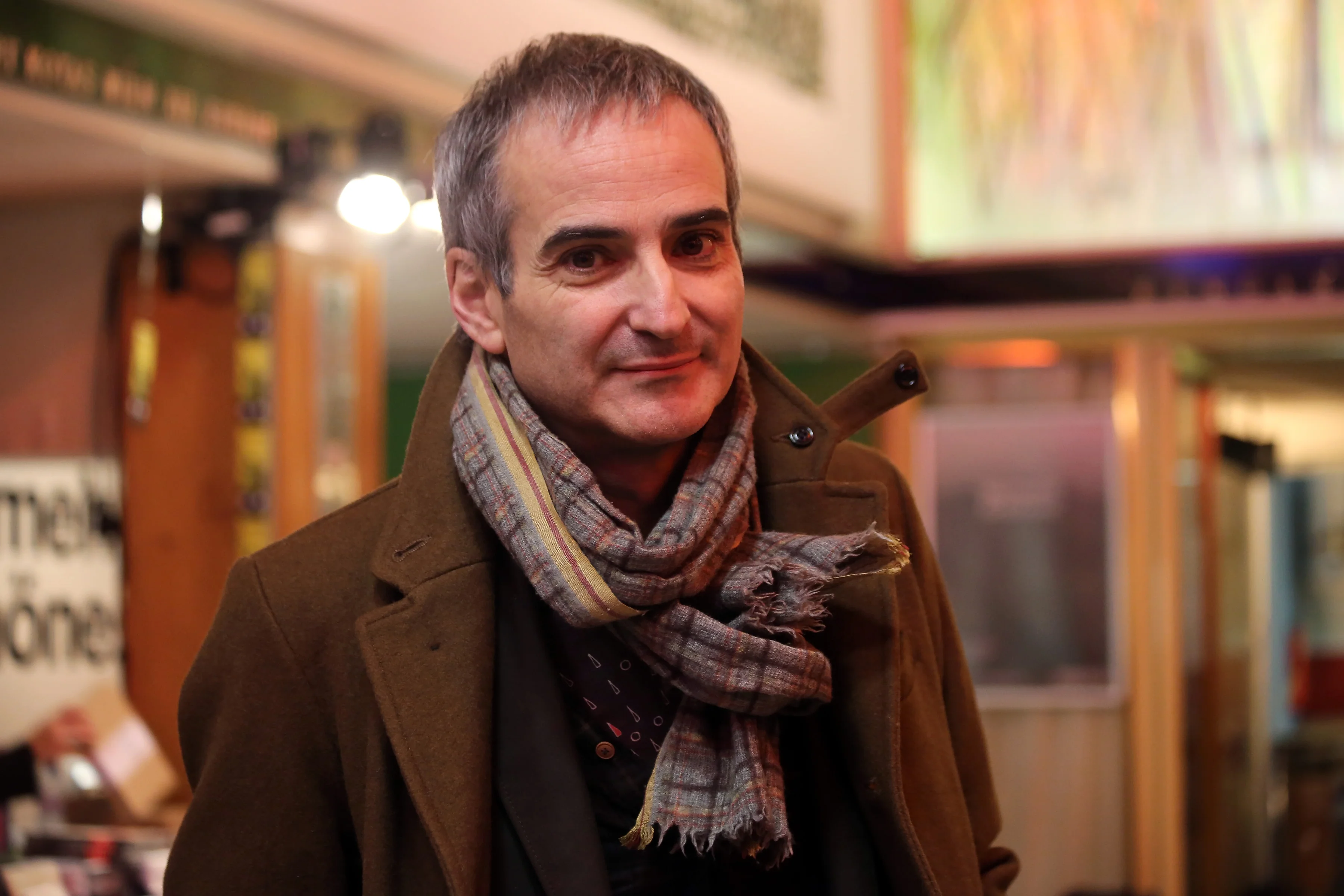
Image from Wikipedia
Image from Wikipedia
Olivier Assayas: The French Auteur Navigating Between Pop, Politics, and Radical Present
A Director Who Dissects Modernity with Cinematic Precision
Olivier Assayas, born on January 25, 1955, in Paris, is one of the most influential French directors of his generation. As a screenwriter, critic, and long-time editor of Cahiers du cinéma, he developed a deep understanding of cinema as an art form, a space for discourse, and a cultural nervous system early on. His career combines cinephile passion with analytical sharpness and a pronounced sensitivity to societal upheavals. ([munzinger.de](https://www.munzinger.de/register/portrait/biographien/Olivier%2BAssayas/00/23076?utm_source=openai))
Assayas did not begin from scratch; he came from an environment that intertwined writing, critique, and cinematic reflection. According to various biographical sources, he was born in Paris as the son of screenwriter Raymond Assayas, known by the name Jacques Rémy; in his early years, he initially engaged with visual arts before turning to film. His first steps as a director and author included short films, writing, and a proximity to film criticism, leading him towards a distinctive artistic style. ([munzinger.de](https://www.munzinger.de/register/portrait/biographien/Olivier%2BAssayas/00/23076?utm_source=openai))
Early Influences: From Painting to Film Critique
Before conquering cinema as his territory, Olivier Assayas was notably drawn to painting. It was only in the late 1970s that he turned to film, realizing his first short film, Copyright, in 1979, inspired by the post-punk movement. This early connection of music, youth culture, and urban anxiety serves as a key to his later work: Assayas never thinks of cinema in isolation but always in exchange with fashion, sound, politics, and contemporary ways of life. ([viennale.at](https://www.viennale.at/de/gast/olivier-assayas?utm_source=openai))
His education took place not only in institutions but also in the practice of writing. The path to directing involved screenplays and work at the film critique platform Cahiers du cinéma, where he served as an editor for many years. This background in criticism continues to shape his films today: they are observant, self-reflective, and emotionally precise. ([munzinger.de](https://www.munzinger.de/register/portrait/biographien/Olivier%2BAssayas/00/23076?utm_source=openai))
The Breakthrough: A Cinema of Transitions and Frictions
Assayas was early on recognized for works that pushed from theory into practice. The biographical profile from AlloCiné points to his short films and collaboration as a screenwriter before he became visible as an independent director. With his feature films, he developed a style that translates familial conflicts, political shifts, and personal crises into strong, often nervously vibrating dramaturgies. ([allocine.fr](https://www.allocine.fr/personne/fichepersonne-5790/biographie/?utm_source=openai))
Films such as Cold Water, Irma Vep, Clean, Boarding Gate, Clouds of Sils Maria, and Personal Shopper mark significant milestones in his international recognition. The Austrian Film Museum describes his works since Une nouvelle vie as attempts to re-capture the world through cinema; the Viennale emphasizes his cinematic development from initial artistic inclination to independent author. This continuity makes Assayas a director who does not cater to trends but rather develops aesthetic tensions over the long term. ([sn.at](https://www.sn.at/kultur/kunst/olivier-assayas-im-wiener-filmmuseum-6107476?utm_source=openai))
The Artistic Development: Between French Tradition and Global Perspective
Assayas is regarded as a filmmaker who intertwines European and Asian cinematic traditions. The FAZ describes this connection as unmistakably French while also open to international influences and stylistic hybrids. This openness particularly shapes his artistic development: he works with cultural transfer, contemporary observation, and a precise sensitivity to social environments. ([faz.net](https://www.faz.net/aktuell/feuilleton/medien-und-film/kino/der-franzoesische-filmregisseur-olivier-assayas-wird-70-110253121.html?utm_source=openai))
In his films, the movement between the interior and exterior, intimacy and publicity, tradition and modernity plays a central role. The characters in Assayas' cinema are often seekers who live in times of upheaval and must re-position themselves in the world. This produces a body of work that not only narrates but also diagnoses: it reads contemporary history as a history of feelings. ([viennale.at](https://www.viennale.at/de/gast/olivier-assayas?utm_source=openai))
Current Projects and Recent Developments
Even in the 2020s, Assayas remains productive and present. The project Suspended Time was described in a 2025 interview as his latest work, a personal meditation on life, love, art, and memory. Additionally, his name also surfaced in 2025 in connection with The Wizard of the Kremlin, a political thriller he co-wrote with Emmanuel Carrère, which premiered in the main competition at the Venice Film Festival 2025. ([hammertonail.com](https://www.hammertonail.com/interviews/olivier-assayas/?utm_source=openai))
These recent works demonstrate a director sharpening his gaze on power, identity, and cultural upheaval without losing emotional complexity. Notably, The Wizard of the Kremlin positions Assayas again at a point where political cinema, psychological tension, and social analysis intertwine. His relevance arises precisely from this ability to translate historical processes into human relationships. ([en.wikipedia.org](https://en.wikipedia.org/wiki/The_Wizard_of_the_Kremlin_%28film%29?utm_source=openai))
Filmography and Artistic Signature
In a narrower sense, Olivier Assayas has no discography but rather an extensive filmography that can be read as a history of his work. It includes early titles like Winter’s Child, Paris Awakens, A New Life, Cold Water, Irma Vep, HHH - Portrait de Hou Hsiao-hsien, Late August, Early September, Demonlover, Clean, Boarding Gate, and Eldorado. This list not only marks productivity but also a consistent expansion of his stylistic register. ([viennale.at](https://www.viennale.at/de/gast/olivier-assayas?utm_source=openai))
His works oscillate between auteur cinema, pop culture, and global arthouse. The documentary-like precision, the nervous energy of the dialogues, and the openness to contemporary image and sound cultures give his work a high recognizability. In Assayas' cinema, staging is never an end in itself; it always serves the exploration of relationships, power, and perception. ([viennale.at](https://www.viennale.at/de/gast/olivier-assayas?utm_source=openai))
Critical Reception, Influence, and Cultural Authority
The reception of Assayas' work has been attentive and respectful for decades. Film-critical institutions, festivals, and cultural media appreciate him as an author who has renewed French cinema without departing from its historical depth. The repeated appearance of his films at international festivals, in curator programs, and in selected retrospectives speaks to his ongoing relevance as a precise chronicler of the present. ([viennale.at](https://www.viennale.at/de/gast/olivier-assayas?utm_source=openai))
His influence is particularly strong where cinema is understood as an open form: as a place for observation, style, and intellectual friction. Assayas combines the reflections of Cahiers du cinéma with a cinematic language that also reaches a broad audience. His authority stems from the connection of theory, practice, and international recognition. ([munzinger.de](https://www.munzinger.de/register/portrait/biographien/Olivier%2BAssayas/00/23076?utm_source=openai))
Conclusion: Why Olivier Assayas Continues to Fascinate
Olivier Assayas remains intriguing because he understands cinema as a living space for thought. His films possess intellectual clarity, emotional tension, and a pronounced sensitivity to the movements of the present. Those who follow his work discover an artist who combines aesthetic precision with cultural awareness, continually opening new perspectives on love, power, identity, and memory. ([faz.net](https://www.faz.net/aktuell/feuilleton/medien-und-film/kino/der-franzoesische-filmregisseur-olivier-assayas-wird-70-110253121.html?utm_source=openai))
That is why it is worthwhile to experience his works on the big screen. Assayas' cinema unfolds its full power in the darkness of the theater, where every nuance of gaze, rhythm, and montage becomes audible and tangible. Engaging with this work offers an encounter with one of the most consistent European auteur filmmakers of our time. ([sn.at](https://www.sn.at/kultur/kunst/olivier-assayas-im-wiener-filmmuseum-6107476?utm_source=openai))
Official Channels of Olivier Assayas:
- Instagram: no official profile found
- Facebook: no official profile found
- YouTube: no official profile found
- Spotify: no official profile found
- TikTok: no official profile found
Sources:
- Wikipedia – Olivier Assayas
- Munzinger Biography – Olivier Assayas
- Alexander Verlag Berlin – Olivier Assayas
- Viennale – Olivier Assayas
- Salzburger Nachrichten – Olivier Assayas in the Vienna Film Museum
- FAZ – The French Film Director Olivier Assayas Turns 70
- AlloCiné – Olivier Assayas: His Biography
- IMDb – Olivier Assayas
- Hammer to Nail – A Conversation with Olivier Assayas (Suspended Time)
- Wikipedia – Image and Text Source
Upcoming Events
The Magician in the Kremlin
An evening at the cinema full of power games and tension: The Magician in the Kremlin comes to filmforum Duisburg on 04/11/2026. Political thriller, strong cast, grand visuals. #Cinema #Duisburg
The Wizard in the Kremlin
An evening full of power, intrigue, and great acting at filmforum Duisburg. The Wizard in the Kremlin portrays politics as a stage. #Cinema #Duisburg