
Peter Ludwig
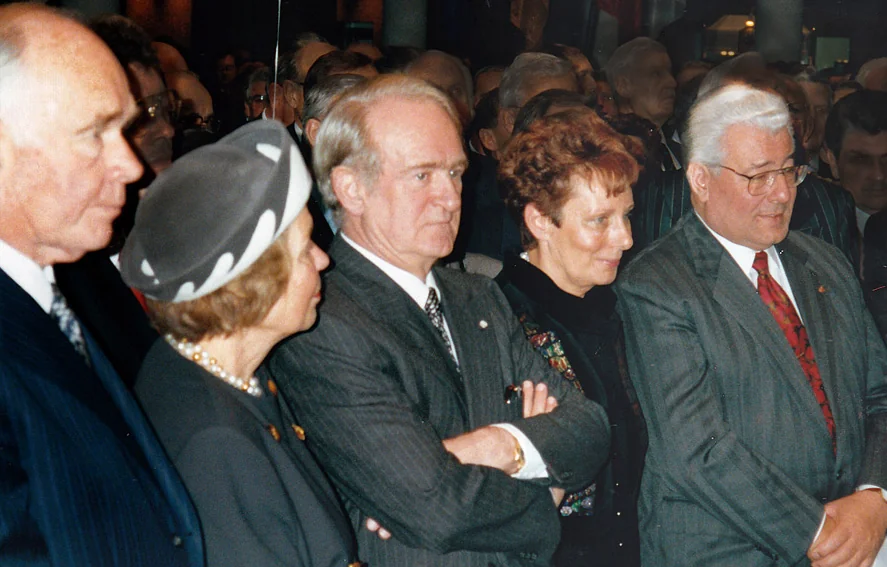
Image from Wikipedia
Image from Wikipedia
Peter Ludwig: The Art Patron Who Wrote an International Art Chapter with Vision
A Life Between Entrepreneurship, Collecting Passion, and Cultural Responsibility
Peter Ludwig (* July 9, 1925 in Koblenz; † July 22, 1996 in Aachen) was one of the defining art patrons and collectors of the 20th century in Germany. As an entrepreneur with an academic background, he combined economic prowess with an exceptional passion for art, research, and public communication. From a private collecting passion, he and his wife Irene Ludwig developed a cultural network that continues to shape museums, foundations, and collections in several countries today.
His significance lies not only in the size of the collection but in the attitude behind it: art should not remain private but should be made publicly effective. This very idea made Peter Ludwig a key figure in post-war culture. His biography reveals a collector who not only studied art history but also actively shaped it.
Early Years and Academic Influence
Peter Ludwig grew up as the son of a lawyer and the daughter of the industrial family Klöckner. He attended the then Kaiserin-Augusta-Gymnasium in Koblenz and passed his wartime Abitur in 1943. After military service and American captivity, he began studying at Johannes Gutenberg University in Mainz in 1946, where he took courses in art history, archaeology, history, and philosophy. This academic breadth later shaped his view of art as a cultural totality.
Especially important for him was his encounter with Hermann Schnitzler, the director of the Schnütgen Museum. Schnitzler not only opened his eyes to Picasso but also reinforced the understanding that art collection can be more than mere possession: it entails research, context, and public communication. Ludwig earned his doctorate under Friedrich Gerke with a dissertation on The Human Image of Picasso as an Expression of a Generation-bound Feeling of Life.
The Path to Becoming an Art Collector and Patron
Peter Ludwig early on developed that rare connection of analytical interest and passionate collecting culture that distinguishes great patrons. Together with Irene Ludwig, he built a collection that spanned from Egyptian and ancient art to contemporary international art. According to Museum Ludwig, their life's work included more than 14,000 artworks. However, this size was only part of the story: the clear collection concept was crucial.
The Ludwigs did not want to accumulate works in isolation but aimed to close art historical gaps and make quality visible across national and epochal boundaries. The guiding idea of "World Art" became the programmatic core of their work. Art appeared here as a transcultural principle of expression that should make societal and political differences aesthetically experienceable.
The Breakthrough: Picasso, Pop Art, and Looking Ahead
Among the defining moments in Ludwig's collecting biography is his early and intense engagement with Pablo Picasso. The dissertation on Picasso indicates how deeply he not only admired the artist but also penetrated his work scientifically. This fusion of research and collecting accompanied his entire career and granted special authority to his art communication.
Another turning point was his encounter with Pop Art in the mid-1960s. Museum Ludwig describes Peter Ludwig’s initial shock upon seeing a Pop Art sculpture by George Segal at MoMA. This moment exemplifies his greatness as a collector: he did not remain confined to what was already familiar but opened himself to the avant-garde and recognized the international significance of this art movement. From this emerged one of the most significant Pop Art collections worldwide.
Museum Ludwig, Donations, and Public Impact
The connection between Peter Ludwig and Cologne became a model example of cultural-political effectiveness. According to Museum Ludwig, a contract stipulated that Peter and Irene Ludwig would donate 350 works of modern art, and in return, the city of Cologne would create its own museum for exhibits created after 1900. This cooperation developed into Museum Ludwig as a central institution for modern and contemporary art.
In Aachen, too, the collector couple left lasting traces. The Suermondt-Ludwig-Museum received a significant donation of artworks from the Middle Ages and modern times from Peter and Irene Ludwig in 1977. Thus, Ludwig connected not only the passion of collecting with patronage but also with long-term cultural infrastructure. His impact is still evident today in the museums that arose from his commitment or benefited from it.
Collection, Strategy, and Artistic Development
Peter Ludwig did not collect based on fashion trends but with strategic foresight. His selection ranged from European art to American Pop Art and included international positions that were still little known in the German museum landscape at that time. This collecting practice imparted an almost curatorial character to his role: he thought in terms of contexts, series, groups of works, and art historical relationships.
Museum Ludwig emphasizes that the Ludwig collection in Cologne today possesses the third-largest Picasso collection after Paris and Barcelona. Such figures highlight the extraordinary scope of his commitment. Ludwig was thus not merely a private buyer but a player who helped shape the canon and actively expanded museum public engagement.
Cultural Influence and Art Historical Authority
The cultural influence of Peter Ludwig extends far beyond individual donations. Together with Irene Ludwig, he developed a model of responsible collecting that understands art as a public good. At a time when private collections often maintained distance from the public, Ludwig focused on accessibility, cooperation, and institutional integration. This made him a significant figure in the German and international museum landscape.
His collection policy influenced not only the visibility of Pop Art and modern art but also the discourse about the role of the collector itself. Peter Ludwig embodied the type of patron who not only provides financial support but also thinks content-wise, reflects scientifically, and assumes cultural responsibility. This is precisely where his enduring authority lies.
Why Peter Ludwig Remains Fascinating Today
Peter Ludwig remains intriguing because his biography exemplifies how knowledge, curiosity, and entrepreneurial strength can create lasting cultural values. He collected not for reasons of prestige but out of conviction for the societal significance of art. His name stands for an art attitude that expands horizons, strengthens institutions, and creates public engagement.
Those who visit the collections shaped by him and Irene Ludwig experience not only works of museum quality but also the vision of a man who understood art as a life mission. Herein lies the lasting fascination: Peter Ludwig not only preserved art but brought it to life. His story invites exploration of the museums and collections he influenced.
Conclusion
Peter Ludwig was an art patron of extraordinary brilliance, whose contributions have profoundly transformed the German museum landscape and the international perception of modern art. His eye for quality, his scholarly foundation, and his readiness to make art publicly accessible make him a key figure in cultural history. Those interested in art, collections, and the influence of great patrons will find in Peter Ludwig a fascinating role model. His traces can be most impressively experienced where his vision remains alive today: in the museums and collections that emerged from his engagement.
Official Channels of Peter Ludwig:
- Instagram: no official profile found
- Facebook: no official profile found
- YouTube: no official profile found
- Spotify: no official profile found
- TikTok: no official profile found
Sources:
- Wikipedia - Peter Ludwig
- Museum Ludwig - Peter and Irene Ludwig Foundation
- Museum Ludwig - History
- Museum Ludwig - Ludwig goes Pop
- Museum Ludwig - The Collection of Museum Ludwig
- Museum Ludwig - Pop Art: Unforeseen Dimensions
- WDR - Feature on the Birthday of Art Collector Peter Ludwig
- Wikipedia: Image and Text Source