
Peter Orloff
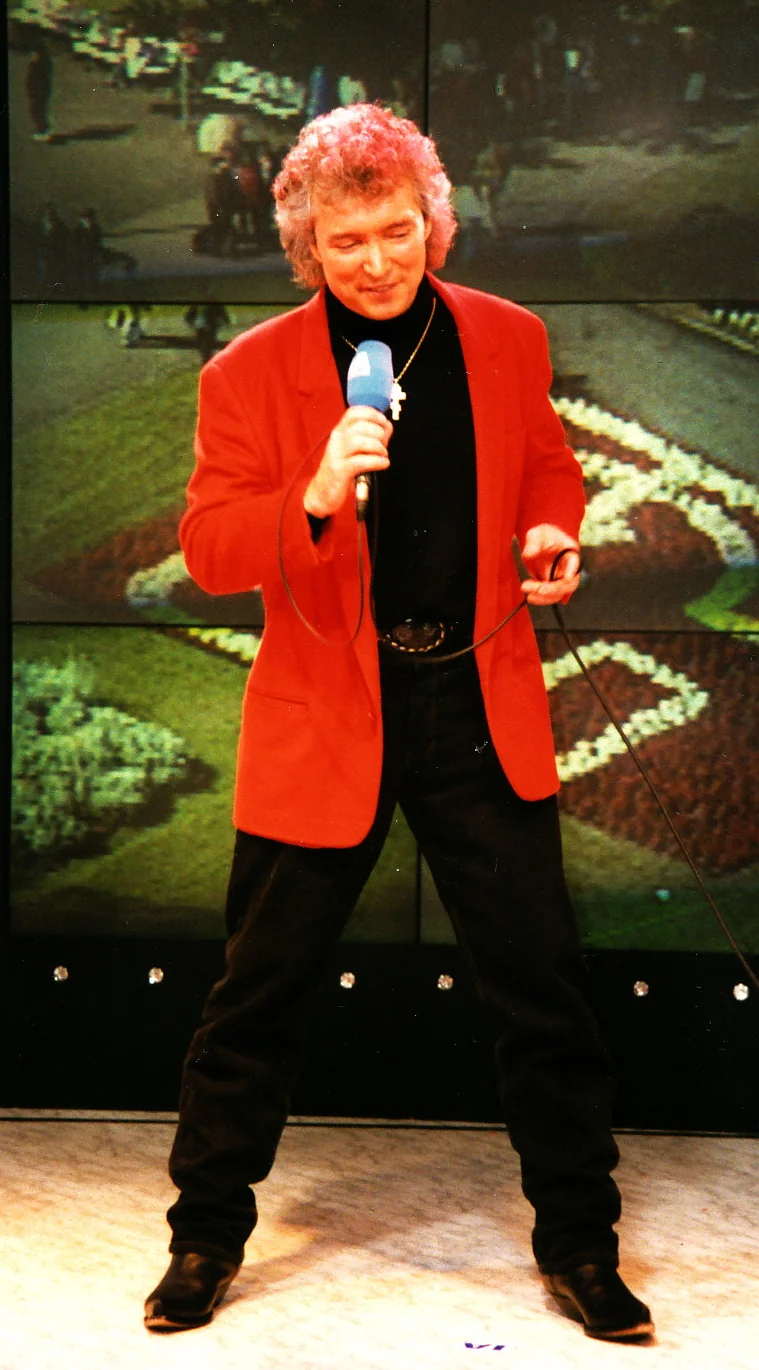
Image from Wikipedia
Image from Wikipedia
Peter Orloff – Schlager Icon, Composer, and Choir Director of a Legend
From Cossack Choir to Chart Star: The Extraordinary Music Career of Peter Orloff
Peter Orloff is one of the most distinctive voices in German Schlager – a singer, composer, lyricist, producer, and for decades the charismatic leader of a legendary vocal ensemble. Born on March 12, 1944, in Lemgo, he grew up in a musically influenced household and took to the stage as a teenager with the Black Sea Cossack Choir. In the late 1960s and 1970s, he shaped the German Schlager scene with original hits, powerful cover interpretations, and groundbreaking compositions for stars like Peter Maffay and Bernd Clüver. His artistic development spans classical singing, pop Schlager, and folk choral music – a body of work that combines stage presence, a distinctive compositional style, and cultural bridge-building.
Early Influence: Background, Education, and First Steps
Peter Orloff's musical socialization goes back to his family history: his father, a Russian immigrant, co-founded the Black Sea Cossack Choir in the 1930s and led it for decades. By the age of 14, already the youngest member of the ensemble, Orloff gained early stage experience, developed vocal technique, and a sense for dramatic phrasing. After graduating from high school, he studied law in Cologne, but the fascination with composition, arrangement, and singing never left him. In the mid-1960s, he formed his first projects, worked as a studio singer, and prepared for a transition into a professional music career.
Breakthrough in Schlager: Chart Placements, Gold Awards, and TV Presence
In 1967, he made his debut in the charts with "Es ist nie zu spät," followed by a series of single successes that made Orloff a regular guest on the ZDF Hitparade. Unmistakable was "Ein Mädchen für immer" (1971): the title reached the Top 20 in Germany, was awarded Gold, and became a number-one hit in Belgium. Variations of his repertoire – from heartfelt love Schlager to energetic uptempo numbers – reinforced his image as a versatile performer. Orloff made countless TV appearances and won multiple editions of the ZDF Hitparade. This TV era shaped the public perception of the artist and anchored his voice in the collective memory of German popular culture.
Composer, Lyricist, Producer: Songs That Made German Music History
Beyond his own discography, Orloff influenced Schlager history as a songwriter and producer. Particularly impactful was "Du" (1969/70) for Peter Maffay – an evergreen that catapulted the singer to stardom and established Orloff as a composer. He also wrote the number-one hits "Der Junge mit der Mundharmonika" and "Der kleine Prinz" for Bernd Clüver. Collaborations with big names like Freddy Quinn, Heino, Rex Gildo, Roy Black, or Julio Iglesias showcase his versatility in composition, arrangement, and production. Orloff demonstrated how coherent hook lines, melodic dramaturgy, and lyrical imagery can intertwine in German Schlager when they come from a single source.
Style and Sound: Between Lyrical Timbre and Dramatic Dynamics
In style analysis, Orloff's warm, narrative vocal color stands out – supported by clear diction, a subtle vibrato, and phrasing that balances text comprehensibility and emotion. His productions combine classical song structures with memorable choruses, orchestral colors, accentuated guitar and brass arrangements, and a clear focus on the vocal melody. As an arranger, he knows when compositional motifs need space, when backing vocals can lift the chorus, and when dynamic changes create dramatic effects. This resulted in a sound language that remained distinctive during the peak of German Schlager and is recognizable in live performances as well as on recordings for decades.
The Years of Change: Neue Deutsche Welle, Mallorca Hits, and the Return to Choral Music
With the beginning of the 1980s, the pop landscape changed – yet Orloff persisted with audience-friendly hits like "Königin der Nacht," which achieved cult status in the context of German-speaking holiday and party Schlager. Simultaneously, he remained active as a producer and lyricist. The 1990s marked an artistic expansion: alongside Schlager, folk and choral symphonic sound ideals came to the fore. Orloff increasingly referenced his musical roots – the grand vocal art that his father had shaped, which he now reinterpreted as artistic director with a modern production aesthetic.
Leadership of the Black Sea Cossack Choir: Tradition, Repertoire, and Artistic Responsibility
Since 1993, Peter Orloff has served as the overall musical director of the Black Sea Cossack Choir. His artistic development saw a consistent progression: from the youngest member to the artistic driving force of an ensemble that connects Slavic vocal culture, liturgical depth, and Central European concert tradition. The repertoire ranges from folk songs and spirituals to classical arrangements and specially arranged programs that reveal Orloff's signature – dramatic arcs, contrasting sound colors, and striking solos. With intense stage presence, precise rehearsal work, and careful voice balancing, he shaped an ensemble that thrives equally in churches and concert halls.
Discography Overview: Albums, Compilations, Reissues
Orloff's discography documents the breadth of his career: early studio albums such as "Peter Orloff" (1968), "Ein Mädchen für immer" (1971), and "Das brennt so heiß wie Feuer" (1972) attest to his peak as a Schlager singer; later releases compile the successful years into extensive compilations. With the choir, he set standards in catalog maintenance, such as with "Teure Heimat – Die Gold Edition" (2019), a elaborately designed edition that entered the official German Top 100 and introduced the specific vocal aesthetic of the ensemble to a larger audience. Additionally, digital platforms showcase the continuing relevance of the repertoire – from reissues of iconic singles to thematically curated collections.
Charts, Awards, and Critical Reception
The chart history illustrates Orloff's dual impact as a performer and songwriter: Gold certifications, Top 20 placements in the singles charts, a number-one hit in Belgium – and decades later, the noteworthy entry into the official German album charts with a choir project. Trade media and event platforms laud Orloff as the "King of the Hitparade" and as an artistic architect who has consistently developed his oeuvre between pop aesthetics and vocal traditions. Industry platforms and chart archives confirm his role as an innovator who, with melodic finesse, lyrical quality, and production craftsmanship, helped define the DNA of German-language Schlager.
Current Projects: Anniversaries, New Releases, and Farewell Tour
Even beyond his 80th birthday, Orloff shows impressive artistic energy. Recent years bring reissues of classic titles, collaborations from the Schlager world, and new choir programs that find visible resonance in TV and press formats. With the highly publicized farewell tour, Orloff reflects on his life's achievements: A program between emotion, memory, and musical excellence – carried by a formation that merges Slavic sound colors with Central European concert culture. Announcement dates for 2025/2026 document the unwavering demand and make clear how strongly his music resonates across generations.
Stage Presence and Artistic Development – A Long-Term Perspective
Over six decades of stage experience shape Orloff's presence: his confident interaction with the audience, the dramatic density of a concert evening, and precise timing between ballads, choruses, and spirited pieces. His artistic development shows a rare continuity – from young soloist to chart star, from producer to choir director. In each career phase, he retained the connection to melody, singable lines, and emotional engagement. This "melodic ethos" makes the Orloff work accessible – for Schlager fans, classical curiosity seekers, and cultural audiences alike.
Cultural Context: Bridges Between Pop, Tradition, and Memory
Orloff's significance lies not only in chart data or resonance curves but in cultural mediation: his Schlager songs captured the spirit of an era – romantic, optimistic, melodic. His work with the Black Sea Cossack Choir also creates spaces for historical memory and transcultural dialogue. Concerts in churches and halls provide a platform for Slavic vocal music within German cultural public life; arrangements and moderation frame the music beyond mere performance. This brings music history to life – as a resonant archive and as contemporary art that translates tradition into modern contexts.
Voices of the Fans
The reactions from fans clearly demonstrate: Peter Orloff touches people worldwide. Streaming profiles and curated playlists document enduring interest in his great Schlager melodies as well as in his moving choir recordings. Whether as a soloist with iconic refrains or as the artistic director of an ensemble – Orloff's music accompanies life moments, creates goosebumps, and remains in the ear. The ongoing presence in playlists, radio specials, and concert announcements verifies how vibrant his entire work remains in the daily lives of many listeners.
Conclusion: Why You Should Experience Peter Orloff
Peter Orloff combines compositional class with narrative singing and the aura of a stage artist who takes his audience seriously. His discography tells of the golden age of Schlager; his choir work demonstrates the power of collective voices and timeless melodies. Those who know his songs discover precisely constructed hook lines and a production that structures emotion. Those who experience him live – as a soloist or with the Black Sea Cossack Choir – feel how deeply moving harmonies, bass foundations, and bright tenor lines merge into a sound event. That is what makes Orloff so exciting: he is a bridge-builder between pop and tradition – an artist whose music sounds as if it were composed for the grand stage. Recommendation: Secure tickets, attend the farewell concerts, and experience this unique voice once again in the room.
Official Channels of Peter Orloff:
- Instagram: No official profile found
- Facebook: No official profile found
- YouTube: No official profile found
- Spotify: https://open.spotify.com/intl-de/artist/5kqaMgJfF7UxU4Uqqc4jhE
- TikTok: No official profile found
Sources:
- Peter Orloff – Official Website
- Peter Orloff – Tour & Dates
- Black Sea Cossack Choir – Official Website
- Peter Orloff – Repertoire/Publications (incl. Teure Heimat – Die Gold Edition)
- Peter Orloff – Charts & Successes (GfK Evaluations, Awards)
- Official German Charts – Teure Heimat – Die Gold Edition (Album Details)
- Apple Music – Peter Orloff (Artist Profile, Bio, Discography)
- Apple Music – Ein Schritt nach vorn, ein Blick zurück (2024)
- smago! – Announcement of Farewell Tour (2025/26)
- Theater Schwedt – Event Announcement (Farewell Tour)
- City of Oranienburg – Concert Announcement (07.03.2026)
- hitparade.ch – Artist Profile/Chart History
- Apple Music – Die Besten Hits von früher bis heute (Compilation)
- Wikipedia: Image and Text Source
Upcoming Events
Peter Orloff & Black Sea Cossack Choir – The Farewell Tour
Farewell with goosebumps in the Rossini Hall: Peter Orloff & the Black Sea Cossacks ignite choral brilliance and emotion. 02/22/2026, 5:00 PM, from €42.45. Secure tickets now. #BadKissingen
Peter Orloff & Black Sea Cossack Choir
Great voices, deep emotions, and a historic hall: Peter Orloff & Black Sea Cossack Choir are coming to Bad Kissingen. An evening for heart and memory. #BadKissingen
Peter Orloff & Black Sea Cossack Choir
An evening full of choral power in the Spa Garden Bad Kissingen: Peter Orloff & Black Sea Cossack Choir live on July 18, 2026. #BadKissingen