
Queen (Band)
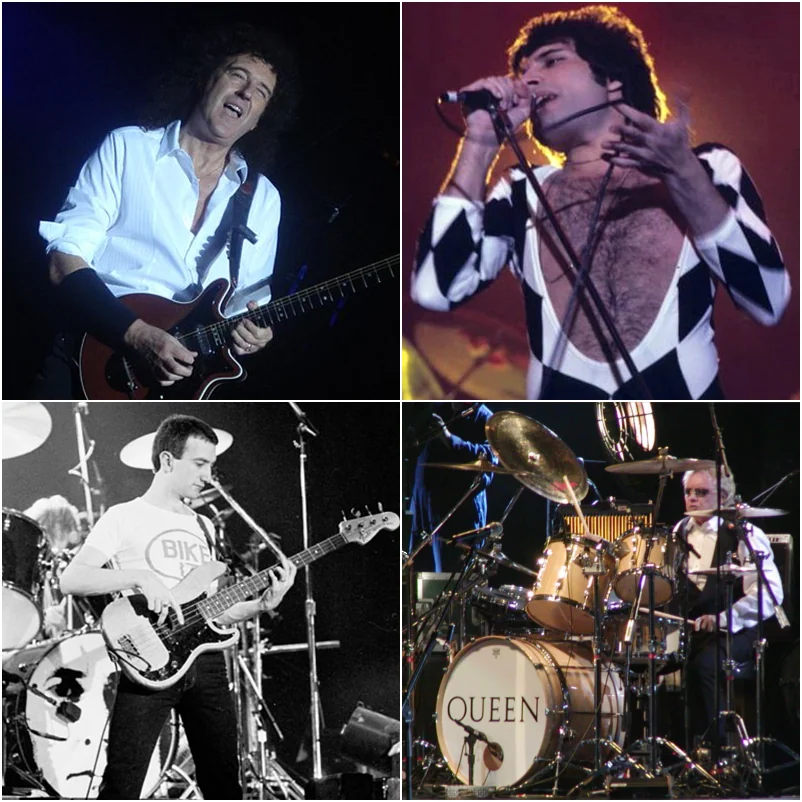
Image from Wikipedia
Image from Wikipedia
Queen (Band) – The Definitive Artist Page
With Drums, Opera, and Power Chords: Why Queen Electrifies Generations
Since 1970, Queen has stood for bold song ideas, theatrical stage presence, and a music career that has made rock history. The British quartet of Freddie Mercury, Brian May, Roger Taylor, and John Deacon combined progressive rock, hard rock, operatic pomp, and pop hooks into a distinctive sound. From Bohemian Rhapsody to We Will Rock You, the band has created anthems that make stadiums tremble and dominate streaming eras. In 2024, their musical legacy was ushered into a new era with the record-breaking sale of the rights to their catalog to Sony Music – a milestone that underscores the group's enduring cultural relevance.
Biography: From “Smile” to Queen – The Birth of a Rock Icon
The formation of Queen emerged from the London predecessor band Smile in 1970. With the lineup of Freddie Mercury (vocals, piano), Brian May (guitar, vocals), Roger Taylor (drums, vocals), and from 1971, John Deacon (bass), the band found their lineup for the decades to come. The early albums Queen (1973) and Queen II (1974) showcased their affinity for progressive arrangements, multi-part harmonies, and virtuoso guitar orchestrations. With Sheer Heart Attack (1974), Queen refined their songwriting between hard rock riffs, glam appeal, and pop-friendly structures – laying the groundwork for their international breakthrough.
Breakthrough and Masterpiece: A Night at the Opera and the Revolution of the Music Video
In 1975, Queen launched an aesthetic rocket with A Night at the Opera: The single Bohemian Rhapsody topped the British charts for nine weeks and climbed back to the top in 1991 after Mercury's death. The accompanying iconic promo video set new standards for the music video format before the MTV era – an aesthetic statement that shapes the visual memory of the song to this day. Musically, the composition broke boundaries: airy ballad passages, operatic overdubs, and heavy-rocking riffs merged into a form that redefined pop architecture.
Songwriting Democracy: Four Authors, Four Handwritings, One Band Sound
Queen's artistic development was fed by a rare diversity in songwriting. Freddie Mercury contributed songs such as Bohemian Rhapsody, We Are the Champions, and The Show Must Go On – songs that combine vocal virtuosity with dramatic storytelling. Brian May wrote We Will Rock You, a percussive stadium formula with an unmistakable guitar solo. John Deacon crafted Another One Bites the Dust, a funk-driven hybrid single that became Queen's best-seller. Roger Taylor shaped the synth and stadium character of the 80s phase with Radio Ga Ga and A Kind of Magic. This polyphony of composition, arrangement, and production formed the brand’s core: stylistic diversity with immediately recognizable identity.
Discography Highlights: From News of the World to The Game
News of the World (1977) brought the double punch of We Will Rock You and We Are the Champions – archetypal stadium anthems that resonate worldwide in sports arenas. The Game (1980) marked Queen's first US number-one album and bundled two transatlantic number-one hits, Another One Bites the Dust and Crazy Little Thing Called Love. The later works Innuendo (1991) and the posthumously released Made in Heaven (1995) showcased the band amidst orchestral expanses, art-rock elegance, and emotional gravitas. A particular constant is Greatest Hits (1981): This compilation is the best-selling album in UK history, a long-term aid for new listener generations, and a cornerstone of the Queen discography.
Stage Presence and Live DNA: Live Aid 1985 and Over 700 Concerts
Queen's stage presence combined virtuosity, operatic gestures, and closeness to the audience. Their 21-minute performance at Live Aid at Wembley Stadium (July 13, 1985) is considered in surveys to be the “best rock concert set” – a lesson in dynamics, call-and-response, and collective ecstasy. From early club shows to stadium productions, the band cultivated a global fan base over the years. Concert statistics and archives show several hundred to over 700 live performances; Queen perfected the balance between tight ensemble play, improvisational moments, and theatrical timing.
Critical Reception and Cultural Influence: From Chart Dominance to Meme of Mass Culture
Few rock catalogs are as deeply rooted in everyday culture and sports traditions: The stomping clap mantra of We Will Rock You and the victory chorus of We Are the Champions are omnipresent in stadiums, advertising campaigns, and social media snippets. Bohemian Rhapsody became the most streamed song of the 20th century in the streaming age and early exceeded historical visibility milestones on YouTube. Reviews and rankings regularly celebrate the band for innovation, vocal strength, guitar architecture, and their ability to merge pop drama with rock energy.
Current Projects, Catalog Preservation, and Awards
Queen's archive and reissue strategy keeps the catalog sonically and curatorially moving. In 2024, the band announced a major overhaul of their debut album Queen (1973) – including new stereo mixes and extensive session and live materials. In 2025, a Dolby Atmos Blu-ray edition will follow, making the debut album immersively experienceable. Meanwhile, international institutions continue to honor their legacy, such as with the Polar Music Prize in 2025. All of this coincides with a steadily growing digital community – from YouTube milestones to a strong TikTok presence.
Records, Charts, and Long-Term Impact
Queen's Greatest Hits is the best-selling album of all time in the UK – a record that demonstrates the transgenerational allure of the songbook. In the US, this work is among the albums that have been listed the longest on the Billboard 200; internationally, the compilation boasts enormous multi-platinum certifications. Bohemian Rhapsody reached the top of the UK charts for nine weeks in 1975 and returned to the top in 1991; in the US, the title climbed to No. 2 after Wayne’s World in 1992. Another One Bites the Dust remains Queen's most successful single worldwide – showcasing how organically the band fused funk, disco, and rock.
Production, Sound Design, and Technology
Queen's studio sound is a school of sound architecture: multi-part choral walls, guitar orchestrations with Brian May's self-built “Red Special,” orchestral dynamics, and precise arrangement craftsmanship. Producer Roy Thomas Baker established standards in overdub stacking with the band – not merely as a gimmick but as a dramatic tool. From the 80s onward, Queen integrated synthesizers and drum programming without losing the organic core of vocals, guitar, bass, and drums. This production signature, combined with memorable hook lines, explains their unbroken appeal on streaming platforms and in cinema halls.
Voices of the Fans
Fan reactions clearly show: Queen captivates people worldwide. On Instagram, a fan exclaims: “These harmony choruses give me goosebumps every time.” A YouTube comment sums it up: “No one fills an arena like Queen – timeless.” On Facebook, it states: “Soundtrack of my life for decades.” And on TikTok, one reads: “Bo Rhap in 15 seconds – and yet pure magic.”
Conclusion: Listen to Queen Today, Experience Them Live Tomorrow
Queen remains a resounding synonym for musical boldness, great emotions, and collectively experienced energy. The discography unites composition, arrangement, and production at the highest level – from operatic escalations to bass-driven club electricity. Those looking to understand why rock music endures across generations should listen to Queen. And those who want to feel the essence of their stage presence should seize the opportunity to experience the band in their current live configuration whenever possible.
Official Channels of Queen:
- Instagram: https://www.instagram.com/officialqueenmusic/
- Facebook: https://www.facebook.com/Queen/
- YouTube: https://www.youtube.com/@queen
- Spotify: https://open.spotify.com/artist/1dfeR4HaWDbWqFHLkxsg1d
- TikTok: https://www.tiktok.com/@queenofficial
Sources:
- QueenOnline – Official Website
- Variety – Queen Catalog to Be Acquired by Sony Music for £1 Billion (20.06.2024)
- Forbes – Queen Makes History As They Sell Their Catalog For More Than $1 Billion (20.06.2024)
- Euronews – Queen Catalog to Be Acquired by Sony Music (20.06.2024)
- TikTok Newsroom – Queen on TikTok (17.11.2020)
- YouTube Blog – Bohemian Rhapsody Reaches 1 Billion Views (22.07.2019)
- Official Charts Company – Queen: Greatest Hits
- Guinness World Records – Best-selling Album in the UK
- Wikipedia – Queen (Band)
- Wikipedia – Greatest Hits (Queen)
- Wikipedia – Bohemian Rhapsody
- Wikipedia – Another One Bites the Dust
- Wikipedia – Queen’s Performance at Live Aid
- Wikipedia – Queen (1973) / Reissues
Upcoming Events
FOREVER QUEEN – performed by Queen Alive
Experience Queen anthems in concert quality: FOREVER QUEEN in the Max-Littmann-Saal Bad Kissingen. Saturday, 07.03.2026, 20:00, from 47.40 €. Great emotions, powerful sound – secure your tickets now! #QueenAlive
The Music of Queen – live – Tour 2026
Experience the greatest Queen hits at an impressive tribute show in Schwerin. An unforgettable night for Queen fans!
The Music Of Queen – Live in Neubrandenburg
Enjoy the music of Queen in a spectacular live performance at the House of Culture and Education. A show for all rock and pop fans!
The Music of QUEEN Live
The House of Culture and Education presents: The greatest hits of Queen live with frontman Valentin L. Findling.
Queen Heaven – The Original at S-Planetarium Augsburg
Experience Queen's classics in 360-Degree Surround Sound and spectacular visuals at S-Planetarium Augsburg. Saturday, 04.04.2026, 19:30 Uhr, Tickets 12 €. Pure emotion, great cinema – secure your tickets now! #QueenHeaven
Queen Heaven – The Original (Fulldome Music Show)
Experience Queen's classics in 360°: spectacular sound orchestration, visual dome effects, and real goosebump moments at S-Planetarium Augsburg. 06.04.2026, 19:30, 12 €. Secure tickets now! #QueenHeaven
Queen Heaven - The Original
Augsburg becomes a rock dome: Queen Heaven brings Queen hits, surround sound, and 360-degree images into a unique live experience. #Augsburg #Queen
Queen Heaven - The Original
Queen Heaven under the dome: iconic Queen hits, surround sound, laser visuals. On 04/17/2026 at 7:30 PM in Augsburg. €12 admission. Experience the energy live – secure your tickets now! #QueenHeaven
MiR goes Glam-Rock - Queen Forever!
Queen in symphonic garb: Gelsenkirchen experiences Glam-Rock full of shine, pressure, and goosebumps. On 19.04.2026 at MiR from 16 €. #QueenForever #Gelsenkirchen
Queen Heaven – Space Flight Planetarium Cottbus
Queen Heaven brings the greatest Queen anthems under the dome in Cottbus. Rock, images, and goosebumps on 04.24.2026 for 10 Euros. #Cottbus #QueenHeaven