
Symphonieorchester des Bayerischen Rundfunks
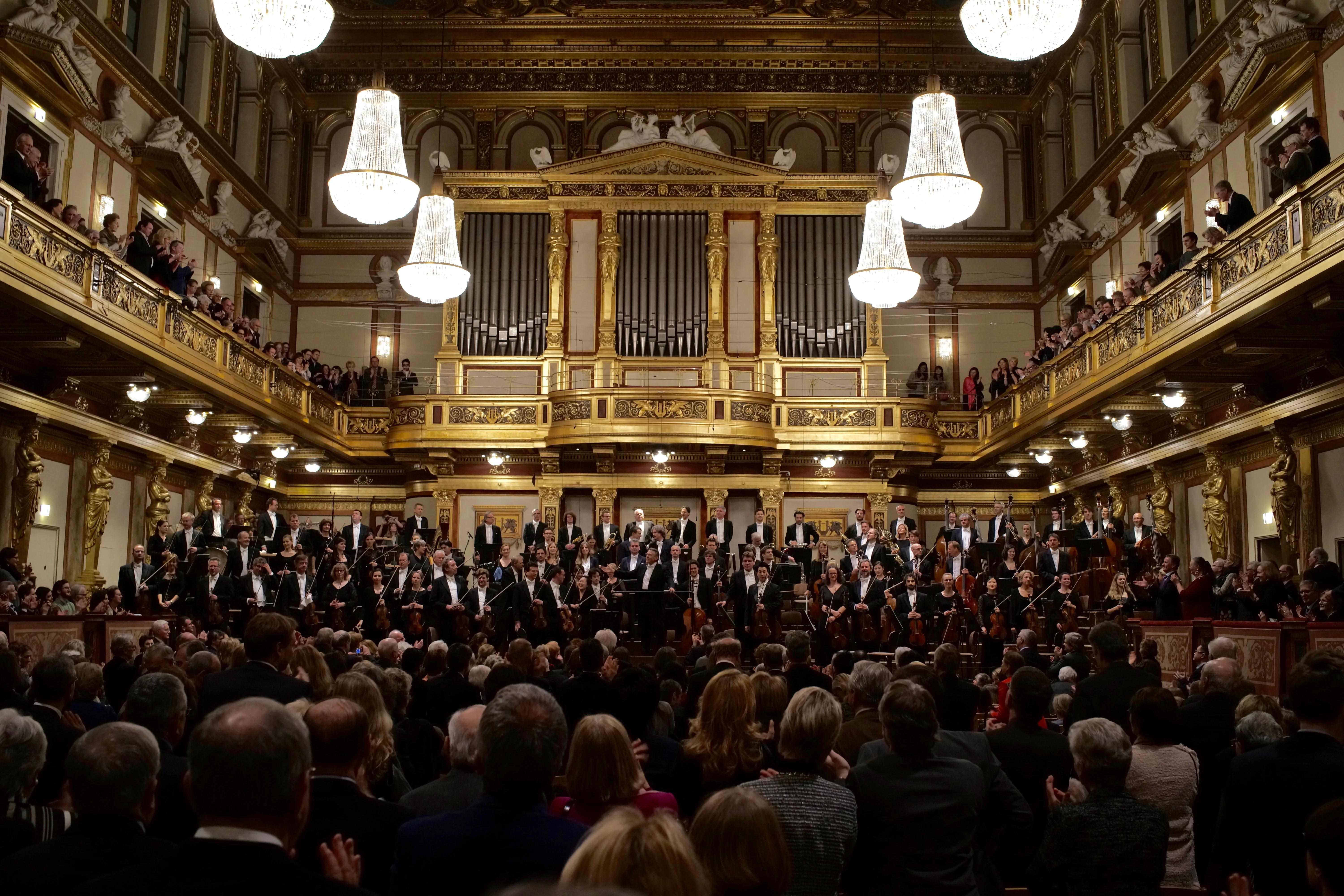
Image from Wikipedia
Image from Wikipedia
Bavarian Radio Symphony Orchestra (BRSO)
World Sound from Munich: How the BRSO Sets Standards with Tradition, Innovation, and Chief Conductor Sir Simon Rattle
The Bavarian Radio Symphony Orchestra – abbreviated as BRSO – is regarded as one of the most influential orchestras of our time. Officially founded in 1949 and based in Munich, the orchestra boasts a unique blend of tonal identity, stylistic flexibility, and unwavering creative ambition. The main venues are the Herkulessaal at the Munich Residence and the Isarphilharmonie as a backup location, while the Philharmonie am Gasteig undergoes modernization. The artistic direction has been shaped since the 2023/24 season by Sir Simon Rattle as Chief Conductor – a leader who combines repertoire curiosity, precise sound imagination, and engaging stage presence.
The musical career of this exceptional orchestra is reflected in an extensive discography, international tours, and media presence, ranging from the radio station BR-KLASSIK to its own media library. The interpretative signature – robust, rich in color, and transparently balanced – proves itself equally in Viennese classicism, late Romanticism, and contemporary music. Critical rankings affirm its authority: In the prominent Bachtrack survey of the world's best orchestras, the BRSO ranked third in 2023, solidifying its status as a global reference ensemble.
Biography and Artistic Development: From Radio Tradition to World Orchestra
The roots of the BRSO reach back into the early history of broadcasting in Bavaria: From several ensembles of the "Deutsche Stunde in Bayern," a professional ensemble developed after 1945, officially becoming the Bavarian Radio Symphony Orchestra under Eugen Jochum in 1949. Jochum assembled the orchestra with an uncompromising commitment to quality and laid the groundwork for a culture of sonic discipline, chamber music alertness, and intellectual depth – qualities that continue to shape its artistic development to this day.
After Jochum, Rafael Kubelík, Sir Colin Davis, Lorin Maazel, and Mariss Jansons further expanded the stylistic range. Kubelík sharpened the profile in the classical modern era and cultivated key cycles of works (including Mahler and Dvořák), Davis placed emphasis on British repertoire and classical sound aesthetics, Maazel refined architecture and virtuosity, while Jansons led the orchestra to international acclaim with a sound that was meticulously nuanced and breathing. With Sir Simon Rattle, the BRSO continues this legacy while also opening windows to new dramatic contexts – from Baroque rhetoric to classical symphony, as well as advanced contemporary works, not least through the longstanding "musica viva" series.
Stage Presence and Program Ideas: Seasonal Profiles, Festivals, Music Education
Recent seasons demonstrate a dramaturgical concept that combines a wide repertoire with pointed focal points. The spectrum ranges from Bach, Haydn, and Beethoven to Bruckner, Mahler, Ravel, and Stravinsky, all the way to Lili Boulanger and Olga Neuwirth. With series like "BRSO and You," "Watch This Space," "BRSO Baroque," as well as the BRSO Academy (which recently celebrated its 25th anniversary), the orchestra strengthens its music education efforts – a task both substantive and societal, visible through workshops, open rehearsals, and thematically curated formats.
Tours regularly take the orchestra to European and international music centers. Major events such as "Klassik am Odeonsplatz" in Munich attract broad audiences; guest performances – such as in Madrid during the 2025/26 season – position the BRSO as an ambassador for a modern, open understanding of classical music. A festival appearance in Lower Bavaria has also been announced for 2026 featuring Beethoven's Ninth Symphony – a programmatic sign of artistic vitality and regional connection alike.
Discography and Awards: Reference Recordings, Prizes, BR-KLASSIK
Recordings have always been a core element of the artistic identity of the BRSO. In addition to collaborations with international labels, the ensemble has been increasingly releasing recordings with BR-KLASSIK since 2009 – a strategic move that combines editorial freedom, documentary depth, and audiophile production standards. Under Mariss Jansons, award-winning recordings were created, including Bruckner's Eighth (multiple accolades), references of Mahler and Shostakovich, and Rachmaninoff's "The Bells." Bernard Haitink was responsible for highly praised Beethoven and Mahler productions; Sir Simon Rattle has already extended the discography with works including Mahler and Wagner.
This commitment to quality was acknowledged early on: For Shostakovich's 13th Symphony, the BRSO received the GRAMMY in 2006 in the category of "Best Orchestral Performance." Other honors include BBC Music Magazine Awards, the "Preis der Deutschen Schallplattenkritik," and awards from Gramophone and Diapason. Current entries in the catalog – curated among other things on streaming platforms – reflect the stylistic breadth: from the symphonic canon to opera highlights and world premieres of "musica viva."
Repertoire, Style, and Sound: Analyzing a Signature
The BRSO brings together several virtues in its sound culture that manifest in concert and production: an elastic rhythm that carries the great symphonic tension; a transparent, chamber music-like phrasing; a woodwind section rich in color yet never harsh; and a string apparatus that combines warmth, agogics, and precision in an organic relationship. This mixture makes Beethoven and Brahms distinct, Bruckner architecturally luminous, and Mahler psychologically nuanced – and it creates ideal conditions for French sonic magic (Debussy, Ravel) as well as contemporary compositions, whose micro-logics and textures depend on clarity.
Central to their work is adherence to the score: Rattle and the guest conductors – including Herbert Blomstedt, Franz Welser-Möst, Daniel Harding, Yannick Nézet-Séguin, Jakub Hrůša, and Iván Fischer – emphasize the connection between historically informed performance practice, modern orchestral technique, and acoustic perception of space. Thus, interpretations arise that not only "sound beautiful" but also unfold the drama of a work consistently – from thematic development to phrasing breaths to large-scale architectural clarity.
Chief Conductors as Artistic Axis: From Jochum to Rattle
Chief conductors shape identity. Jochum's pioneering spirit established symphonic excellence; Kubelík internationalized the profile and connected classics with the modern; Sir Colin Davis brought a noble, unpretentious style and care for British repertoire; Lorin Maazel crafted orchestral virtuosity and formal clarity; Mariss Jansons sharpened the breathing, humanistic tone; Sir Simon Rattle connects all of this with explorations of repertoire and a communicative language that puts the audience and orchestra in dialogue. This conductor tableau explains why the BRSO regularly appears at the top of rankings and is regarded as a reference for symphonic music-making.
Musica viva, World Premieres, and the Present: Commission, Experiment, Context
The "musica viva" – founded in 1945 by Karl Amadeus Hartmann – serves as the conscience of the orchestra's artistic development. Here, world premieres, rediscoveries, and new assessments of the 20th and 21st centuries emerge. Composers are not only provided with a top-notch instrumentarium but also with a responsive counterpart: an orchestra that treats timbre, articulation, balance, and spatial disposition with the seriousness that contemporary scores require. This practice shapes the entire repertoire: The confident handling of new music sharpens precision and acoustic imagination even in classical-romantic contexts.
Media Presence, Streaming, and Youth Work
As a radio orchestra, the BRSO has a natural media competence: Concert broadcasts on BR-KLASSIK, video livestreams, a continuously curated media library, and high-quality audio/video productions expand the accessibility of the symphonic repertoire. Formats like "Discover Music with Simon Rattle" provide insights into rehearsal work, composition, and interpretation – a glimpse into the "workshop" of great symphonic music. Concurrently, the BRSO Academy offers young musicians a two-year curriculum in orchestral practice, stylistic understanding, and rehearsal culture – an orchestral talent forge with international resonance.
Current Projects and Seasons: From Munich to the World
In the 2024/25 and 2025/26 seasons, the orchestra focuses on a wide-ranging program: Purcell to Janáček, Webern to Ravel, Beethoven to Bruckner – with Rattle as the dramaturgical anchor. Highlights range from urban open-air formats to international guest performances (including Madrid, 2025/26 season) and large-scale choral symphonies in cooperation with the Bavarian Radio Choir. For 2026, a performance of Beethoven's Ninth is scheduled in Passau – a symbolic milestone in the spirit of European cultural encounters.
The discography continues to thrive: Curated releases on BR-KLASSIK and new streaming features present historical highlights (such as Jansons' New York concert in 2019) alongside current references. Platforms also showcase recent catalog additions – including releases from 2025 – and bundle repertoire essentials that exemplify the stylistic breadth of the BRSO.
Critical Reception and Cultural Influence
Music press and rankings commend the BRSO for its combination of precision, expressiveness, and repertoire courage. Its repeated presence in international lists – Gramophone, Bachtrack, BBC Music Magazine – confirms the ensemble's authority. Reviews elevate BRSO recordings as reference points in the discography – particularly for Bruckner, Mahler, Strauss, Dvořák, or Shostakovich. Additionally, awards such as the GRAMMY and the "Preis der Deutschen Schallplattenkritik" document recording quality, arranging craftsmanship, and artistic rigor.
Culturally, the BRSO extends beyond the concert hall: It promotes youth, fosters community experiences in public spaces, conveys complex music through radio broadcasts and streaming, and initiates artistic impulses with "musica viva." This interplay of excellence, responsibility, and curiosity makes the orchestra a vibrant cultural actor – in Bavaria, in Germany, and internationally.
Conclusion: Why the BRSO Fascinates
The Bavarian Radio Symphony Orchestra captivates because it combines aesthetic depth with contemporary communication. Its artistic development over more than seven decades, the prominent lineup of conductors, the rich discography, and the consistent opening up to education, media, and the public make the ensemble an institution. Those who wish to experience the energy of a great symphony orchestra in perfect balance of architecture, color, and breath should hear the BRSO live: These are the evenings when music history becomes immediate presence.
Official Channels of the Bavarian Radio Symphony Orchestra:
- Instagram: No official profile found
- Facebook: No official profile found
- YouTube: No official profile found
- Spotify: No official profile found
- TikTok: No official profile found
Sources:
- BRSO – Official Website (DE/EN): Season, Media Library, History, Discography
- Wikipedia – Bavarian Radio Symphony Orchestra (History, Chief Conductors)
- Bachtrack – Critics’ Choice 2023: World's Best Orchestras (BRSO Rank 3)
- Grammy Award for Best Orchestral Performance – Winner 2006 (Shostakovich 13, BRSO/Jansons)
- BRSO – History of the Orchestra (Awards, Label BR-KLASSIK, Discography)
- BRSO – Season 2024/25 (Program Overview, Projects)
- BRSO – Season 2025/26 (Program, Projects, Anniversaries)
- BRSO – Video Livestreams (Concert Broadcasts)
- El País – Madrid Concert 19.11.2025 (Program Note)
- WELT – European Weeks Passau 2026 (BRSO with Beethoven 9)
- Presto Music – Bruckner 8 (BRSO/Jansons): Reviews & Awards
- Wikipedia: Image and text source
Upcoming Events
MALLWITZ / SZULC / Hindemith, Prokofiev, Weill / 4. Abo C1
Rouvali and Sietzen bring Staud, Nielsen, and Sibelius to the Isar Philharmonic
BRSO with Rouvali and Sietzen in Munich
Classics at Odeonsplatz
Symphony Orchestra of the BR at Classic at Odeonsplatz
Symphony Orchestra of the BR – Classical at Odeonsplatz 2026
Anniversary Concert: Symphony Orchestra of the BR
Anniversary Concert: Symphony Orchestra of the Bavarian Radio
Anniversary Concert of the Bavarian Radio Symphony Orchestra