
Tango Argentino
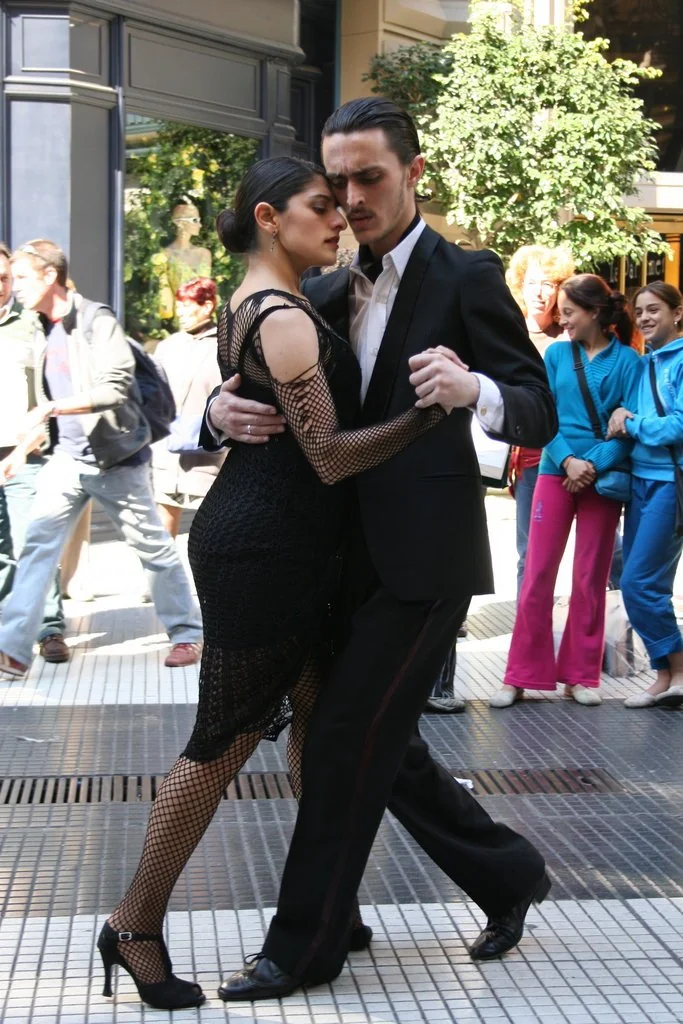
Image from Wikipedia
Image from Wikipedia
Argentine Tango – the Soul of the Río de la Plata in Music, Dance, and Poetry
A Cultural Power Field Between Buenos Aires and Montevideo
Argentine Tango represents much more than a dance style: it is a vibrant cultural form in which music, movement, poetry, and song merge into a distinctive means of expression. Originating in the urban environments of Buenos Aires and Montevideo, tango has developed since the late 19th century into one of the most notable musical and dance traditions in the world. UNESCO describes it as a cultural practice that arose from the encounters of European immigrants, African descendants, and Creole traditions, shaping the identity of the Río de la Plata region. ([ich.unesco.org](https://ich.unesco.org/en/RL/tango-00258?utm_source=openai))
To distinguish it from the standardized ballroom dance of the World Dance Program, the original, freer form is often referred to as Argentine Tango today. In Argentina itself, this separation is hardly acknowledged in everyday life; they simply refer to it as tango. This immediacy adds to its charm: tango remains an open, breathing music and dance system that preserves tradition while allowing for new interpretations. Since 2009, tango has been recognized as part of the Intangible Cultural Heritage of Humanity by UNESCO. ([en.wikipedia.org](https://en.wikipedia.org/wiki/Tango?utm_source=openai))
The Cultural Roots: From the Margins of Cities to the World Stage
The early development spaces of tango were located in the port neighborhoods, suburbs, and social interzones of the Río de la Plata. There, rhythms, instruments, and narrative traditions from Europe, Africa, and local Creole culture converged. From this mix emerged a style that feels both melancholic and intensely urban. UNESCO highlights this cultural fusion as the core of tango. ([ich.unesco.org](https://ich.unesco.org/en/RL/tango-00258?utm_source=openai))
As a musical form, tango combines dance tension with poetic intensity. The sound of the bandoneon, distinctive syncopations, and often dramatically charged harmonies give the genre its characteristic depth. The music tells stories of longing, pride, social experience, and personal memory. This blend of musical structure and emotional directness makes tango one of the most influential genres in Latin America. ([ich.unesco.org](https://ich.unesco.org/doc/src/06859-EN.pdf?utm_source=openai))
Tango as an Art Form: Music, Poetry, Song, and Stage Presence
Argentine Tango unfolds its impact not only in the dance hall but also in song, poetry, and performance. UNESCO explicitly describes tango as a musical genre that includes dance, music, poetry, and song. This is precisely what creates its remarkable stage presence: tango is not merely a rhythm but a scenographic event with its own dramaturgy, where body, voice, and instruments interact. ([ich.unesco.org](https://ich.unesco.org/doc/src/06859-EN.pdf?utm_source=openai))
In the traditional dance venues of Buenos Aires and Montevideo, this art form continues to thrive today. At the same time, tango has made its way into international theaters, concert halls, and festivals, without losing its social roots. The community encompasses musicians and composers, professional and amateur dancers, as well as teachers and guardians of the tradition. This complexity contributes to its global appeal. ([ich.unesco.org](https://ich.unesco.org/en/RL/tango-00258?utm_source=openai))
Career Without Individual Artists: The Development of a Whole Scene
Because Argentine Tango is not represented by a single performer but is a historically evolved cultural form, its "career" tells the story of an entire scene. Since the end of the 19th century, tango has spread from Buenos Aires to the world, constantly adapting to new spaces and audiences. The form has transformed, but the core has remained: intense emotionality, a close connection between music and movement, and a distinctive urban habitus. ([ich.unesco.org](https://ich.unesco.org/en/RL/tango-00258?utm_source=openai))
International recognition significantly accelerated this development. The UNESCO inscription in 2009 marked not only a symbolic turning point but also confirmed the cultural significance of the genre for Argentina and Uruguay. This official recognition fostered preservation, research, and transmission, including training centers, documentation, and measures to secure tango as a living tradition. ([ich.unesco.org](https://ich.unesco.org/en/RL/tango-00258?utm_source=openai))
Discography, Repertoire, and the Question of Hits
In the classical sense, Argentine Tango does not have a single discography like a solo artist. Instead, its repertoire comprises an extensive canon of compositions, songs, orchestral versions, and interpretive schools. The significance of the genre is evident in its ongoing reproduction: pieces are rearranged, reinterpreted stylistically, and passed on in different formations. This open work logic is a hallmark of the tango tradition. ([ich.unesco.org](https://ich.unesco.org/doc/src/06859-EN.pdf?utm_source=openai))
The reception of the genre, therefore, focuses less on chart positions and more on cultural resonance, performance practice, and passed-down masterpieces. UNESCO emphasizes the character of tango as a form of expression that shapes identity, while regional institutions document its history as a music and dance tradition. The decisive measure here is not the hit parade but the lasting presence in milongas, concert halls, films, and dance schools worldwide. ([ich.unesco.org](https://ich.unesco.org/en/RL/tango-00258?utm_source=openai))
Musical Development and Stylistic Features
The musical development of tango can be seen as a constant balance between rigor and freedom. Its compositions work with clear rhythmic impulses, emphasized pauses, and a high level of interpretive tension. The result is a style that is both precise and expressive, acquiring new shades through arrangement and instrumentation. ([ich.unesco.org](https://ich.unesco.org/doc/src/06859-EN.pdf?utm_source=openai))
Particularly defining is the role of the bandoneon, which gives tango its unmistakable sound. Added to this are orchestral traditions, vocal lines, and poetic texts that often deal with love, loss, urban life, and memory. In this field of tension, tango unfolds its aesthetic power: it is at once popular and artistic, physical and reflective, locally rooted and internationally comprehensible. ([ich.unesco.org](https://ich.unesco.org/doc/src/06859-EN.pdf?utm_source=openai))
Cultural Influence and Contemporary Relevance
Argentine Tango is today a global cultural symbol. UNESCO highlights that the genre is cultivated in the traditional dance halls of Buenos Aires and Montevideo while also impacting new contexts. Tango exemplifies a living cultural heritage that does not become museum-like but is continually renewed through practice, teaching, and performance. ([ich.unesco.org](https://ich.unesco.org/en/RL/tango-00258?utm_source=openai))
The public cultural policy of Argentina and Uruguay underscores this significance. Both countries have made tango a visible shared cultural treasure and provided institutional support for its transmission. Thus, tango remains not only a historical heritage but a contemporary phenomenon with artistic, social, and educational reach. ([ich.unesco.org](https://ich.unesco.org/en/RL/tango-00258?utm_source=openai))
Voices of the Fans
No official profile found.
Conclusion: Why Argentine Tango Continues to Captivate Today
Argentine Tango fascinates because it productively engages contrasts: closeness and distance, rigor and improvisation, melancholy and elegance. As a musical genre and dance form, it possesses a rare depth that stems from its historical roots as much as from its stylistic openness. Those who experience tango encounter not just a tradition but a whole culture of expression. ([ich.unesco.org](https://ich.unesco.org/en/RL/tango-00258?utm_source=openai))
Especially live, tango reveals its full power. In the movement, in the breath of the bandoneon, and in the tension between the dancers, one sees why this genre has touched people worldwide for generations. To truly understand Argentine Tango, one should not only read or listen to it but experience it firsthand in a milonga or on stage. ([ich.unesco.org](https://ich.unesco.org/en/RL/tango-00258?utm_source=openai))
Official Channels of Argentine Tango:
- Instagram: no official profile found
- Facebook: no official profile found
- YouTube: no official profile found
- Spotify: no official profile found
- TikTok: no official profile found
Sources:
Upcoming Events
Argentine Tango
Argentine Tango
Dance Pavilion Tango Argentino
Argentine Tango in Erlangen
Argentinian Tango - Dance Course in Traunstein