
Thelonious Monk
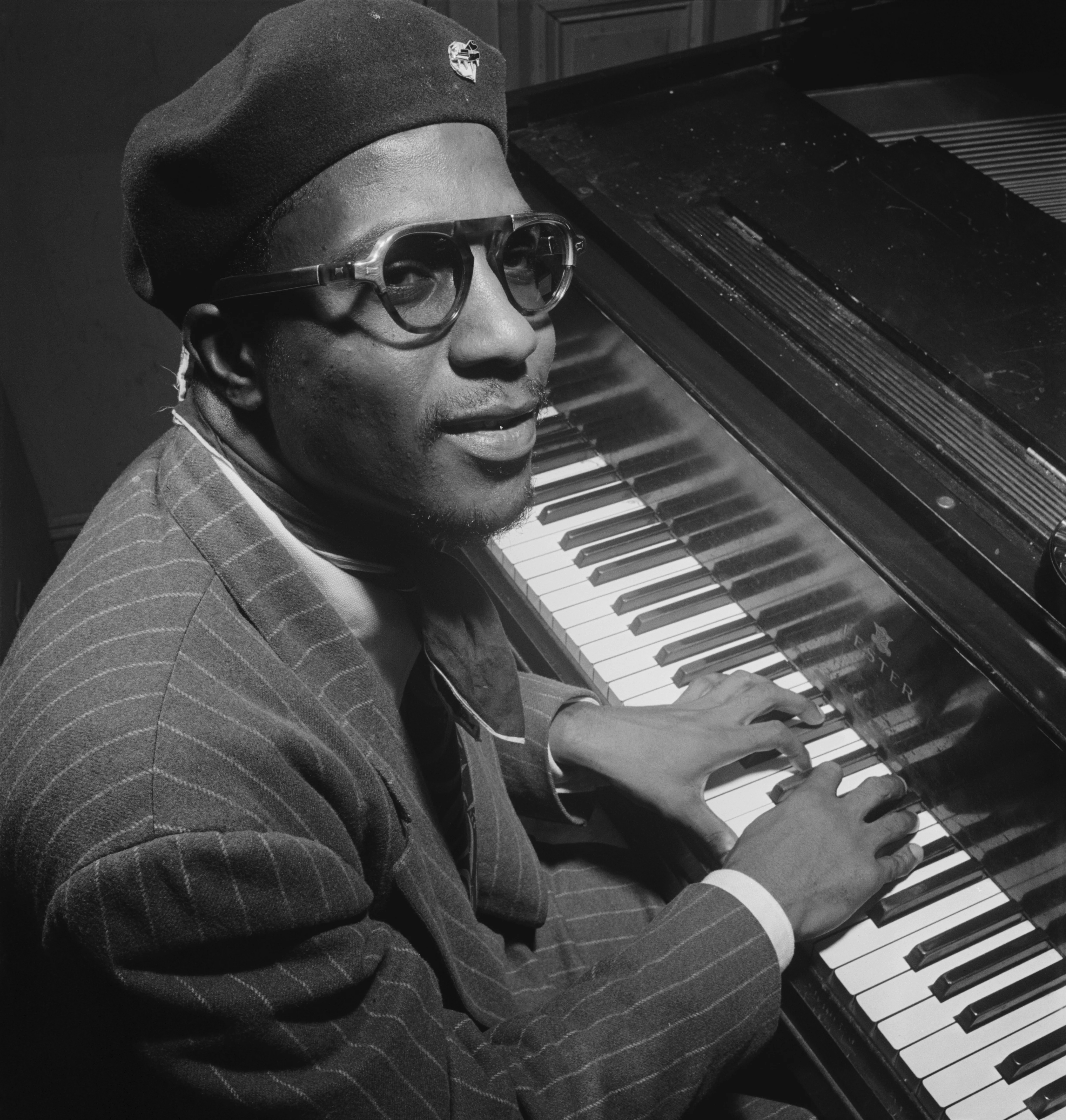
Image from Wikipedia
Image from Wikipedia
Thelonious Monk: The Architect of Modern Jazz and Master of Unexpected Sound
An Artist Legend Between Bebop, Eccentricity, and Timeless Innovation
Thelonious Sphere Monk is one of the most influential figures in 20th-century jazz. As a pianist, composer, and defining individualist, he shaped Modern Jazz with a signature style that remains instantly recognizable: angular, rhythmically free, harmonically daring, and grounded in a radical internal logic. His music combines deep roots in tradition with a sonic language that was ahead of its time and continues to resonate today. ([britannica.com](https://www.britannica.com/biography/Thelonious-Monk))
Early Years: From Rocky Mount to New York
Monk was born on October 10, 1917, in Rocky Mount, North Carolina, and moved to New York City at the age of four with his mother and siblings. The family lived in Manhattan near San Juan Hill, where musical influences from the church, the streets, and urban life converged. From an early age, Monk displayed an extraordinary talent: he started playing the piano as a child, performed at rent parties as a teenager, and played in churches and local competitions. ([britannica.com](https://www.britannica.com/biography/Thelonious-Monk))
The biography of young Monk reads like the emergence of a musical individuality. After attending Stuyvesant High School, he dropped out to focus entirely on music, initially working for a traveling preacher and later forming his own ensembles. These years laid the foundation for his music career, where he quickly learned to craft compositional ideas from every situation. His development as a pianist was not linear but rather characterized by observation, improvisation, and constant experimentation. ([theloniousmonkmusic.com](https://www.theloniousmonkmusic.com/bio/))
Minton’s Playhouse and the Birth of a New Jazz Language
The crucial boost for Monk came in 1941 when drummer Kenny Clarke hired him as the house pianist at Minton’s Playhouse in Harlem. There, musicians driving the Bebop revolution gathered, including Charlie Parker, Dizzy Gillespie, Mary Lou Williams, and Bud Powell. In this environment, Monk's harmonic thinking became a foundation of modern jazz; his compositions like “’Round Midnight,” “Epistrophy,” and “I Mean You” circulated early among peers and became reference points for a new aesthetic. ([theloniousmonkmusic.com](https://www.theloniousmonkmusic.com/bio/))
What set Monk apart from many of his contemporaries was his radical economy of space. He combined an active right hand with an equally present left hand, merged stride elements with angular rhythms, and employed silence as a structural means. Rather than just playing lines over chords, he thought in architecture: melody, harmony, and rhythm formed an inseparable whole. This compositional approach made him one of the most significant innovators of Modern Jazz. ([theloniousmonkmusic.com](https://www.theloniousmonkmusic.com/bio/))
Struggles, Misunderstandings, and the Path to Recognition
Monk's early years as a bandleader were economically and publicly challenging, despite his artistic brilliance. His first Blue Note recordings began in 1947, later recognized as great classics, but at the time of their release, they did not meet commercial expectations. Critics and musicians often approached his sound with skepticism, partly due to his unconventional articulation and deliberate reduction. It is precisely this early rejection that makes Monk's later recognition all the more significant. ([theloniousmonkmusic.com](https://www.theloniousmonkmusic.com/bio/))
Additionally, the loss of his Cabaret Card in 1951 meant he could not perform in New York clubs for six years. Nevertheless, Monk continued to compose, played in Brooklyn, performed outside the city, and recorded for Prestige numerous trio and ensemble albums. This phase sharpened his profile as an artist who did not conform to market logic or short-term trends. His artistic development remained consistent and unwavering. ([theloniousmonkmusic.com](https://www.theloniousmonkmusic.com/bio/))
Riverside, Brilliant Corners, and the Breakthrough to Master Status
With the switch to Riverside Records in 1955, a phase of intense artistic recognition began. Albums like Thelonious Monk Plays Duke Ellington, The Unique Thelonious Monk, Brilliant Corners, Monk’s Music, and Thelonious Monk Alone are considered central documents of his oeuvre. These recordings showcased an artist who reinterpreted standards while simultaneously creating a distinctive sound world with his original compositions. ([theloniousmonkmusic.com](https://www.theloniousmonkmusic.com/bio/))
In 1957, Monk returned to the center of New York's jazz life with his Cabaret Card restored, playing a legendary series at the Five Spot Café with John Coltrane, Wilbur Ware, Ahmed Abdul-Malik, and Shadow Wilson. From this moment on, his reputation soared: critics praised his work, music schools took his compositions seriously, and the scene recognized the value of his stylistic daring. During this time, Monk transitioned from a misunderstood outsider to a recognized architect of jazz. ([theloniousmonkmusic.com](https://www.theloniousmonkmusic.com/bio/))
Columbia Years, International Presence, and Cultural Impact
In 1962, Monk signed with Columbia Records, and by 1964, he became the third jazz musician ever to grace the cover of Time Magazine. By this point, his cultural significance was felt not only within the jazz world but also in broader musical and societal discourse. He toured with a stable quartet, played in Europe and Japan, and performed large-scale projects at Lincoln Center and festivals. ([theloniousmonkmusic.com](https://www.theloniousmonkmusic.com/bio/))
Monk's influence extended far beyond individual recordings. His compositions became core to the jazz repertoire and were interpreted by musicians of various generations and genres. The official artist page describes his work as deeply rooted in tradition yet open to the avant-garde; it is precisely this tension that shapes his lasting resonance. Monk became a reference figure for creative freedom, formal awareness, and sonic independence. ([theloniousmonkmusic.com](https://www.theloniousmonkmusic.com/bio/))
Stylistics: The Piano as a Thinking Space
Monk's piano style was never merely virtuosic in the conventional sense, but intellectual and physical at the same time. His touch culture, conscious pauses, sudden interval jumps, and play with skewed angles created a music that often seemed rough, gaining the highest precision precisely because of it. He worked with repetitions, fragments, and unexpected emphases, giving even standards like “April in Paris” or “’Round Midnight” a new dramatic depth. ([theloniousmonkmusic.com](https://www.theloniousmonkmusic.com/bio/))
As a composer, Monk also thought in an expanded sense of form. He sought not only new melodies but a different musical architecture in which harmony and rhythm co-determined the melody. This mindset makes his pieces so attractive for interpretations even today: they are open enough for new readings yet clear enough to keep Monk's signature unmistakable. ([theloniousmonkmusic.com](https://www.theloniousmonkmusic.com/bio/))
Discography, Reissues, and Current Relevance
Some of Monk's key recordings include the early Blue Note sessions, the Prestige works of the early 1950s, the Riverside classics, and the Columbia era. Notable recordings include Brilliant Corners, Monk’s Music, Thelonious Monk Alone, Thelonious Himself, Solo Monk, and the concert and live documents that showcase his improvisational art in different contexts. His discography represents not merely an archive but an ongoing narrative of invention, patience, and stylistic consistency. ([theloniousmonkmusic.com](https://www.theloniousmonkmusic.com/bio/))
Even in 2025 and 2026, Monk remains present: Craft Recordings announced new reissues of Thelonious Himself for 2025 and Alone in San Francisco for March 13, 2026, while Blue Note lists a reissue of Genius Of Modern Music, Vol. 2 in its Classic Vinyl Series program for February 20, 2026. These releases show that Monk's work does not feel museum-like but is a living canon that is continuously re-edited, listened to, and evaluated. ([craftrecordings.com](https://craftrecordings.com/blogs/news/ojc-jan2025))
Current Projects and Releases in a Broader Sense
Since Thelonious Monk passed away in 1982, there have been no new studio albums in the strict sense. His current presence arises instead from reissues, archival releases, and curated rediscoveries that translate his work into the present. The official music pages currently reference releases like Palo Alto, as well as videos and catalog titles that keep Monk's relevance visible for today's listeners. ([theloniousmonkmusic.com](https://www.theloniousmonkmusic.com/music/?utm_source=openai))
Voices of Fans
Official social media channels for the artist could not be verified. Therefore, this section is intentionally omitted to avoid creating unverifiable fan voices or quotes. ([theloniousmonkmusic.com](https://www.theloniousmonkmusic.com/?utm_source=openai))
Conclusion: Why Thelonious Monk Still Excites Today
Thelonious Monk remains fascinating because he translated no compromises into art but character into sound. His stage presence, artistic development, and discography tell of a musician who has not only expanded jazz but reimagined it. Listening to Monk means experiencing not just historical greatness but a present filled with tension, humor, breaks, and formal beauty. ([theloniousmonkmusic.com](https://www.theloniousmonkmusic.com/bio/))
Monk's music deserves the grand stage because it continues to challenge and reward today. Those who want to experience Modern Jazz in its boldest form should encounter Thelonious Monk live in the spirit of his recordings: attentive, open, and ready for surprises. This is where his unbroken fascination lies. ([theloniousmonkmusic.com](https://www.theloniousmonkmusic.com/bio/))
Official Channels of Thelonious Monk:
- Instagram: no official profile found
- Facebook: no official profile found
- YouTube: no official profile found
- Spotify: no official profile found
- TikTok: no official profile found
Sources:
- Thelonious Monk - Official Biography
- Thelonious Monk - Official Website
- Craft Recordings - Original Jazz Classics Announces 2025 Reissues
- Craft Recordings - Original Jazz Classics Kicks Off 2026 With Three Landmark Reissues
- Blue Note Records - Classic Vinyl Reissue Series 2026 Line-Up
- Britannica - Thelonious Monk
- Wikipedia: Image and text source
Upcoming Events
Munich Jazz Salon – Thelonious Monk
Munich Jazz Salon - Thelonious Monk in the Silbersaal