
Äußere Badstraße 7A, Bayreuth
Äußere Badstraße 7A, 95448 Bayreuth, Germany
DAS ZENTRUM Bayreuth | Events & Photos
DAS ZENTRUM at Äußere Badstraße 7a is Bayreuth's international youth cultural center and a solid anchor in the cultural landscape of Upper Franconia. Since its inauguration in 1982 and a comprehensive renovation from 2012 to 2013, the building has served as a stage, laboratory, and meeting place for music, theater, comedy, readings, film, and workshops. The centerpiece is the flexible Europasaal with up to 374 seats plus 84 in the gallery or 650 standing places, flanked by an independent small arts stage with 99 seats and six well-equipped workshop rooms. As an event venue with modern technology, barrier-free access, and strong public transport connections, the ZENTRUM brings international artists to the stage alongside local talents and emerging ensembles. Whether celebrated cabaret evenings, energetic club nights, intimate readings, film festivals, or family formats: the atmosphere is approachable, the paths are short, and the team is experienced. Tickets can be secured directly online for many dates or purchased through the city's box office. First-time visitors will find practical parking options within walking distance, and regular photo galleries on the website provide an authentic visual impression of the halls and foyers. Thus, the ZENTRUM connects lived cultural history with a current, diverse program that continually brings the city to life.
Current Events and Program at ZENTRUM Bayreuth
The program of the ZENTRUM is continuously curated and presented in a structured monthly calendar on the website. Visitors can filter by genres such as music, theater, comedy, readings, family, youth, workshops, or others and receive a detail page for each event with time, a short description, and often direct access to ticket purchase. A look at the dates from March to May 2026 impressively shows the range: In April, for example, Jochen Malmsheimer will be on the big stage with his language acrobatics program, the International Ocean Film Tour brings adventurous sea stories as a cinematic experience, and the long-standing successful series with the improv group Mamaladnamala ensures punchy evenings in both April and May. It gets rockier with acts like Nick Young and Band, while fans of the folk and crossover scene appreciate Fiddlers Green, who are announced with an acoustic set. In addition, readings, workshops, and club nights highlight the versatility of the house. All these examples come from the real-time program overview of the house and give a sense of how broad the spectrum is. For many dates, an online ticket shop is available, where tickets can be conveniently booked and used as print-at-home. For all other events, the house refers to the Bayreuth box office at 0921-69001 and well-known advance sales points in the region. Those who click early secure the best seats at highly demanded comedy evenings or concert nights. Tip for returnees: The website offers an archive function that allows older seasons to be looked up, a useful tool to rediscover favorite artists or track series like the Jam Session. The combination of reliable layout, genre filters, and ticket references makes planning events pleasantly manageable, especially when planning for friend groups, clubs, or school classes. Thus, the calendar becomes not only an overview but a central entry point into the cultural diversity of the house.
Organizationally, the user guidance is also well resolved. Each event page refers to practical information such as entry times, seating or standing concepts, and the classification into the two main halls or the workshop rooms. Because many productions have different technical requirements, the setup varies depending on the evening: from seated chamber concerts with excellent sightlines to unseated club shows with a large standing area and energetic lighting design. Those looking for family offerings will find bundled information under the category Family, while workshop dates are listed separately. Overall, it shows: The program consciously relies on a mix of established names and newcomers, of calm narrative formats and energetic live shows. This change makes it appealing to return monthly and discover new favorite series.
Photos and First Impressions: Europasaal, Small Arts Stage, Foyer
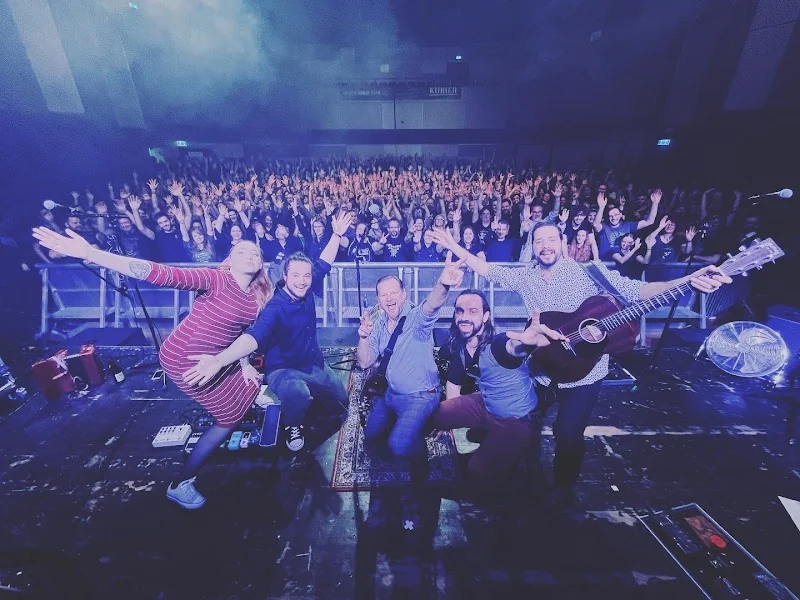
Visual impressions are crucial when selecting a location, and the ZENTRUM addresses this with extensive photo series on the room pages. In the Europasaal, interior shots convey the architectural openness of the approximately 284 square meter visitor area, the comfortable seating rows with good sightlines, and the 71 square meter stage including a height-adjustable fore-stage and orchestra pit. Particularly striking is the RGB-controllable light ceiling, which can immerse the space in warm or cool moods depending on the event and switch the ambiance between a classic concert hall and a modern performance area. The gallery with up to 84 seats is well documented in pictures, allowing newcomers to get an idea of the viewpoint from the second level. Additional photos show the modern sound and lighting control, variable curtains and projections, and the foyer, which serves as a meeting point before and after the show with around 100 square meters. The small arts stage, in turn, presents itself in the image gallery as an independent, intimate hall with a separate entrance, its own bar, and its own sanitary areas. The mobile 20 square meter stage, flexible seating, and the technical basic equipment with projector, screen, and sound make it clear why readings, singer-songwriter evenings, small theater productions, and club formats work particularly well here. In addition to the halls, motifs from the workshop rooms provide insight into the diversity: acoustic ceilings, pianos, mirror walls in the dance room, and flexible seating options demonstrate that rehearsals, seminars, and training sessions find professional conditions here.
For organizers, the photos are more than just atmosphere; they assist in concrete planning. One can see podium heights, possible stage openings, and the spatial relations between stage, tiers, gallery, and foyer. Those who want to deepen the planning can download the information folder with hall and stage plans as well as technical equipment. It contains dimensions, loads, light and sound distributions, and information on projectors, screens, grand pianos, and pianos. The combination of photographic material and plans reduces inquiries during coordination and accelerates the preparation of setups for orchestra rehearsals, panel discussions, dance productions, or festival shifts. For guests, the galleries serve as a reliable preview of sightlines, proximity to the stage, and atmosphere in seated and unseated settings. Those who enjoy being in the midst of the action get a feel for the dynamics of standing places, while lovers of quieter perspectives recognize the charm of the gallery.
Reviews and Visitor Experience: What Guests Report
Experience reports on events at the ZENTRUM repeatedly highlight the successful mix of proximity to the stage, good acoustics, and the overall friendly, well-organized handling. It begins with orientation: thanks to clear signage and compact paths, visitors can quickly get from the box office and foyer to the hall. While seated evenings in the Europasaal showcase the strengths of classical concert halls, such as balanced speech intelligibility and a present but not intrusive live sound, unseated formats allow for movement and club atmosphere. It is particularly appreciated that the house can represent both large audience evenings and intimate theater and reading settings with two independent halls without one encroaching on the other. The image and audio technology is up to date, enabling projections, film series, and hybrid formats that have become more important in recent years. Additionally, the service aspect is emphasized: the event office team assists with entry, seating, and questions about the evening, while the house technology reliably ensures the flow and sound. Barrier-free access and an induction loop for people with hearing aids in the Europasaal are also positively highlighted, facilitating inclusive participation.
A successful visit also includes uncomplicated arrival. The city bus lines serve several stops in the vicinity, including Oberfrankenhalle Sports Center, Wieland-Wagner-Straße, and Friedrich-Ebert-Straße Königsallee. For those arriving by car, there are only a few parking spaces directly at the house, including two designated spaces for people with disabilities. A reliable recommendation is the nearby parking garage Oberfrankenhalle Sports Park on Albrecht-Dürer-Straße, which is about a three-minute walk to the entrance. Ticketing is also perceived as transparent: part of the dates is available in the online ticket shop, while the Bayreuth box office and well-known advance sales points serve as contact points for other events. This clarity is particularly helpful for visitors who spontaneously plan cultural evenings or book for family and friend groups. Those who combine multiple program points can also easily integrate restaurants, student meeting places, and walking paths due to the nearby city center, thus extending the cultural evening.
Intercultural Children's Festival and Family Formats
A constant fixture in the annual calendar is the Intercultural Children's Festival, organized by the Integration Advisory Board of the City of Bayreuth at the ZENTRUM. It brings families, children, and local initiatives together and playfully shows how diverse culture is lived. The house offers the ideal infrastructure for this: protected indoor spaces with short paths, a stage for presentations, workshop areas for creative and movement offers, and a foyer as a meeting zone. The festival took place, for example, on June 1, 2025, from 2 to 5 PM at the ZENTRUM and offered interactive stations, dance and music from different cultures, and child-friendly information. Such events utilize the strengths of the house particularly effectively, as stage moments and hands-on activities seamlessly intertwine, allowing families to experience a varied afternoon. For families new to Bayreuth, the festival also serves as a welcome compass: clubs, schools, cultural initiatives, and municipal contact persons introduce themselves and open pathways into the city's broader cultural and leisure offerings.
Beyond the children's festival, there are repeatedly formats throughout the year that address families. Reading series bring authors into contact with young audiences, theater productions rely on interactive elements, and musical workshops bring children and young people onto the stage or to the instrument. In close cooperation with partners from the city and region, such as the Bayreuth Youth Council, the Upper Franconia District Youth Council, schools, and the University of Bayreuth, projects with learning and experiential character are regularly created. The spatial flexibility pays off: while the large stage of the Europasaal hosts presentations and final performances, the workshop rooms with acoustic ceilings, pianos, and mirror walls are excellent for rehearsals, seminars, or dance. Thus, the ZENTRUM connects pedagogical approaches with stage practice and creates experiential spaces where children and young people actively shape culture.
Band Festival, Mamaladnamala, and Young Talent: Stage for Young Culture
The DNA of the ZENTRUM is closely linked to the promotion of young culture. This historically begins with the International Youth Festival Meeting, from which today's Festival of Young Artists Bayreuth has emerged, and continues to the present day. Year after year, the house organizes rehearsals, workshops, and performances of young musicians, with international collaborations that firmly integrate Bayreuth into a European network. Regular audience series underline this orientation. The monthly Open Jam Session, for example, offers free admission, invites encounters between different scenes, and has long established itself as a meeting point for musicians from Bayreuth and beyond. In addition, festivals such as the three-day short film festival Kontrast in spring shape the program, presenting highlights of European short films accompanied by workshops and lectures. The annual Comedy and Cabaret Autumn brings renowned stage personalities and newcomers alike to the city, while the reading pleasure in spring makes literature tangible.
Specific artist and ensemble formats are also part of the profile. The improv group Mamaladnamala regularly returns with new shows and fills the schedules with spontaneity, wordplay, and audience proximity. Young band festivals and open-air formats like Free and Outside also open the stage for young bands from the region, often supported by technical and communicative assistance from the house. The fact that prominent names from rock, hip-hop, cabaret, literature, and pop such as Die Toten Hosen, Wu-Tang Clan, Rick Kavanian, Axel Hacke, Django Asül, Fiddlers Green, or Sebastian Fitzek have already been guests at the ZENTRUM speaks to the range and radiance. At the same time, the house remains a place where first steps are possible: through favorable rental conditions for the small arts stage, presence in the program channels, and networking with initiatives like the German-French forum for young art, talents become visible. This connection of international aspirations and local youth work is a unique selling point and a reason why the ZENTRUM is described in reviews as lively, open, and surprisingly versatile.
Hall Plan, Technology, and Rooms: Capacity, Equipment, Accessibility
Those planning in detail will find all the crucial numbers and options on the room pages and in the information folder. The Europasaal offers up to 374 seats in seated operation plus 84 seats in the gallery and can accommodate up to 650 guests for standing concerts. The stage measures approximately 71 square meters; a height-adjustable fore-stage allows variable setups with an orchestra pit, and the clear heights are about seven meters above the stage and nine meters in the audience area. The equipment includes modern stage machinery with electric fly systems, an inductive hearing system, screen and projector, as well as a color-controllable light ceiling that atmospherically transforms the space. The grand piano in the hall and several pianos in the house underscore the suitability for classical concerts and choir projects, while the professional lighting and sound system supports productions from rock to hip-hop to spoken word.
The small arts stage complements the offering with 99 seats or about 200 standing places. The mobile approximately 20 square meter stage, flexible seating, independent entrance, own bar, and sanitary areas create a self-sufficient setting for readings, club evenings, cabaret programs, or seminars. The technical basic equipment with projector, screen, lighting, and sound technology is documented, as are the power connections for light and sound. Six workshop rooms between approximately 40 and 60 square meters are available for rehearsals, training, and seminars, including a dance room with a mirror wall and dance floor. Acoustic ceilings, pianos, flip charts, and projectors are part of the basic equipment, while seating and tables are arranged as needed. Overall, the house has a total usable area of over 2300 square meters, making parallel uses and festival logistics possible without any issues. Additionally, the information folder contains hall and stage plans, dimension sketches, power distributions, load specifications, and control positions, which significantly facilitate the technical preparation for tour productions and in-house events.
Barrier-free access significantly contributes to visitor-friendliness. The Europasaal, foyer, and barrier-free sanitary facilities are accessible at ground level, and an elevator connects the other levels with workshop rooms and the small arts stage. For people with hearing aids, the induction loop in the Europasaal provides hearing support technology. For arrival: several city bus lines stop at short distances at Oberfrankenhalle Sports Center, Wieland-Wagner-Straße, or Friedrich-Ebert-Straße Königsallee. There are only limited parking spaces available at the house itself, with two spaces reserved for those entitled to use as disabled parking. A practical tip is the parking garage Oberfrankenhalle Sports Park on Albrecht-Dürer-Straße, from which the path to the main entrance takes only a few minutes. Those planning as organizers will find direct contacts to the event office and house technology on the room pages, including extensions and email addresses to clarify individual inquiries regarding seating, lighting, or audio setups. This combination of transparency in infrastructure and reliable contact options has made the house a preferred location for cultural events, award ceremonies, university formats, and club celebrations in the region.
History, Network, and Special Profiles
The history of the house explains its current significance. The foundation stone was laid in 1978 after the desire for a dedicated cultural center for the then International Youth Festival Meeting had formed since the 1960s. The building was inaugurated in 1982, based on the design of the internationally renowned architect Helmut Jahn. The first artist workshop took place in the house as early as 1981, and from 2012 to 2013, a fundamental renovation and expansions followed to bring the center's technical and spatial facilities up to date. The carrier is the non-profit association International Youth Cultural Center Bayreuth e.V., which cooperates with municipal, regional, and international partners. These include, among others, the German-French forum for young art, which brings many young musicians to Bayreuth every year with training and an orchestra academy, as well as the Festival of Young Artists Bayreuth, which has been bringing together cultural creators from around the world for decades. Fixed components of the annual calendar in the house also include the Bayreuth Pub Festival, the Comedy and Cabaret Autumn, the literature series Reading Pleasure, and the Short Film Festival Kontrast.
This thematic and institutional anchoring is reflected in the usage: in addition to in-house events and co-productions, the house is also available as a rental location for external organizers. The Europasaal is used for symphonic chamber music, large readings, comedy tours, film nights, or award ceremonies, while the small arts stage is used for club and youth evenings, try-outs, and seminars. The workshop rooms serve as rehearsal and training spaces where school and university projects, choirs, and theater groups work. The house maintains a clear service culture: the information folder and room pages consolidate all information for quick planning, and contacts in the event office coordinate occupancy, technology, and safety. Collaborations with schools, youth councils, and clubs ensure that the center fulfills its mission as a meeting place and enables young people to access the stage. In summary, a vibrant place emerges that makes the city of Bayreuth visible as both a host of regional formats and a breeding ground for local culture.
Sources:
- DAS ZENTRUM Bayreuth - Europasaal Info and Capacities
- DAS ZENTRUM Bayreuth - Small Arts Stage Details
- DAS ZENTRUM Bayreuth - Workshop Rooms Equipment
- DAS ZENTRUM Bayreuth - Directions, Bus Lines, and Parking
- DAS ZENTRUM Bayreuth - Ticket Shop and Advance Sale
- DAS ZENTRUM Bayreuth - History of the House
- DAS ZENTRUM Bayreuth - Interesting Facts, Series, and Visitor Numbers
- Venue Specs 2024 - Hall and Stage Plans, Technology
- Bayreuth.de - Intercultural Children's Festival
- Families in Bayreuth - Intercultural Children's Festival Date
- Wikipedia - Bayreuth, Culture and Venues
Show moreShow less
DAS ZENTRUM Bayreuth | Events & Photos
DAS ZENTRUM at Äußere Badstraße 7a is Bayreuth's international youth cultural center and a solid anchor in the cultural landscape of Upper Franconia. Since its inauguration in 1982 and a comprehensive renovation from 2012 to 2013, the building has served as a stage, laboratory, and meeting place for music, theater, comedy, readings, film, and workshops. The centerpiece is the flexible Europasaal with up to 374 seats plus 84 in the gallery or 650 standing places, flanked by an independent small arts stage with 99 seats and six well-equipped workshop rooms. As an event venue with modern technology, barrier-free access, and strong public transport connections, the ZENTRUM brings international artists to the stage alongside local talents and emerging ensembles. Whether celebrated cabaret evenings, energetic club nights, intimate readings, film festivals, or family formats: the atmosphere is approachable, the paths are short, and the team is experienced. Tickets can be secured directly online for many dates or purchased through the city's box office. First-time visitors will find practical parking options within walking distance, and regular photo galleries on the website provide an authentic visual impression of the halls and foyers. Thus, the ZENTRUM connects lived cultural history with a current, diverse program that continually brings the city to life.
Current Events and Program at ZENTRUM Bayreuth
The program of the ZENTRUM is continuously curated and presented in a structured monthly calendar on the website. Visitors can filter by genres such as music, theater, comedy, readings, family, youth, workshops, or others and receive a detail page for each event with time, a short description, and often direct access to ticket purchase. A look at the dates from March to May 2026 impressively shows the range: In April, for example, Jochen Malmsheimer will be on the big stage with his language acrobatics program, the International Ocean Film Tour brings adventurous sea stories as a cinematic experience, and the long-standing successful series with the improv group Mamaladnamala ensures punchy evenings in both April and May. It gets rockier with acts like Nick Young and Band, while fans of the folk and crossover scene appreciate Fiddlers Green, who are announced with an acoustic set. In addition, readings, workshops, and club nights highlight the versatility of the house. All these examples come from the real-time program overview of the house and give a sense of how broad the spectrum is. For many dates, an online ticket shop is available, where tickets can be conveniently booked and used as print-at-home. For all other events, the house refers to the Bayreuth box office at 0921-69001 and well-known advance sales points in the region. Those who click early secure the best seats at highly demanded comedy evenings or concert nights. Tip for returnees: The website offers an archive function that allows older seasons to be looked up, a useful tool to rediscover favorite artists or track series like the Jam Session. The combination of reliable layout, genre filters, and ticket references makes planning events pleasantly manageable, especially when planning for friend groups, clubs, or school classes. Thus, the calendar becomes not only an overview but a central entry point into the cultural diversity of the house.
Organizationally, the user guidance is also well resolved. Each event page refers to practical information such as entry times, seating or standing concepts, and the classification into the two main halls or the workshop rooms. Because many productions have different technical requirements, the setup varies depending on the evening: from seated chamber concerts with excellent sightlines to unseated club shows with a large standing area and energetic lighting design. Those looking for family offerings will find bundled information under the category Family, while workshop dates are listed separately. Overall, it shows: The program consciously relies on a mix of established names and newcomers, of calm narrative formats and energetic live shows. This change makes it appealing to return monthly and discover new favorite series.
Photos and First Impressions: Europasaal, Small Arts Stage, Foyer
Visual impressions are crucial when selecting a location, and the ZENTRUM addresses this with extensive photo series on the room pages. In the Europasaal, interior shots convey the architectural openness of the approximately 284 square meter visitor area, the comfortable seating rows with good sightlines, and the 71 square meter stage including a height-adjustable fore-stage and orchestra pit. Particularly striking is the RGB-controllable light ceiling, which can immerse the space in warm or cool moods depending on the event and switch the ambiance between a classic concert hall and a modern performance area. The gallery with up to 84 seats is well documented in pictures, allowing newcomers to get an idea of the viewpoint from the second level. Additional photos show the modern sound and lighting control, variable curtains and projections, and the foyer, which serves as a meeting point before and after the show with around 100 square meters. The small arts stage, in turn, presents itself in the image gallery as an independent, intimate hall with a separate entrance, its own bar, and its own sanitary areas. The mobile 20 square meter stage, flexible seating, and the technical basic equipment with projector, screen, and sound make it clear why readings, singer-songwriter evenings, small theater productions, and club formats work particularly well here. In addition to the halls, motifs from the workshop rooms provide insight into the diversity: acoustic ceilings, pianos, mirror walls in the dance room, and flexible seating options demonstrate that rehearsals, seminars, and training sessions find professional conditions here.
For organizers, the photos are more than just atmosphere; they assist in concrete planning. One can see podium heights, possible stage openings, and the spatial relations between stage, tiers, gallery, and foyer. Those who want to deepen the planning can download the information folder with hall and stage plans as well as technical equipment. It contains dimensions, loads, light and sound distributions, and information on projectors, screens, grand pianos, and pianos. The combination of photographic material and plans reduces inquiries during coordination and accelerates the preparation of setups for orchestra rehearsals, panel discussions, dance productions, or festival shifts. For guests, the galleries serve as a reliable preview of sightlines, proximity to the stage, and atmosphere in seated and unseated settings. Those who enjoy being in the midst of the action get a feel for the dynamics of standing places, while lovers of quieter perspectives recognize the charm of the gallery.
Reviews and Visitor Experience: What Guests Report
Experience reports on events at the ZENTRUM repeatedly highlight the successful mix of proximity to the stage, good acoustics, and the overall friendly, well-organized handling. It begins with orientation: thanks to clear signage and compact paths, visitors can quickly get from the box office and foyer to the hall. While seated evenings in the Europasaal showcase the strengths of classical concert halls, such as balanced speech intelligibility and a present but not intrusive live sound, unseated formats allow for movement and club atmosphere. It is particularly appreciated that the house can represent both large audience evenings and intimate theater and reading settings with two independent halls without one encroaching on the other. The image and audio technology is up to date, enabling projections, film series, and hybrid formats that have become more important in recent years. Additionally, the service aspect is emphasized: the event office team assists with entry, seating, and questions about the evening, while the house technology reliably ensures the flow and sound. Barrier-free access and an induction loop for people with hearing aids in the Europasaal are also positively highlighted, facilitating inclusive participation.
A successful visit also includes uncomplicated arrival. The city bus lines serve several stops in the vicinity, including Oberfrankenhalle Sports Center, Wieland-Wagner-Straße, and Friedrich-Ebert-Straße Königsallee. For those arriving by car, there are only a few parking spaces directly at the house, including two designated spaces for people with disabilities. A reliable recommendation is the nearby parking garage Oberfrankenhalle Sports Park on Albrecht-Dürer-Straße, which is about a three-minute walk to the entrance. Ticketing is also perceived as transparent: part of the dates is available in the online ticket shop, while the Bayreuth box office and well-known advance sales points serve as contact points for other events. This clarity is particularly helpful for visitors who spontaneously plan cultural evenings or book for family and friend groups. Those who combine multiple program points can also easily integrate restaurants, student meeting places, and walking paths due to the nearby city center, thus extending the cultural evening.
Intercultural Children's Festival and Family Formats
A constant fixture in the annual calendar is the Intercultural Children's Festival, organized by the Integration Advisory Board of the City of Bayreuth at the ZENTRUM. It brings families, children, and local initiatives together and playfully shows how diverse culture is lived. The house offers the ideal infrastructure for this: protected indoor spaces with short paths, a stage for presentations, workshop areas for creative and movement offers, and a foyer as a meeting zone. The festival took place, for example, on June 1, 2025, from 2 to 5 PM at the ZENTRUM and offered interactive stations, dance and music from different cultures, and child-friendly information. Such events utilize the strengths of the house particularly effectively, as stage moments and hands-on activities seamlessly intertwine, allowing families to experience a varied afternoon. For families new to Bayreuth, the festival also serves as a welcome compass: clubs, schools, cultural initiatives, and municipal contact persons introduce themselves and open pathways into the city's broader cultural and leisure offerings.
Beyond the children's festival, there are repeatedly formats throughout the year that address families. Reading series bring authors into contact with young audiences, theater productions rely on interactive elements, and musical workshops bring children and young people onto the stage or to the instrument. In close cooperation with partners from the city and region, such as the Bayreuth Youth Council, the Upper Franconia District Youth Council, schools, and the University of Bayreuth, projects with learning and experiential character are regularly created. The spatial flexibility pays off: while the large stage of the Europasaal hosts presentations and final performances, the workshop rooms with acoustic ceilings, pianos, and mirror walls are excellent for rehearsals, seminars, or dance. Thus, the ZENTRUM connects pedagogical approaches with stage practice and creates experiential spaces where children and young people actively shape culture.
Band Festival, Mamaladnamala, and Young Talent: Stage for Young Culture
The DNA of the ZENTRUM is closely linked to the promotion of young culture. This historically begins with the International Youth Festival Meeting, from which today's Festival of Young Artists Bayreuth has emerged, and continues to the present day. Year after year, the house organizes rehearsals, workshops, and performances of young musicians, with international collaborations that firmly integrate Bayreuth into a European network. Regular audience series underline this orientation. The monthly Open Jam Session, for example, offers free admission, invites encounters between different scenes, and has long established itself as a meeting point for musicians from Bayreuth and beyond. In addition, festivals such as the three-day short film festival Kontrast in spring shape the program, presenting highlights of European short films accompanied by workshops and lectures. The annual Comedy and Cabaret Autumn brings renowned stage personalities and newcomers alike to the city, while the reading pleasure in spring makes literature tangible.
Specific artist and ensemble formats are also part of the profile. The improv group Mamaladnamala regularly returns with new shows and fills the schedules with spontaneity, wordplay, and audience proximity. Young band festivals and open-air formats like Free and Outside also open the stage for young bands from the region, often supported by technical and communicative assistance from the house. The fact that prominent names from rock, hip-hop, cabaret, literature, and pop such as Die Toten Hosen, Wu-Tang Clan, Rick Kavanian, Axel Hacke, Django Asül, Fiddlers Green, or Sebastian Fitzek have already been guests at the ZENTRUM speaks to the range and radiance. At the same time, the house remains a place where first steps are possible: through favorable rental conditions for the small arts stage, presence in the program channels, and networking with initiatives like the German-French forum for young art, talents become visible. This connection of international aspirations and local youth work is a unique selling point and a reason why the ZENTRUM is described in reviews as lively, open, and surprisingly versatile.
Hall Plan, Technology, and Rooms: Capacity, Equipment, Accessibility
Those planning in detail will find all the crucial numbers and options on the room pages and in the information folder. The Europasaal offers up to 374 seats in seated operation plus 84 seats in the gallery and can accommodate up to 650 guests for standing concerts. The stage measures approximately 71 square meters; a height-adjustable fore-stage allows variable setups with an orchestra pit, and the clear heights are about seven meters above the stage and nine meters in the audience area. The equipment includes modern stage machinery with electric fly systems, an inductive hearing system, screen and projector, as well as a color-controllable light ceiling that atmospherically transforms the space. The grand piano in the hall and several pianos in the house underscore the suitability for classical concerts and choir projects, while the professional lighting and sound system supports productions from rock to hip-hop to spoken word.
The small arts stage complements the offering with 99 seats or about 200 standing places. The mobile approximately 20 square meter stage, flexible seating, independent entrance, own bar, and sanitary areas create a self-sufficient setting for readings, club evenings, cabaret programs, or seminars. The technical basic equipment with projector, screen, lighting, and sound technology is documented, as are the power connections for light and sound. Six workshop rooms between approximately 40 and 60 square meters are available for rehearsals, training, and seminars, including a dance room with a mirror wall and dance floor. Acoustic ceilings, pianos, flip charts, and projectors are part of the basic equipment, while seating and tables are arranged as needed. Overall, the house has a total usable area of over 2300 square meters, making parallel uses and festival logistics possible without any issues. Additionally, the information folder contains hall and stage plans, dimension sketches, power distributions, load specifications, and control positions, which significantly facilitate the technical preparation for tour productions and in-house events.
Barrier-free access significantly contributes to visitor-friendliness. The Europasaal, foyer, and barrier-free sanitary facilities are accessible at ground level, and an elevator connects the other levels with workshop rooms and the small arts stage. For people with hearing aids, the induction loop in the Europasaal provides hearing support technology. For arrival: several city bus lines stop at short distances at Oberfrankenhalle Sports Center, Wieland-Wagner-Straße, or Friedrich-Ebert-Straße Königsallee. There are only limited parking spaces available at the house itself, with two spaces reserved for those entitled to use as disabled parking. A practical tip is the parking garage Oberfrankenhalle Sports Park on Albrecht-Dürer-Straße, from which the path to the main entrance takes only a few minutes. Those planning as organizers will find direct contacts to the event office and house technology on the room pages, including extensions and email addresses to clarify individual inquiries regarding seating, lighting, or audio setups. This combination of transparency in infrastructure and reliable contact options has made the house a preferred location for cultural events, award ceremonies, university formats, and club celebrations in the region.
History, Network, and Special Profiles
The history of the house explains its current significance. The foundation stone was laid in 1978 after the desire for a dedicated cultural center for the then International Youth Festival Meeting had formed since the 1960s. The building was inaugurated in 1982, based on the design of the internationally renowned architect Helmut Jahn. The first artist workshop took place in the house as early as 1981, and from 2012 to 2013, a fundamental renovation and expansions followed to bring the center's technical and spatial facilities up to date. The carrier is the non-profit association International Youth Cultural Center Bayreuth e.V., which cooperates with municipal, regional, and international partners. These include, among others, the German-French forum for young art, which brings many young musicians to Bayreuth every year with training and an orchestra academy, as well as the Festival of Young Artists Bayreuth, which has been bringing together cultural creators from around the world for decades. Fixed components of the annual calendar in the house also include the Bayreuth Pub Festival, the Comedy and Cabaret Autumn, the literature series Reading Pleasure, and the Short Film Festival Kontrast.
This thematic and institutional anchoring is reflected in the usage: in addition to in-house events and co-productions, the house is also available as a rental location for external organizers. The Europasaal is used for symphonic chamber music, large readings, comedy tours, film nights, or award ceremonies, while the small arts stage is used for club and youth evenings, try-outs, and seminars. The workshop rooms serve as rehearsal and training spaces where school and university projects, choirs, and theater groups work. The house maintains a clear service culture: the information folder and room pages consolidate all information for quick planning, and contacts in the event office coordinate occupancy, technology, and safety. Collaborations with schools, youth councils, and clubs ensure that the center fulfills its mission as a meeting place and enables young people to access the stage. In summary, a vibrant place emerges that makes the city of Bayreuth visible as both a host of regional formats and a breeding ground for local culture.
Sources:
- DAS ZENTRUM Bayreuth - Europasaal Info and Capacities
- DAS ZENTRUM Bayreuth - Small Arts Stage Details
- DAS ZENTRUM Bayreuth - Workshop Rooms Equipment
- DAS ZENTRUM Bayreuth - Directions, Bus Lines, and Parking
- DAS ZENTRUM Bayreuth - Ticket Shop and Advance Sale
- DAS ZENTRUM Bayreuth - History of the House
- DAS ZENTRUM Bayreuth - Interesting Facts, Series, and Visitor Numbers
- Venue Specs 2024 - Hall and Stage Plans, Technology
- Bayreuth.de - Intercultural Children's Festival
- Families in Bayreuth - Intercultural Children's Festival Date
- Wikipedia - Bayreuth, Culture and Venues
DAS ZENTRUM Bayreuth | Events & Photos
DAS ZENTRUM at Äußere Badstraße 7a is Bayreuth's international youth cultural center and a solid anchor in the cultural landscape of Upper Franconia. Since its inauguration in 1982 and a comprehensive renovation from 2012 to 2013, the building has served as a stage, laboratory, and meeting place for music, theater, comedy, readings, film, and workshops. The centerpiece is the flexible Europasaal with up to 374 seats plus 84 in the gallery or 650 standing places, flanked by an independent small arts stage with 99 seats and six well-equipped workshop rooms. As an event venue with modern technology, barrier-free access, and strong public transport connections, the ZENTRUM brings international artists to the stage alongside local talents and emerging ensembles. Whether celebrated cabaret evenings, energetic club nights, intimate readings, film festivals, or family formats: the atmosphere is approachable, the paths are short, and the team is experienced. Tickets can be secured directly online for many dates or purchased through the city's box office. First-time visitors will find practical parking options within walking distance, and regular photo galleries on the website provide an authentic visual impression of the halls and foyers. Thus, the ZENTRUM connects lived cultural history with a current, diverse program that continually brings the city to life.
Current Events and Program at ZENTRUM Bayreuth
The program of the ZENTRUM is continuously curated and presented in a structured monthly calendar on the website. Visitors can filter by genres such as music, theater, comedy, readings, family, youth, workshops, or others and receive a detail page for each event with time, a short description, and often direct access to ticket purchase. A look at the dates from March to May 2026 impressively shows the range: In April, for example, Jochen Malmsheimer will be on the big stage with his language acrobatics program, the International Ocean Film Tour brings adventurous sea stories as a cinematic experience, and the long-standing successful series with the improv group Mamaladnamala ensures punchy evenings in both April and May. It gets rockier with acts like Nick Young and Band, while fans of the folk and crossover scene appreciate Fiddlers Green, who are announced with an acoustic set. In addition, readings, workshops, and club nights highlight the versatility of the house. All these examples come from the real-time program overview of the house and give a sense of how broad the spectrum is. For many dates, an online ticket shop is available, where tickets can be conveniently booked and used as print-at-home. For all other events, the house refers to the Bayreuth box office at 0921-69001 and well-known advance sales points in the region. Those who click early secure the best seats at highly demanded comedy evenings or concert nights. Tip for returnees: The website offers an archive function that allows older seasons to be looked up, a useful tool to rediscover favorite artists or track series like the Jam Session. The combination of reliable layout, genre filters, and ticket references makes planning events pleasantly manageable, especially when planning for friend groups, clubs, or school classes. Thus, the calendar becomes not only an overview but a central entry point into the cultural diversity of the house.
Organizationally, the user guidance is also well resolved. Each event page refers to practical information such as entry times, seating or standing concepts, and the classification into the two main halls or the workshop rooms. Because many productions have different technical requirements, the setup varies depending on the evening: from seated chamber concerts with excellent sightlines to unseated club shows with a large standing area and energetic lighting design. Those looking for family offerings will find bundled information under the category Family, while workshop dates are listed separately. Overall, it shows: The program consciously relies on a mix of established names and newcomers, of calm narrative formats and energetic live shows. This change makes it appealing to return monthly and discover new favorite series.
Photos and First Impressions: Europasaal, Small Arts Stage, Foyer
Visual impressions are crucial when selecting a location, and the ZENTRUM addresses this with extensive photo series on the room pages. In the Europasaal, interior shots convey the architectural openness of the approximately 284 square meter visitor area, the comfortable seating rows with good sightlines, and the 71 square meter stage including a height-adjustable fore-stage and orchestra pit. Particularly striking is the RGB-controllable light ceiling, which can immerse the space in warm or cool moods depending on the event and switch the ambiance between a classic concert hall and a modern performance area. The gallery with up to 84 seats is well documented in pictures, allowing newcomers to get an idea of the viewpoint from the second level. Additional photos show the modern sound and lighting control, variable curtains and projections, and the foyer, which serves as a meeting point before and after the show with around 100 square meters. The small arts stage, in turn, presents itself in the image gallery as an independent, intimate hall with a separate entrance, its own bar, and its own sanitary areas. The mobile 20 square meter stage, flexible seating, and the technical basic equipment with projector, screen, and sound make it clear why readings, singer-songwriter evenings, small theater productions, and club formats work particularly well here. In addition to the halls, motifs from the workshop rooms provide insight into the diversity: acoustic ceilings, pianos, mirror walls in the dance room, and flexible seating options demonstrate that rehearsals, seminars, and training sessions find professional conditions here.
For organizers, the photos are more than just atmosphere; they assist in concrete planning. One can see podium heights, possible stage openings, and the spatial relations between stage, tiers, gallery, and foyer. Those who want to deepen the planning can download the information folder with hall and stage plans as well as technical equipment. It contains dimensions, loads, light and sound distributions, and information on projectors, screens, grand pianos, and pianos. The combination of photographic material and plans reduces inquiries during coordination and accelerates the preparation of setups for orchestra rehearsals, panel discussions, dance productions, or festival shifts. For guests, the galleries serve as a reliable preview of sightlines, proximity to the stage, and atmosphere in seated and unseated settings. Those who enjoy being in the midst of the action get a feel for the dynamics of standing places, while lovers of quieter perspectives recognize the charm of the gallery.
Reviews and Visitor Experience: What Guests Report
Experience reports on events at the ZENTRUM repeatedly highlight the successful mix of proximity to the stage, good acoustics, and the overall friendly, well-organized handling. It begins with orientation: thanks to clear signage and compact paths, visitors can quickly get from the box office and foyer to the hall. While seated evenings in the Europasaal showcase the strengths of classical concert halls, such as balanced speech intelligibility and a present but not intrusive live sound, unseated formats allow for movement and club atmosphere. It is particularly appreciated that the house can represent both large audience evenings and intimate theater and reading settings with two independent halls without one encroaching on the other. The image and audio technology is up to date, enabling projections, film series, and hybrid formats that have become more important in recent years. Additionally, the service aspect is emphasized: the event office team assists with entry, seating, and questions about the evening, while the house technology reliably ensures the flow and sound. Barrier-free access and an induction loop for people with hearing aids in the Europasaal are also positively highlighted, facilitating inclusive participation.
A successful visit also includes uncomplicated arrival. The city bus lines serve several stops in the vicinity, including Oberfrankenhalle Sports Center, Wieland-Wagner-Straße, and Friedrich-Ebert-Straße Königsallee. For those arriving by car, there are only a few parking spaces directly at the house, including two designated spaces for people with disabilities. A reliable recommendation is the nearby parking garage Oberfrankenhalle Sports Park on Albrecht-Dürer-Straße, which is about a three-minute walk to the entrance. Ticketing is also perceived as transparent: part of the dates is available in the online ticket shop, while the Bayreuth box office and well-known advance sales points serve as contact points for other events. This clarity is particularly helpful for visitors who spontaneously plan cultural evenings or book for family and friend groups. Those who combine multiple program points can also easily integrate restaurants, student meeting places, and walking paths due to the nearby city center, thus extending the cultural evening.
Intercultural Children's Festival and Family Formats
A constant fixture in the annual calendar is the Intercultural Children's Festival, organized by the Integration Advisory Board of the City of Bayreuth at the ZENTRUM. It brings families, children, and local initiatives together and playfully shows how diverse culture is lived. The house offers the ideal infrastructure for this: protected indoor spaces with short paths, a stage for presentations, workshop areas for creative and movement offers, and a foyer as a meeting zone. The festival took place, for example, on June 1, 2025, from 2 to 5 PM at the ZENTRUM and offered interactive stations, dance and music from different cultures, and child-friendly information. Such events utilize the strengths of the house particularly effectively, as stage moments and hands-on activities seamlessly intertwine, allowing families to experience a varied afternoon. For families new to Bayreuth, the festival also serves as a welcome compass: clubs, schools, cultural initiatives, and municipal contact persons introduce themselves and open pathways into the city's broader cultural and leisure offerings.
Beyond the children's festival, there are repeatedly formats throughout the year that address families. Reading series bring authors into contact with young audiences, theater productions rely on interactive elements, and musical workshops bring children and young people onto the stage or to the instrument. In close cooperation with partners from the city and region, such as the Bayreuth Youth Council, the Upper Franconia District Youth Council, schools, and the University of Bayreuth, projects with learning and experiential character are regularly created. The spatial flexibility pays off: while the large stage of the Europasaal hosts presentations and final performances, the workshop rooms with acoustic ceilings, pianos, and mirror walls are excellent for rehearsals, seminars, or dance. Thus, the ZENTRUM connects pedagogical approaches with stage practice and creates experiential spaces where children and young people actively shape culture.
Band Festival, Mamaladnamala, and Young Talent: Stage for Young Culture
The DNA of the ZENTRUM is closely linked to the promotion of young culture. This historically begins with the International Youth Festival Meeting, from which today's Festival of Young Artists Bayreuth has emerged, and continues to the present day. Year after year, the house organizes rehearsals, workshops, and performances of young musicians, with international collaborations that firmly integrate Bayreuth into a European network. Regular audience series underline this orientation. The monthly Open Jam Session, for example, offers free admission, invites encounters between different scenes, and has long established itself as a meeting point for musicians from Bayreuth and beyond. In addition, festivals such as the three-day short film festival Kontrast in spring shape the program, presenting highlights of European short films accompanied by workshops and lectures. The annual Comedy and Cabaret Autumn brings renowned stage personalities and newcomers alike to the city, while the reading pleasure in spring makes literature tangible.
Specific artist and ensemble formats are also part of the profile. The improv group Mamaladnamala regularly returns with new shows and fills the schedules with spontaneity, wordplay, and audience proximity. Young band festivals and open-air formats like Free and Outside also open the stage for young bands from the region, often supported by technical and communicative assistance from the house. The fact that prominent names from rock, hip-hop, cabaret, literature, and pop such as Die Toten Hosen, Wu-Tang Clan, Rick Kavanian, Axel Hacke, Django Asül, Fiddlers Green, or Sebastian Fitzek have already been guests at the ZENTRUM speaks to the range and radiance. At the same time, the house remains a place where first steps are possible: through favorable rental conditions for the small arts stage, presence in the program channels, and networking with initiatives like the German-French forum for young art, talents become visible. This connection of international aspirations and local youth work is a unique selling point and a reason why the ZENTRUM is described in reviews as lively, open, and surprisingly versatile.
Hall Plan, Technology, and Rooms: Capacity, Equipment, Accessibility
Those planning in detail will find all the crucial numbers and options on the room pages and in the information folder. The Europasaal offers up to 374 seats in seated operation plus 84 seats in the gallery and can accommodate up to 650 guests for standing concerts. The stage measures approximately 71 square meters; a height-adjustable fore-stage allows variable setups with an orchestra pit, and the clear heights are about seven meters above the stage and nine meters in the audience area. The equipment includes modern stage machinery with electric fly systems, an inductive hearing system, screen and projector, as well as a color-controllable light ceiling that atmospherically transforms the space. The grand piano in the hall and several pianos in the house underscore the suitability for classical concerts and choir projects, while the professional lighting and sound system supports productions from rock to hip-hop to spoken word.
The small arts stage complements the offering with 99 seats or about 200 standing places. The mobile approximately 20 square meter stage, flexible seating, independent entrance, own bar, and sanitary areas create a self-sufficient setting for readings, club evenings, cabaret programs, or seminars. The technical basic equipment with projector, screen, lighting, and sound technology is documented, as are the power connections for light and sound. Six workshop rooms between approximately 40 and 60 square meters are available for rehearsals, training, and seminars, including a dance room with a mirror wall and dance floor. Acoustic ceilings, pianos, flip charts, and projectors are part of the basic equipment, while seating and tables are arranged as needed. Overall, the house has a total usable area of over 2300 square meters, making parallel uses and festival logistics possible without any issues. Additionally, the information folder contains hall and stage plans, dimension sketches, power distributions, load specifications, and control positions, which significantly facilitate the technical preparation for tour productions and in-house events.
Barrier-free access significantly contributes to visitor-friendliness. The Europasaal, foyer, and barrier-free sanitary facilities are accessible at ground level, and an elevator connects the other levels with workshop rooms and the small arts stage. For people with hearing aids, the induction loop in the Europasaal provides hearing support technology. For arrival: several city bus lines stop at short distances at Oberfrankenhalle Sports Center, Wieland-Wagner-Straße, or Friedrich-Ebert-Straße Königsallee. There are only limited parking spaces available at the house itself, with two spaces reserved for those entitled to use as disabled parking. A practical tip is the parking garage Oberfrankenhalle Sports Park on Albrecht-Dürer-Straße, from which the path to the main entrance takes only a few minutes. Those planning as organizers will find direct contacts to the event office and house technology on the room pages, including extensions and email addresses to clarify individual inquiries regarding seating, lighting, or audio setups. This combination of transparency in infrastructure and reliable contact options has made the house a preferred location for cultural events, award ceremonies, university formats, and club celebrations in the region.
History, Network, and Special Profiles
The history of the house explains its current significance. The foundation stone was laid in 1978 after the desire for a dedicated cultural center for the then International Youth Festival Meeting had formed since the 1960s. The building was inaugurated in 1982, based on the design of the internationally renowned architect Helmut Jahn. The first artist workshop took place in the house as early as 1981, and from 2012 to 2013, a fundamental renovation and expansions followed to bring the center's technical and spatial facilities up to date. The carrier is the non-profit association International Youth Cultural Center Bayreuth e.V., which cooperates with municipal, regional, and international partners. These include, among others, the German-French forum for young art, which brings many young musicians to Bayreuth every year with training and an orchestra academy, as well as the Festival of Young Artists Bayreuth, which has been bringing together cultural creators from around the world for decades. Fixed components of the annual calendar in the house also include the Bayreuth Pub Festival, the Comedy and Cabaret Autumn, the literature series Reading Pleasure, and the Short Film Festival Kontrast.
This thematic and institutional anchoring is reflected in the usage: in addition to in-house events and co-productions, the house is also available as a rental location for external organizers. The Europasaal is used for symphonic chamber music, large readings, comedy tours, film nights, or award ceremonies, while the small arts stage is used for club and youth evenings, try-outs, and seminars. The workshop rooms serve as rehearsal and training spaces where school and university projects, choirs, and theater groups work. The house maintains a clear service culture: the information folder and room pages consolidate all information for quick planning, and contacts in the event office coordinate occupancy, technology, and safety. Collaborations with schools, youth councils, and clubs ensure that the center fulfills its mission as a meeting place and enables young people to access the stage. In summary, a vibrant place emerges that makes the city of Bayreuth visible as both a host of regional formats and a breeding ground for local culture.
Sources:
- DAS ZENTRUM Bayreuth - Europasaal Info and Capacities
- DAS ZENTRUM Bayreuth - Small Arts Stage Details
- DAS ZENTRUM Bayreuth - Workshop Rooms Equipment
- DAS ZENTRUM Bayreuth - Directions, Bus Lines, and Parking
- DAS ZENTRUM Bayreuth - Ticket Shop and Advance Sale
- DAS ZENTRUM Bayreuth - History of the House
- DAS ZENTRUM Bayreuth - Interesting Facts, Series, and Visitor Numbers
- Venue Specs 2024 - Hall and Stage Plans, Technology
- Bayreuth.de - Intercultural Children's Festival
- Families in Bayreuth - Intercultural Children's Festival Date
- Wikipedia - Bayreuth, Culture and Venues
Upcoming Events

Int. Ocean Film Tour Vol. 12 – Bayreuth
Dive in, be amazed, dream away – the Ocean Film Tour Vol. 12 brings marine adventures to Bayreuth. Start at 7:30 PM, original version with subtitles, tickets from approx. 19.50–22 €. Experience inspiration & marine conservation live. Secure tickets now! #OceanFilmTour

Jochen Malmsheimer: Instead of Essential ...
An evening full of word fireworks in Bayreuth: Jochen Malmsheimer, epic cabaret, confident stage presence. 23.04.2026, 20:00, from 29.30 €, accessible. Experience, laugh, join in. #Cabaret
Frequently Asked Questions
Reviews
Benjamin Pandjaitan
9. March 2024
nice place, really, ngl.
David Seezen
14. March 2024
What cool venue!
Yara Mekawei
23. September 2017
I played in that one of my performances :)
Golandsky Event- und Lagerverkauf
19. June 2024
Top
Tanja Ahrens-Lenk
18. September 2022
Great location!