
Bad Kissingen
Theaterpl. 1, 97688 Bad Kissingen, Deutschland
Kurtheater | Program & Seating Plan Bad Kissingen
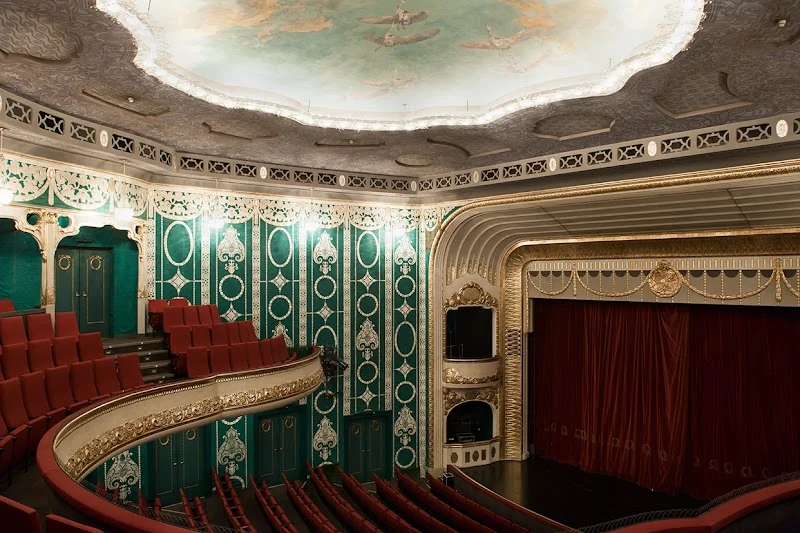
The Kurtheater in Bad Kissingen combines the magic of a historic stage with a vibrant program of drama, dance, and music. With 538 seats in the stalls, balcony, and boxes, the venue is intentionally intimate yet large enough for a diverse guest performance program. The stage is located in the spa district at Theaterplatz and is embedded in the UNESCO-awarded ensemble of the spa town. Built in 1904 according to plans by the Munich architect Max Littmann and opened on June 25, 1905, the theater captivates with baroque-inspired Art Nouveau and intricate decor. Thanks to its location, you can easily reach it on foot from the city center; directly at the venue is the Theater parking garage. Those who want to connect culture with architectural history will find an authentic place here: classical ballets, spoken theater, concerts, and guest performances meet historical spatial effects, green wall coverings with silver embellishments, and the ceiling painting 'Flight of the Cranes.'
Program and Events: Today and Upcoming
The Kurtheater is traditionally operated as a stage for guest performances. This means for visitors: a diverse, regularly changing program. Responsible for the curation and organization is the Theaterring Bad Kissingen, which compiles a package of drama, dance, concerts, and special guest performances each season. Notable are the classical ballet evenings and literary theater productions that make ideal use of the historic ambiance. For example, in recent seasons, ballets such as 'The Nutcracker' and 'Swan Lake' have been experienced, filling the house with grand orchestral sound and traditional choreography. Fairy tales like 'Cinderella' or contemporary dramas and comedies are also regularly on the agenda. This variety is typical: it reflects the history of the house, which entertained spa guests with theater evenings and concerts even during the imperial era, as well as the current role of Bad Kissingen as a vibrant cultural venue. Many performances begin at 7:30 PM, allowing for a relaxed arrival without haste. For finding dates, it is advisable to check the current publications of the Theaterring as well as regional event calendars. They concretely reflect the diversity of the offerings and show which ensembles, orchestras, or touring productions will next make a stop at the Kurtheater. Those who enjoy planning their cultural outings can secure entire series of evenings with season tickets; those who decide spontaneously can take advantage of individual dates, which are often still available at short notice. Compared to large multi-genre houses, the character of a guest performance theater remains palpable: one evening drama, the next dance or concert – a format that appeals to both regular guests and first-time visitors alike, making the Kurtheater a place where one continually discovers something new.
Tickets and Booking: Advance Sales, Subscriptions, and Box Office
You can conveniently purchase tickets through the Theaterring Bad Kissingen – online, by phone, or in person. The central service number is +49 971 8048 444; additionally, the Tourist Information in the arcade building in the spa garden provides assistance. For last-minute decisions, the box office at the Kurtheater usually opens one hour before the performance begins. The pricing structure is transparent: there are five seating categories that reflect the sightlines in the auditorium. For many guest performances, individual tickets vary in price depending on the production within tiered pricing ranges, and the Theaterring publishes an overview with specific prices each season. Savings can be made with subscriptions that secure a fixed seat in a chosen category and bundle several events of the season. Newer offerings such as partner subscriptions make it easier to share a package among friends or family, while the Flexi package offers a discount for booking multiple evenings for selected pieces. Particularly welcome is the low-threshold access for young people: students, apprentices, and university students receive discounted tickets at a flat rate directly at the box office shortly before the performance begins, upon presentation of an ID. This keeps the visit not only manageable but also affordable. Those who prefer to select their seats can benefit from the online purchase option, which categorizes by stalls, balcony, or box. There, the booking is displayed with the desired category and available seats, allowing you to get a sense of sight and distance before purchasing. Tip for frequent visitors: the combination of a subscription and occasional single tickets for special highlights combines planning security with flexibility. This way, the season at the Kurtheater can be comfortably arranged – whether you follow favorite genres like ballet and classics or navigate the program out of curiosity.
Seating Plan and Seats in the Kurtheater Bad Kissingen
The auditorium of the Kurtheater is divided into stalls, balcony, and boxes and has a total of 538 seats. Its shape follows the idea of courtly rank theaters and is also an architectural response to the limited building site: the auditorium was widened, the longitudinal axis of the building was compressed, and the foyer, stairs, and cloakrooms were organized around the auditorium. This creates a visual closeness to the stage, allowing many rows to have good sightlines. In the stalls, one benefits from the steeply rising arrangement: even middle rows usually offer a pleasant view of the stage without the heads of the front rows obstructing the view. Those who like to oversee the entire scene choose seats in the balcony; here, choreographies or scenic tableaus can be particularly well captured as a whole. The boxes convey a historic atmosphere and are suitable for sitting with two or in small groups, preferring a framed view of the action. When choosing seats, it applies: depending on the production, the optimal perspective varies. Ballet evenings often benefit from a slight elevation in the balcony to see formations; in drama with quiet interludes, the proximity of the stalls is appealing. For booking, the pricing structure of the Theaterring is helpful: five categories reflect typical sight qualities and distances. Additionally, those who want to experience the historic space should pay attention to seats that allow the ceiling painting 'Flight of the Cranes' by Julius Mössel to shine upon entering the auditorium – a moment that makes the visit special even before the first note or line. By the way: the heavy, dark red curtain, the silver Art Nouveau ornaments, and the green wall coverings create a distinctive auditorium atmosphere. Together with the compact dimensions of the house, it creates the impression of a large yet personal stage. Thus, the seating plan becomes not only a question of sight but part of a total experience of space, light, and history.
Directions and Parking at the Kurtheater
The address of the venue is Theaterplatz 1, 97688 Bad Kissingen. The location in the spa district allows for short distances from the city center and the spa garden. For those arriving by car, numerous parking options are available in the spa town, foremost the Theater parking garage directly at the Kurtheater, operated by the Bad Kissingen municipal utilities. This is particularly convenient for evening performances, as the foyer can be reached on foot in just a few minutes. The city also provides a comprehensive parking concept that includes several parking garages and spaces around the city center. Fees can be conveniently paid in the city center via SMS or through a mobile app; the technical management of the facilities is handled by the municipal utilities. Independent city guides provide orientation with reference prices, such as 1.20 euros for the first two hours in the parking garage area and 0.60 euros for each additional started hour. Additionally, depending on the day of the week, there are free parking spaces outside the immediate city center, which can be reached on foot in about 10 to 15 minutes. Those planning to arrive by public transport will benefit from the compact city structure: from the train station, the route leads through the city center and the spa garden towards Theaterplatz. For group arrivals by bus, it is advisable to check the city’s guidelines for bus parking. Conveniently, thanks to the central location, a theater evening can be combined with a walk through the UNESCO-acclaimed spa ensemble. For navigation devices, entering Theaterplatz 1 is helpful; on-site signage directs towards the spa district and Theater parking garage. For questions about parking ticket machines or barrier systems, service numbers from the municipal utilities are available, which are indicated on the devices. This makes the journey transparent and predictable – regardless of whether you are traveling by car, on foot through the spa garden, or as a group.
History and Architecture: From Max Littmann to the Opening in 1905
The theater tradition in Bad Kissingen dates back to the 18th century, but the current Kurtheater was built during a phase of strong structural renewal in the spa town. In 1904, the Bavarian government commissioned architect Max Littmann to construct a new building on the site of a wooden predecessor. The challenge: during the ongoing season, the performance operation should be disrupted as little as possible. Therefore, the new building began behind the old theater; after the season ended, the wooden structure was dismantled, and the shell construction was quickly advanced. Already on June 25, 1905, the new Royal Theater was ceremonially opened – with the opera 'The Clowns' by Ruggero Leoncavallo. Architecturally, the house combines baroque-inspired Art Nouveau with functional reform ideas. Due to space constraints, the longitudinal axis was compressed, and the auditorium was widened; a pavilion architecture divides the facade. Inside, green wall coverings, silver Art Nouveau embellishments, box supports covered in old silver, and the ceiling painting 'Flight of the Cranes' by Julius Mössel shape the appearance. The auditorium follows the model of courtly rank theaters, a conscious gesture towards the aristocratic spa guests of the time. Historically, the use changed: after World War I, during economic crises, and into the post-war period, the theater remained a venue for entertainment and culture, sometimes supplemented by film screenings. To this day, it serves as a stage for guest performances. The owner of the building remains the Free State of Bavaria as the legal successor of the Kingdom of Bavaria, a hint at the significance of the house in the historical fabric of the spa town. At the same time, the Kurtheater is part of the international context of the Great Spa Towns of Europe, through which Bad Kissingen makes its spa and architectural history visible as a UNESCO World Heritage site. Therefore, those visiting the house experience not only a program but also architectural and urban history that can be read in the space itself.
Capacity, Equipment, and Use for Guest Performances
With 538 seats, the Kurtheater is intentionally compactly dimensioned. This size creates the conditions for dense communication between stage and audience and allows for productions with medium casts – from drama to ballet and dance to concerts. The division into stalls, balcony, and boxes offers different perspectives, while the steep incline of the stalls ensures visual comfort. Like many historic stages, the house does not have all the technical possibilities of large new buildings; for example, a revolving stage is not available, and sinkings are limited. Precisely for this reason, the format of guest performances has proven successful: touring productions bring their technology, and the house provides the atmospheric framework. For planners, this means: productions are tailored to the spatial conditions, resulting in the diversity of the program – from touring theater to classical ballets to concerts, readings, and scenic formats. For visitors, it is advisable to check the publication for specific questions related to the piece (e.g., sound reinforcement, stage visibility, or duration). The auditorium size also facilitates entry, and the central location allows for short distances during the intermission. Those arriving by car benefit from the adjacent Theater parking garage; those exploring the city on foot can quickly reach dining options in the spa garden area. The traditional interior details – green wall coverings, silver ornaments, dark red curtain – ensure that even modern productions receive a special historical aura. Thus, the Kurtheater combines a clearly structured seating plan and a comprehensible pricing logic with the experience of an Art Nouveau theater that continues to function as a cultural stage of the spa town.
Sources:
- Wikipedia – Kurtheater Bad Kissingen
- Welterbe.BadKissingen.de – Kurtheater
- City of Bad Kissingen – Theaterring: Prices, Promotions, and Discounts
- City of Bad Kissingen – Parking in the City Area
- Municipal Utilities Bad Kissingen – Parking Garages (Theater Parking Garage)
- Main-Post Events – Venue Kurtheater
- BadKissingen-erleben.de – Kurtheater
- inFranken – Parking in Bad Kissingen: Tips and Prices
Show moreShow less
Kurtheater | Program & Seating Plan Bad Kissingen
The Kurtheater in Bad Kissingen combines the magic of a historic stage with a vibrant program of drama, dance, and music. With 538 seats in the stalls, balcony, and boxes, the venue is intentionally intimate yet large enough for a diverse guest performance program. The stage is located in the spa district at Theaterplatz and is embedded in the UNESCO-awarded ensemble of the spa town. Built in 1904 according to plans by the Munich architect Max Littmann and opened on June 25, 1905, the theater captivates with baroque-inspired Art Nouveau and intricate decor. Thanks to its location, you can easily reach it on foot from the city center; directly at the venue is the Theater parking garage. Those who want to connect culture with architectural history will find an authentic place here: classical ballets, spoken theater, concerts, and guest performances meet historical spatial effects, green wall coverings with silver embellishments, and the ceiling painting 'Flight of the Cranes.'
Program and Events: Today and Upcoming
The Kurtheater is traditionally operated as a stage for guest performances. This means for visitors: a diverse, regularly changing program. Responsible for the curation and organization is the Theaterring Bad Kissingen, which compiles a package of drama, dance, concerts, and special guest performances each season. Notable are the classical ballet evenings and literary theater productions that make ideal use of the historic ambiance. For example, in recent seasons, ballets such as 'The Nutcracker' and 'Swan Lake' have been experienced, filling the house with grand orchestral sound and traditional choreography. Fairy tales like 'Cinderella' or contemporary dramas and comedies are also regularly on the agenda. This variety is typical: it reflects the history of the house, which entertained spa guests with theater evenings and concerts even during the imperial era, as well as the current role of Bad Kissingen as a vibrant cultural venue. Many performances begin at 7:30 PM, allowing for a relaxed arrival without haste. For finding dates, it is advisable to check the current publications of the Theaterring as well as regional event calendars. They concretely reflect the diversity of the offerings and show which ensembles, orchestras, or touring productions will next make a stop at the Kurtheater. Those who enjoy planning their cultural outings can secure entire series of evenings with season tickets; those who decide spontaneously can take advantage of individual dates, which are often still available at short notice. Compared to large multi-genre houses, the character of a guest performance theater remains palpable: one evening drama, the next dance or concert – a format that appeals to both regular guests and first-time visitors alike, making the Kurtheater a place where one continually discovers something new.
Tickets and Booking: Advance Sales, Subscriptions, and Box Office
You can conveniently purchase tickets through the Theaterring Bad Kissingen – online, by phone, or in person. The central service number is +49 971 8048 444; additionally, the Tourist Information in the arcade building in the spa garden provides assistance. For last-minute decisions, the box office at the Kurtheater usually opens one hour before the performance begins. The pricing structure is transparent: there are five seating categories that reflect the sightlines in the auditorium. For many guest performances, individual tickets vary in price depending on the production within tiered pricing ranges, and the Theaterring publishes an overview with specific prices each season. Savings can be made with subscriptions that secure a fixed seat in a chosen category and bundle several events of the season. Newer offerings such as partner subscriptions make it easier to share a package among friends or family, while the Flexi package offers a discount for booking multiple evenings for selected pieces. Particularly welcome is the low-threshold access for young people: students, apprentices, and university students receive discounted tickets at a flat rate directly at the box office shortly before the performance begins, upon presentation of an ID. This keeps the visit not only manageable but also affordable. Those who prefer to select their seats can benefit from the online purchase option, which categorizes by stalls, balcony, or box. There, the booking is displayed with the desired category and available seats, allowing you to get a sense of sight and distance before purchasing. Tip for frequent visitors: the combination of a subscription and occasional single tickets for special highlights combines planning security with flexibility. This way, the season at the Kurtheater can be comfortably arranged – whether you follow favorite genres like ballet and classics or navigate the program out of curiosity.
Seating Plan and Seats in the Kurtheater Bad Kissingen
The auditorium of the Kurtheater is divided into stalls, balcony, and boxes and has a total of 538 seats. Its shape follows the idea of courtly rank theaters and is also an architectural response to the limited building site: the auditorium was widened, the longitudinal axis of the building was compressed, and the foyer, stairs, and cloakrooms were organized around the auditorium. This creates a visual closeness to the stage, allowing many rows to have good sightlines. In the stalls, one benefits from the steeply rising arrangement: even middle rows usually offer a pleasant view of the stage without the heads of the front rows obstructing the view. Those who like to oversee the entire scene choose seats in the balcony; here, choreographies or scenic tableaus can be particularly well captured as a whole. The boxes convey a historic atmosphere and are suitable for sitting with two or in small groups, preferring a framed view of the action. When choosing seats, it applies: depending on the production, the optimal perspective varies. Ballet evenings often benefit from a slight elevation in the balcony to see formations; in drama with quiet interludes, the proximity of the stalls is appealing. For booking, the pricing structure of the Theaterring is helpful: five categories reflect typical sight qualities and distances. Additionally, those who want to experience the historic space should pay attention to seats that allow the ceiling painting 'Flight of the Cranes' by Julius Mössel to shine upon entering the auditorium – a moment that makes the visit special even before the first note or line. By the way: the heavy, dark red curtain, the silver Art Nouveau ornaments, and the green wall coverings create a distinctive auditorium atmosphere. Together with the compact dimensions of the house, it creates the impression of a large yet personal stage. Thus, the seating plan becomes not only a question of sight but part of a total experience of space, light, and history.
Directions and Parking at the Kurtheater
The address of the venue is Theaterplatz 1, 97688 Bad Kissingen. The location in the spa district allows for short distances from the city center and the spa garden. For those arriving by car, numerous parking options are available in the spa town, foremost the Theater parking garage directly at the Kurtheater, operated by the Bad Kissingen municipal utilities. This is particularly convenient for evening performances, as the foyer can be reached on foot in just a few minutes. The city also provides a comprehensive parking concept that includes several parking garages and spaces around the city center. Fees can be conveniently paid in the city center via SMS or through a mobile app; the technical management of the facilities is handled by the municipal utilities. Independent city guides provide orientation with reference prices, such as 1.20 euros for the first two hours in the parking garage area and 0.60 euros for each additional started hour. Additionally, depending on the day of the week, there are free parking spaces outside the immediate city center, which can be reached on foot in about 10 to 15 minutes. Those planning to arrive by public transport will benefit from the compact city structure: from the train station, the route leads through the city center and the spa garden towards Theaterplatz. For group arrivals by bus, it is advisable to check the city’s guidelines for bus parking. Conveniently, thanks to the central location, a theater evening can be combined with a walk through the UNESCO-acclaimed spa ensemble. For navigation devices, entering Theaterplatz 1 is helpful; on-site signage directs towards the spa district and Theater parking garage. For questions about parking ticket machines or barrier systems, service numbers from the municipal utilities are available, which are indicated on the devices. This makes the journey transparent and predictable – regardless of whether you are traveling by car, on foot through the spa garden, or as a group.
History and Architecture: From Max Littmann to the Opening in 1905
The theater tradition in Bad Kissingen dates back to the 18th century, but the current Kurtheater was built during a phase of strong structural renewal in the spa town. In 1904, the Bavarian government commissioned architect Max Littmann to construct a new building on the site of a wooden predecessor. The challenge: during the ongoing season, the performance operation should be disrupted as little as possible. Therefore, the new building began behind the old theater; after the season ended, the wooden structure was dismantled, and the shell construction was quickly advanced. Already on June 25, 1905, the new Royal Theater was ceremonially opened – with the opera 'The Clowns' by Ruggero Leoncavallo. Architecturally, the house combines baroque-inspired Art Nouveau with functional reform ideas. Due to space constraints, the longitudinal axis was compressed, and the auditorium was widened; a pavilion architecture divides the facade. Inside, green wall coverings, silver Art Nouveau embellishments, box supports covered in old silver, and the ceiling painting 'Flight of the Cranes' by Julius Mössel shape the appearance. The auditorium follows the model of courtly rank theaters, a conscious gesture towards the aristocratic spa guests of the time. Historically, the use changed: after World War I, during economic crises, and into the post-war period, the theater remained a venue for entertainment and culture, sometimes supplemented by film screenings. To this day, it serves as a stage for guest performances. The owner of the building remains the Free State of Bavaria as the legal successor of the Kingdom of Bavaria, a hint at the significance of the house in the historical fabric of the spa town. At the same time, the Kurtheater is part of the international context of the Great Spa Towns of Europe, through which Bad Kissingen makes its spa and architectural history visible as a UNESCO World Heritage site. Therefore, those visiting the house experience not only a program but also architectural and urban history that can be read in the space itself.
Capacity, Equipment, and Use for Guest Performances
With 538 seats, the Kurtheater is intentionally compactly dimensioned. This size creates the conditions for dense communication between stage and audience and allows for productions with medium casts – from drama to ballet and dance to concerts. The division into stalls, balcony, and boxes offers different perspectives, while the steep incline of the stalls ensures visual comfort. Like many historic stages, the house does not have all the technical possibilities of large new buildings; for example, a revolving stage is not available, and sinkings are limited. Precisely for this reason, the format of guest performances has proven successful: touring productions bring their technology, and the house provides the atmospheric framework. For planners, this means: productions are tailored to the spatial conditions, resulting in the diversity of the program – from touring theater to classical ballets to concerts, readings, and scenic formats. For visitors, it is advisable to check the publication for specific questions related to the piece (e.g., sound reinforcement, stage visibility, or duration). The auditorium size also facilitates entry, and the central location allows for short distances during the intermission. Those arriving by car benefit from the adjacent Theater parking garage; those exploring the city on foot can quickly reach dining options in the spa garden area. The traditional interior details – green wall coverings, silver ornaments, dark red curtain – ensure that even modern productions receive a special historical aura. Thus, the Kurtheater combines a clearly structured seating plan and a comprehensible pricing logic with the experience of an Art Nouveau theater that continues to function as a cultural stage of the spa town.
Sources:
- Wikipedia – Kurtheater Bad Kissingen
- Welterbe.BadKissingen.de – Kurtheater
- City of Bad Kissingen – Theaterring: Prices, Promotions, and Discounts
- City of Bad Kissingen – Parking in the City Area
- Municipal Utilities Bad Kissingen – Parking Garages (Theater Parking Garage)
- Main-Post Events – Venue Kurtheater
- BadKissingen-erleben.de – Kurtheater
- inFranken – Parking in Bad Kissingen: Tips and Prices
Kurtheater | Program & Seating Plan Bad Kissingen
The Kurtheater in Bad Kissingen combines the magic of a historic stage with a vibrant program of drama, dance, and music. With 538 seats in the stalls, balcony, and boxes, the venue is intentionally intimate yet large enough for a diverse guest performance program. The stage is located in the spa district at Theaterplatz and is embedded in the UNESCO-awarded ensemble of the spa town. Built in 1904 according to plans by the Munich architect Max Littmann and opened on June 25, 1905, the theater captivates with baroque-inspired Art Nouveau and intricate decor. Thanks to its location, you can easily reach it on foot from the city center; directly at the venue is the Theater parking garage. Those who want to connect culture with architectural history will find an authentic place here: classical ballets, spoken theater, concerts, and guest performances meet historical spatial effects, green wall coverings with silver embellishments, and the ceiling painting 'Flight of the Cranes.'
Program and Events: Today and Upcoming
The Kurtheater is traditionally operated as a stage for guest performances. This means for visitors: a diverse, regularly changing program. Responsible for the curation and organization is the Theaterring Bad Kissingen, which compiles a package of drama, dance, concerts, and special guest performances each season. Notable are the classical ballet evenings and literary theater productions that make ideal use of the historic ambiance. For example, in recent seasons, ballets such as 'The Nutcracker' and 'Swan Lake' have been experienced, filling the house with grand orchestral sound and traditional choreography. Fairy tales like 'Cinderella' or contemporary dramas and comedies are also regularly on the agenda. This variety is typical: it reflects the history of the house, which entertained spa guests with theater evenings and concerts even during the imperial era, as well as the current role of Bad Kissingen as a vibrant cultural venue. Many performances begin at 7:30 PM, allowing for a relaxed arrival without haste. For finding dates, it is advisable to check the current publications of the Theaterring as well as regional event calendars. They concretely reflect the diversity of the offerings and show which ensembles, orchestras, or touring productions will next make a stop at the Kurtheater. Those who enjoy planning their cultural outings can secure entire series of evenings with season tickets; those who decide spontaneously can take advantage of individual dates, which are often still available at short notice. Compared to large multi-genre houses, the character of a guest performance theater remains palpable: one evening drama, the next dance or concert – a format that appeals to both regular guests and first-time visitors alike, making the Kurtheater a place where one continually discovers something new.
Tickets and Booking: Advance Sales, Subscriptions, and Box Office
You can conveniently purchase tickets through the Theaterring Bad Kissingen – online, by phone, or in person. The central service number is +49 971 8048 444; additionally, the Tourist Information in the arcade building in the spa garden provides assistance. For last-minute decisions, the box office at the Kurtheater usually opens one hour before the performance begins. The pricing structure is transparent: there are five seating categories that reflect the sightlines in the auditorium. For many guest performances, individual tickets vary in price depending on the production within tiered pricing ranges, and the Theaterring publishes an overview with specific prices each season. Savings can be made with subscriptions that secure a fixed seat in a chosen category and bundle several events of the season. Newer offerings such as partner subscriptions make it easier to share a package among friends or family, while the Flexi package offers a discount for booking multiple evenings for selected pieces. Particularly welcome is the low-threshold access for young people: students, apprentices, and university students receive discounted tickets at a flat rate directly at the box office shortly before the performance begins, upon presentation of an ID. This keeps the visit not only manageable but also affordable. Those who prefer to select their seats can benefit from the online purchase option, which categorizes by stalls, balcony, or box. There, the booking is displayed with the desired category and available seats, allowing you to get a sense of sight and distance before purchasing. Tip for frequent visitors: the combination of a subscription and occasional single tickets for special highlights combines planning security with flexibility. This way, the season at the Kurtheater can be comfortably arranged – whether you follow favorite genres like ballet and classics or navigate the program out of curiosity.
Seating Plan and Seats in the Kurtheater Bad Kissingen
The auditorium of the Kurtheater is divided into stalls, balcony, and boxes and has a total of 538 seats. Its shape follows the idea of courtly rank theaters and is also an architectural response to the limited building site: the auditorium was widened, the longitudinal axis of the building was compressed, and the foyer, stairs, and cloakrooms were organized around the auditorium. This creates a visual closeness to the stage, allowing many rows to have good sightlines. In the stalls, one benefits from the steeply rising arrangement: even middle rows usually offer a pleasant view of the stage without the heads of the front rows obstructing the view. Those who like to oversee the entire scene choose seats in the balcony; here, choreographies or scenic tableaus can be particularly well captured as a whole. The boxes convey a historic atmosphere and are suitable for sitting with two or in small groups, preferring a framed view of the action. When choosing seats, it applies: depending on the production, the optimal perspective varies. Ballet evenings often benefit from a slight elevation in the balcony to see formations; in drama with quiet interludes, the proximity of the stalls is appealing. For booking, the pricing structure of the Theaterring is helpful: five categories reflect typical sight qualities and distances. Additionally, those who want to experience the historic space should pay attention to seats that allow the ceiling painting 'Flight of the Cranes' by Julius Mössel to shine upon entering the auditorium – a moment that makes the visit special even before the first note or line. By the way: the heavy, dark red curtain, the silver Art Nouveau ornaments, and the green wall coverings create a distinctive auditorium atmosphere. Together with the compact dimensions of the house, it creates the impression of a large yet personal stage. Thus, the seating plan becomes not only a question of sight but part of a total experience of space, light, and history.
Directions and Parking at the Kurtheater
The address of the venue is Theaterplatz 1, 97688 Bad Kissingen. The location in the spa district allows for short distances from the city center and the spa garden. For those arriving by car, numerous parking options are available in the spa town, foremost the Theater parking garage directly at the Kurtheater, operated by the Bad Kissingen municipal utilities. This is particularly convenient for evening performances, as the foyer can be reached on foot in just a few minutes. The city also provides a comprehensive parking concept that includes several parking garages and spaces around the city center. Fees can be conveniently paid in the city center via SMS or through a mobile app; the technical management of the facilities is handled by the municipal utilities. Independent city guides provide orientation with reference prices, such as 1.20 euros for the first two hours in the parking garage area and 0.60 euros for each additional started hour. Additionally, depending on the day of the week, there are free parking spaces outside the immediate city center, which can be reached on foot in about 10 to 15 minutes. Those planning to arrive by public transport will benefit from the compact city structure: from the train station, the route leads through the city center and the spa garden towards Theaterplatz. For group arrivals by bus, it is advisable to check the city’s guidelines for bus parking. Conveniently, thanks to the central location, a theater evening can be combined with a walk through the UNESCO-acclaimed spa ensemble. For navigation devices, entering Theaterplatz 1 is helpful; on-site signage directs towards the spa district and Theater parking garage. For questions about parking ticket machines or barrier systems, service numbers from the municipal utilities are available, which are indicated on the devices. This makes the journey transparent and predictable – regardless of whether you are traveling by car, on foot through the spa garden, or as a group.
History and Architecture: From Max Littmann to the Opening in 1905
The theater tradition in Bad Kissingen dates back to the 18th century, but the current Kurtheater was built during a phase of strong structural renewal in the spa town. In 1904, the Bavarian government commissioned architect Max Littmann to construct a new building on the site of a wooden predecessor. The challenge: during the ongoing season, the performance operation should be disrupted as little as possible. Therefore, the new building began behind the old theater; after the season ended, the wooden structure was dismantled, and the shell construction was quickly advanced. Already on June 25, 1905, the new Royal Theater was ceremonially opened – with the opera 'The Clowns' by Ruggero Leoncavallo. Architecturally, the house combines baroque-inspired Art Nouveau with functional reform ideas. Due to space constraints, the longitudinal axis was compressed, and the auditorium was widened; a pavilion architecture divides the facade. Inside, green wall coverings, silver Art Nouveau embellishments, box supports covered in old silver, and the ceiling painting 'Flight of the Cranes' by Julius Mössel shape the appearance. The auditorium follows the model of courtly rank theaters, a conscious gesture towards the aristocratic spa guests of the time. Historically, the use changed: after World War I, during economic crises, and into the post-war period, the theater remained a venue for entertainment and culture, sometimes supplemented by film screenings. To this day, it serves as a stage for guest performances. The owner of the building remains the Free State of Bavaria as the legal successor of the Kingdom of Bavaria, a hint at the significance of the house in the historical fabric of the spa town. At the same time, the Kurtheater is part of the international context of the Great Spa Towns of Europe, through which Bad Kissingen makes its spa and architectural history visible as a UNESCO World Heritage site. Therefore, those visiting the house experience not only a program but also architectural and urban history that can be read in the space itself.
Capacity, Equipment, and Use for Guest Performances
With 538 seats, the Kurtheater is intentionally compactly dimensioned. This size creates the conditions for dense communication between stage and audience and allows for productions with medium casts – from drama to ballet and dance to concerts. The division into stalls, balcony, and boxes offers different perspectives, while the steep incline of the stalls ensures visual comfort. Like many historic stages, the house does not have all the technical possibilities of large new buildings; for example, a revolving stage is not available, and sinkings are limited. Precisely for this reason, the format of guest performances has proven successful: touring productions bring their technology, and the house provides the atmospheric framework. For planners, this means: productions are tailored to the spatial conditions, resulting in the diversity of the program – from touring theater to classical ballets to concerts, readings, and scenic formats. For visitors, it is advisable to check the publication for specific questions related to the piece (e.g., sound reinforcement, stage visibility, or duration). The auditorium size also facilitates entry, and the central location allows for short distances during the intermission. Those arriving by car benefit from the adjacent Theater parking garage; those exploring the city on foot can quickly reach dining options in the spa garden area. The traditional interior details – green wall coverings, silver ornaments, dark red curtain – ensure that even modern productions receive a special historical aura. Thus, the Kurtheater combines a clearly structured seating plan and a comprehensible pricing logic with the experience of an Art Nouveau theater that continues to function as a cultural stage of the spa town.
Sources:
- Wikipedia – Kurtheater Bad Kissingen
- Welterbe.BadKissingen.de – Kurtheater
- City of Bad Kissingen – Theaterring: Prices, Promotions, and Discounts
- City of Bad Kissingen – Parking in the City Area
- Municipal Utilities Bad Kissingen – Parking Garages (Theater Parking Garage)
- Main-Post Events – Venue Kurtheater
- BadKissingen-erleben.de – Kurtheater
- inFranken – Parking in Bad Kissingen: Tips and Prices
Upcoming Events
No events found
Frequently Asked Questions
Reviews
Lena
6. December 2025
Very beautiful historic theater. We went to the ballet and it was really something special. I just think it's a shame that the break until you can get a drink is already pretty short and you're not allowed to bring drinks inside. I get it though. Maybe it would be worth considering having several small stands to avoid long lines. Otherwise, it was really nice to enjoy cultural programs in a beautiful theater.
Hans-Michael Fritz
25. November 2025
Small but nice theater with good acoustics
Roland Baechler
3. December 2025
An impressive building in Bad Kissingen and a beautiful ballet. The Nutcracker.
Susan “Shozie1” Yassin
29. February 2024
A very nice place with a very pleasant atmosphere. We were guests at the theater for the first time. Next time we'll sit downstairs. The balcony isn't optimal for kids from everywhere. Jan and Henry were well received by the kids. 👍
Detlef Heber
29. October 2025
An esteemed theater. Great ambiance, good acoustics. Unfortunately, it's underused.