
Alexander von Zemlinsky
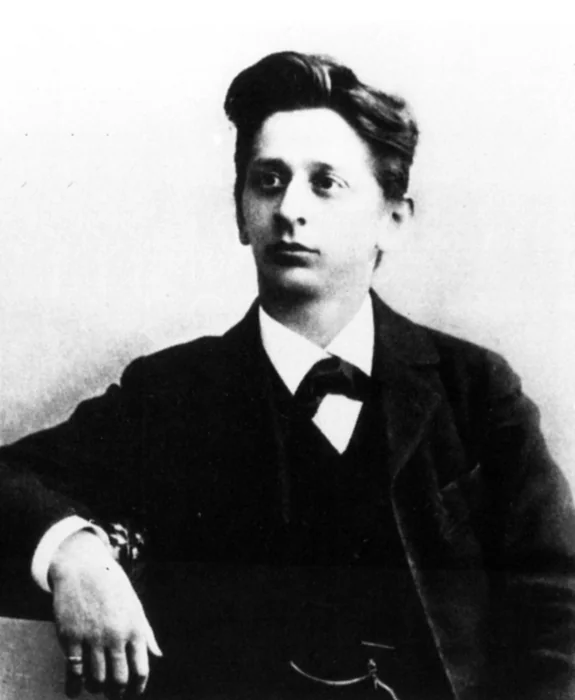
Image from Wikipedia
Image from Wikipedia
Alexander von Zemlinsky – the Vienna Master between Late Romanticism, Modernism, and Musical Seduction
A composer of significance whose sound language resonates to this day
Alexander von Zemlinsky belongs to those great names in music history that became famous not primarily through a single iconic work, but through a distinctive artistic signature. Born on October 14, 1871, in Vienna and passing away on March 15, 1942, in Larchmont near New York, he was a composer, conductor, and educator – and a central figure in the Viennese music scene at the turn of the 19th to the 20th century. His career unfolded between tradition and innovation, between proximity to Brahms, musical decadence, and the expressive language of modernity. ([zemlinsky.at](https://www.zemlinsky.at/de/biographie?utm_source=openai))
Listening to Zemlinsky today reveals a composer of the highest compositional culture: colorful orchestration, intense expression, finely balanced harmony, and a dramatic line that electrifies both in song and opera. The Alexander Zemlinsky Fund describes his music as a testament to a "turbulent development" between 1890 and 1940, emphasizing that he found a distinctive language in a space between styles. It is this position that continues to make him fascinating for music lovers and researchers alike. ([zemlinsky.at](https://www.zemlinsky.at/de/biographie?utm_source=openai))
Biographical Roots: Vienna, Leopoldstadt, and Early Influences
Zemlinsky grew up in Vienna's Leopoldstadt, an environment strongly shaped by Jewish life. The official biography of the Zemlinsky Fund depicts a childhood in modest circumstances, yet under the auspices of linguistic and musical education. His father, Adolf von Zemlinszky, who converted to Judaism later, was literarily educated and worked as a writer; his mother, Clara Semo, hailed from Sarajevo. This biographical constellation profoundly influenced Zemlinsky's perception of identity, culture, and belonging. ([zemlinsky.at](https://www.zemlinsky.at/de/biographie/wien-1871-1882?utm_source=openai))
His musical talent manifested early on, leading him to be admitted to the Conservatory of the Society of Music Friends in Vienna as a teenager. There, he studied until 1892 and composed his first works, which were still clearly under the influence of Johannes Brahms, whom the fund identifies as his role model and supporter. In this early phase, the core of the compositional discipline that would characterize Zemlinsky's later works already emerged: motivic precision, dense writing, and a preference for elaborated forms. ([zemlinsky.at](https://www.zemlinsky.at/de/biographie?utm_source=openai))
Rising in Viennese Musical Life
After his studies, Zemlinsky successfully stepped into the vibrant Viennese musical life, where personal connections were as important as institutional engagement. The official biography emphasizes that he established a solid position through his commitment to various institutions and associations. Vienna was not only his place of origin but also a space of resonance: Here he developed into a musician who worked as a composer, conductor, and intermediary between repertoire and present. ([zemlinsky.at](https://www.zemlinsky.at/de/biographie?utm_source=openai))
Especially influential were his encounters with Arnold Schoenberg and Alma Schindler, who later became Gustav Mahler's wife. The Zemlinsky Fund highlights that these contacts had a decisive impact on him both personally and artistically. The exchange with Schoenberg particularly illustrates how close Zemlinsky was to the emerging conditions of musical modernity—without relinquishing his own late Romantic tonal language. ([zemlinsky.at](https://www.zemlinsky.at/de/biographie?utm_source=openai))
Composer and Conductor: Between Opera House, Concert Hall, and Contemporary Repertoire
As a conductor, Zemlinsky demonstrated a keen sense for the great repertoire of German-language music theater. The Zemlinsky Fund specifically mentions Strauss, Wagner, Schreker, Weber, Beethoven, Brahms, Mahler, and Mozart as the center of his work. At the same time, he championed new music, conducting works by Schönberg, Berg, Bartók, Dukas, Ravel, Korngold, Krenek, Janáček, Schulhoff, Hindemith, Honegger, Milhaud, and Weill in Prague, among others. This repertoire policy makes him a key figure in musical mediation in the first half of the 20th century. ([zemlinsky.at](https://www.zemlinsky.at/de/schaffen/der-dirigent?utm_source=openai))
His conducting skills were highly valued. Igor Stravinsky recalled in 1964 that Zemlinsky was one of the "outstanding conductors" he had heard. Such statements are more than mere accolades: they show that Zemlinsky was perceived not only as a composer but also as a defining musician of his time. His stage presence and artistic judgment had an impact that extended well beyond his own scores. ([zemlinsky.at](https://www.zemlinsky.at/de/schaffen/der-dirigent?utm_source=openai))
The Music: Late Romanticism with Sharp Contours
Zemlinsky's compositional style merges emotional density with a controlled, often opulent sound architecture. The Warner Classics text on Eine florentinische Tragödie categorizes him explicitly within the "decadent" side of the fin-de-siècle, pointing to rich harmonies and lush orchestration. Here lies the fascination of his art: he thinks late-romantically but never merely pleasingly, rather with psychological tension, dense motifs, and high dramatic pressure. ([warnerclassics.com](https://www.warnerclassics.com/release/zemlinsky-eine-florentinische-tragodie?utm_source=openai))
This is particularly impressive in his operas and orchestral works, where timbres serve not only decoratively but dramatically. Works like Die Seejungfrau or the Lyrische Symphonie unfold a symphonic poetry in which longing, melancholy, and expressive expansiveness permeate one another. The Zemlinsky Fund's catalog and current releases from Warner Classics evidence that these pieces remain at the core of his repertoire to this day. ([warnerclassics.com](https://www.warnerclassics.com/artist/alexander-zemlinsky/releases?utm_source=openai))
Opera, Song, and Symphonic Poem as Hallmarks
In opera, Zemlinsky found a form where he could expertly unite psychological intensity and musical condensation at the highest level. Warner Classics highlights Eine florentinische Tragödie as possibly his masterpiece; the recording is part of an ongoing rediscovery by James Conlon and the Gürzenich Orchestra Cologne. Additional works securing his position in the repertoire include Der Zwerg, Die Seejungfrau, and the Lyrische Symphonie. ([warnerclassics.com](https://www.warnerclassics.com/release/zemlinsky-eine-florentinische-tragodie?utm_source=openai))
Moreover, he has a strong presence in the realm of art song. The Wikipedia raw text refers to numerous song cycles, including the Sechs Gesänge op. 13 after Maurice Maeterlinck, one of his most well-known vocal works. Here, Zemlinsky’s sensitivity to text declamation, subtle harmonic shading, and a vocal line allowing great emotional range becomes evident. ([en.wikipedia.org](https://en.wikipedia.org/wiki/Alexander_von_Zemlinsky?utm_source=openai))
Discography, Rediscovery, and Critical Reception
Zemlinsky's discography is now closely associated with the rediscovery projects of major classical labels. Warner Classics lists numerous releases, including Lyrische Symphonie, Die Seejungfrau & Sinfonietta, Cymbeline Suite, Ein Tanzpoem & Frühlingsbegräbnis, and Der Zwerg, many conducted by James Conlon. These releases document not only a repertoire but also a critical process of canonization: Zemlinsky is increasingly being heard as an independent master of modernity. ([warnerclassics.com](https://www.warnerclassics.com/artist/alexander-zemlinsky/releases?utm_source=openai))
The reception of his music often emphasizes the connection between late romantic sensuality and modern nervousness. Warner Classics describes his sound language as related to the “fin-de-siècle” atmosphere and points to the intense mood of his operas. The Zemlinsky Fund also speaks of a reevaluation of his oeuvre, through which a genuine renaissance of the composer has emerged. In music press, Zemlinsky is thus increasingly recognized not as a marginal figure but as a central representative of a highly complex transitional style. ([warnerclassics.com](https://www.warnerclassics.com/release/zemlinsky-eine-florentinische-tragodie?utm_source=openai))
Current Projects and Today's Presence in Concert Life
Although Zemlinsky passed away in 1942, his work continues to live on in current releases, programs, and performances. Warner Classics still includes his works in its recent catalogs, while the Zemlinsky Fund continues scholarly and editorial care for his estate. The fund's purpose explicitly includes the promotion, research, and source-critical edition of his compositions, published by Universal Edition Vienna and Ricordi Munich. ([zemlinsky.at](https://www.zemlinsky.at/en/more/fund-and-prize?utm_source=openai))
The continued presence in concert programs and on labels shows that Zemlinsky is by no means a historical museum subject. Rather, he serves today as a reference point for interpreters seeking to explore the bridge between romantic tradition and early modernism. Especially at a time when audiences are increasingly open to rediscovered masterpieces, his music feels fresh, dramatic, and full of undiminished expressiveness. ([operabase.com](https://www.operabase.com/productions/symphonic-stories-works-of-dvorak-bollon-and-zemlinsky-494595/en?utm_source=openai))
Cultural Influence and Musical Legacy
Zemlinsky's cultural influence lies less in a single “hit” than in the depth of his sound and his role as a connector. He blended Brahmsian formal rigor, the sensitivity of the fin de siècle, and the premonition of musical modernism into a language that generations of listeners and interpreters can rediscover. The fact that both the Mahler-affiliated Viennese tradition and the school around Schoenberg, along with the opera reception of the 20th century, recognize him as a reference point underscores this unique position. ([zemlinsky.at](https://www.zemlinsky.at/?utm_source=openai))
Institutionally, his influence remains strong: The Alexander Zemlinsky Fund manages his legacy, grants a prize, and supports research and performance practice. Thus, Zemlinsky remains not only a name in music history but a living reference in today’s concert and editorial activities. This form of reception is particularly enlightening for a composer of his stature, as it permanently confirms artistic rank and music-historical relevance. ([zemlinsky.at](https://www.zemlinsky.at/en/more/fund-and-prize?utm_source=openai))
Conclusion: Why Alexander von Zemlinsky Still Fascinates Today
Alexander von Zemlinsky fascinates because he transformed the great contrasts of his era into a personal, highly condensed musical language: beauty and unrest, tradition and progress, intimacy and dramatic force. His operas, orchestral works, and songs open a sound space that is equally elegant, vulnerable, and psychologically sharply contoured. Listening to Zemlinsky means not just experiencing historical music but engaging with a living chapter of European cultural history. ([warnerclassics.com](https://www.warnerclassics.com/release/zemlinsky-eine-florentinische-tragodie?utm_source=openai))
For this reason, encountering his works in concert halls or in new recordings is worthwhile: Zemlinsky unfolds his full power where color, tension, and melodic line meet directly. His oeuvre ranks among the most impressive rediscoveries of 20th-century classical music. Those who experience him live quickly understand why this Viennese master is once again considered one of the great voices of his time. ([zemlinsky.at](https://www.zemlinsky.at/?utm_source=openai))
Official Channels of Alexander von Zemlinsky:
- Instagram: No official profile found
- Facebook: No official profile found
- YouTube: No official profile found
- Spotify: No official profile found
- TikTok: No official profile found
Sources:
- Alexander Zemlinsky Fund – Biography
- Alexander Zemlinsky Fund – His Life, His Work
- Alexander Zemlinsky Fund – Fund and Prize
- Warner Classics – Alexander Zemlinsky Releases
- Warner Classics – Zemlinsky: Eine florentinische Tragödie
- Warner Classics – Zemlinsky: Lyrische Symphonie & Orchestral Preludes and Interludes
- Wikipedia – Alexander von Zemlinsky