
Alexander von Zemlinsky
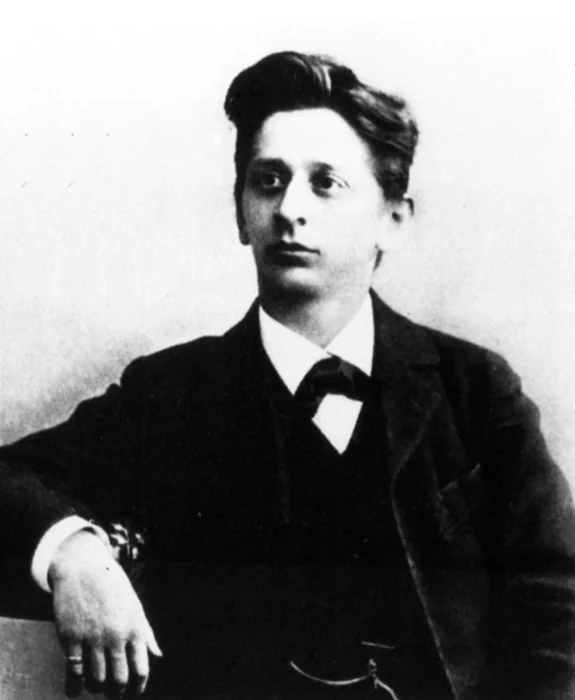
Image from Wikipedia
Image from Wikipedia
Alexander von Zemlinsky – Between Late Romanticism, Modernism, and Musical Rediscovery
A Composer, Conductor, and Stylistic Voyager with Viennese Roots
Alexander von Zemlinsky is among the most fascinating figures in the music history of the Viennese Modern era. Born in Vienna in 1871 and passing away in exile in Larchmont near New York in 1942, he navigated the realms of late romanticism, expressionism, and the early forms of musical modernism as a composer, conductor, and educator. His career bridged the tradition of Brahms and Wagner with the advent of a new century, without ever completely embracing radical atonality. ([britannica.com](https://www.britannica.com/biography/Alexander-Zemlinsky?utm_source=openai))
Biography: Education, Early Recognition, and the Path into the Viennese Music Scene
Zemlinsky came from a culturally diverse family and began his piano and organ lessons at an early age. In 1884, he was admitted to the Vienna Conservatory, where he studied with Anton Door, Franz Krenn, and the brothers Robert and Johann Nepomuk Fuchs. By the 1890s, his first chamber music works were already making an appearance; Johannes Brahms is said to have been impressed by the clarinet trio and recommended its publication. ([orelfoundation.org](https://www.orelfoundation.org/composers/article/alexander_zemlinsky?utm_source=openai))
In Vienna, he met Arnold Schönberg, with whom he initially had a teaching relationship, later evolving into a close artistic friendship. The young Schönberg dedicated early works to him, and from the environment of this relationship, one of the most productive constellations of Viennese music around 1900 emerged. At the same time, Zemlinsky drew attention as a conductor and opera composer with works such as the opera Sarema and later with Es war einmal…, which Gustav Mahler presented at the Vienna State Opera. ([orelfoundation.org](https://www.orelfoundation.org/composers/article/alexander_zemlinsky?utm_source=openai))
Conductor, Teacher, and Motor of New Music
Zemlinsky worked as a conductor at the Carl Theater and the Theater an der Wien until 1903, where he primarily conducted operettas. Simultaneously, he taught at the Schwarzwaldschule and established connections that anchored him in the institutional musical life of Vienna. In 1904, he co-founded the Association of Creative Musicians with Schönberg, supported by Gustav Mahler, to promote contemporary music in Vienna. ([orelfoundation.org](https://www.orelfoundation.org/composers/article/alexander_zemlinsky?utm_source=openai))
His reputation as a conductor grew further when he was appointed as the First Conductor at the Volksoper and later also worked at the State Opera. Although he gained recognition in Vienna, he never achieved the breakthrough he longed for. This very tension between high reputation and limited popularity continues to shape the perception of his musical career to this day. ([zemlinsky.at](https://www.zemlinsky.at/de/biographie?utm_source=openai))
Prague as an Artistic Flourishing Period
The decisive career boost for Zemlinsky came in 1911 in Prague, where he took over the musical leadership of the New German Theatre. Under his direction, the house developed into one of the most esteemed opera stages in Europe; assistants such as Erich Kleiber, Anton Webern, George Szell, and Viktor Ullmann passed through important stages of their own development there. In Prague, some of his most significant scores were also composed, including the Lyrical Symphony, A Florentine Tragedy, and The Dwarf. ([orelfoundation.org](https://www.orelfoundation.org/composers/article/alexander_zemlinsky?utm_source=openai))
The Prague years depict Zemlinsky as an artist with an enormous range of styles: as an opera dramatist who distilled literary sources with psychological precision, and as an orchestral composer who combined large forms with subtle thematic work. His role as a guest conductor of the Czech Philharmonic also strengthened his position as a mediator between tradition and new music. ([orelfoundation.org](https://www.orelfoundation.org/composers/article/alexander_zemlinsky?utm_source=openai))
Berlin, Emigration, and the Final Years in Exile
In the late 1920s, Zemlinsky sought new artistic horizons again and moved to Berlin. There, he worked until the closure of the Kroll Opera House, taught at the music academy, and performed across Europe. With the rise of National Socialism, his situation drastically worsened; in 1938, he fled via Prague to New York, where he composed smaller works under financial constraints and worked on a new opera project called Circe, which remained unfinished. ([orelfoundation.org](https://www.orelfoundation.org/composers/article/alexander_zemlinsky?utm_source=openai))
The last years were marked by illness, isolation, and the forced withdrawal from the major music theater scene. Nevertheless, his name remained present in modern circles, and even late radio and concert performances showed that his musical language did not fall silent in exile. Zemlinsky died in 1942 in Larchmont, without having witnessed the later rediscovery of his works. ([orelfoundation.org](https://www.orelfoundation.org/composers/article/alexander_zemlinsky?utm_source=openai))
Musical Language: Late Romanticism with Expressionist Sharpness
Zemlinsky's compositions bridge Brahms, Wagner, and early musical modernism. His works engage with shifting tonal centers, dense variation techniques, subtle word interpretation, and a sound language that combines late romantic warmth with inner tension. Unlike Schönberg, he avoided a radical break with tonality and remained true to the possibilities of expanded harmony. ([orelfoundation.org](https://www.orelfoundation.org/composers/article/alexander_zemlinsky?utm_source=openai))
This very attitude makes his style so distinctive: Zemlinsky is neither merely a conservative latecomer nor a revolutionary avant-gardist but a transitional composer. Early works such as the clarinet trio or the first quartets show proximity to Brahms and dramatic intensity, while later scores like The Mermaid, the Lyric Symphony, and the operas based on Oscar Wilde unfold a more complex, often darkly shimmering sound world. ([orelfoundation.org](https://www.orelfoundation.org/composers/article/alexander_zemlinsky?utm_source=openai))
Discography, Major Works, and Critical Reception
The core of his discography and reception includes the operas Sarema, Es war einmal…, A Florentine Tragedy, The Dwarf, The Chalk Circle, and the unfinished The King Kandaules. Additionally, there are the Lyric Symphony, the Sinfonietta, three symphonies, several string quartets, song cycles, and chamber music works. The Lyric Symphony is particularly regarded as his most famous work and a key composition of his middle phase. ([britannica.com](https://www.britannica.com/biography/Alexander-Zemlinsky?utm_source=openai))
The critics' responses to his music were never uniform, but this precisely underscores his significance. He was early recognized as an outstanding musician of his milieu, but later political persecution and changes in the canon meant that his works were rarely performed for a long time. However, from the late 1960s onwards, a clear renaissance began, fueled by research, critical editions, and recordings. ([orelfoundation.org](https://www.orelfoundation.org/composers/article/alexander_zemlinsky?utm_source=openai))
Particularly, recordings of the orchestral music and operas have sharpened his profile. Label and critical voices emphasize the orchestral richness, the fluid dramaturgy, and the combination of romantic fullness with modern tension. Recent releases and program notes also show that Zemlinsky's music remains present in the concert and recording canon. ([hyperion-records.co.uk](https://www.hyperion-records.co.uk/dc.asp?dc=D_CDA67985&utm_source=openai))
Cultural Influence and Rediscovery
Zemlinsky today ranks among the composers whose status only became fully visible through later historical reassessment. His closeness to Schönberg, Berg, and Webern, his influence on younger conductors, and his mediating role between late romanticism and modernism make him a key figure in Viennese music history. His work in Prague particularly illustrates how strongly he shaped the music life, repertoire, and promotion of young talent. ([orelfoundation.org](https://www.orelfoundation.org/composers/article/alexander_zemlinsky?utm_source=openai))
The rediscovery of his works is attributed not only to the interest in the "lost modern" but also to the independence of his scores. Zemlinsky composed not mere transitional works but music of great inner coherence, passionate expressiveness, and fine formal control. This lies at the cultural value of his oeuvre: It broadens the view of the music history of the 20th century far beyond the most famous names. ([theguardian.com](https://www.theguardian.com/music/2020/jun/25/zemlinsky-die-seejungfrau-review-netherlands-philharmonic-albrecht-pentatone?utm_source=openai))
Conclusion: A Master of In-Betweens Who Deserves to Be Heard Anew
Alexander von Zemlinsky fascinates as an artist between epochs, as a conductor with an instinct for new music, and as a composer with a distinctive musical language. His career speaks of recognition and repression, of Viennese progress and exile, of melancholy and formal clarity. Anyone who listens to his works discovers a composer who may not have loudly rewritten music history but has enriched it sustainably. ([orelfoundation.org](https://www.orelfoundation.org/composers/article/alexander_zemlinsky?utm_source=openai))
Especially in live performances, Zemlinsky's scores reveal their full impact: the shimmering orchestration, the psychological depth, the tension between intimacy and grand breath. His music demands attention and rewards it with emotional density and stylistic elegance. Engaging with Zemlinsky offers an encounter with one of the most exciting sound worlds of Viennese modernism. ([orelfoundation.org](https://www.orelfoundation.org/composers/article/alexander_zemlinsky?utm_source=openai))
Official Channels of Alexander von Zemlinsky:
- Instagram: no official profile found
- Facebook: no official profile found
- YouTube: no official profile found
- Spotify: no official profile found
- TikTok: no official profile found