
Carla Simón
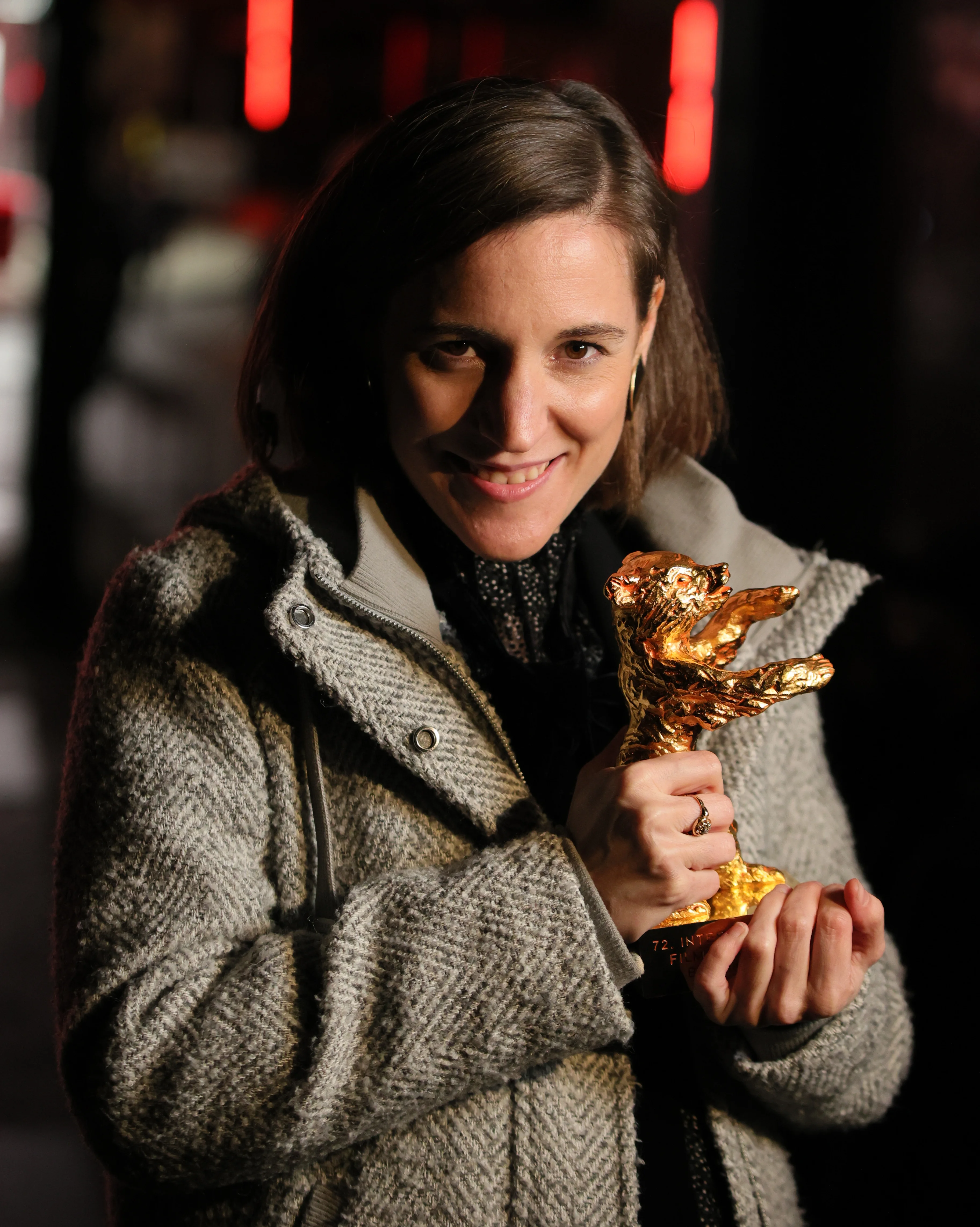
Image from Wikipedia
Image from Wikipedia
Carla Simón: The Quiet Power of Spanish Auteur Cinema
A director who transforms personal memory into great cinema
Carla Simón is one of the most distinctive voices in contemporary European cinema. Born in 1986 in Barcelona, the Spanish filmmaker and screenwriter has earned a solid place in international auteur cinema with her autobiographically grounded, keenly observed films. Her work combines intimacy with social precision, turning familial memory into a cinematic language of great emotional force. ([en.wikipedia.org](https://en.wikipedia.org/wiki/Carla_Sim%C3%B3n?utm_source=openai))
She gained recognition primarily through Summer of 1993 and Alcarràs – The Last Harvest, two films that not only impressed festivals and critics but also sharpened her distinctive style: naturalistic, sensitive, close to characters and their environments. In 2025, she once again came into the spotlight of the international film world with Romería, her third feature film and another step in her consistently personal career. ([en.wikipedia.org](https://en.wikipedia.org/wiki/Carla_Sim%C3%B3n?utm_source=openai))
Biography: Origins, Loss, and Cinematic Self-Location
Carla Simón grew up with relatives in Catalonia after losing her parents to AIDS. This early biographical rupture continues to shape her work today, as her films repeatedly circle themes of origin, loss, family memory, and the search for belonging. A scholarship took her to the London Film School, where she deepened her film education and laid the foundation for her international career. ([accioncultural.es](https://www.accioncultural.es/en/carla_simon))
It is precisely this biographical density that makes Simón's cinema so unmistakable. Her works never feel merely autobiographical in the narrow sense; rather, they transform personal experience into universal narratives about childhood, farewell, and social reality. In the eyes of festivals and cultural institutions, she appears not only as a director but as an astute chronicler of a generation that understands memory as an aesthetic form. ([berlinale.de](https://www.berlinale.de/de/2023/news-pressemitteilungen/231746.html?utm_source=openai))
Career Start: Breaking Through with Summer of 1993
Her feature film debut, Summer of 1993, brought Carla Simón international fame. The film celebrated its world premiere at the Berlinale in the Generation section in 2017 and won both the Best First Film award and the Grand Jury Prize of the International Jury of Generation Kplus. Subsequently, the film won over 30 additional awards at international festivals and received three Goya Awards; it was also selected as Spain's submission for the Oscars. ([berlinale.de](https://www.berlinale.de/de/2023/news-pressemitteilungen/231746.html?utm_source=openai))
The power of this debut lay in its quiet authority. Simón portrayed childhood not sentimentally but observationally, with a keen eye for movement, lines of sight, and the unspeakable between characters. This was the first significant demonstration of her artistic development: an intimate drama that nevertheless reached far beyond the private level, setting the tone for her entire body of work. ([berlinale.de](https://www.berlinale.de/de/2023/news-pressemitteilungen/231746.html?utm_source=openai))
The International Summit: Alcarràs – The Last Harvest
With Alcarràs – The Last Harvest, Simón reached a new peak in 2022. The film won the Golden Bear at the 72nd Berlinale; the festival called it one of the central winners of the year, making Carla Simón the first Catalan director to receive this award. At the same time, the film was nominated for eleven Goya Awards and three European Film Awards. ([berlinale.de](https://www.berlinale.de/en/archive/awards-juries/awards.html/a%3Dgolden-bear-feature-length-film/y%3D1951%2C2022/o%3Ddesc/p%3D1/rp%3D40?utm_source=openai))
Alcarràs demonstrates how adept Simón is at translating familial and economic upheavals into an ensemble portrait of rural life. The film was received with great attention for its accuracy in everyday life, its observations of work and generational change, and its unsentimental emotionality. This blend of social realism and nuanced character portrayal makes her direction so authoritative. ([en.wikipedia.org](https://en.wikipedia.org/wiki/Carla_Sim%C3%B3n?utm_source=openai))
Current Projects: Romería and the Continuation of Biographical Cinema
In 2025, Carla Simón presented Romería, her third feature film, in the official selection at Cannes; the festival featured the film as a competition entry and listed Simón as both director and screenwriter. The film was produced in Spain and Germany, runs approximately 115 minutes, and premiered in competition at the 78th edition of the festival. ([festival-cannes.com](https://www.festival-cannes.com/f/romeria/?utm_source=openai))
In interviews and festival discussions, Simón described Romería as a work arising from familial frustration and memory work. The plot follows a young woman who confronts her paternal family and her own origins through her mother's diary; the director also noted that this time she focused on her Galician roots, her parents' stories, and the interplay between professional and non-professional actors. This is an important point for the perception of her career: Simón develops her personal themes in an increasingly complex and form-conscious manner rather than repetitively. ([festival-cannes.com](https://www.festival-cannes.com/f/romeria/?utm_source=openai))
Filmography, Awards, and Critical Reception
Since Carla Simón is a filmmaker rather than a musician, her filmography takes center stage instead of a discography. In addition to her three feature films, her short films and collaborative works are part of a consistent author profile that has been documented since 2009. The international film community has particularly noted the consistency of her themes and the cohesion of her aesthetic signature. ([en.wikipedia.org](https://en.wikipedia.org/wiki/Carla_Sim%C3%B3n?utm_source=openai))
Major awards include the Golden Bear for Alcarràs, the Goya successes for Summer of 1993, and festival prizes for her debut. Additionally, institutions such as the Berlinale environment and the Academia de Cine have repeatedly recognized Simón as a defining representative of contemporary Spanish cinema, most recently in connection with discussions and program points surrounding Romería. This presence underscores her authority as a director whose works are discussed and taken seriously on an international level. ([berlinale.de](https://www.berlinale.de/de/2023/news-pressemitteilungen/231746.html?utm_source=openai))
Style: Naturalism, Memory, and a Precise Visual Language
Simón's directorial style thrives on calm, observation, and a strong connection to real spaces. Whether Catalan landscapes, rural family structures, or Galician origins: Her films engage with closeness, everyday details, and a rhythm that allows the characters to unfold. Precisely this distinct expertise in auteur cinema shapes biographies into credible, multifaceted film worlds rather than mere self-reflections. ([rtve.es](https://www.rtve.es/rtve/20250912/carla-simon-primera-invitada-nueva-temporada-version-espanola-emite-verano-1993/16726381.shtml?utm_source=openai))
In international reception, Simón is often associated with terms like naturalism, realism, and intimacy. This classification aligns with a cinematic language that does not rely on effects but on composition, actor direction, and the emotional temperature of scenes. Thus, a cinema emerges that begins quietly and lingers long after. ([rtve.es](https://www.rtve.es/rtve/20250912/carla-simon-primera-invitada-nueva-temporada-version-espanola-emite-verano-1993/16726381.shtml?utm_source=openai))
Cultural Influence: A Voice for Personal European Cinema
Carla Simón has significantly broadened the perspective on Spanish and Catalan cinema. Her works represent a generation of filmmakers who do not separate the personal from the political but intertwine both. In particular, Alcarràs has become a symbol of rural present, structural change, and family cohesion, while Summer of 1993 condensed the themes of childhood and grief into an extraordinarily accessible form. ([berlinale.de](https://www.berlinale.de/de/2023/news-pressemitteilungen/231746.html?utm_source=openai))
Her participation in the competition at Cannes with Romería in 2025 confirms her status as an important European author. Her films represent cultural accuracy, emotional honesty, and remarkable perseverance in artistic development. As such, Carla Simón belongs to those directors whose work not only collects awards but also profoundly shapes the understanding of contemporary cinema. ([festival-cannes.com](https://www.festival-cannes.com/p/carla-simon/?utm_source=openai))
Conclusion: Why Carla Simón Remains So Captivating
Carla Simón fascinates because she transforms personal history into precise, moving cinema. Her films possess depth, rhythmic calm, and a rare authenticity that resonates with both festival audiences and cinephiles. Those who watch her works experience an auteur cinema that shapes attitudes from memory and transforms closeness into great narrative art. ([berlinale.de](https://www.berlinale.de/de/2023/news-pressemitteilungen/231746.html?utm_source=openai))
In a time when many films prioritize pace and spectacle, Simón's signature remains refreshingly consistent. Her works invite viewers to look closely, take characters seriously, and rediscover the power of quiet images. Anyone who has the opportunity to experience one of her films on the big screen should seize it. ([rtve.es](https://www.rtve.es/rtve/20250912/carla-simon-primera-invitada-nueva-temporada-version-espanola-emite-verano-1993/16726381.shtml?utm_source=openai))
Official Channels of Carla Simón:
- Instagram: No official profile found
- Facebook: No official profile found
- YouTube: No official profile found
- Spotify: No official profile found
- TikTok: No official profile found
Sources:
- Wikipedia – Carla Simón
- Berlinale – News & Press Releases on Carla Simón
- Berlinale – Awards Archive: Alcarràs
- Festival de Cannes – ROMERÍA
- Festival de Cannes – Carla SIMÓN
- Festival de Cannes – Romería, conversation with Carla Simón
- Acción Cultural Española – Carla Simón
- RTVE – Carla Simón, first guest...
- IMDb – Carla Simón
- IMDb News – Carla Simón
Upcoming Events
Romería - My Mother's Diary
A quiet, intense film evening at filmforum Duisburg: Romería touches with family secrets, memories, and a grand visual language. #Cinema
Romería - The Diary of My Mother
A quiet, touching cinematic experience in Duisburg: Romería takes you deep into memory, loss, and the search for origin. On 03.04.2026 for 9,90 €. #Cinema
Romería - The Diary of My Mother
A Quiet Cinematic Event Full of Emotion: Romería at filmforum Duisburg tells of heritage, memory, and familial tension. April 5, 2026, €9.90. #Cinema
Romería - The Diary of My Mother
A quiet, intense film evening in Duisburg: Romería tells of origins, family, and memory. On 06.04.2026 at 17:45, only 7 €. #Cinema
Romería - The Diary of My Mother
An evening full of quiet tension and great emotions at filmforum Duisburg: Romería tells of origin, loss, and memory. 07.04.2026, 18:00, €8.90. #Cinema