
Christoph Willibald Gluck
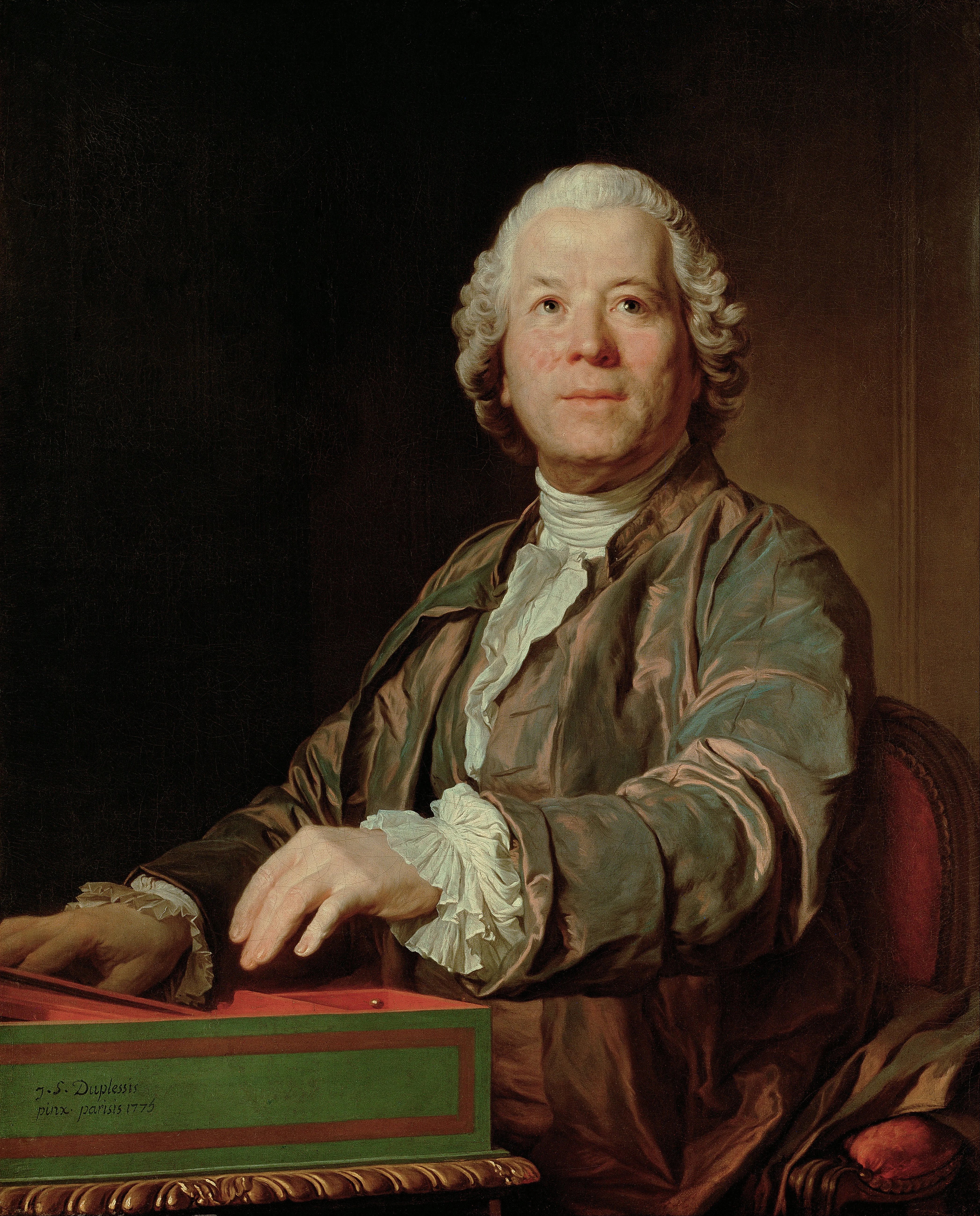
Image from Wikipedia
Image from Wikipedia
Christoph Willibald Gluck – the Opera Revolutionary Between the Viennese Court, the Paris Stage, and Musical Renewal
A Composer Who Reimagined Opera
Christoph Willibald Gluck is counted among the most influential opera composers of the 18th century. Born on July 2, 1714, in Erasbach near Berching in the Upper Palatinate and died on November 15, 1787, in Vienna, he shaped opera not only with strong melodies but especially with a radically new concept of dramatic truth. His work exemplifies that rare combination of artistic intuition, stylistic clarity, and historical impact that changes music history. ([britannica.com](https://www.britannica.com/summary/Christoph-Willibald-Gluck?utm_source=openai))
Gluck became known as a German composer and opera reformer who sought to break the rigid forms of opera seria. His name remains synonymous with a reform idea that fused music, poetry, plot, and scenic effect more closely together. It is this consistent connection between expression and dramaturgy that makes him a key figure in the history of European opera. ([britannica.com](https://www.britannica.com/summary/opera-music?utm_source=openai))
From the Upper Palatinate to Europe: The Early Years
Gluck's life began far from the great music centers, yet early on, his musical career took him beyond national borders. After a youth in Bohemia and study years in Prague, he arrived in Vienna and later Milan, where he studied composition with Giovanni Battista Sammartini. There he became acquainted with the modern Italian style, which shaped his early musical language. ([britannica.com](https://www.britannica.com/biography/Christoph-Willibald-Gluck?utm_source=openai))
In Milan, Gluck also found his first major dramatic success. With the opera Artaserse, he achieved a breakthrough in 1741, which was followed by further works for Italian stages. These early operas still reflected the fashion of the time but already displayed signs of character development and emotional intensification that would later become his trademarks. ([britannica.com](https://www.britannica.com/biography/Christoph-Willibald-Gluck?utm_source=openai))
Vienna, Travel, and the Search for a New Opera
From 1750 onwards, Vienna became Gluck's artistic center, although he continued to travel through Europe and work for various courts and theaters. His career as a court composer and opera creator led him through a musical network that spanned Prague, Milan, Rome, Copenhagen, and Paris. This mobility was crucial for his artistic development, as it allowed him to directly compare different opera traditions. ([britannica.com](https://www.britannica.com/biography/Christoph-Willibald-Gluck?utm_source=openai))
A significant turning point was his encounter with French vaudeville and opéra-comique forms in Vienna. Gluck experimented with new hybrid forms, replacing stereotypical numbers with more integrated scenes and approaching a musical theater that no longer separated plot and expression. In these works, the handwriting of a composer who prioritized dramatic flow over mere virtuosity is already evident. ([britannica.com](https://www.britannica.com/biography/Christoph-Willibald-Gluck?utm_source=openai))
The Reform Opera: Orfeo ed Euridice and Alceste
The real turning point came in 1762 with Orfeo ed Euridice. Together with the librettist Ranieri de’ Calzabigi, Gluck developed a new opera aesthetic in which music, poetry, and dance merge into a unified dramatic form. This work is considered one of the most important reform operas and marks Gluck's decisive break with the rigid tradition of opera seria. ([britannica.com](https://www.britannica.com/topic/Orfeo-ed-Euridice?utm_source=openai))
Gluck articulated his artistic intentions even more clearly in the preface to Alceste from 1767. There he placed simplicity, truth, and naturalness at the center of his musical language. This programmatic approach made him one of the first composers to publicly and programmatically justify his aesthetic stance rather than just talk about his works. ([britannica.com](https://www.britannica.com/summary/Christoph-Willibald-Gluck?utm_source=openai))
The reform idea was not merely a theoretical project but was audible in musical practice. Gluck cut unnecessary embellishments, reduced mere spectacle effects, and subordinated vocal virtuosity to dramatic expression. It is precisely in this that the modern strength of his operas lies: They do not aim to shine for the sake of shine, but to create meaning. ([britannica.com](https://www.britannica.com/topic/Orfeo-ed-Euridice?utm_source=openai))
Paris and International Fame
In 1773, Gluck went to Paris, where he already had a significant advocate in his former student Marie Antoinette. In the French capital, some of his most significant late works unfolded, including Iphigénie en Aulide, Armide, and Iphigénie en Tauride. These operas brought him wide recognition and definitively established him as a European authority in music theater. ([britannica.com](https://www.britannica.com/summary/Christoph-Willibald-Gluck?utm_source=openai))
The Paris years also intensified the aesthetic debates surrounding his person. Gluck became the focal point in those famous disputes between French and Italian opera concepts. That his art provoked such reactions attests to his historical authority: Few other composers in the 18th century had such a visible and publicly effective impact on opera reform. ([encyclopedia.com](https://www.encyclopedia.com/people/literature-and-arts/music-history-composers-and-performers-biographies/christoph-willibald-von-gluck?utm_source=openai))
Discography, Canon of Works, and Enduring Key Pieces
Gluck's work comprises more than 40 operas as well as several ballets. Key titles include Artaserse, Orfeo ed Euridice, Alceste, Paride ed Elena, Iphigénie en Aulide, Armide, and Iphigénie en Tauride. The ballet Don Juan is also considered a significant contribution to the development of dance theater. ([britannica.com](https://www.britannica.com/summary/Christoph-Willibald-Gluck?utm_source=openai))
Particularly influential for reception are individual musical moments that are still regarded as the epitome of operatic expression. The lament „Che farò senza Euridice“ from Orfeo ed Euridice is among the most famous arias in opera history, as is the dramatic expressiveness of Iphigénie en Tauride. Such pieces depict Gluck as a master of concentrated scene rather than mere spectacle-seeking. ([britannica.com](https://www.britannica.com/biography/Christoph-Willibald-Gluck/Legacy?utm_source=openai))
Gluck remains present even in the catalog of modern recordings, especially through recordings of his operas by specialized classical labels and in historical complete editions. His works are still part of the core repertoire of opera houses and concert halls because they provide an essential reference point both musically and stylistically. The catalog of works is therefore less a “discography” in the pop-cultural sense than a perpetually vibrant canon. ([naxos.com](https://www.naxos.com/catalogue/item.asp?item_code=C428962I&utm_source=openai))
Musical Language, Style, and Artistic Impact
Gluck's music is characterized by clarity, dramatic concentration, and a close relationship between affect and action. He consciously avoided overloaded coloraturas when they disturbed the dramatic truth, seeking instead a form where singing, orchestra, and scene pursue a common goal. This attitude made him a precursor to later opera reformers and an important reference point for the development of music theater. ([britannica.com](https://www.britannica.com/summary/opera-music?utm_source=openai))
His influence extends far beyond the 18th century. Gluck's opera reform impacted composers such as Mozart, Méhul, and later Berlioz, who each interpreted his idea of a dramatically integrated music theater in their own ways. Even though Gluck may have been overshadowed by Mozart in some respects, his historical achievement remains unassailable: he changed the rules by which opera was conceived and heard. ([britannica.com](https://www.britannica.com/art/opera-music/From-the-reform-to-grand-opera?utm_source=openai))
From today's perspective, Gluck appears as a composer with exceptional cultural-historical authority. His works merge courtly representation, Enlightenment program, and emotional directness into a language that still has an immediate impact. For this reason, he remains an indispensable figure in classical music for opera lovers, conductors, and singers. ([britannica.com](https://www.britannica.com/biography/Christoph-Willibald-Gluck/Legacy?utm_source=openai))
Cultural Influence and Enduring Significance
Gluck was not merely a successful court composer but an aesthetic innovator with a long-term impact. His reform idea resonated with an era that demanded truth, naturalness, and dramatic credibility. Thus, he became a key figure of the musical Enlightenment and a forerunner of modern opera thinking. ([britannica.com](https://www.britannica.com/art/opera-music/From-the-reform-to-grand-opera?utm_source=openai))
His importance also lies in the fact that he rethought opera as a total artwork before modernity. In his best works, composition, text, scene, and movement merge into a unity that still functions on stages today. Those who listen to Gluck experience not only a historical document but a living plea for musical truthfulness. ([metopera.org](https://www.metopera.org/link/8e1452bea24446438b2fb8452fe8d0f2.aspx?utm_source=openai))
Conclusion: Why Christoph Willibald Gluck Still Fascinates Today
Christoph Willibald Gluck is fascinating because he not only wrote music but also redefined opera. His career speaks of artistic courage, international experience, and the determination to shatter rigid forms. Those who experience his works live encounter a composer whose stage still glows because it integrates drama, expression, and musical truth in rare purity. ([britannica.com](https://www.britannica.com/biography/Christoph-Willibald-Gluck/Legacy?utm_source=openai))
Gluck's operas are particularly worthwhile on stage, where their dramatic architecture, vocal concentration, and emotional precision come to full fruition. He remains a name for all who understand opera not as a museum but as a living art form. Engaging with Gluck reveals the roots of a modern musical dramaturgy that still sets standards today. ([metopera.org](https://www.metopera.org/link/8e1452bea24446438b2fb8452fe8d0f2.aspx?utm_source=openai))
Official Channels of Christoph Willibald Gluck:
- Instagram: No official profile found
- Facebook: No official profile found
- YouTube: No official profile found
- Spotify: No official profile found
- TikTok: No official profile found
Sources:
- Britannica – Christoph Willibald Gluck
- Britannica – Christoph Willibald Gluck Summary
- Britannica – Legacy of Christoph Willibald Gluck
- Britannica – Orfeo ed Euridice
- Britannica – Opera, From the reform to grand opera
- Metropolitan Opera – Orfeo ed Euridice
- Metropolitan Opera – Program Notes Orfeo ed Euridice
- Naxos – Christoph Willibald Gluck (1714–1787)
- Wikipedia: Christoph Willibald Gluck