
Eugene Chadbourne
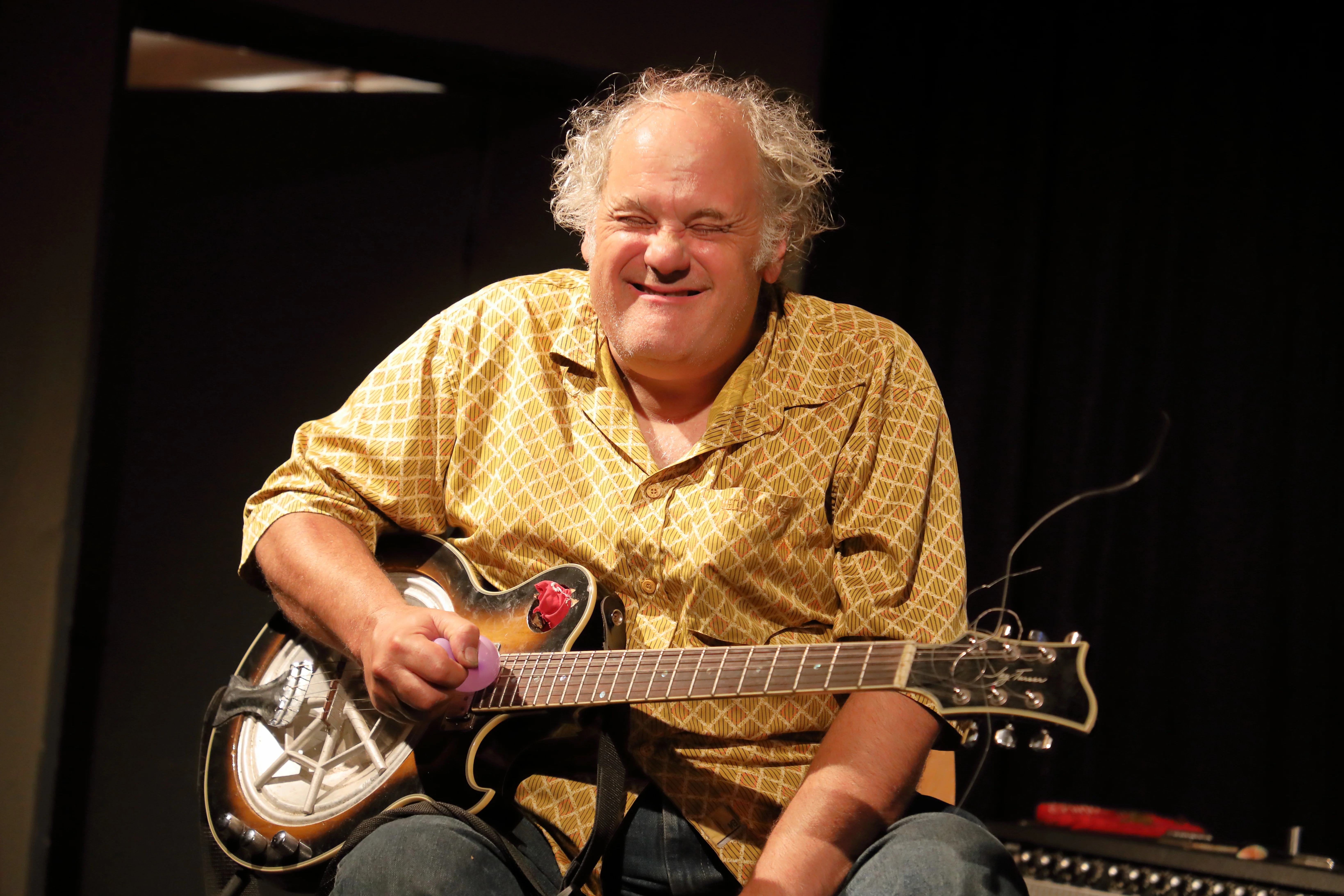
Image from Wikipedia
Image from Wikipedia
Eugene Chadbourne – The Radical Sound Inventor Between Avant-Garde, Country, and Free Jazz
A Musician Who Does Not Respect Boundaries, But Redraws Them
Eugene Chadbourne, born on January 4, 1954, in Mount Vernon, New York, is one of those American artists whose work defies easy categorization. As a guitarist, banjo player, composer, songwriter, and music journalist, he merges music career, theory, and stage presence into a distinctive whole. His name stands for experimental improvisation, sharp political songs, and a consistently independent artistic development that has continued since the 1970s. ([en.wikipedia.org](https://en.wikipedia.org/wiki/Eugene_Chadbourne?utm_source=openai))
Early Years: From Rock Impulse to Avant-Garde
According to biographical accounts, Chadbourne grew up in Boulder, Colorado, and began playing guitar as a teenager; early influences include The Beatles, Jimi Hendrix, and later the radical freedom of Anthony Braxton and Derek Bailey. This range already shows the core of his artistic DNA: he did not seek the safe pop form early on, but rather the open space where sound, composition, and irritation grapple with one another. In his Wikipedia biography, he is described as a musician and music journalist who also wrote for the All Music Guide and Maximum RocknRoll. ([en.wikipedia.org](https://en.wikipedia.org/wiki/Eugene_Chadbourne?utm_source=openai))
Chadbourne's path into music was not a straightforward ascent but instead a series of detours, curiosity, and aesthetic contradiction. He belonged to a generation that shaped a new vocabulary from free improvisation, the punk do-it-yourself spirit, and American folk and country traditions. His early work as a journalist sharpened his perception of musical connections, questions of form, and cultural friction. ([en.wikipedia.org](https://en.wikipedia.org/wiki/Eugene_Chadbourne?utm_source=openai))
The Breakthrough in the Spirit of Improvisation
A first crucial section of his career began in the mid-1970s with early solo recordings and the founding of the Parachute label. The official Chadbourne chronicle notes the release of Volume One; Solo Acoustic Guitar in 1975 and the premiere of a first series of compositions for solo acoustic guitar; Volume Two; Solo Acoustic Guitar followed in 1976. These works mark not only the beginning of his career but also the entry into his enduring practice of prepared guitar. ([eugenechadbourne.com](https://eugenechadbourne.com/dochistory))
Simultaneously, Chadbourne formed an environment in which improvised music, free jazz, and experimental song forms intersected. The artist archive chronicles collaborations with Tristan Honsinger, Han Bennink, Leo Smith, Fred Frith, John Zorn, Evan Parker, Steve Lacy, and many other influential figures in free music. This led to a network that established Chadbourne not only as a soloist but also as a connecting figure between scenes. ([eugenechadbourne.com](https://eugenechadbourne.com/dochistory))
Shockabilly, The Chadbournes, and the Revolt Against the Ordinary
With projects around The Chadbournes and later Shockabilly, Chadbourne shifted the coordinates between avant-garde and pop culture even further. The official chronicle describes how, in the early 1980s, The Chadbournes developed into a formation that blended improvised music with traditional country and western, thus sustainably altering the trajectory of this music. Shortly thereafter, Chadbourne began releasing his own cassettes – a practice that the chronicle labels as an important contribution to early lo-fi and low-tech thought. ([eugenechadbourne.com](https://eugenechadbourne.com/dochistory))
Particularly, Shockabilly is still considered one of his most famous projects. Reviews describe this music as "free improvised country & western bebop,” an explosive crossbreed of country iconography, noise, satire, and improvisation. The songs are often brief, aggressive, ironic, and politically charged; at the same time, they showcase Chadbourne's sense of melody, quotation, and compositional sharpness. ([trouserpress.com](https://trouserpress.com/reviews/eugene-chadbourne/))
Discography: Between Solo Work, Collaborations, and Archive Cosmos
Chadbourne's discography is less a linear career than a sprawling sound archive. The official site features early solo works, extensive duo and trio projects, as well as releases with John Zorn, Anthony Braxton, Camper Van Beethoven, Violent Femmes, Sunwatchers, and many other partners. Additionally, there are releases on the in-house label House of Chadula, which documents not only new music but also reissues, CDRs, live recordings, and thematic series. ([eugenechadbourne.com](https://eugenechadbourne.com/))
The diversity of his releases shows how strongly Chadbourne perceives his work as an ongoing documentation. Examples from the official catalog range from The Insect And Western Party to Oil Of Hate 7″, including releases from the Shockabilly series and newer projects like Beauty And The Bloodsucker. The album Chadbourne Baptist Church is also documented by All About Jazz, demonstrating that his work is taken seriously and cataloged within the modern jazz context. ([eugenechadbourne.com](https://eugenechadbourne.com/portfolio/insect-western-party?utm_source=openai))
Musical Language: Prepared Guitar, Banjo, and Collage Aesthetics
Chadbourne's style thrives on friction. He works with acoustic and electric guitar, banjo, dobro, voice, sounds, and often with unusual performance ideas such as the Electric Rake he developed. The official chronicle highlights that this invention inspired a whole series of similar sound objects in the 1980s. Thus, Chadbourne moves not only as an interpreter but as an instrument inventor, composer, and performer in the broad sense. ([eugenechadbourne.com](https://eugenechadbourne.com/dochistory))
Musically, he connects free improvisation with American traditions: country, folk, blues, rockabilly, protest song, jazz, and avant-rock. In the British-Canadian music press, his work is often described as elusive while simultaneously being exceptionally rich in ideas, surprises, and contradictory energy. This mix of calculated provocation and craftsmanship precision makes his artistic development so enduring. ([straight.com](https://www.straight.com/music/1363036/eugene-chadbourne-high-weirdness-mystical-banjos-and-not-having-be-farmer))
Critical Reception: Respect for Radicalism
The reception of Chadbourne's work traditionally fluctuates between admiration, irritation, and analytical respect. Trouser Press describes his music as a form of "free improvised country & western bebop" and emphasizes that political songs, autobiographical condensation, and expressive sound means are closely interlinked in his work. Also, All About Jazz and other jazz and experimental media place him in the context of improvised and boundary-crossing music. ([trouserpress.com](https://trouserpress.com/reviews/eugene-chadbourne/))
The cultural value of his oeuvre lies precisely in this disorder with a system. Chadbourne demonstrates that American roots can be deconstructed and recombined rather than preserved. His work has influenced later forms of lo-fi, related underground culture, and that scene which sees country, noise, and free improvisation not as contradictions, but as a productive tension. ([eugenechadbourne.com](https://eugenechadbourne.com/dochistory))
Current Projects and Releases
The official pages show that Chadbourne remains active into the 2020s. The homepage and project archive announce new releases, publications, and tour dates; the tour page features current concert announcements with formations such as the Doc Chad Contemporary Rock Band and solo performances in Europe. Additionally, recent press coverage mentions new solo CDs from a European tour as well as collaborations, including with the Sunwatchers. ([eugenechadbourne.com](https://eugenechadbourne.com/))
An important note from the official environment states that new show dates and release info are currently being posted on Chadbourne's Instagram and Facebook pages. This not only documents his ongoing presence in live performance but also the strong connection between direct communication, self-management, and independent release practices. ([eugenechadbourne.com](https://eugenechadbourne.com/a-special-announcement))
Voices of Fans
The official channels primarily document tour dates, new releases, and archival material; verified fan comments were not reliably available in the found sources. Instead of fabricated reactions, it can be noted: Chadbourne has a loyal, curious audience that follows his concert practice, his CDR culture, and his uncompromising spirit of experimentation. This form of attachment arises less from mainstream successes than from the intensity of the live experience and the authenticity of his artistic stance. ([eugenechadbourne.com](https://eugenechadbourne.com/a-special-announcement))
Conclusion: A Unique Figure in American Contemporary Music
Eugene Chadbourne remains exciting because he never sees music as a rigid identity but as an open experiment. His music career combines avant-garde, country, jazz, punk energy, and satirical sharpness into a signature that is immediately recognizable yet never static. Those who follow his development discover an artist who has consistently worked against routine, kitsch, and aesthetic convenience for decades. ([en.wikipedia.org](https://en.wikipedia.org/wiki/Eugene_Chadbourne?utm_source=openai))
Especially live, his stage presence unfolds most powerfully: banjo, guitar, voice, irony, and spontaneous improvisation create an experience that can only be fully realized in the moment. Those who love music as an adventure should not only listen to Eugene Chadbourne but experience him. ([straight.com](https://www.straight.com/music/1363036/eugene-chadbourne-high-weirdness-mystical-banjos-and-not-having-be-farmer))
Official Channels of Eugene Chadbourne:
- Instagram: https://www.instagram.com/eugene_chadbourne/
- Facebook: https://www.facebook.com/profile.php?id=100011321138931
- YouTube: No official profile found
- Spotify: No official profile found
- TikTok: No official profile found
Sources:
- House of Chadula – Official Home of Eugene Chadbourne
- The Life Of Doc Chad – House of Chadula
- A Special Announcement – House of Chadula
- Tour Dates – House of Chadula
- AllMusic – Eugene Chadbourne
- Trouser Press – Eugene Chadbourne
- Georgia Straight – Eugene Chadbourne: high weirdness, mystical banjos, and not having to be a farmer
- All About Jazz – Chadbourne Baptist Church
- Wikipedia: Eugene Chadbourne